Startup program page examples (27)
A startup program page offers a free or cheaper plan to a group that qualifies, such as startups, students or nonprofits. Its job is to make the offer clear and get the right people to apply. See 27 real examples.
Showing 1–24 of 27 startup program pages
How to build a startup program page, by the numbers
The questions a team asks when it designs a startup or student program page, answered from the 27 here.
Who is the program for?
Who the program is for
- Startups12 startup program pages
- Students11 startup program pages
Startups and students make up most of the set. Say which one in the headline, because a visitor decides in a second whether the page is about them.
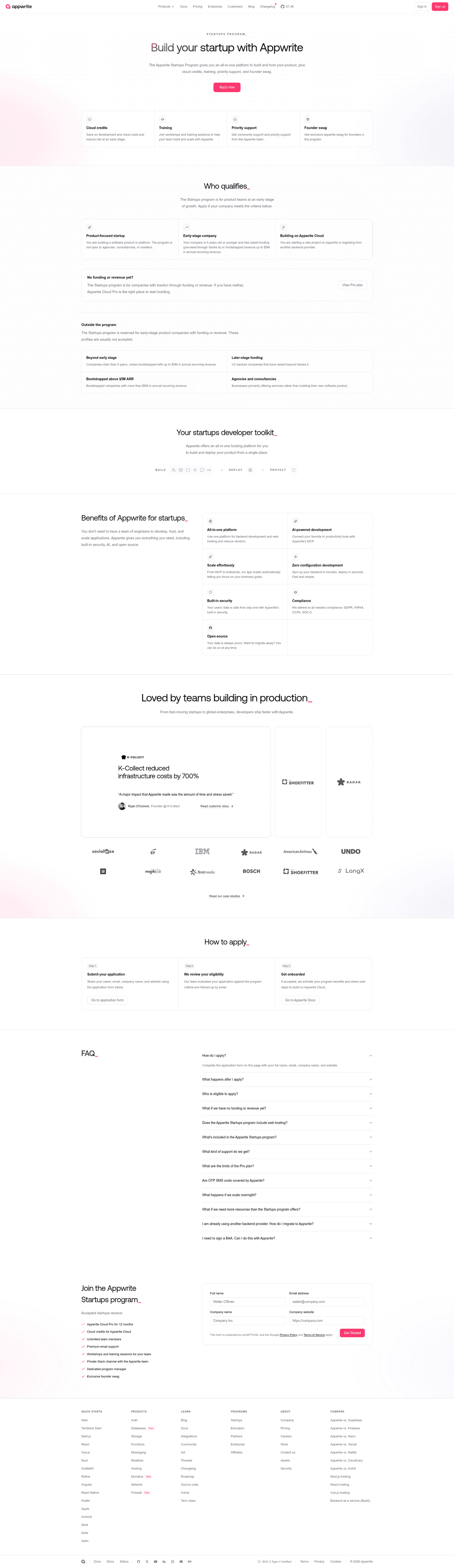
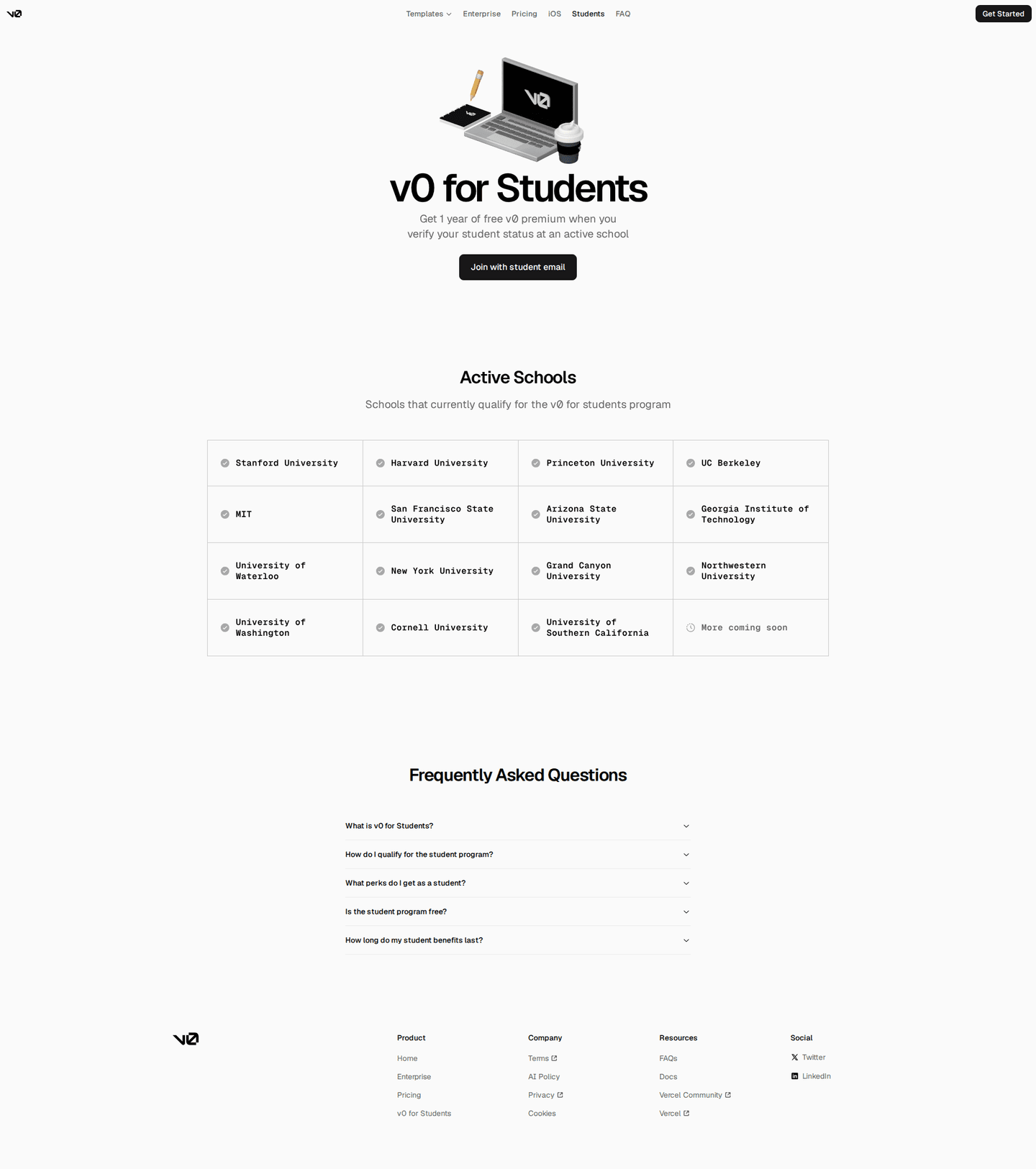
Should the page say who qualifies?
85% list the conditions before the visitor reaches the form. The usual ones are a funding stage, the age of the company and being a new customer.
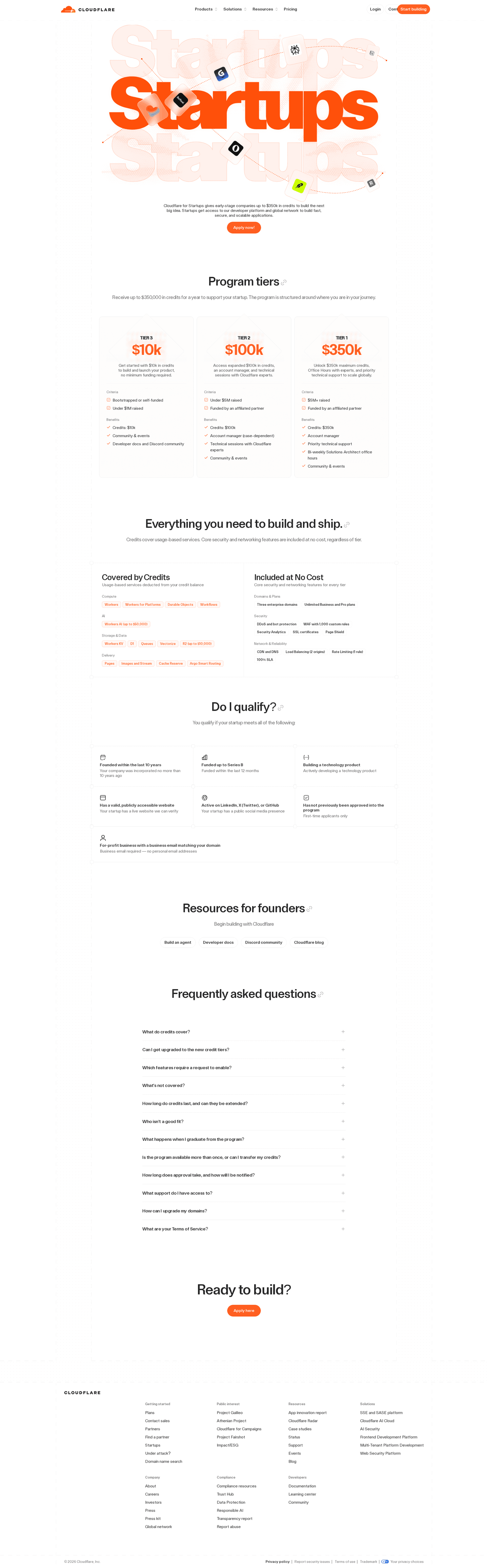
What happens when the offer ends?
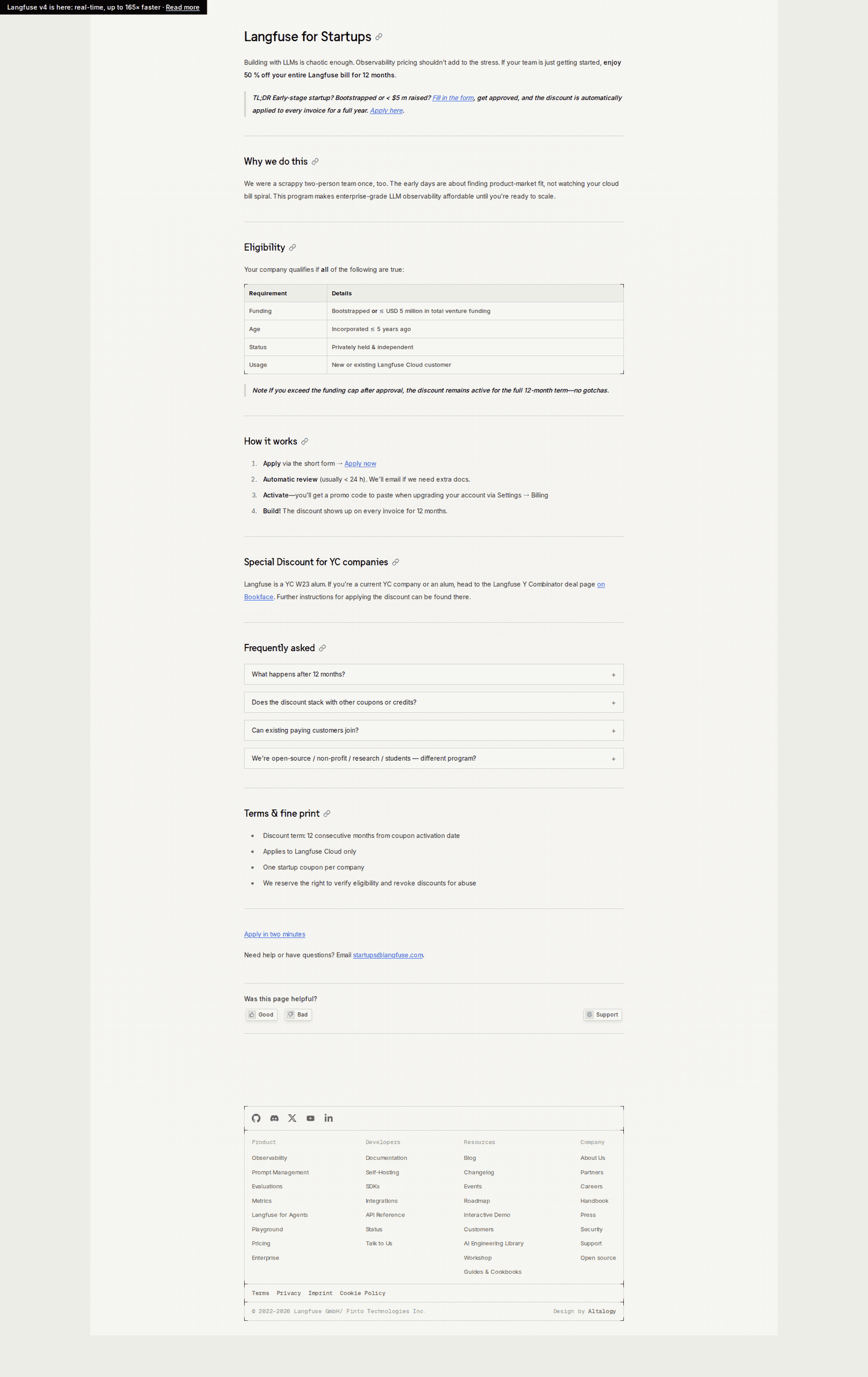
33% say what the visitor pays, or loses, once the free period is over. It is the first thing a careful founder looks for, and most pages leave it out.
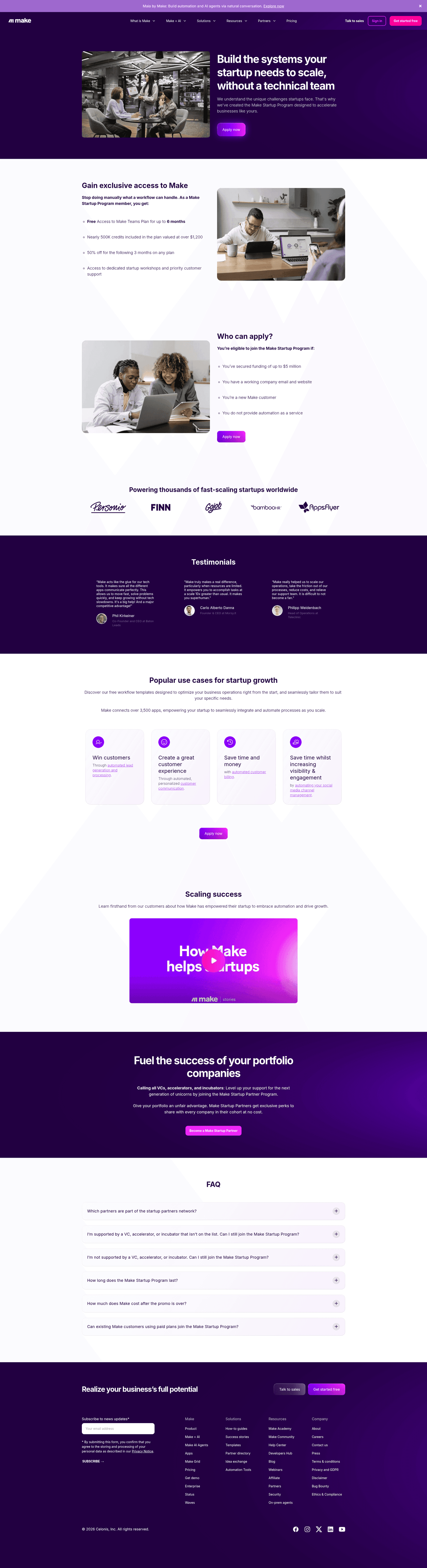
How do people apply?
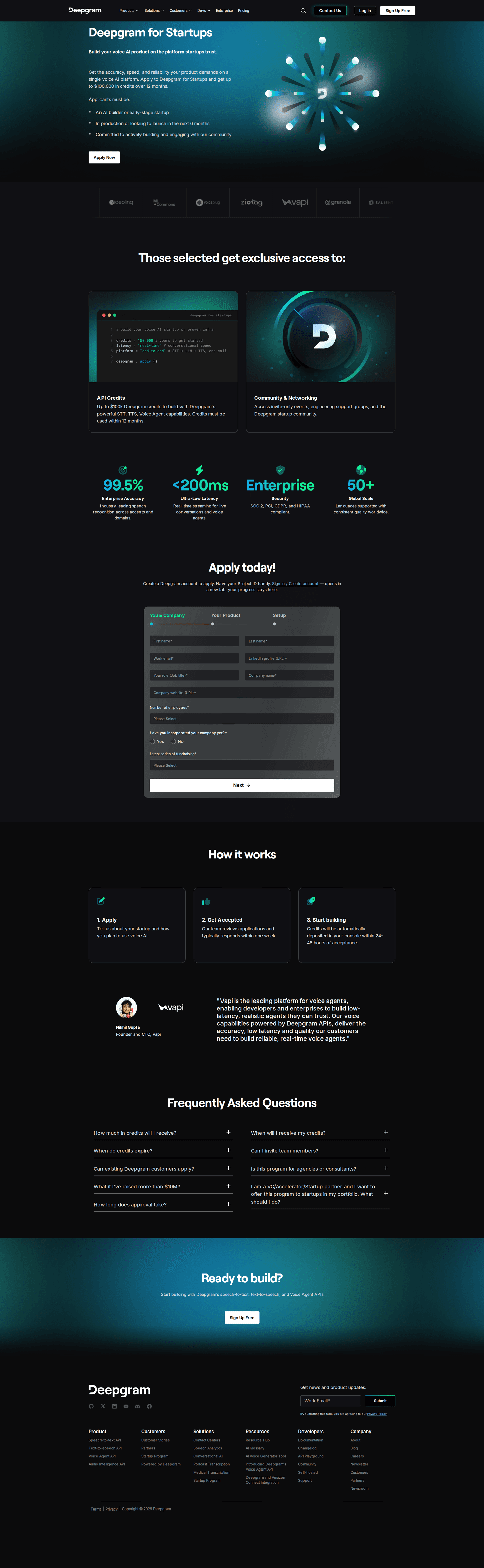
Applications are the norm: 100% ask for one. Almost all of them use a form on the page itself, often split into a few short steps.
Does the page need an FAQ?
70% carry one. It is where the fine print lives: who is excluded, what happens after the program, and whether existing customers can join.

What proof belongs on the page?
22% show logos of companies already in the program. It tells a founder that teams like theirs got in.
The moves almost nobody makes
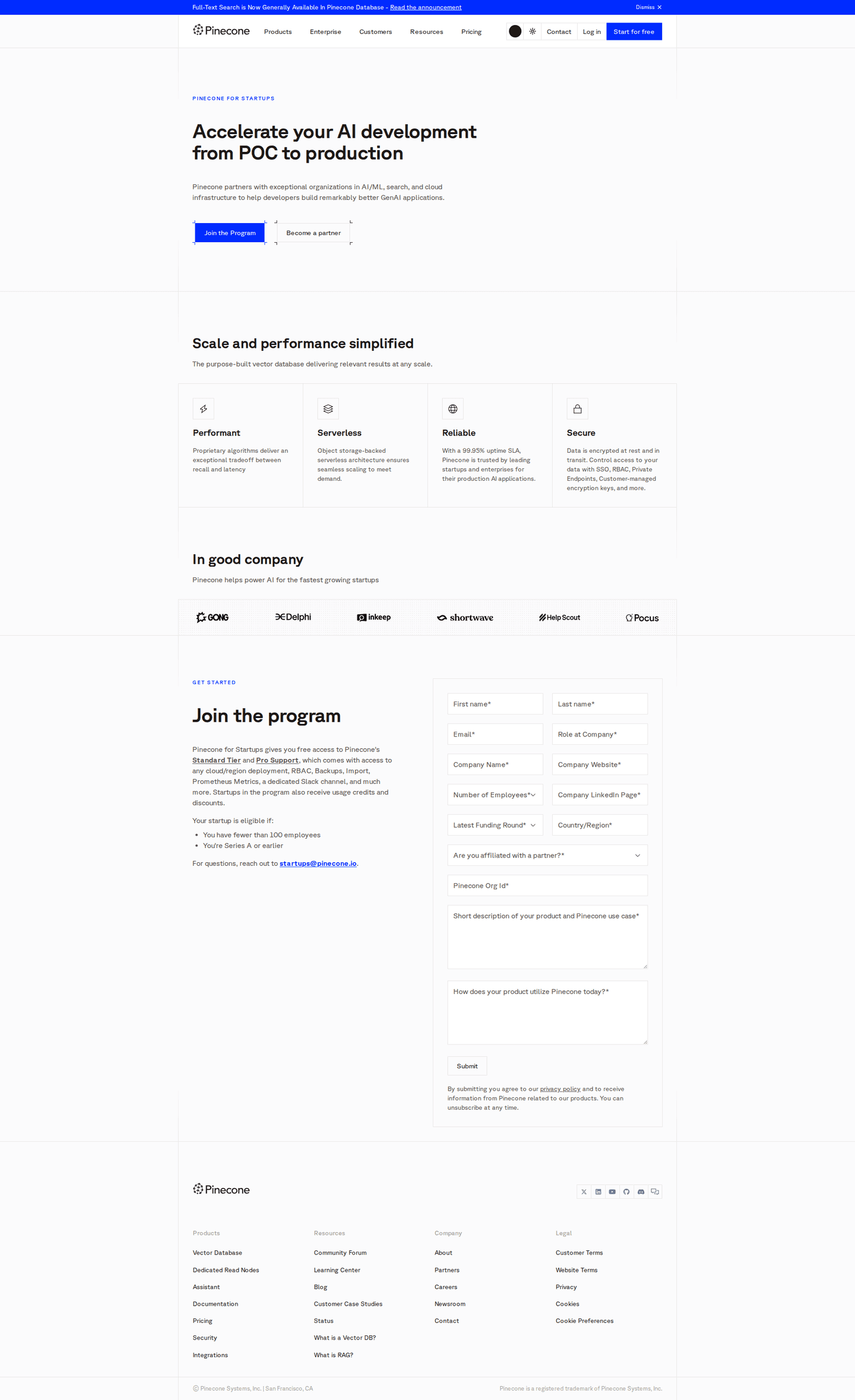
Each sits under 15% of the market, with the strongest startup program page that uses it.
An eligibility check on the page
7% let the visitor check whether they qualify before applying, with a short form or a school search right in the first screen.
How long approval takes
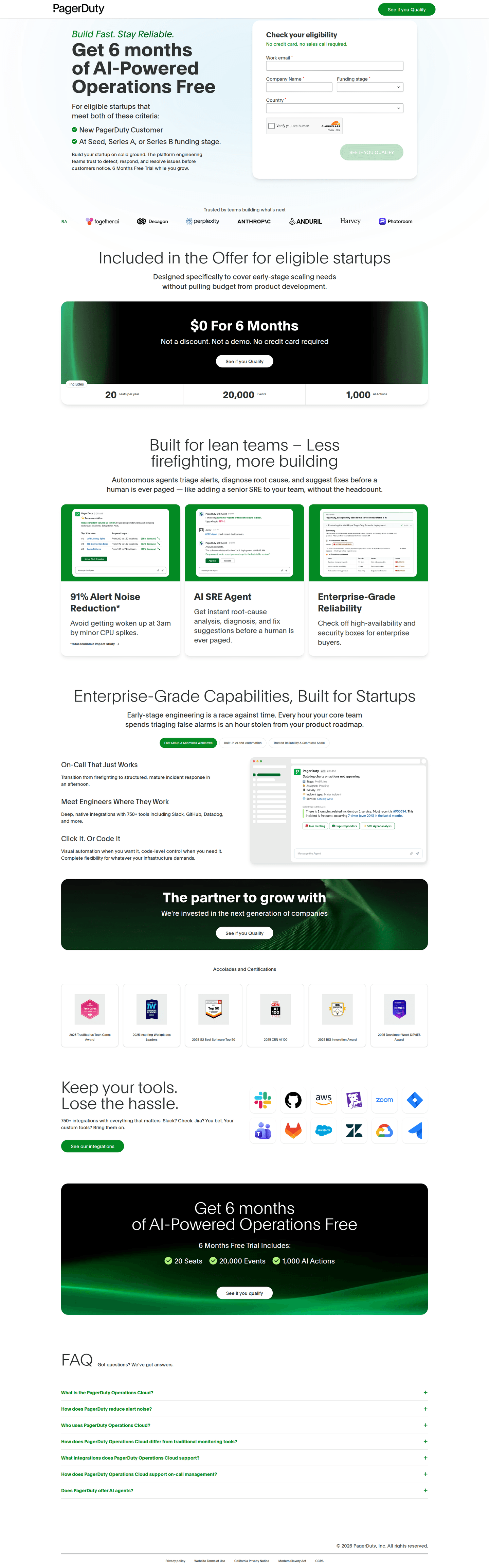
11% tell applicants when they will hear back. A day or a week, it is one line, and it answers the question every applicant has after pressing submit.

Curated by
Gabriel Amzallag , Founder, Web Anatomy
5 years CRO + SEO at Qonto (2021–2025). After advising 15+ SaaS on their websites (Payfit, Pigment…), the same patterns kept breaking, so I decided to build the source of truth on what works on the web: the intelligence layer every tool, builder, and team uses to ship sites that perform.
Go further than startup program pages
Growth Engine
Your top 3 opportunities for more revenue.
We find every way to grow your website’s visibility and conversions: SEO, AI search (AEO), backlinks and mentions, and UX/UI. 3 free opportunities, delivered by email.
Library
The analysis behind every page here
Each startup program page on this page, section by section, with what works and what does not. Free account.
Didn't find the startup program page you were looking for?
Every other page type has its own gallery. Start from all page types.
- Homepages
- Pricing pages
- About pages
- Contact pages
- Feature pages
- Integrations pages
- Security pages
- Enterprise pages
- Industry pages
- Persona pages
- Why us pages
- Case study pages
- Comparison pages
- Blog pages
- Signup pages
- Webinar pages
- SEO landing pages
- Free tool pages
- PPC landing pages
- Careers pages
- Login pages
- 404 pages
- AI product pages
- Press pages
- Partner program pages
- Download pages
- Resource libraries
- Developer pages
- Solutions pages
- Template galleries
- Glossary pages
- Community pages
- ROI calculators
- Newsletter pages
- Programmatic SEO pages
- Blog posts
- Customer stories pages
- Alternatives pages
- Features overview pages
- Product tours
- Integration pages
- AI agent pages
- Affiliate program pages
- Team pages
- Conference pages
Your top 3 opportunities for more revenue.
We find every way to grow your website’s visibility and conversions: SEO, AI search (AEO), backlinks and mentions, and UX/UI. 3 free opportunities, delivered by email.
Startup program page design, answered
The questions people ask before building a startup or student program page, answered from 27 real ones.
What should a startup program page include?
01Three things show up on most of them. Nearly nine in ten spell out who qualifies, about three in four answer questions in an FAQ, and all of them ask for an application. Fewer than a third say what happens when the free period ends, which is the question a founder asks before signing up.
How long should a startup program offer last?
02A year is the standard. Close to half of these programs run for twelve months. The rest range from three months to two years, and a few mix a free period with a discount after it.
Should the page say who qualifies?
03Yes. Nearly nine in ten do, usually as a short checklist. More than half add a condition beyond being a startup or a student, such as a funding stage of Series A or earlier, a company younger than five years, or being a new customer.
How do applicants prove they qualify?
04Almost all use an application form. A few check a school or work email instead, and only a couple let the visitor check eligibility on the page itself before applying.
Should a startup program page show logos of companies in it?
05About one in four does. It is the clearest proof the program is real and that companies like the visitor's already got in, and most of the pages here skip it.
How is this different from the best landing pages leaderboard?
06This gallery is a visual browse: what startup program pages look like and what they contain. The best landing pages benchmark is the graded view, where pages are scored against conversion best practices and ranked by industry. Same companies, different question.