Benchmark-backed answers for telecom website designFAQ: Best Telecom Websites (Telecom Benchmarks)
Quick answers to common questions about what makes the best telecom websites convert, based on section-level benchmark data from this telecom review.
What makes telecom websites harder to convert than other industries?
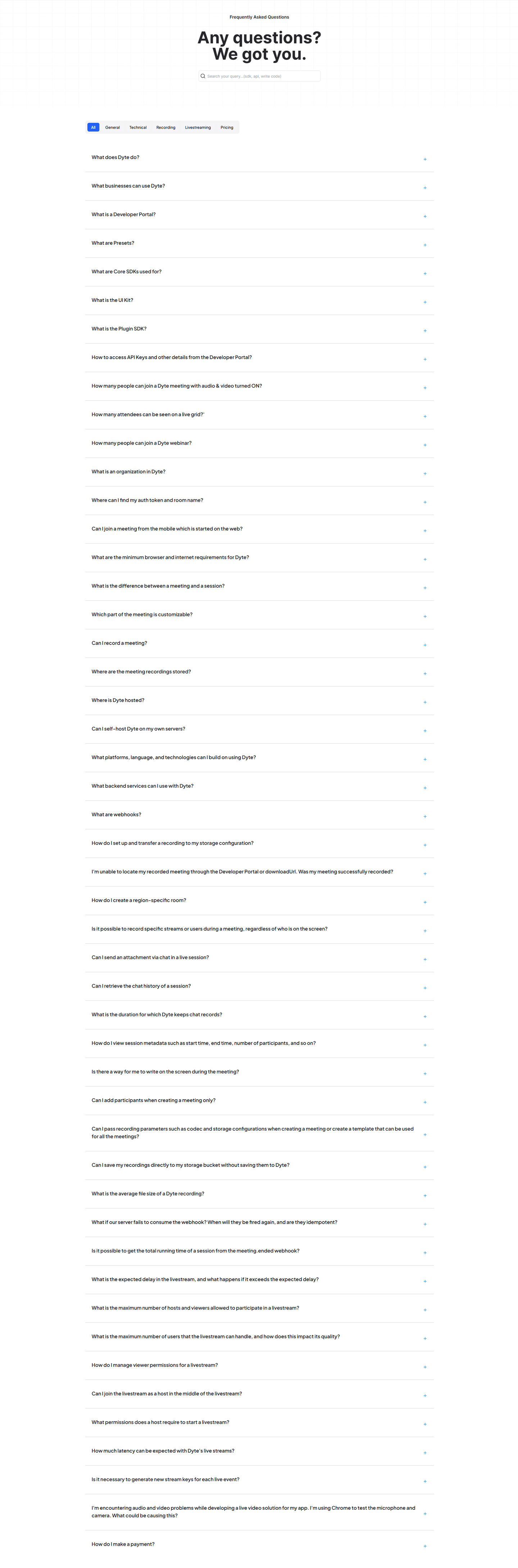
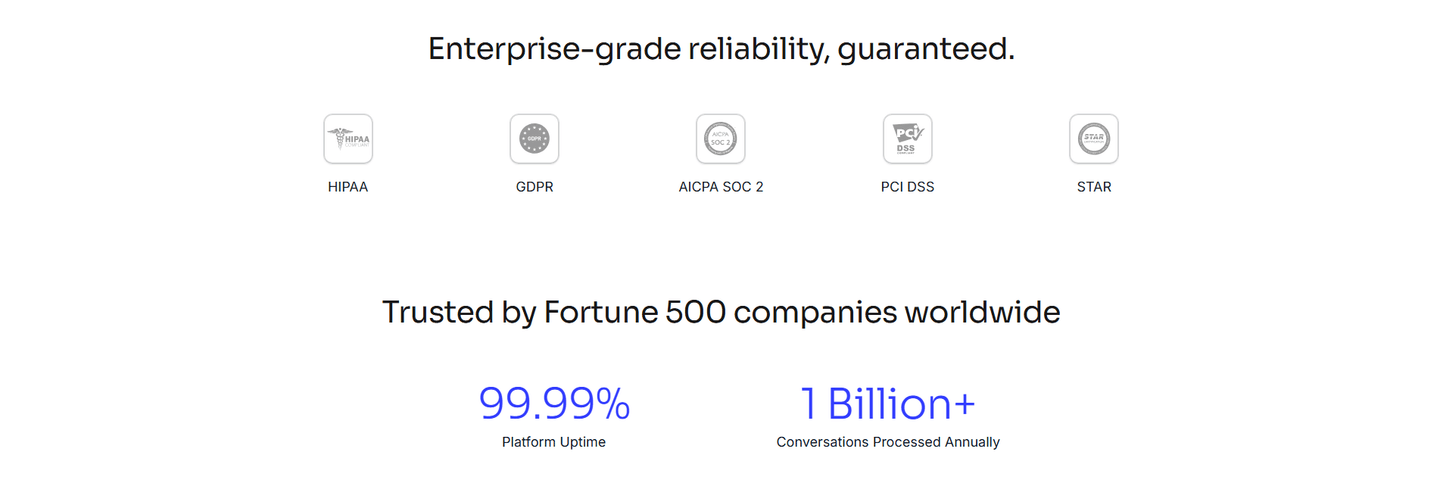
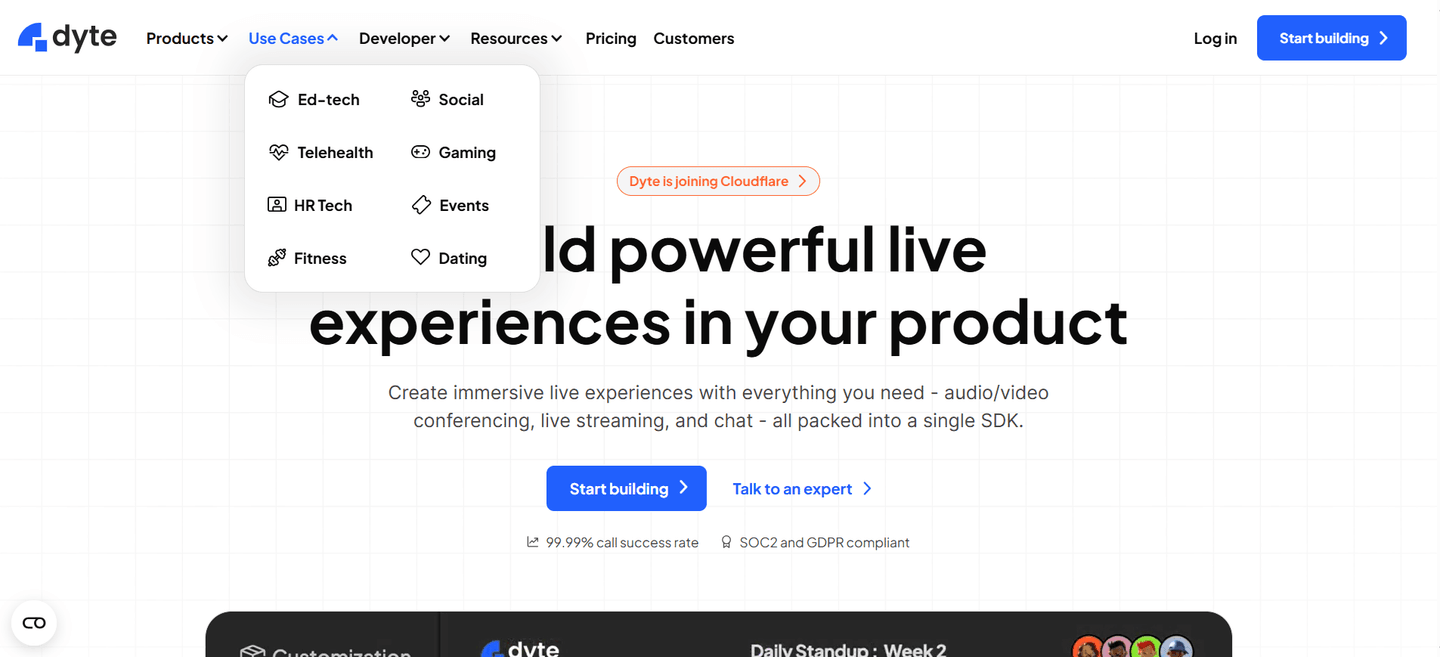
[01]Telecom websites serve split audiences. Developers evaluate APIs while enterprise buyers compare vendors, so the page must route both without creating friction for either. Across 9 homepages reviewed in this September 2026 benchmark, Dyte, Sinch, Aircall, and Plivo treat routing as structure, not decoration. Dyte gives developers a dedicated nav tab. Aircall segments use cases across team, size, and industry. Plivo stacks HIPAA, GDPR, SOC 2, PCI DSS, and STAR badges so neither audience has to hunt for proof.
Should a telecom homepage lead with features or trust?
[02]Reliability proof and audience routing first, features second. Across 9 telecom pages reviewed, Plivo opens with a 99.99% uptime claim and 1 Billion+ conversations processed annually before any feature tour, Sinch leads with Meta Business Partner and Trust in Enterprise Messaging badges, and Dyte's "Start building" CTA matches developer intent without alienating business evaluators. Feature lists land harder when infrastructure trust is already established.
What is the biggest messaging mistake on telecom homepages?
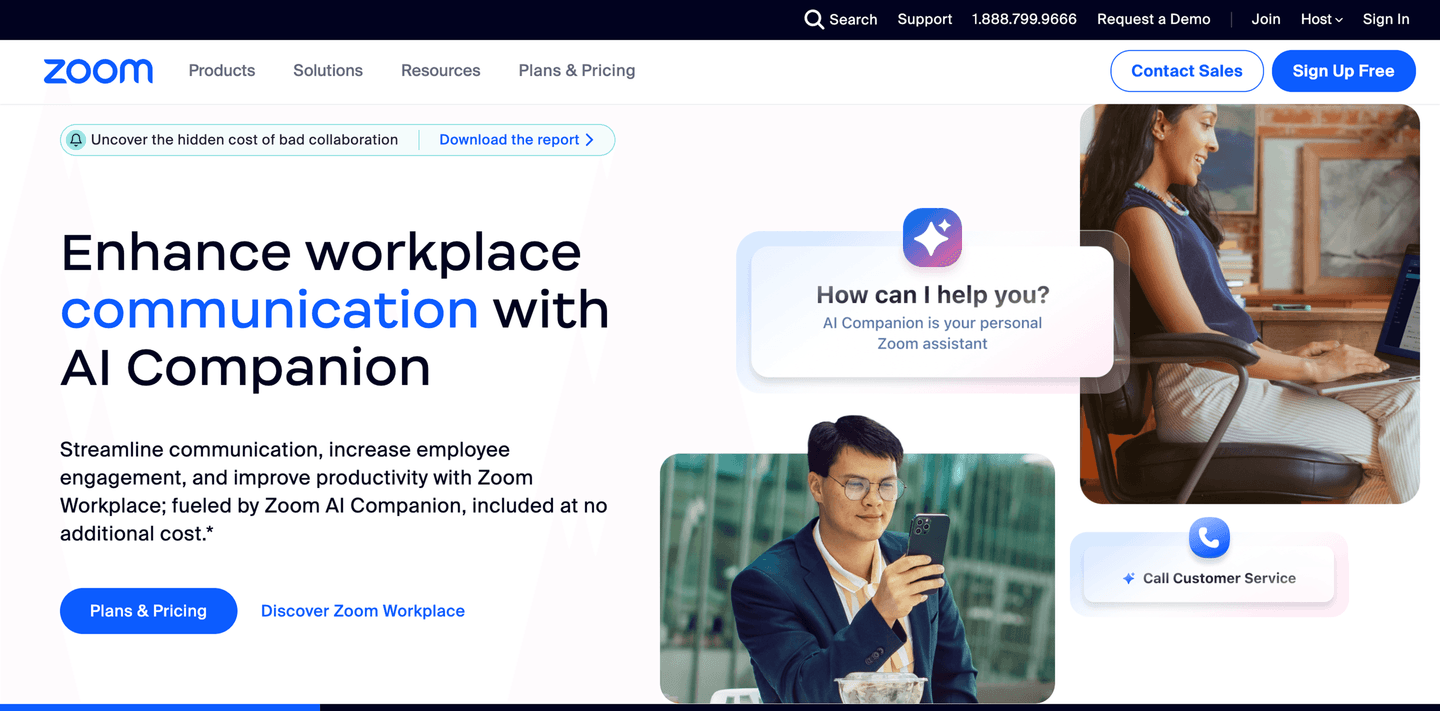
[03]Treating developers and enterprise buyers as one audience. The average page in this September 2026 benchmark scored 54.8 across 9 pages. Top performers give each audience its own path: Dyte's Use Cases dropdown uses industry icons (Ed-tech, Telehealth) while a separate Developer tab keeps docs one click away, and Zoom pairs "Included at no additional cost" AI Companion framing with dual CTAs (Plans and Pricing plus Discover Zoom Workplace) for both price-first and exploratory visitors.
How do you find the best telecom websites to review before a redesign?
[04]Compare real pages side by side, section by section, not as full-page screenshots. This review scores 9 telecom homepages against 60+ criteria. The strongest performers are Dyte (developer routing), Sinch (enterprise trust badges), Aircall (use-case segmentation), Plivo (compliance-as-proof with HIPAA, GDPR, SOC 2, PCI DSS, and STAR badges), and ElevenLabs (interactive product timeline).
How should a telecom team sequence a homepage redesign across marketing, product, and compliance?
[05]Start with compliance and product reviewing the hero claims together. Telecom teams lose weeks when marketing ships a claim like Plivo's "99.99% uptime" or "1 Billion+ conversations" that legal quietly strips later, so lock the numbers first. Then map two audience paths. Dyte shows the template: developers need a docs link within one scroll, enterprise buyers need a compliance and SLA section, and the hero should route both without forcing either off-page. Visual design is the final sprint. It's the least controversial piece.
What is the best website for telecom?
[06]There is no single best. It depends on your product line. For developer-first CPaaS, Dyte is the template (dedicated dev nav tab, industry-specific use cases). For enterprise messaging, Sinch leads with partner-credibility badges. For voice, Aircall segments by team and industry. For regulated communications, Plivo stacks HIPAA, SOC 2, and GDPR next to 99.99% uptime. For AI voice, ElevenLabs shows its research depth with an interactive product timeline. All 9 telecom homepages in this September 2026 review are scored on the same rubric.