Blog page examples (657)
A blog page is the front door of a blog: the index and the category pages that list its posts. Its job is to help a reader find the post they came for. See 657 real examples.
Showing 1–24 of 657 blog pages
How to build a blog page, by the numbers
The questions a team asks when it rebuilds a blog index or a category page, answered from the 657 here.
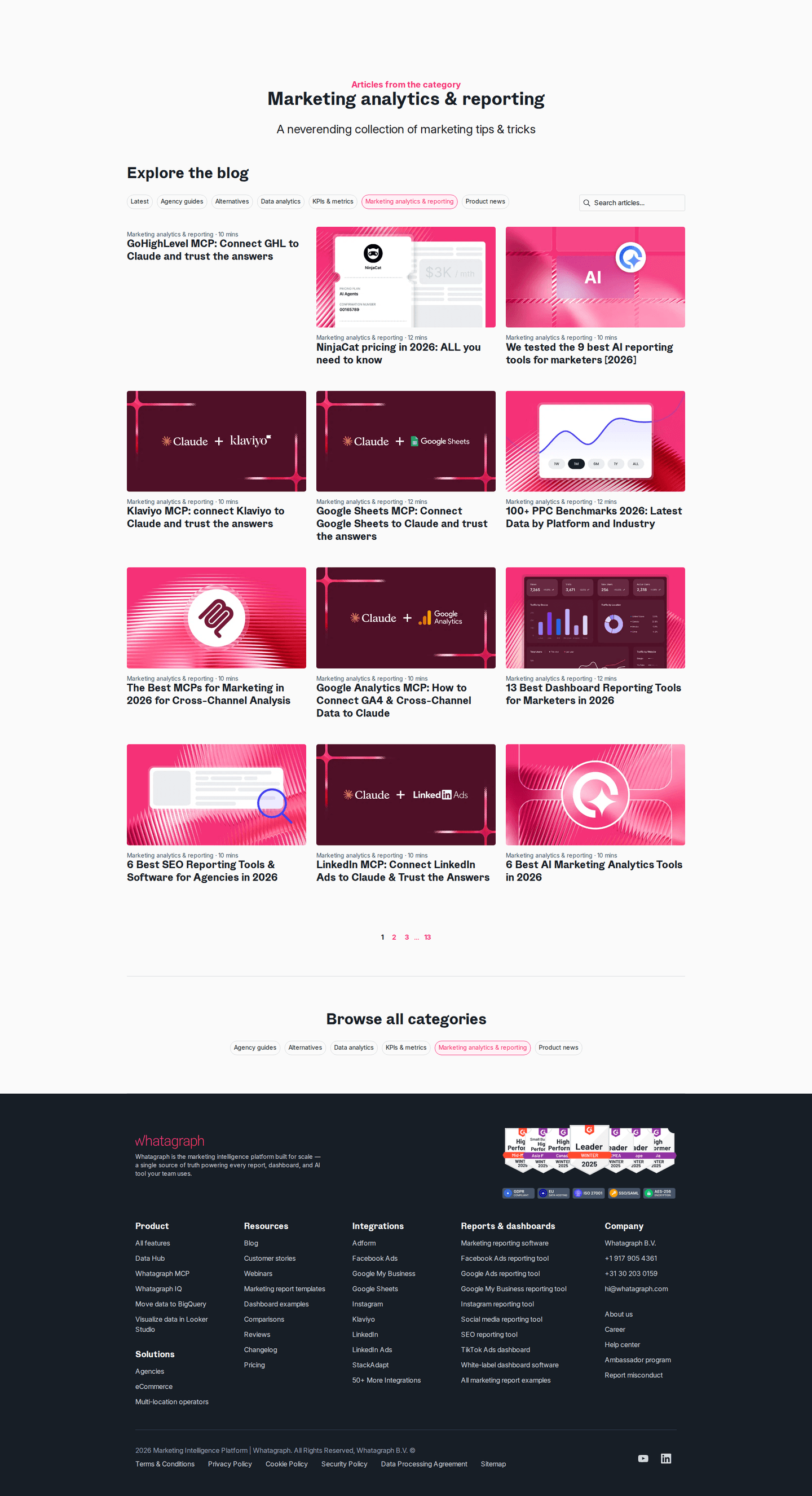
What goes on a post card?
- A picture on 88%
- A date on 67%
- A summary line on 56%
- The author's name on 45%
- A reading time on 30% of blog indexes
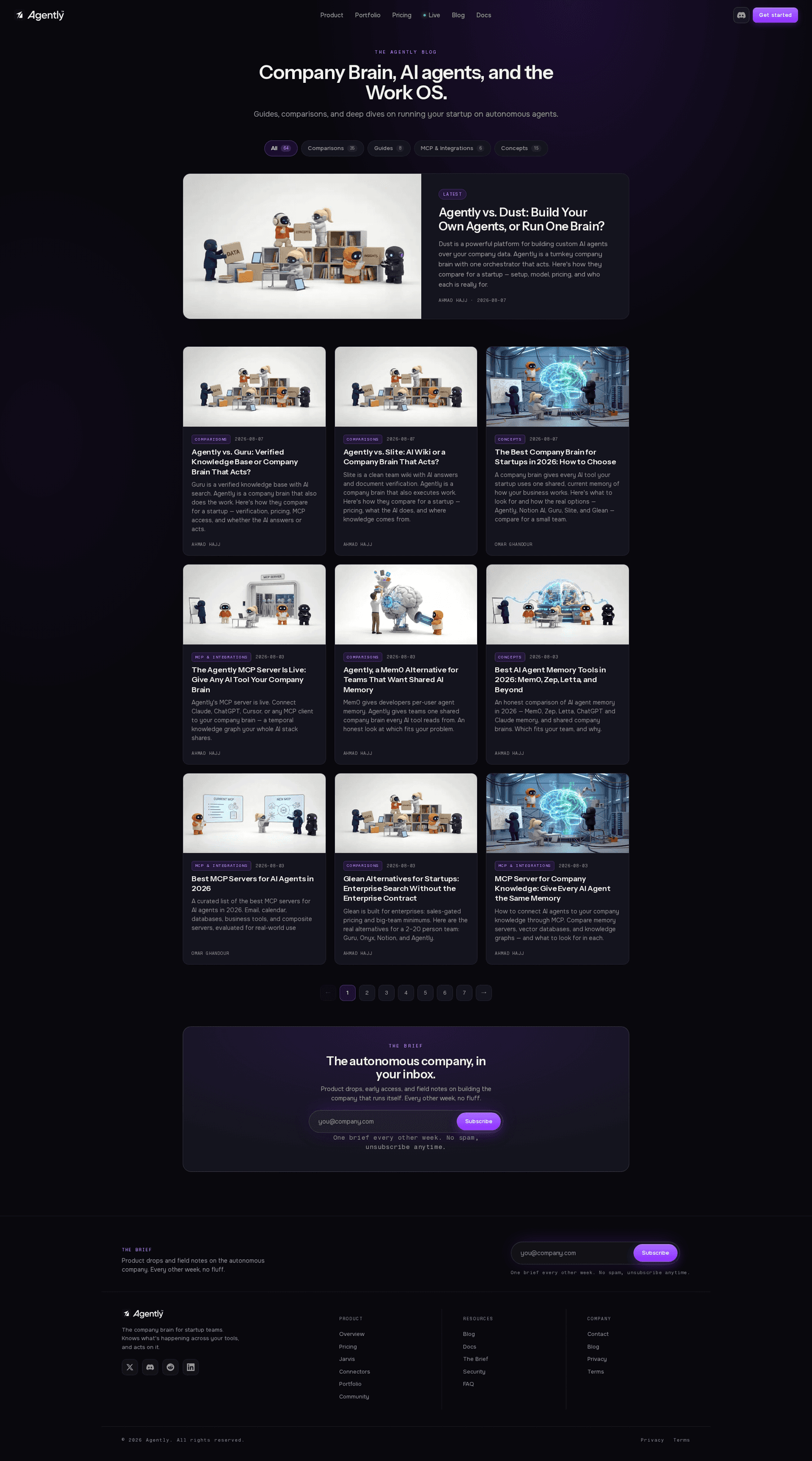
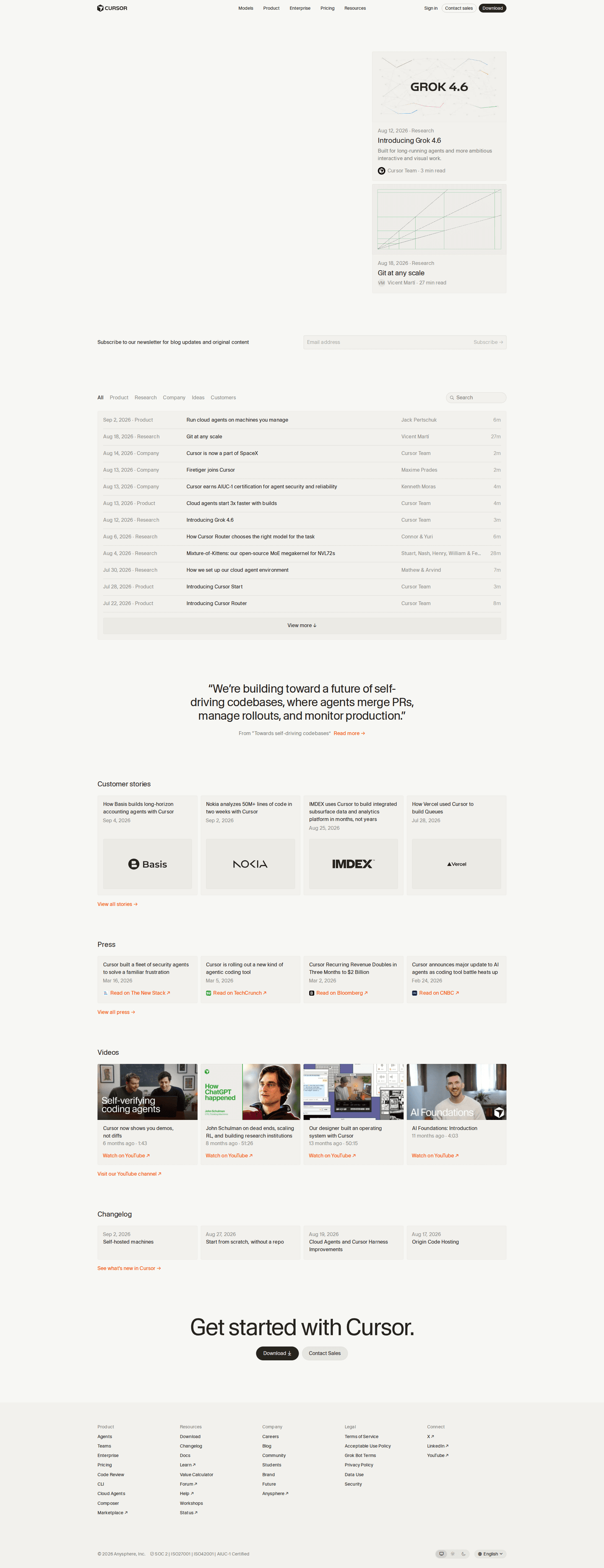
Should the index feature one post?
71% give one post a bigger card or a spot above the feed. A flat feed tells a first-time reader that every post is equally worth their time.
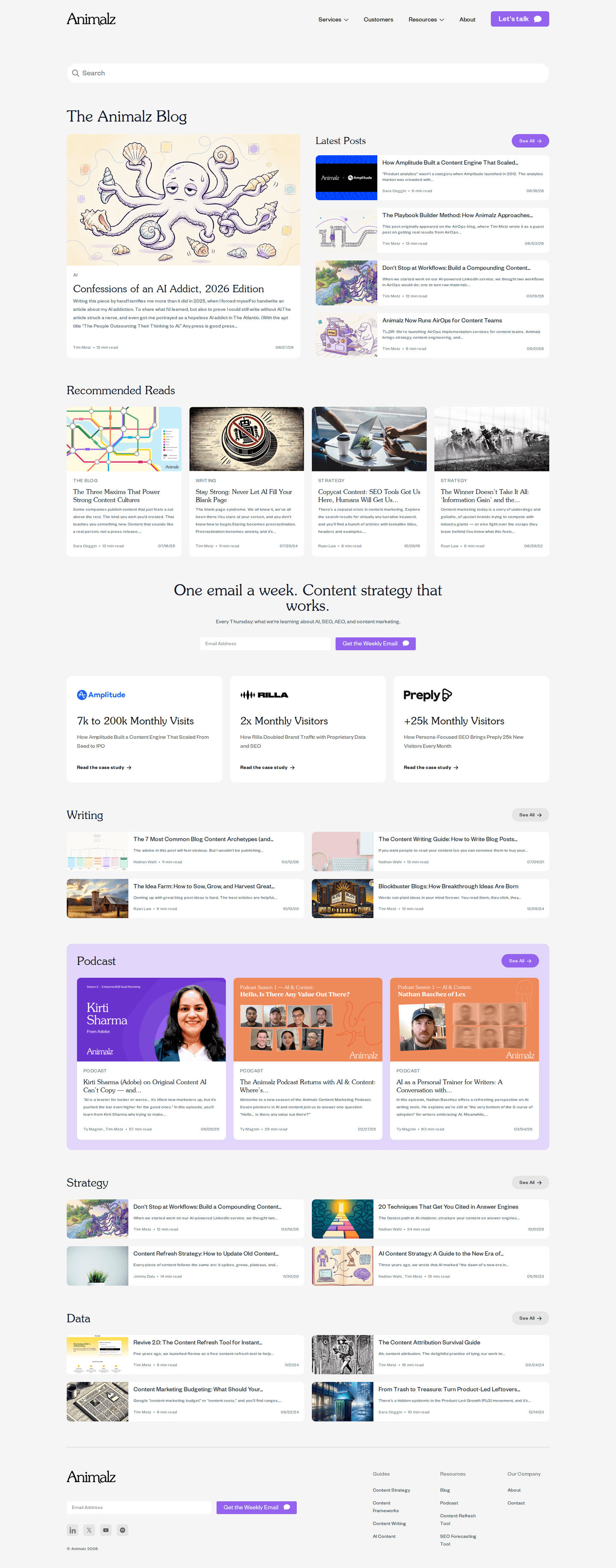
How does a reader find the right post?
- Category labels on 80%
- A search box or a filter on 62%
- Page numbers or a load more button on 61%
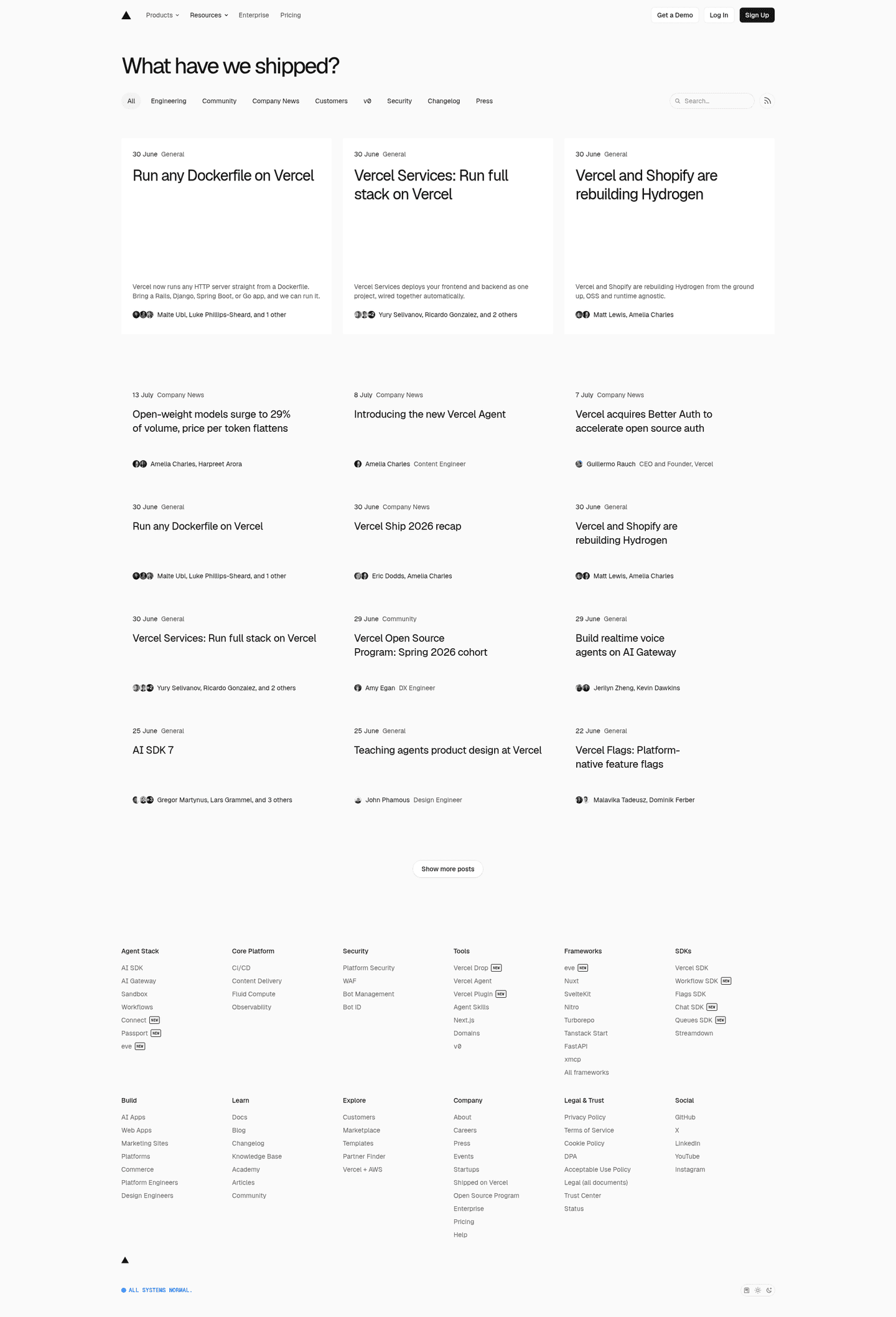
What goes on a category page?
- Links to the other categories on 72%
- A line under the category name saying what it covers on 43%
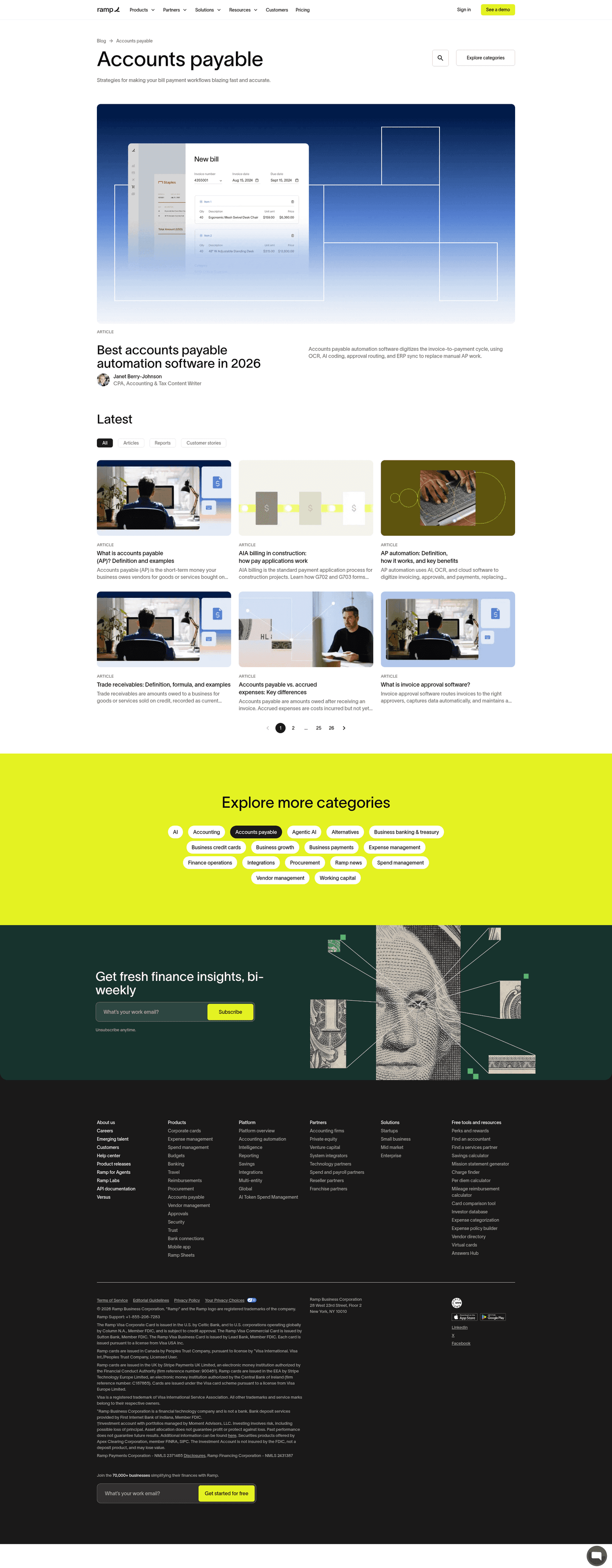
What does a blog page ask the reader to do?
- A product call to action on 82%
- A newsletter signup on 37%
What the main button asks for
- Sign up304 blog pages
- Start a free trial136 blog pages
- Request a demo122 blog pages
- Contact sales29 blog pages
- Download22 blog pages
- Try it in a prompt box6 blog pages


The moves almost nobody makes
Each sits under 15% of the blog pages here, with the strongest one that uses it.
A video on the index
4% put a video on the blog index or a category page.

Curated by
Gabriel Amzallag , Founder, Web Anatomy
5 years CRO + SEO at Qonto (2021–2025). After advising 15+ SaaS on their websites (Payfit, Pigment…), the same patterns kept breaking, so I decided to build the source of truth on what works on the web: the intelligence layer every tool, builder, and team uses to ship sites that perform.
Go further than blog pages
Growth Engine
Your top 3 opportunities for more revenue.
We find every way to grow your website’s visibility and conversions: SEO, AI search (AEO), backlinks and mentions, and UX/UI. 3 free opportunities, delivered by email.
Library
The analysis behind every page here
Each blog page on this page, section by section, with what works and what does not. Free account.
Didn't find the blog page you were looking for?
Every other page type has its own gallery. Start from all page types.
- Homepages
- Pricing pages
- About pages
- Contact pages
- Feature pages
- Integrations pages
- Security pages
- Enterprise pages
- Industry pages
- Persona pages
- Why us pages
- Case study pages
- Comparison pages
- Signup pages
- Webinar pages
- SEO landing pages
- Free tool pages
- PPC landing pages
- Careers pages
- Login pages
- 404 pages
- AI product pages
- Press pages
- Partner program pages
- Download pages
- Resource libraries
- Developer pages
- Solutions pages
- Template galleries
- Glossary pages
- Startup program pages
- Community pages
- ROI calculators
- Newsletter pages
- Programmatic SEO pages
- Customer stories pages
- Alternatives pages
- Features overview pages
- Product tours
- Integration pages
- AI agent pages
- Affiliate program pages
- Team pages
- Conference pages
Your top 3 opportunities for more revenue.
We find every way to grow your website’s visibility and conversions: SEO, AI search (AEO), backlinks and mentions, and UX/UI. 3 free opportunities, delivered by email.
Blog page design, answered
The questions people ask before rebuilding a blog index, answered from 657 real blog pages.
What should a blog index page include?
01Five things are close to standard: a picture on every post card (nearly nine in ten), category labels (four in five), one featured post above the feed (about seven in ten), dates on the cards (two in three) and a search box or a filter (about three in five).
Should a blog index feature one post?
02Most do. About seven in ten give one post a bigger card or a spot above the feed, so a first-time reader knows where to start.
How do readers find the right post on a blog?
03Through categories first: four in five blog indexes show them. About three in five add a search box or a filter, and about three in five have page numbers or a load more button under the feed.
What should a blog category page include?
04About seven in ten link to the other categories, so a reader who landed in the wrong one can move sideways. A bit under half add a line under the category name saying what it covers, and nearly nine in ten keep a picture on every post card.
Should a blog page have a call to action?
05Four in five carry a button or banner for the product. Most show it once or twice, rarely more. A newsletter signup is less common, on a bit over a third.
How is this different from the best landing pages leaderboard?
06This gallery is a visual browse: what blog pages look like and what they contain. The best landing pages benchmark is the graded view, where pages are scored against conversion best practices and ranked by industry. Same companies, different question.