Security page design (301)
A security page explains how a company keeps its customers' data safe. Its job is to get a buyer through a security review before they sign. See 301 real examples.
Showing 1–24 of 301 security pages
How to structure a security page, by the numbers
The questions a team asks when it rebuilds a security page, answered from the 301 here.
How long is a security page?
5 sections between the navigation and the footer, half of them between 4 and 6. A sticky header follows the visitor down 74% of them.
The section right after the hero
- Logo wall or trust bar163 security pages
- Features75 security pages
- Value proposition40 security pages
- FAQ5 security pages
The last section before the footer
- Closing CTA band129 security pages
- Contact66 security pages
- FAQ28 security pages
- Logo wall or trust bar28 security pages
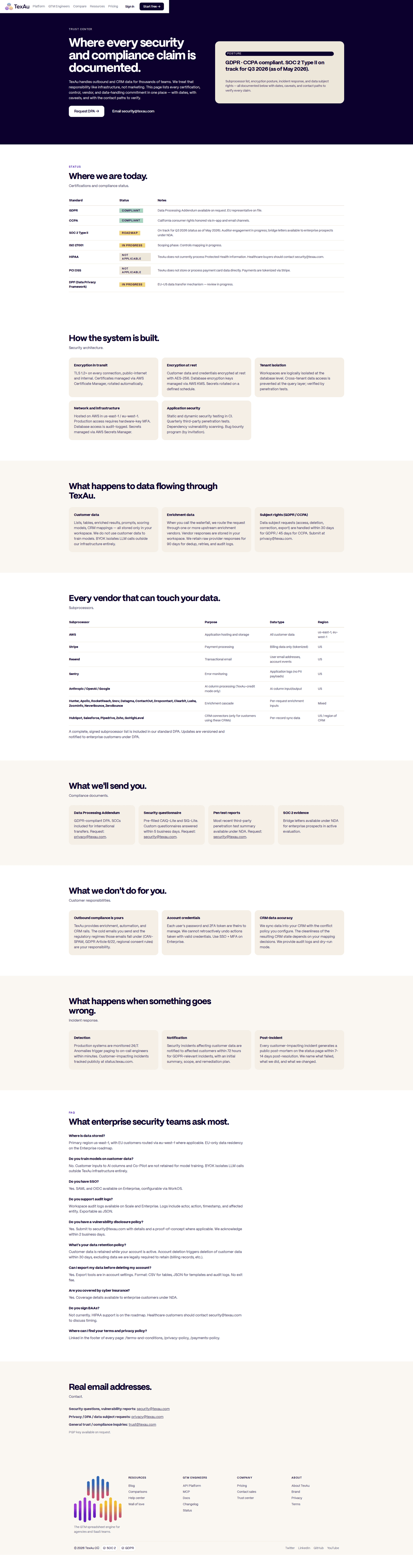
What does the page say about the data?
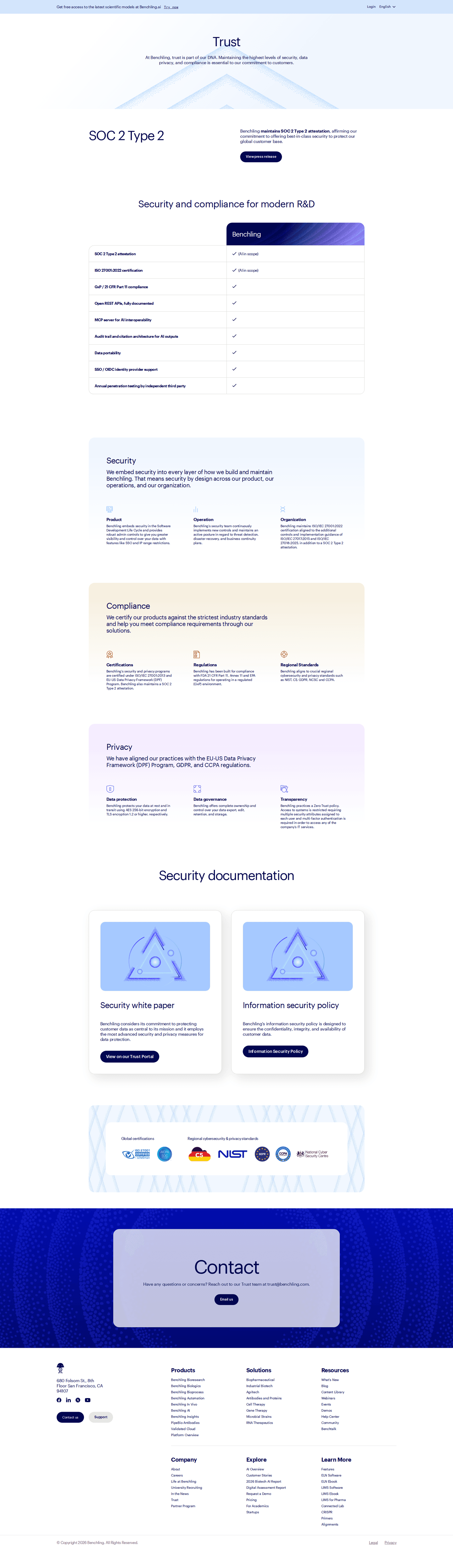
- Access control specifics such as SSO, SCIM or RBAC on 64%
- Encryption specifics such as AES-256 or TLS on 59%
- Where the data is stored on 42%
- How long the data is kept on 20%, the question almost nobody answers
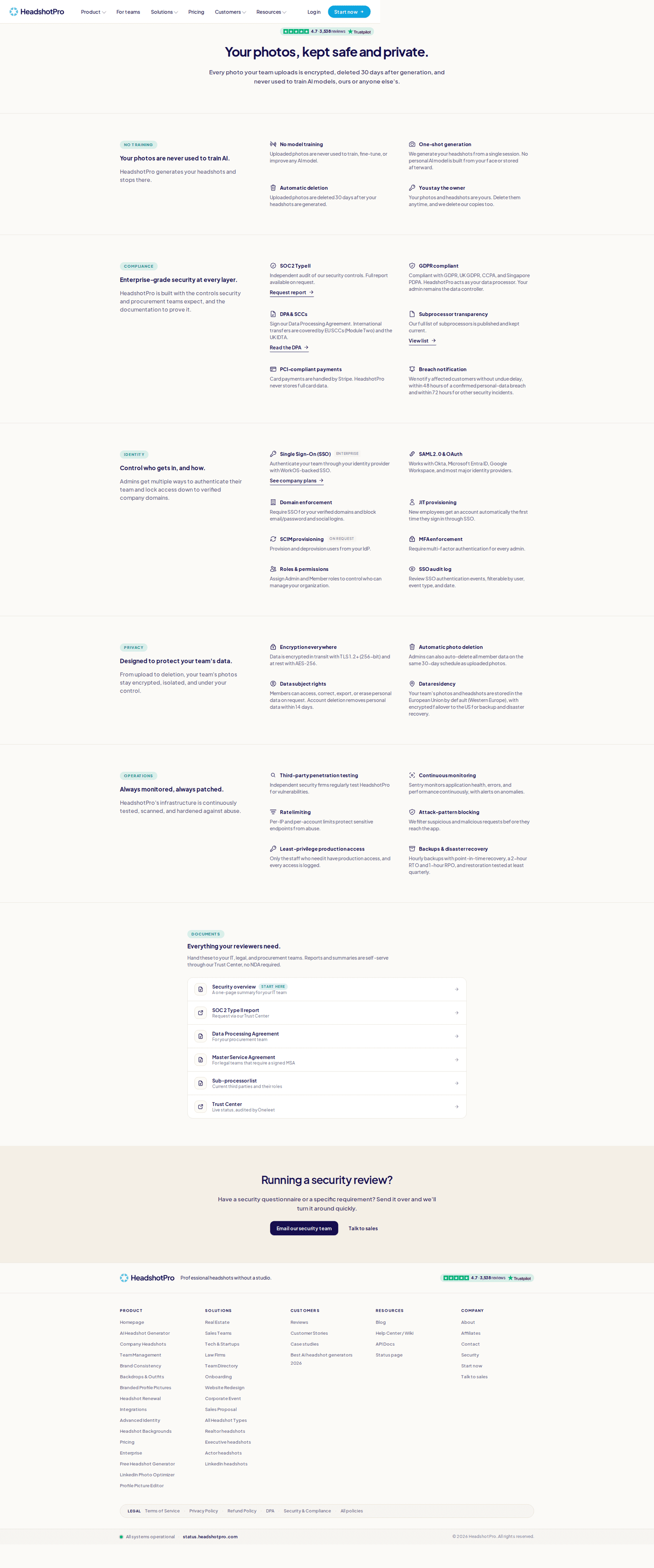
What compliance does the page name?
How many certifications the page names
- Two certifications named51 security pages
- No certifications named51 security pages
- One certification named42 security pages
- Three certifications named40 security pages
- Four certifications named32 security pages
- Five certifications named26 security pages
17% name none at all, and 17% name two. GDPR is on 61% and HIPAA on 29%. HIPAA is where the strongest pages pull away: 47% of them name it, against 3% of the weakest.
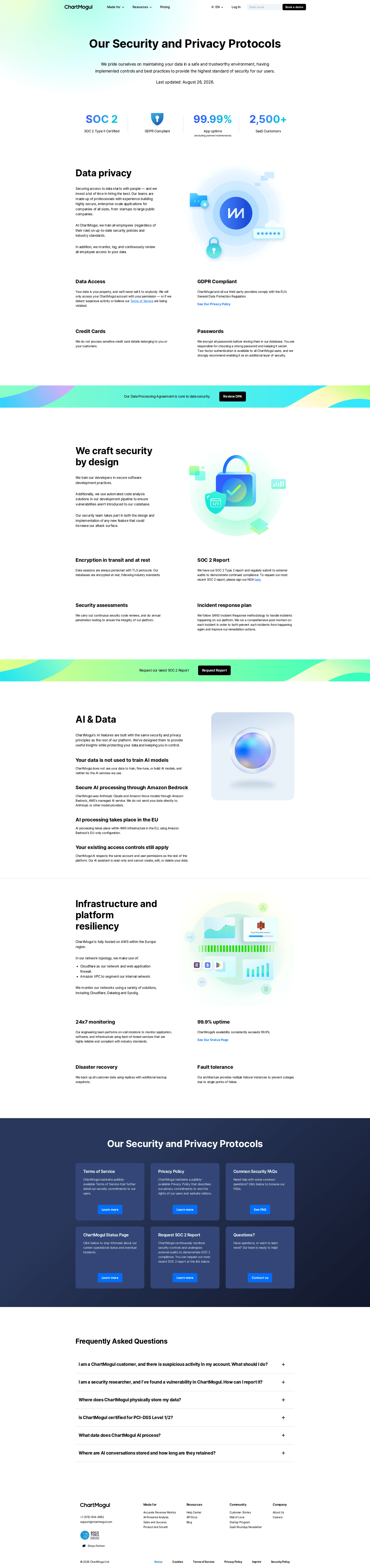
How does the page prove any of it?
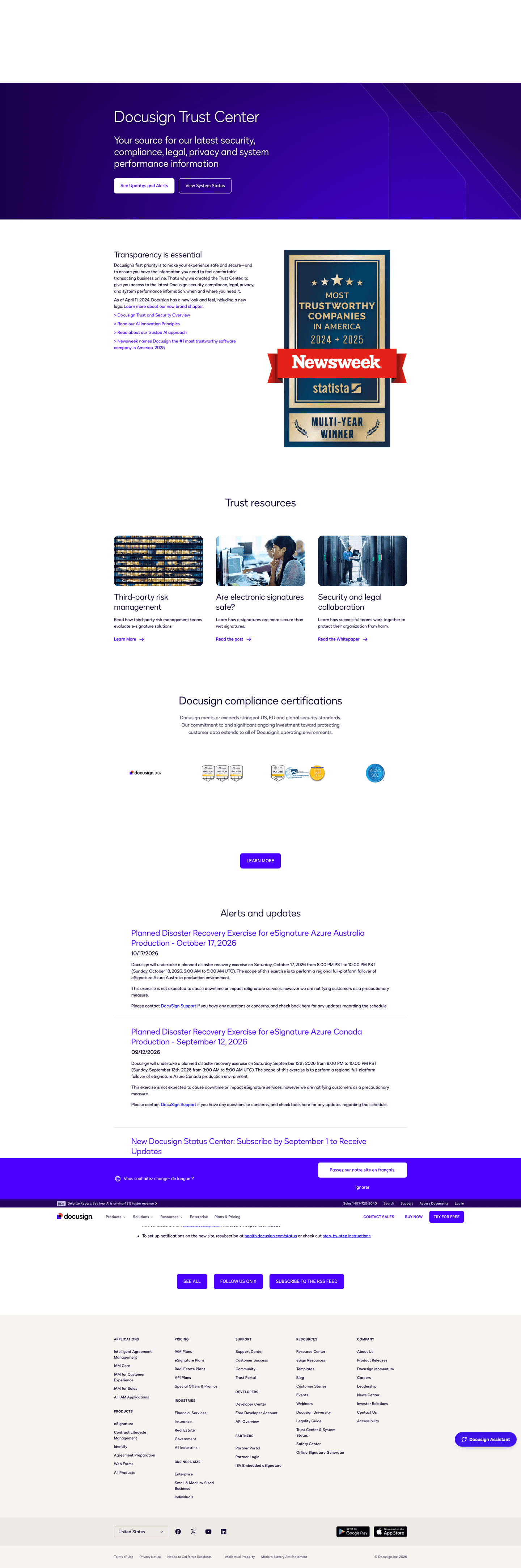
- A trust portal where the documents can be checked on 42%
- A live status page on 52%
- Penetration testing named on 49%, an incident response process on 43%
- The third parties that handle the data listed on 17%, a bug bounty program on 29%
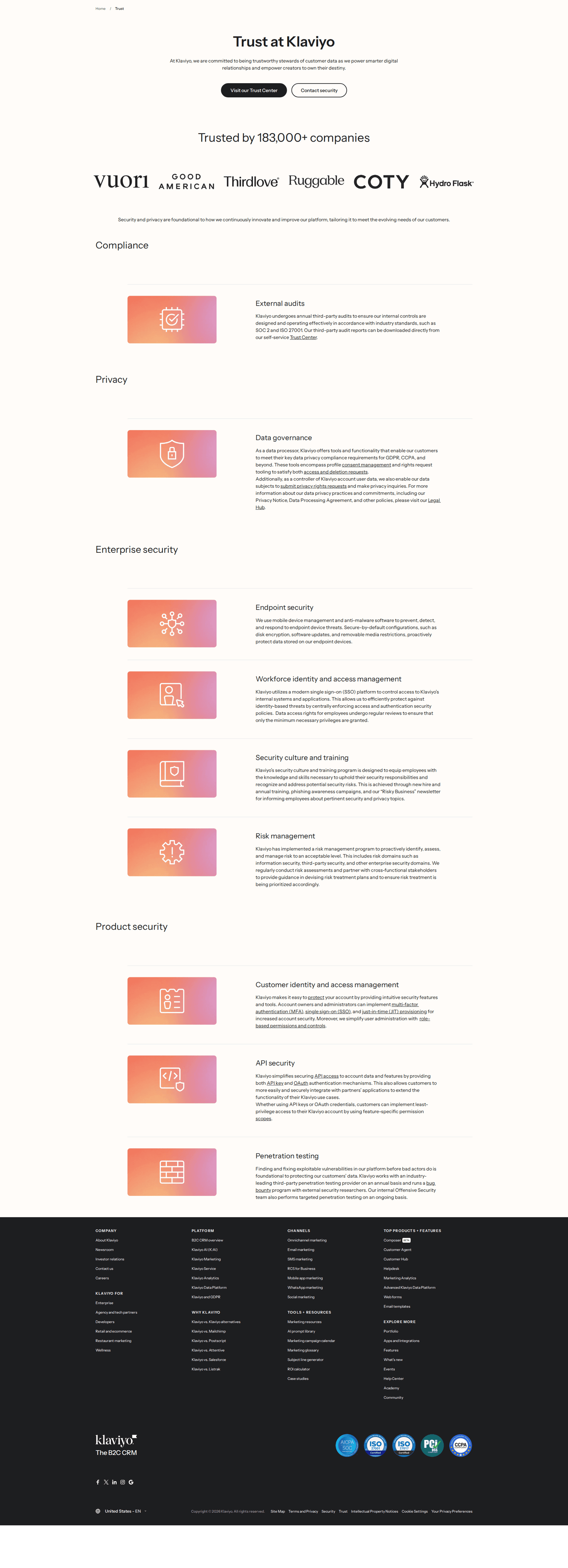
What does the page ask the visitor to do?
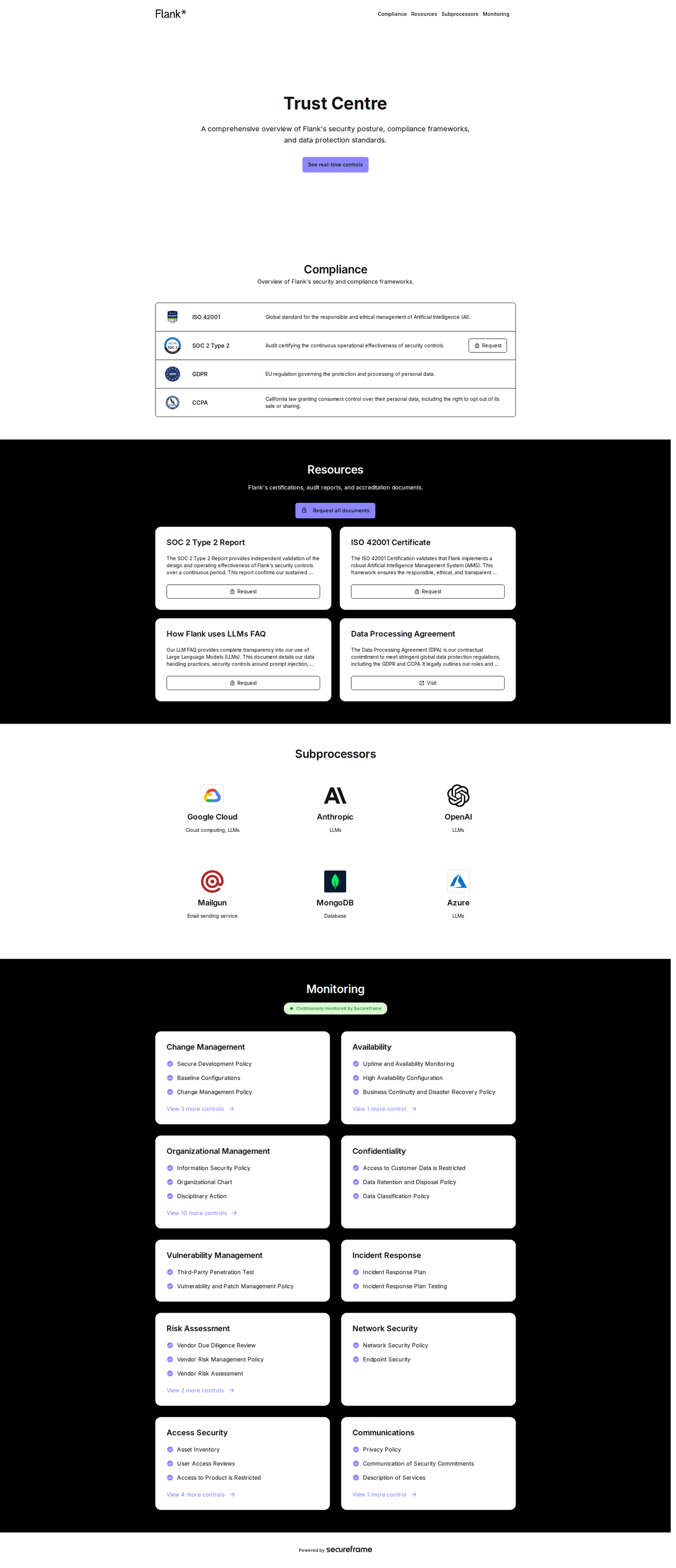
- A button to request the audit report on 33%
- A way to reach the security team on 61%
- A chat widget on 16%
The moves almost nobody makes
Each of these sits on fewer than one security page in five, with the strongest security page that uses it.
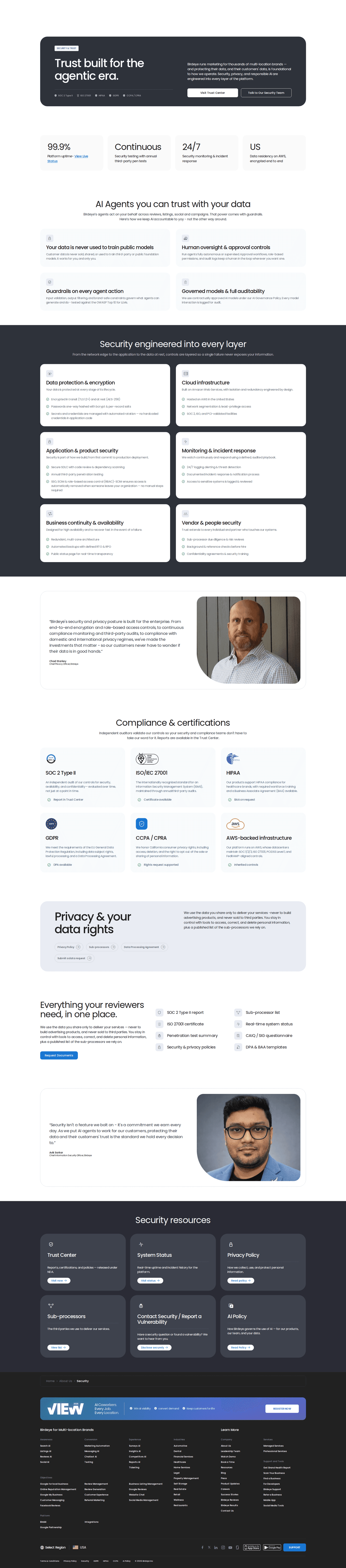
Saying whether the data trains a model
16% state whether customer data is used to train models, and the strongest pages say it far more often: 37% of them, against 3% of the weakest.
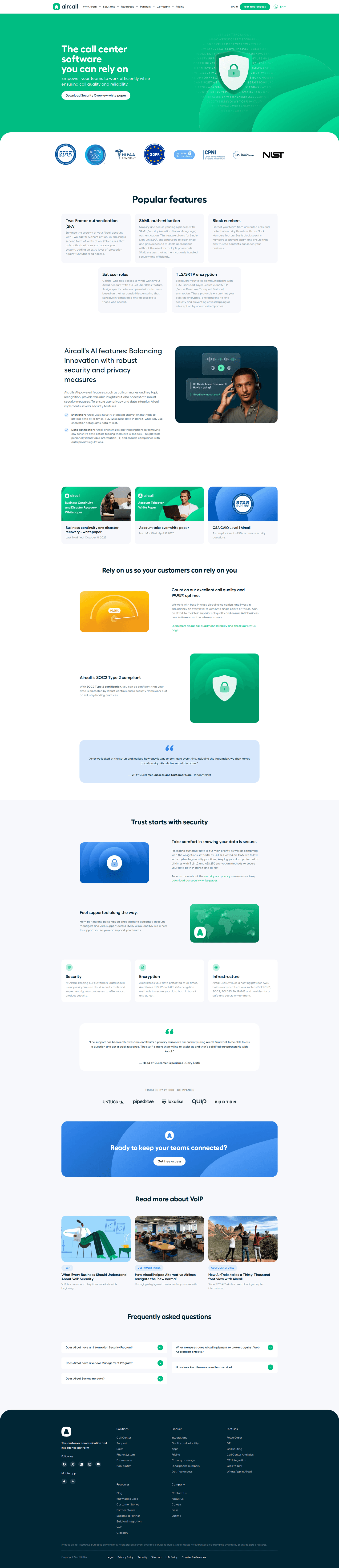
A security whitepaper to download
13% offer the long version as a file, for the reviewer who has to attach something to a ticket.
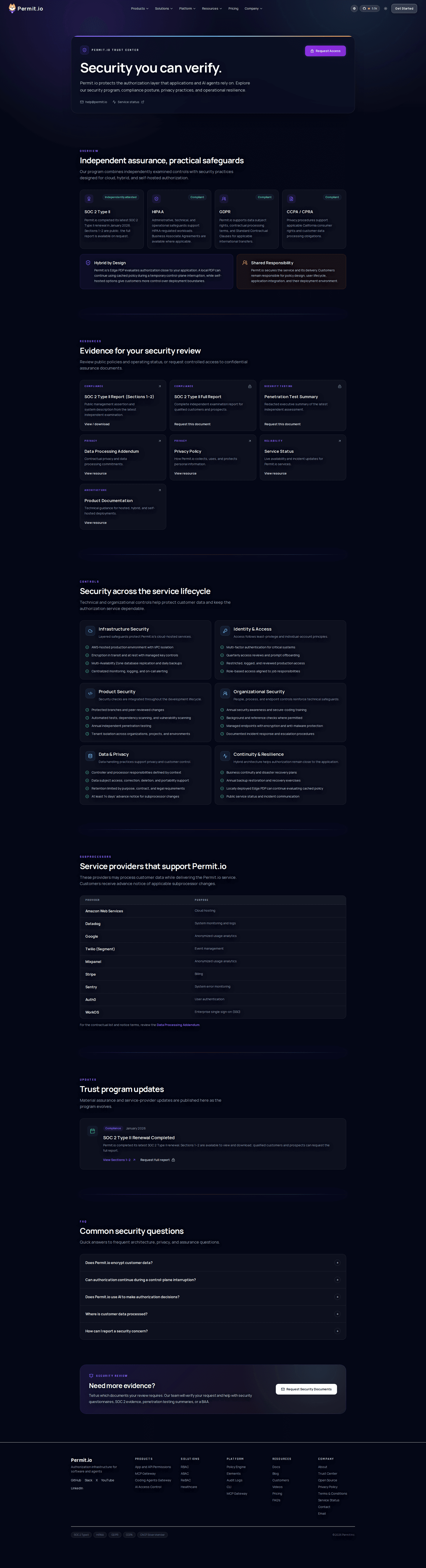
A date on the audit
7% show when the audit was done, so the certification badge is not an undated claim.

Curated by
Gabriel Amzallag , Founder, Web Anatomy
5 years CRO + SEO at Qonto (2021–2025). After advising 15+ SaaS on their websites (Payfit, Pigment…), the same patterns kept breaking, so I decided to build the source of truth on what works on the web: the intelligence layer every tool, builder, and team uses to ship sites that perform.
Go further than security pages
Growth Engine
Your top 3 opportunities for more revenue.
We find every way to grow your website’s visibility and conversions: SEO, AI search (AEO), backlinks and mentions, and UX/UI. 3 free opportunities, delivered by email.
Library
The analysis behind every page here
Each security page on this page, section by section, with what works and what does not. Free account.
Didn't find the security page you were looking for?
Every other page type has its own gallery. Start from all page types.
- Homepages
- Pricing pages
- About pages
- Contact pages
- Feature pages
- Integrations pages
- Enterprise pages
- Industry pages
- Persona pages
- Why us pages
- Case study pages
- Comparison pages
- Blog pages
- Signup pages
- Webinar pages
- SEO landing pages
- Free tool pages
- PPC landing pages
- Careers pages
- Login pages
- 404 pages
- AI product pages
- Press pages
- Partner program pages
- Download pages
- Resource libraries
- Developer pages
- Solutions pages
- Template galleries
- Glossary pages
- Startup program pages
- Community pages
- ROI calculators
- Newsletter pages
- Programmatic SEO pages
- Blog posts
- Customer stories pages
- Alternatives pages
- Features overview pages
- Product tours
- Integration pages
- AI agent pages
- Affiliate program pages
- Team pages
- Conference pages
Your top 3 opportunities for more revenue.
We find every way to grow your website’s visibility and conversions: SEO, AI search (AEO), backlinks and mentions, and UX/UI. 3 free opportunities, delivered by email.
Security page design, answered
The questions people ask before rebuilding a security page, answered from 301 real ones.
What should a security page include?
01Four things show up on about three in five of these 301 security pages: access control specifics such as SSO or RBAC, a GDPR mention, encryption specifics such as AES-256 or TLS, and a way to reach the security team. A status page link comes next, on about half.
How many certifications should a security page name?
02None and two are the most common answers, each on about one page in six, followed by one and three. Naming more of them is a habit of the strongest pages here: none of the strongest fifth name zero, against more than half of the weakest. Naming none is common on early products that have not been audited yet.
Should a security page link to a trust portal?
03About two in five do, and it is one of the widest splits in the set: four in five of the strongest fifth link to a trust center where the documents can be checked, against about one in six of the weakest fifth. It turns a list of claims into something a buyer can verify without emailing anyone.
Should the page offer the audit report?
04About one in three put a button on the page to request the SOC 2 or the audit report. Among the strongest fifth that rises to close to three in five, against fewer than one in ten of the weakest fifth. It is the closest thing a security page has to a call to action.
Does a security page need to say anything about AI?
05About one in seven state whether customer data is used to train models. It is still a minority pattern, but close to two in five of the strongest fifth say it against almost none of the weakest fifth. Buyers now ask, and the page that answers first saves a round of email.
How is this different from the best landing pages leaderboard?
06This gallery is a visual browse: what security pages look like and what they contain. The best landing pages benchmark is the graded view, where pages are scored against conversion best practices and ranked by industry. Same companies, different question.