Industry page design (161)
An industry page shows how a product works for one sector, like healthcare or retail. Its job is to convince people in that sector that the product was built for them. See 161 real examples.
Showing 1–24 of 161 industry pages
How to build an industry page, by the numbers
The questions a team asks when it builds a page for one vertical, answered from the 161 here.
Does the headline name the industry?
- 78% name the vertical in the headline
- 94% use words a practitioner would recognise as theirs
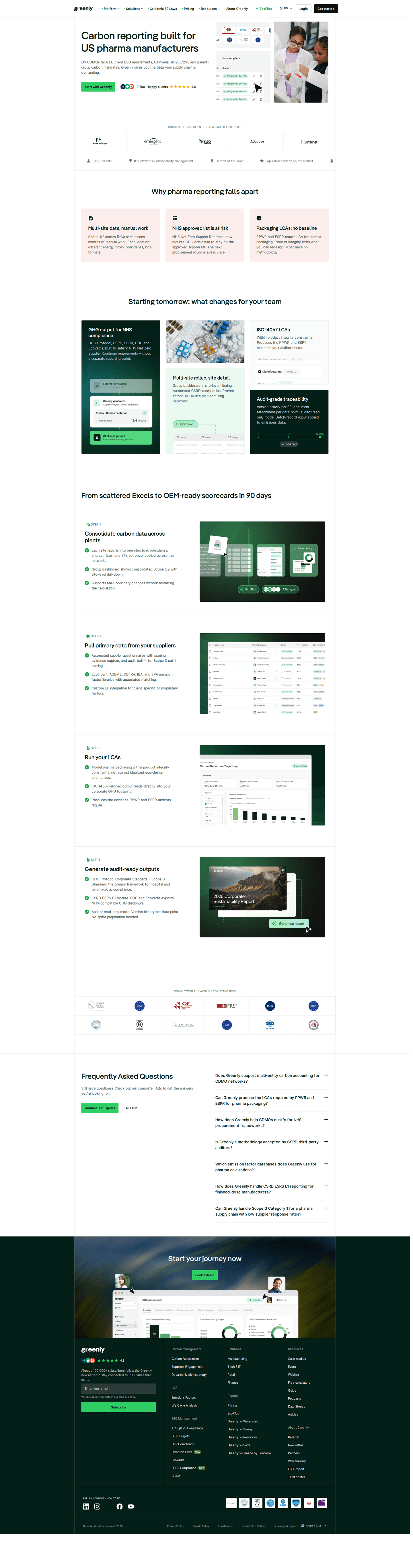
Is the body written for the sector or copied from the homepage?
- 86% name problems this industry actually has
- 28% run the standard feature list with a new headline on top
The feature list is what separates them: 0% of the strongest run it, against 91% of the weakest. Rewrite the problem the page opens with before touching anything else.

What proof does the sector want?
- Customer logos from the same industry on 57%
- A case study from the same industry on 45%
- A number attached to that customer result on 32%
- A stated return or saving on 57%
Pick the customer from the reader's own industry even when a bigger name from another one is available.

What does the page look like?
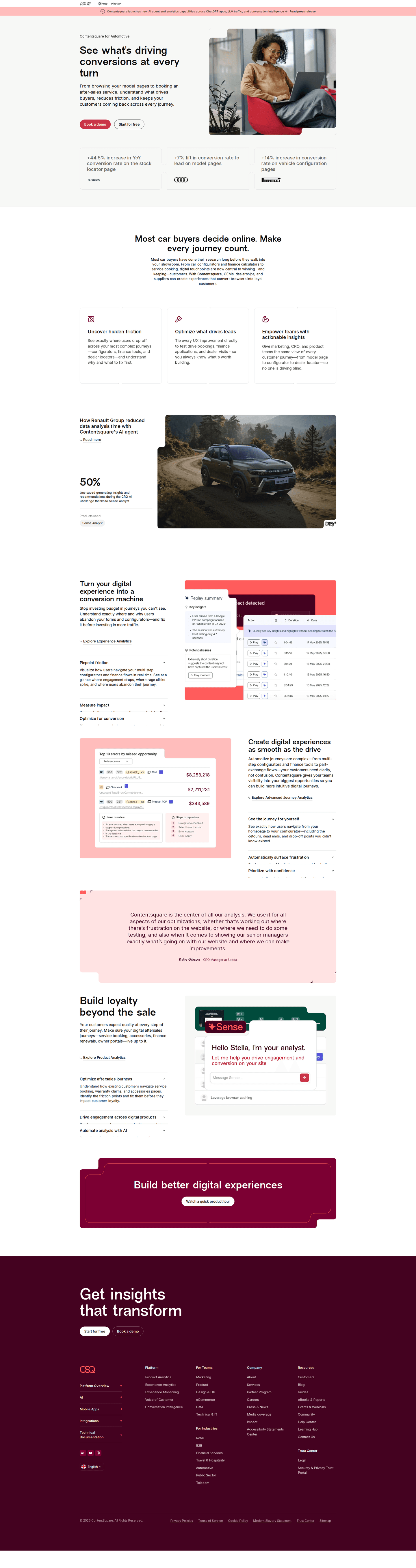
75% show photos or imagery from the sector. The body runs 8 sections between the navigation and the footer, half of them between 7 and 10.
The section right after the hero
- Logo wall or trust bar97 industry pages
- Value proposition23 industry pages
- Features13 industry pages
- Problem9 industry pages
- Testimonials8 industry pages
Share of industry pages carrying each section
- Closing CTA band148 industry pages
- Features146 industry pages
- Logo wall or trust bar133 industry pages
- Testimonials118 industry pages
- Resources83 industry pages
- Use cases77 industry pages
- Value proposition67 industry pages
- FAQ67 industry pages
- Problem49 industry pages
- How it works42 industry pages
- Integrations35 industry pages
- Contact12 industry pages
What should the page ask for?
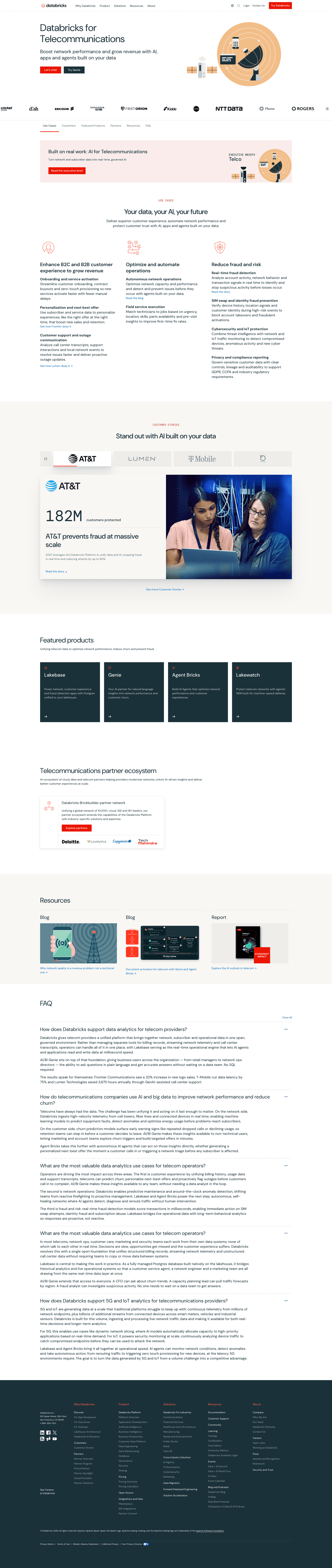
What the main button asks for
- Request a demo65 industry pages
- Start a free trial44 industry pages
- Contact sales30 industry pages
- Sign up17 industry pages
- The same ask comes back 3 times down the page
- 83% repeat it three times or more
- 72% end on a closing CTA band
- 83% keep a pricing link on the page, so cost is one click away
- An FAQ on 42%


The moves almost nobody makes
Nothing on an industry page is truly rare. The least common pattern here still sits on about one page in four, shown with the strongest page that uses it.
An embedded video
23% run a video rather than a static image, usually a walkthrough of the product doing the sector's own job.


Curated by
Gabriel Amzallag , Founder, Web Anatomy
5 years CRO + SEO at Qonto (2021–2025). After advising 15+ SaaS on their websites (Payfit, Pigment…), the same patterns kept breaking, so I decided to build the source of truth on what works on the web: the intelligence layer every tool, builder, and team uses to ship sites that perform.
Go further than industry pages
Growth Engine
Your top 3 opportunities for more revenue.
We find every way to grow your website’s visibility and conversions: SEO, AI search (AEO), backlinks and mentions, and UX/UI. 3 free opportunities, delivered by email.
Library
The analysis behind every page here
Each industry page on this page, section by section, with what works and what does not. Free account.
Didn't find the industry page you were looking for?
Every other page type has its own gallery. Start from all page types.
- Homepages
- Pricing pages
- About pages
- Contact pages
- Feature pages
- Integrations pages
- Security pages
- Enterprise pages
- Persona pages
- Why us pages
- Case study pages
- Comparison pages
- Blog pages
- Signup pages
- Webinar pages
- SEO landing pages
- Free tool pages
- PPC landing pages
- Careers pages
- Login pages
- 404 pages
- AI product pages
- Press pages
- Partner program pages
- Download pages
- Resource libraries
- Developer pages
- Solutions pages
- Template galleries
- Glossary pages
- Startup program pages
- Community pages
- ROI calculators
- Newsletter pages
- Programmatic SEO pages
- Blog posts
- Customer stories pages
- Alternatives pages
- Features overview pages
- Product tours
- Integration pages
- AI agent pages
- Affiliate program pages
- Team pages
- Conference pages
Your top 3 opportunities for more revenue.
We find every way to grow your website’s visibility and conversions: SEO, AI search (AEO), backlinks and mentions, and UX/UI. 3 free opportunities, delivered by email.
Industry page design, answered
The questions people ask before building a page for one vertical, answered from 161 real ones.
What should an industry page include?
01Four things are close to universal across these 161 industry pages. Nearly all use words a practitioner would recognise as theirs, close to nine in ten name problems specific to the sector, and about four in five name the industry in the headline and keep a pricing link on the page. Those are the floor. The decisions that separate a strong page from a weak one sit in the proof further down.
How is an industry page different from the homepage?
02By how much of it is written again. More than one in four of these pages run the standard feature list with a new headline bolted on top, and that splits the set harder than anything else: about nine in ten of the weakest fifth do it and none of the strongest fifth do.
What proof works on an industry page?
03Proof from the same industry. More than half carry customer logos from the sector, over two in five a case study from the sector, and about one in three attach a number to that result. All three separate strong from weak: sector logos show up on close to nine in ten of the strongest fifth, against about one in three of the weakest.
What should the call to action be?
04A demo, on about two in five of these pages. A free trial comes second at more than one in four, then contact sales at about one in five and a plain signup at one in ten. The ask comes back three times at the median, so it is one ask repeated rather than several competing ones.
Does an industry page need an FAQ?
05It helps. About two in five carry one, and the split is wide: more than half of the strongest fifth against about one in three of the weakest. An industry page draws readers who are checking whether the product handles their particular constraints, and an FAQ is where those answers fit.
How is this different from the best landing pages leaderboard?
06This gallery is a visual browse: what industry pages look like and what they contain. The best landing pages benchmark is the graded view, where pages are scored against conversion best practices and ranked by industry. Same companies, different question.