About us page examples (493)
An about page tells visitors who is behind a company and why it exists. Its job is to make them trust the people before they hand over money or data. See 493 real examples.
Showing 1–24 of 493 about pages
How to structure an about page, by the numbers
The questions a team asks when it rebuilds an about page, answered from the 493 here.
How many sections, and in what order?
6 between the navigation and the footer, half of them between 5 and 7.
The section right after the hero
- About300 about pages
- Logo wall or trust bar108 about pages
- Value proposition48 about pages
- Features12 about pages
The most common first three sections
- HeroAboutLogo wall or trust bar21% · 105 about pages
- HeroLogo wall or trust barAbout16% · 79 about pages
- HeroAboutAbout7% · 35 about pages
- HeroAboutClosing CTA band7% · 35 about pages
- HeroAboutFeatures6% · 32 about pages
Should the page show the team?
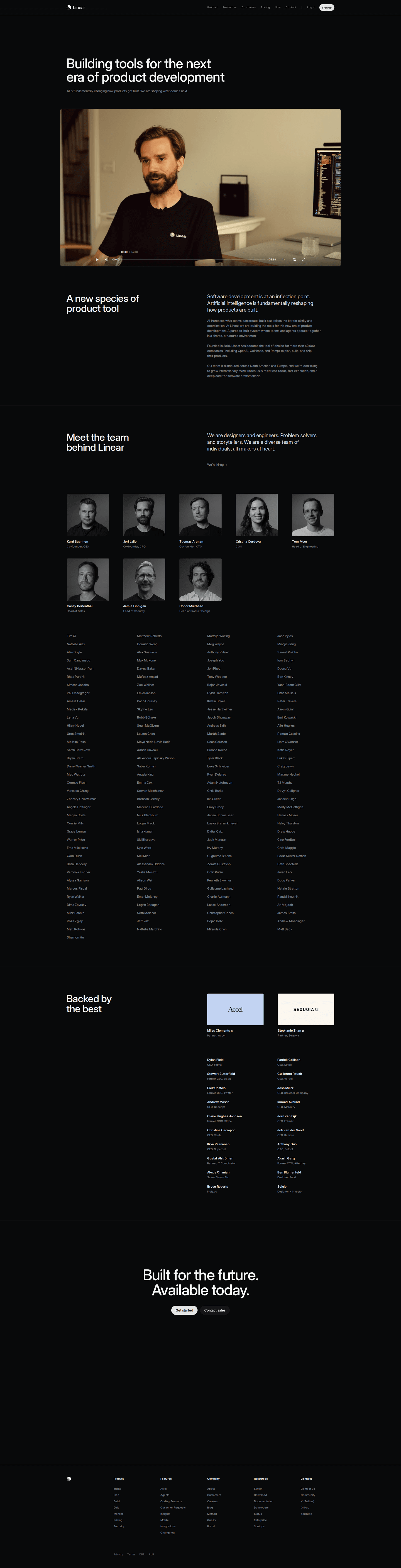
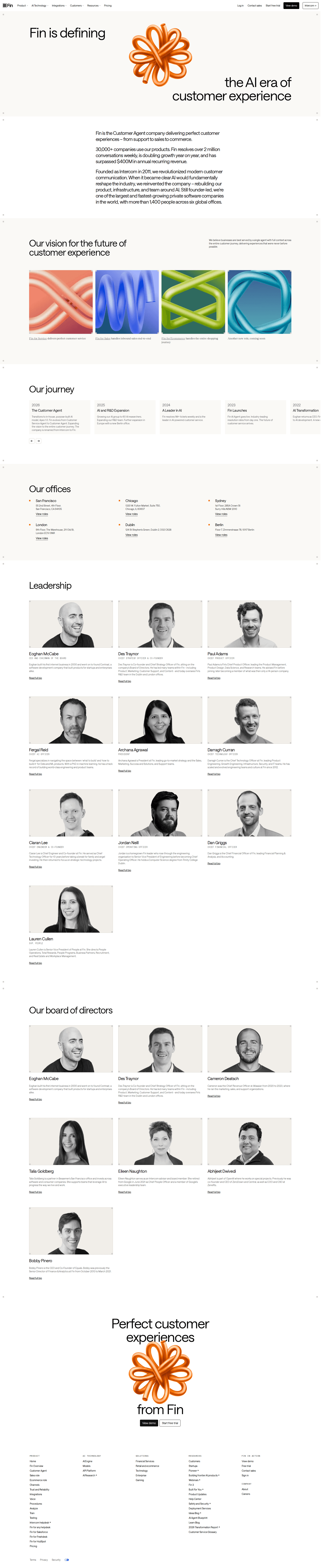
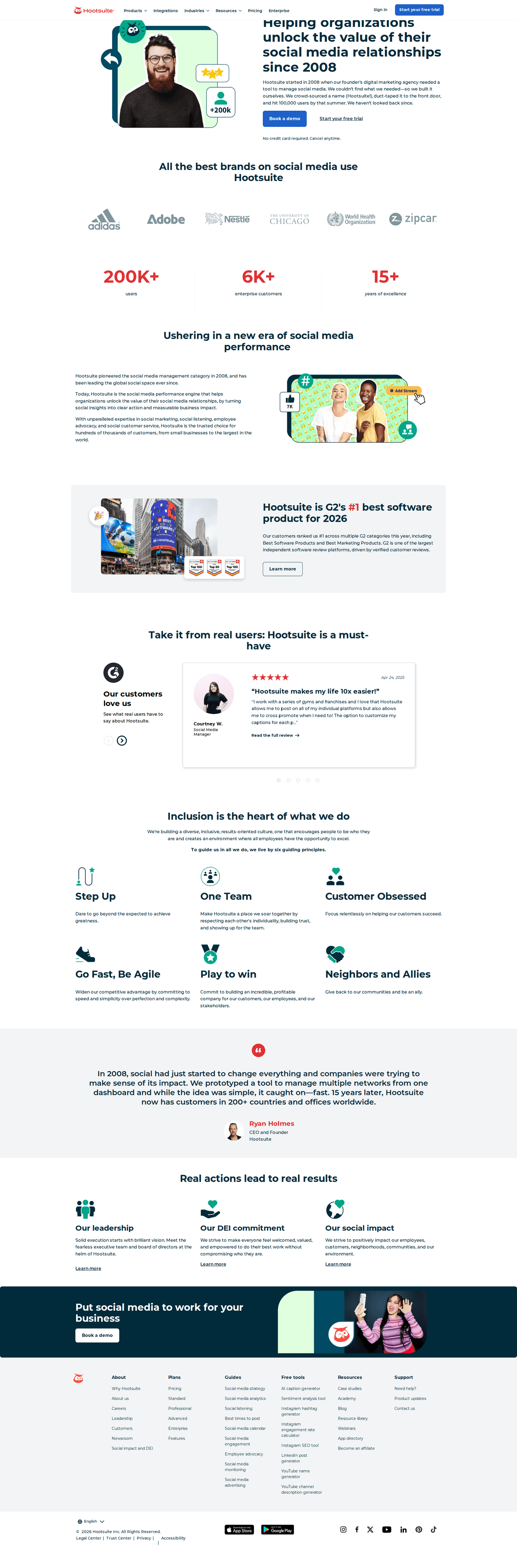
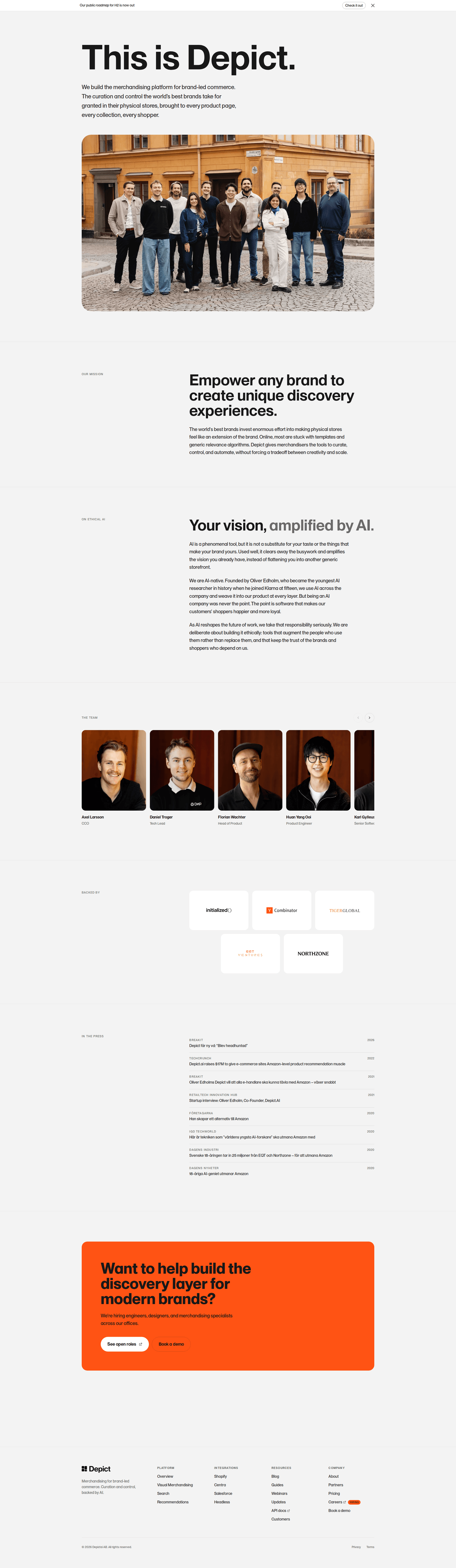
- Team photos on 73% of about pages
- Stock imagery on 12%
99% of the strongest pages show the real people, against 33% of the weakest. Stock imagery runs the other way.

Who gets named?
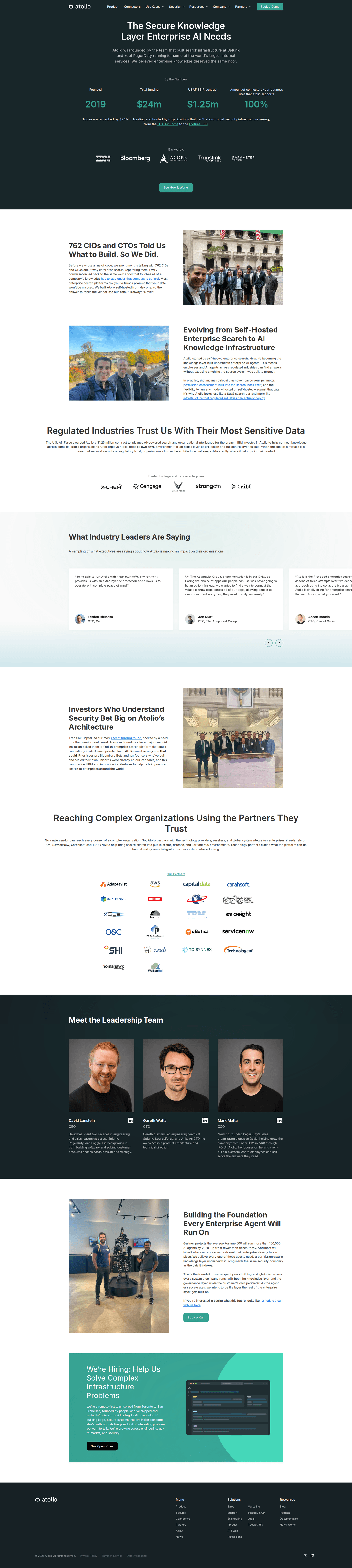
- Leaders listed with their job titles on 56%
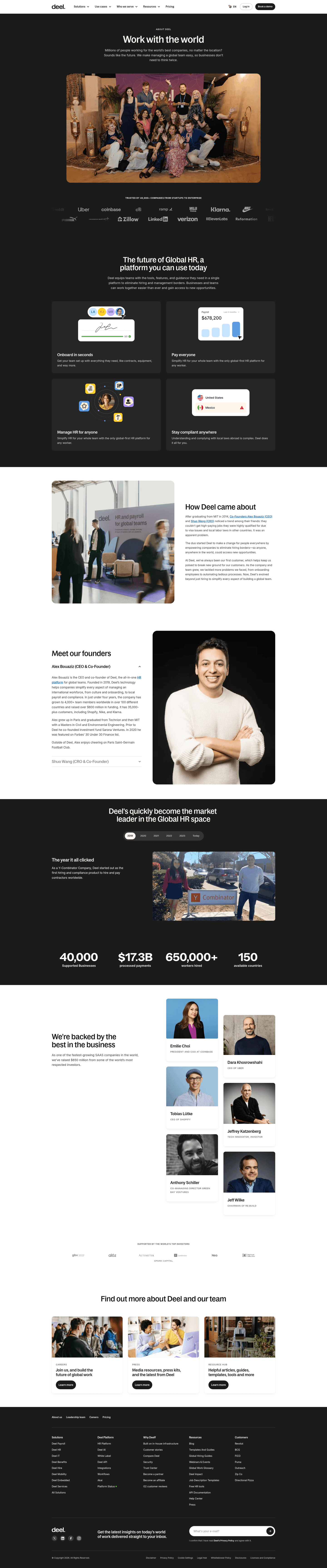
- Founders named on 54%
90% of the strongest pages list their leaders with job titles, against 22% of the weakest.
What story does the page tell?
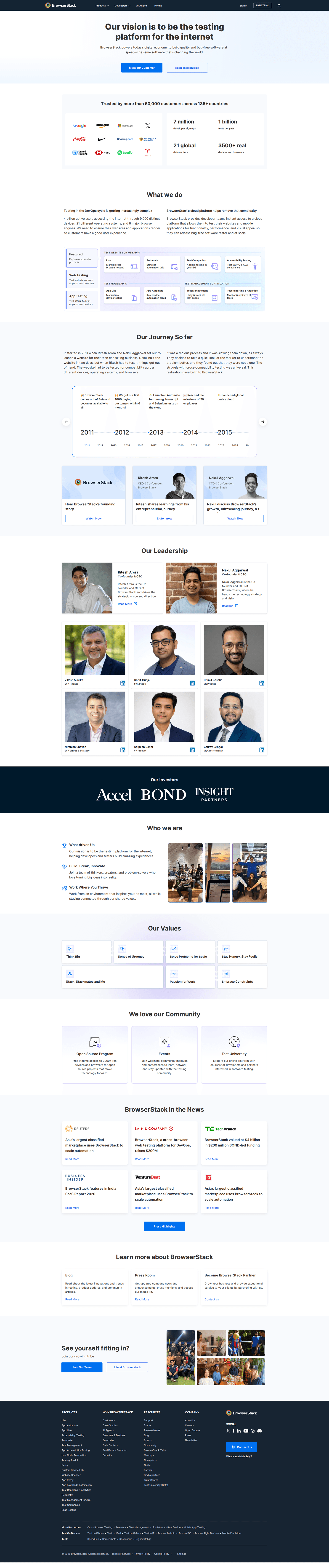
- A line saying why the company exists on 97%, close to every page here
- A founding story on 66%
- A values section on 59%
- An explanation of what the company sells on 93%

How much does the page say about the company itself?
- Offices or locations on 54%
- A stated headcount on 22%

What proof belongs on an about page?
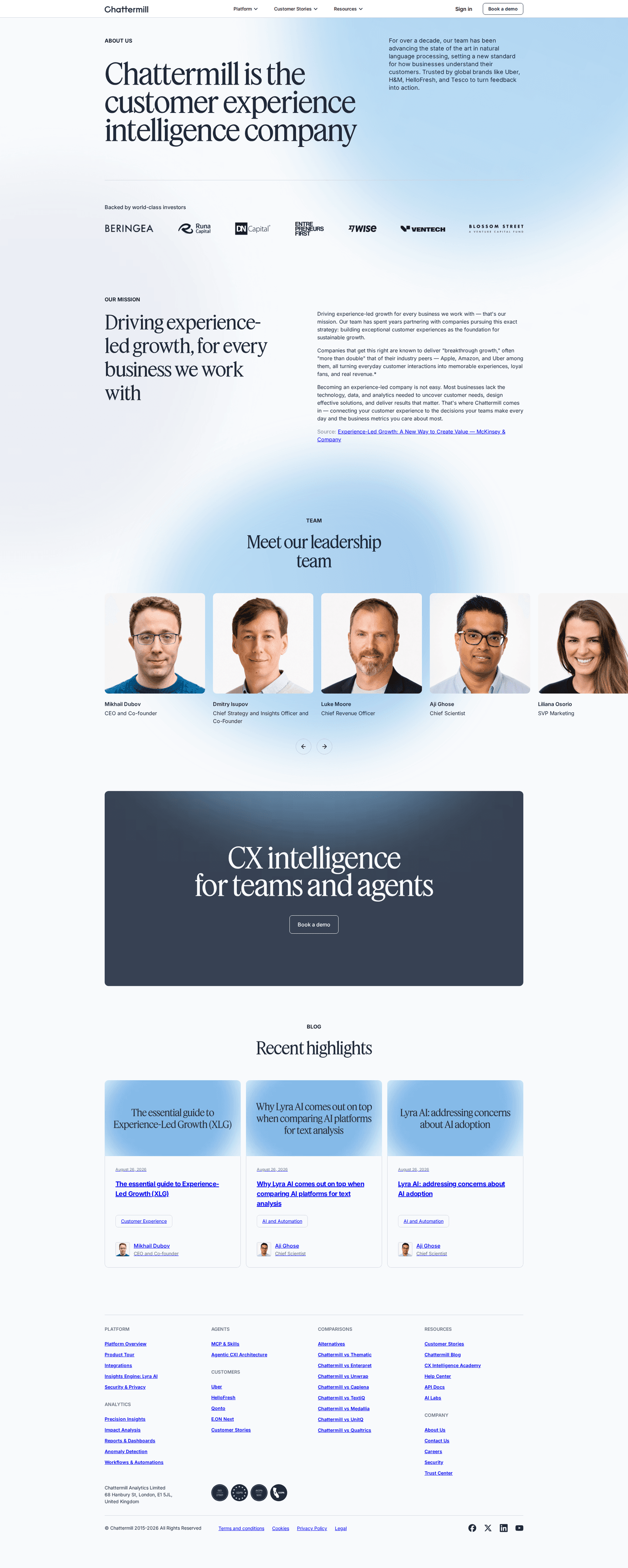
- A funding mention on 38%
- A customer logo wall on 26%
The logo wall leans toward the stronger pages: 35% of the strongest carry one, against 11% of the weakest.
Where does the page send people next?
What the main button asks for
- Sign up171 about pages
- Request a demo121 about pages
- Start a free trial101 about pages
- Contact sales45 about pages
- Get in touch17 about pages
- Download17 about pages
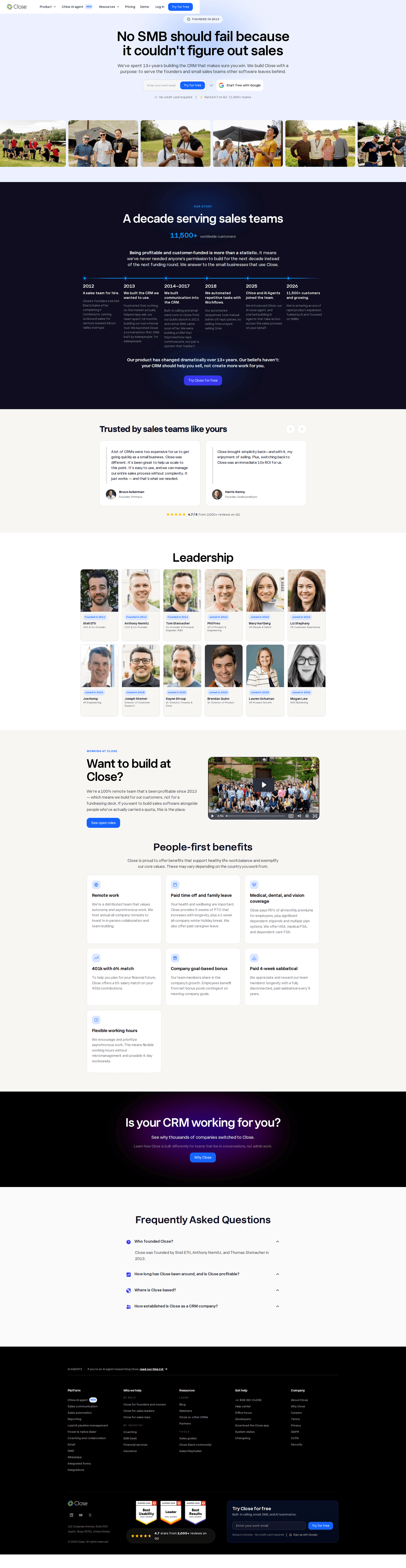
- A careers link on 81%
- The ask comes back 2 times down the page, and 22% repeat it three times or more
The last section before the footer
- Closing CTA band317 about pages
- Resources43 about pages
- Logo wall or trust bar40 about pages
- About36 about pages
The moves almost nobody makes
Each of these sits on fewer than a quarter of about pages, with the strongest one that uses it.
Press coverage on the page
23% show logos or quotes from the publications that covered them.
A video on the about page
13% embed a video, usually the founders saying the same story the page writes out.


Curated by
Gabriel Amzallag , Founder, Web Anatomy
5 years CRO + SEO at Qonto (2021–2025). After advising 15+ SaaS on their websites (Payfit, Pigment…), the same patterns kept breaking, so I decided to build the source of truth on what works on the web: the intelligence layer every tool, builder, and team uses to ship sites that perform.
Go further than about pages
Growth Engine
Your top 3 opportunities for more revenue.
We find every way to grow your website’s visibility and conversions: SEO, AI search (AEO), backlinks and mentions, and UX/UI. 3 free opportunities, delivered by email.
Library
The analysis behind every page here
Each about page on this page, section by section, with what works and what does not. Free account.
Didn't find the about page you were looking for?
Every other page type has its own gallery. Start from all page types.
- Homepages
- Pricing pages
- Contact pages
- Feature pages
- Integrations pages
- Security pages
- Enterprise pages
- Industry pages
- Persona pages
- Why us pages
- Case study pages
- Comparison pages
- Blog pages
- Signup pages
- Webinar pages
- SEO landing pages
- Free tool pages
- PPC landing pages
- Login pages
- 404 pages
- AI product pages
- Partner program pages
- Download pages
- Resource libraries
- Developer pages
- Solutions pages
- Template galleries
- Glossary pages
- Startup program pages
- Community pages
- ROI calculators
- Newsletter pages
- Programmatic SEO pages
- Blog posts
- Customer stories pages
- Alternatives pages
- Features overview pages
- Product tours
- Integration pages
- AI agent pages
- Affiliate program pages
- Conference pages
Your top 3 opportunities for more revenue.
We find every way to grow your website’s visibility and conversions: SEO, AI search (AEO), backlinks and mentions, and UX/UI. 3 free opportunities, delivered by email.
About page design, answered
The questions people ask before rebuilding an about page, answered from 493 real ones.
What should an about page include?
01Across 493 about pages, four things are close to standard: a line saying why the company exists (almost all of them), enough explanation that a cold visitor still learns what is sold (more than nine in ten), a link to open roles (four in five), and photos of the team (about three in four). A founding story is on two in three and a values section on three in five.
Should an about page show photos of the team?
02Yes. Team photos are on about three in four of these about pages, and the split is the widest in the set: nearly all of the strongest pages carry them against fewer than one in three of the weakest. Stock imagery runs the other way, on about one in five of the weakest pages and almost none of the strongest.
Should the founders be named on the about page?
03More than half do, and the strongest pages do it far more often. Just over half name the founders and close to three in five list leaders with their job titles. Among the strongest pages both rise to nearly nine in ten, against about one in four of the weakest. Naming the leadership team is one of the widest gaps on the page type.
Does an about page need a founding story?
04Two in three tell one: more than four in five of the strongest pages against fewer than half of the weakest. A mission statement is almost universal, so the story is the part that is actually optional, and the one that is usually missing on a weak page.
Should an about page mention funding, headcount or offices?
05Some of it. About half say where the company is based, about two in five mention money raised or who backs the company, and about one in five state a headcount. All three lean toward the stronger pages, with funding mentioned on more than half of the strongest against about one in five of the weakest.
How is this different from the best landing pages leaderboard?
06This gallery is a visual browse: what about pages look like and what they contain. The best landing pages benchmark is the graded view, where pages are scored against conversion best practices and ranked by industry. Same companies, different question.