AI agent landing page examples (27)
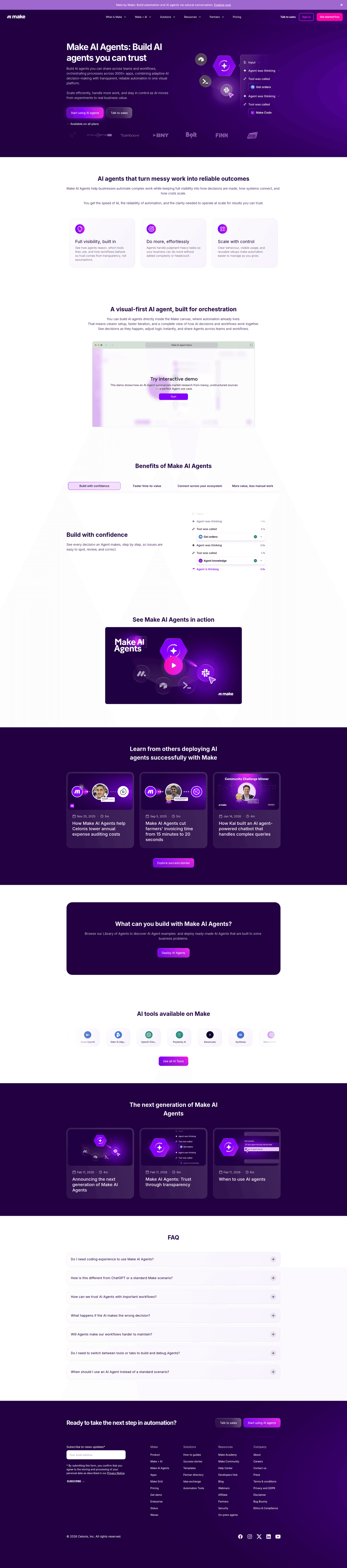
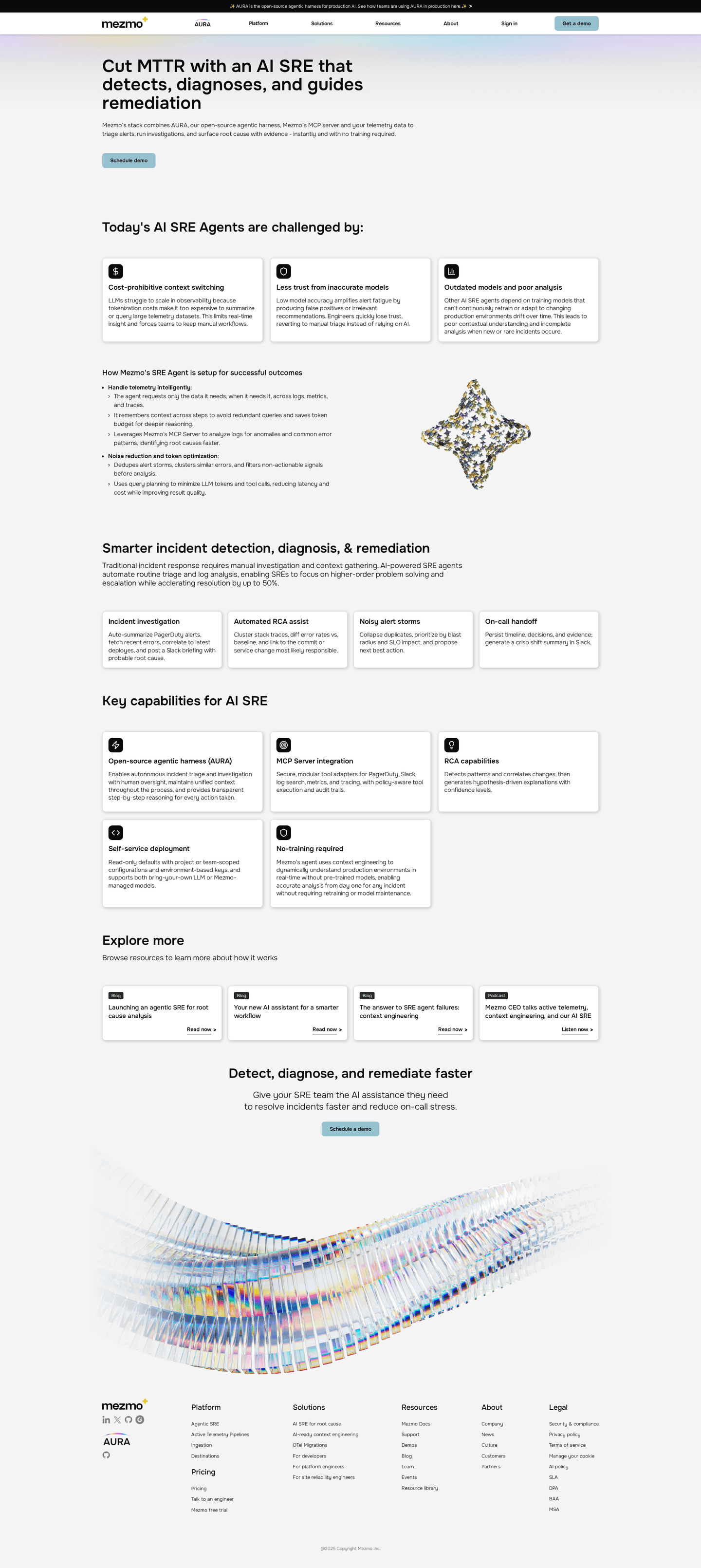
An AI agent page sells software that carries out a task on its own, such as answering calls or fixing a failed deploy. Its job is to show what the agent does and where a person stays in charge. See 27 real examples.
Showing 1–24 of 27 AI agent pages
How to build an AI agent page, by the numbers
The questions a team asks when it designs a page for an AI agent, answered from the 27 here.
How much should the agent do on its own?
How much the page says the agent does unattended
- Supervised: a person approves14 AI agent pages
- Assisted: a person drives9 AI agent pages
Supervised leads: the agent does the work and a person signs off. Assisted, where a person drives, is close behind. Only a handful of pages claim the agent runs entirely on its own.
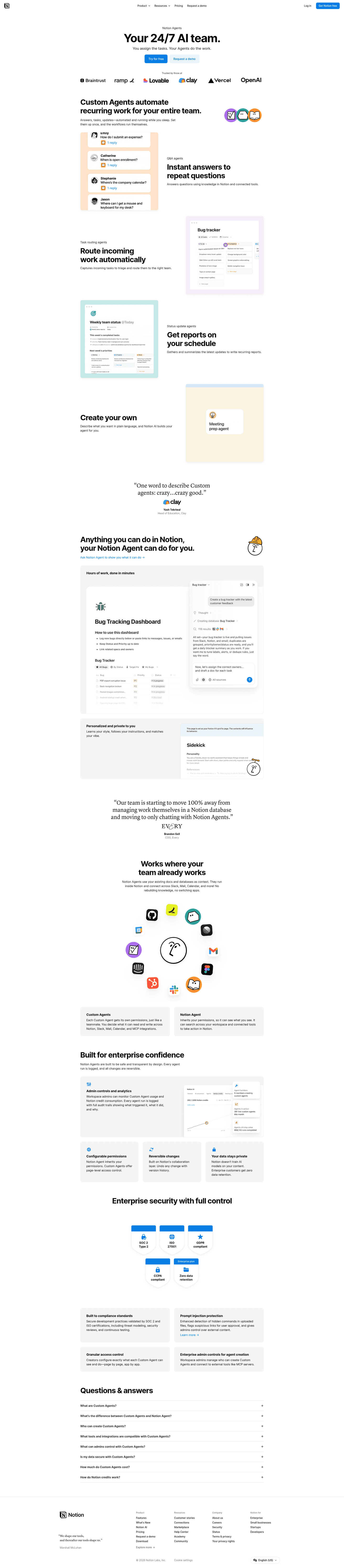
How do you show the agent at work?
81% follow one real task from start to finish, so the reader sees the agent do the job.
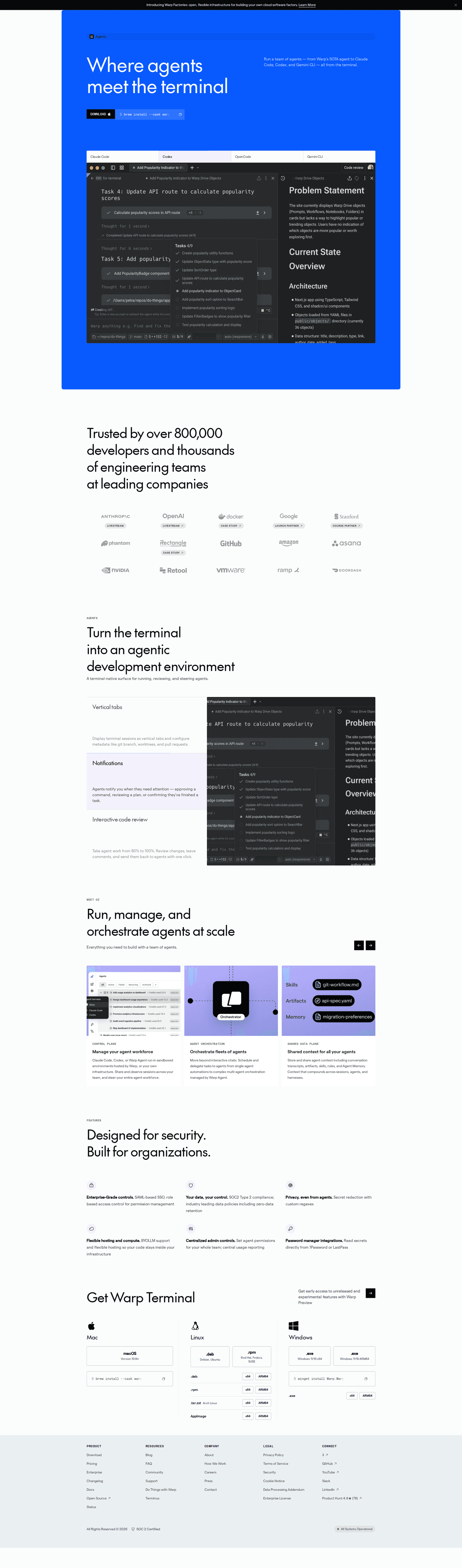
Where does a person stay in control?
- A log of what the agent did on 37%
- A handoff to a person on 37%
- An approval step before it acts on 30%
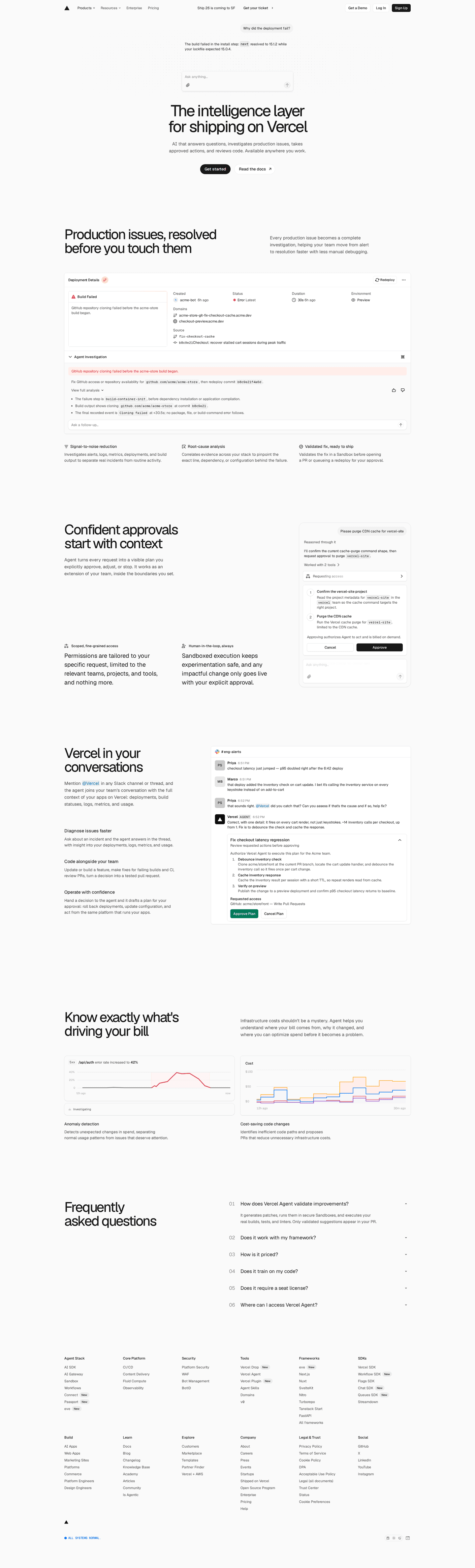

Which tools can the agent reach?
74% name the apps and systems the agent works in.

Should the agent have its own name?
37% give the agent a name and a character, selling it as a teammate rather than a feature.
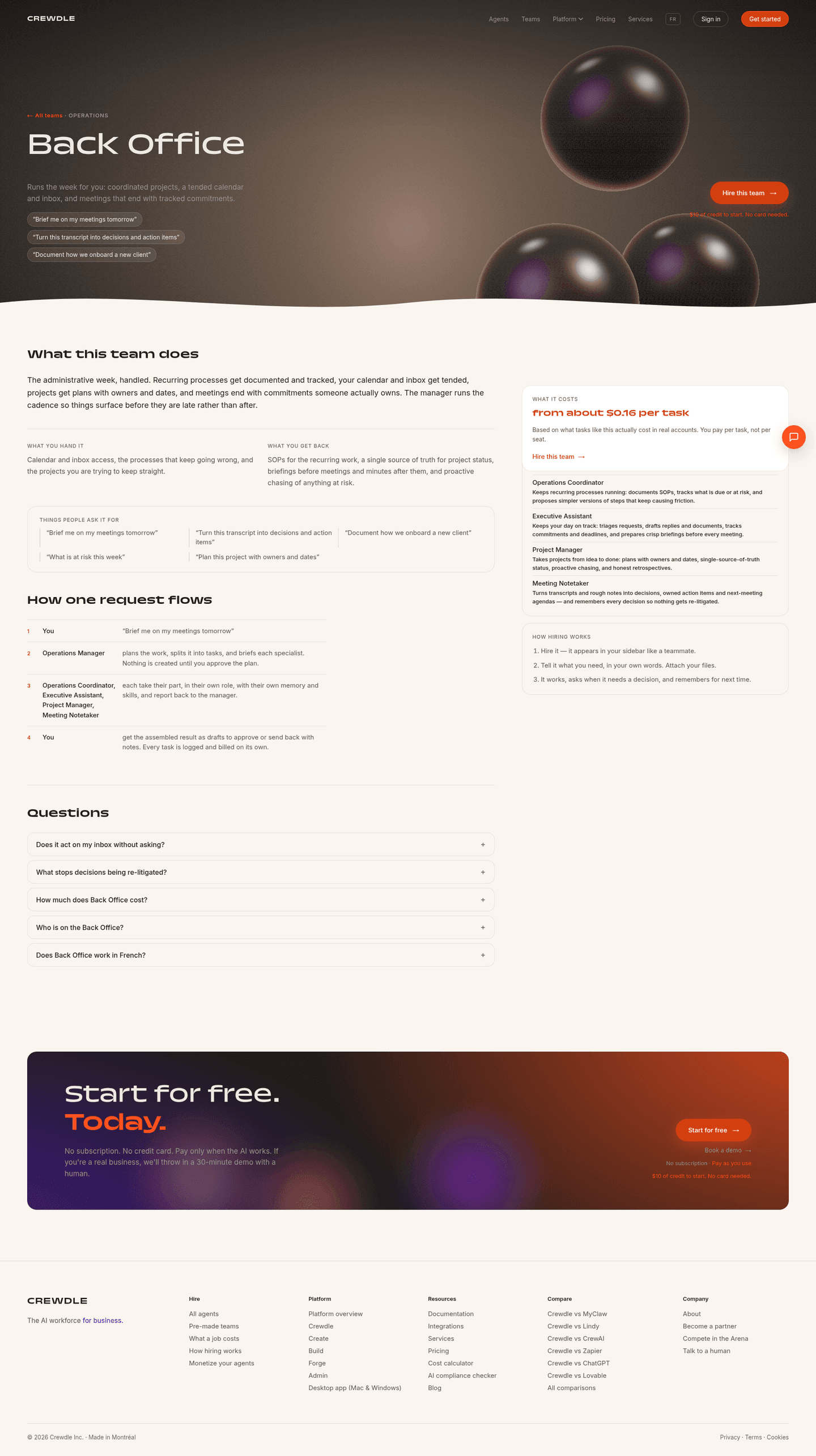
How does a visitor try it?
44% offer a demo to run or book.
The moves almost nobody makes
These sit at the bottom of the list, with the strongest agent page that makes each one.
Prices on the page
15% say what the agent costs on the page itself.

The problem before the agent
7% open by naming the problem the agent fixes before they introduce it.

Curated by
Gabriel Amzallag , Founder, Web Anatomy
5 years CRO + SEO at Qonto (2021–2025). After advising 15+ SaaS on their websites (Payfit, Pigment…), the same patterns kept breaking, so I decided to build the source of truth on what works on the web: the intelligence layer every tool, builder, and team uses to ship sites that perform.
Go further than AI agent pages
MCP
Section ideas, from inside your editor
Ask your coding agent for the strongest sections of an AI agent page in your industry. It answers from this benchmark, section by section.
Library
The analysis behind every page here
Each AI agent page on this page, section by section, with what works and what does not. Free account.
Didn't find the AI agent page you were looking for?
Every other page type has its own gallery. Start from all page types.
- Homepages
- Pricing pages
- About pages
- Contact pages
- Feature pages
- Integrations pages
- Security pages
- Enterprise pages
- Industry pages
- Persona pages
- Why us pages
- Case study pages
- Comparison pages
- Blog pages
- Signup pages
- Webinar pages
- SEO landing pages
- Free tool pages
- PPC landing pages
- Careers pages
- Login pages
- 404 pages
- Press pages
- Partner program pages
- Download pages
- Resource libraries
- Developer pages
- Solutions pages
- Template galleries
- Glossary pages
- Startup program pages
- Community pages
- ROI calculators
- Newsletter pages
- Programmatic SEO pages
- Blog posts
- Customer stories pages
- Alternatives pages
- Features overview pages
- Product tours
- Integration pages
- Affiliate program pages
- Team pages
- Conference pages
See how your own agent page compares
Paste a URL and get a scored breakdown against the same best practices, with the fixes ranked by impact. Free, no signup.
AI agent page design, answered
The questions people ask before building a page for an AI agent, answered from 27 real ones.
What should an AI agent page show?
01A real task followed from start to finish, on about four in five. About three in four name the tools the agent can work in, and a bit over two in five offer a demo to try or book.
How much autonomy should an agent page claim?
02Nearly half describe a supervised agent: it does the work and a person approves. About two in five describe an assisted one, where a person stays in the driving seat. Only about one in eight claims the agent runs fully on its own.
How much control should an agent page show?
03About a third mention a log of everything the agent did, about a third say when it hands the task to a person, and about three in ten show an approval step before it acts.
Should the agent have its own name?
04About a third give it a name and a character, which sells it as a teammate rather than a feature. The rest call it by what it does.
Should the page sell one agent or a team of them?
05Most sell a single agent. About two in five of the pages that count their agents sell a team of several, each with its own job.
How is this different from the best landing pages leaderboard?
06This gallery is a visual browse: what AI agent pages look like and what they contain. The best landing pages benchmark is the graded view, where pages are scored against conversion best practices and ranked by industry. Same companies, different question.