Pricing pages with two plans (49)
The 49 pricing pages here that show exactly two plans, where most of the market shows three or four.
Key takeaways
- Show both prices, so the visitor has two numbers to weigh against each other.
- Skip the long comparison table. Two cards next to each other are easy to compare on their own.
- Use the space a third plan would take for a free trial, a price calculator or a money-back guarantee.
- Keep the FAQ for the questions people still have after picking a plan.
Showing 1–24 of 49 pricing pages
What the best two-plan pages do
With only two plans there's less for a visitor to compare, so the best pages put their effort into making that one choice easy.
Show both prices
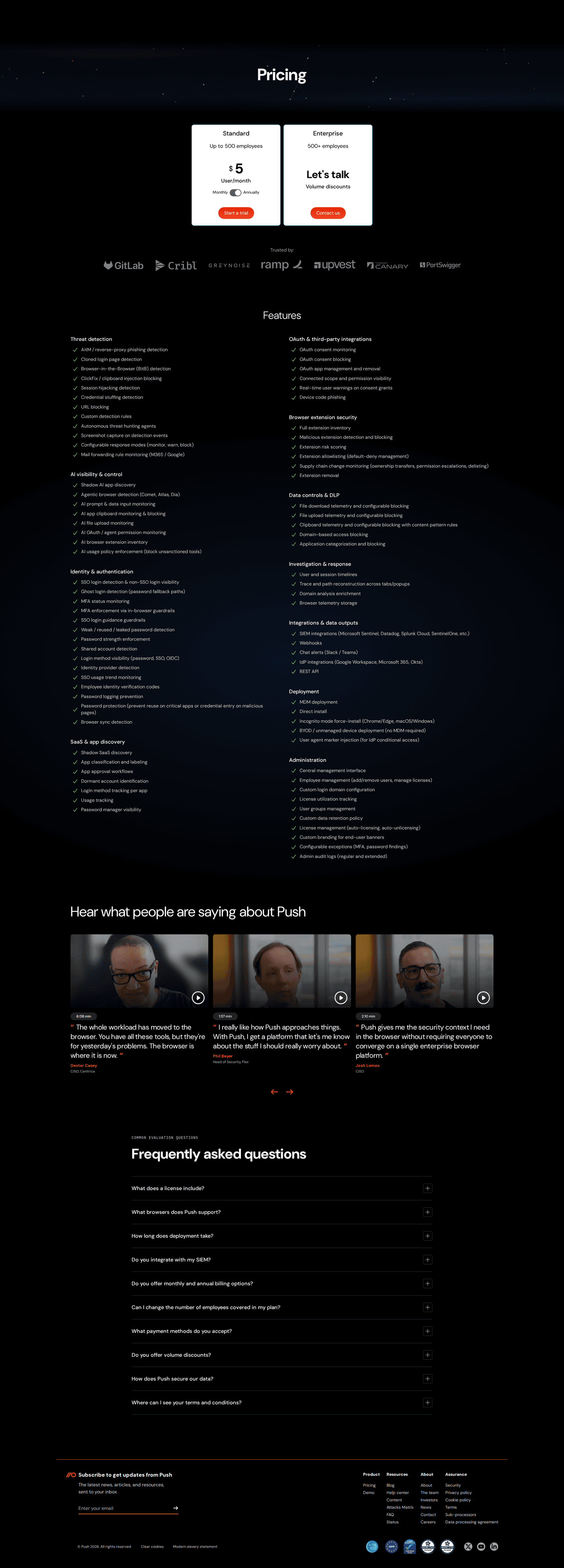
1% of the best pricing pages hide a price. On a bigger grid a hidden price is one number among many, but on a two-plan page it leaves the visitor with a single price and nothing to weigh it against.
Add a trial or a calculator
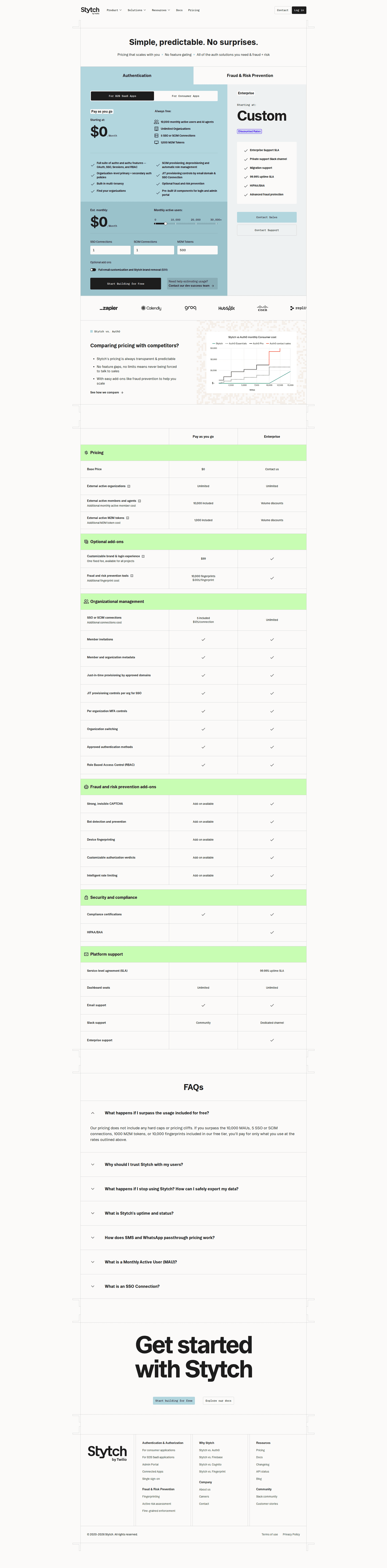
69% of the best pricing pages offer a free trial, and 22% have a price calculator. The best pages use the space a third plan would take for something the visitor can act on, most often a free trial or a price calculator. Usage pricing is common on these pages, and a slider shows visitors what they'd pay for their own usage.
Keep the FAQ
91% of the best pricing pages have one. It's where the page answers the questions people still have once they've picked one of the two plans.

Curated by
Gabriel Amzallag , Founder, Web Anatomy
5 years CRO + SEO at Qonto (2021–2025). After advising 15+ SaaS on their websites (Payfit, Pigment…), the same patterns kept breaking, so I decided to build the source of truth on what works on the web: the intelligence layer every tool, builder, and team uses to ship sites that perform.
Go further than pricing pages
MCP
Section ideas, from inside your editor
Ask your coding agent for the strongest sections of a pricing page in your industry. It answers from this benchmark, section by section.
Library
The analysis behind every page here
Each pricing page on this page, section by section, with what works and what does not. Free account.
Browse more pricing pages
Pick another group below, see every pricing page, or browse the sections these pages are built from.
Two plans, and no idea which one people pick?
Paste your pricing page. Get a scored breakdown against the same best practices these pages were measured on, with the fixes ranked by impact. Free, no signup.
Two-plan pricing pages, answered
What changes when a pricing page has two plans instead of three or four, answered from the 49 here.
How many pricing pages use only two plans?
01Not many. Most pricing pages in this benchmark show three or four plans, so a page with two has usually been set up that way on purpose.
What is the second plan on a two-tier pricing page?
02Usually a plan you have to ask about. Most of these pages offer a custom quote and more than half name an enterprise tier, so the common setup is one plan a visitor can buy straight away and one that goes through sales. A free plan is rare on these pages, while nearly half of other pricing pages offer one.
Should a two-plan pricing page show both prices?
03Yes, and it's the clearest pattern on these pages. None of the best pages here hide a price. A two-plan page only has two numbers on it, and if one is hidden, the visitor is left with a single price and nothing to weigh it against.
Do you still need a feature comparison table with two plans?
04Less often than you'd think. Fewer than half of two-plan pages have one, while most pricing pages with more plans do, and the best two-plan pages have one even less often. Two cards next to each other are already easy to compare, so a long table under them mostly repeats what the cards say.
Should one of the two plans be free?
05Rarely. Few two-plan pages have a free tier, far fewer than on the rest of the market. If one of the two plans is free, there's only one paid plan left to sell. It's more common to offer a free trial of the paid plan, and more than half of the best pages here do.
How do two-plan pricing pages charge?
06By usage, more often than the rest of the market. Usage-based pricing is far more common on two-plan pages than on other pricing pages, and a flat monthly price is much less common. Charging by usage lets one plan work for small and large customers alike, which is what a third plan would usually be for.