Pricing pages with no plans (25)
The 25 pricing pages here that show no plan grid: every price is a conversation.
Key takeaways
- Accept that a page with no plans works as a lead capture page.
- With no plans to compare, testimonials and the FAQ have to do the explaining.
- Add an FAQ. These pages miss it more than anything else, and it's cheap to add.
Showing 1–24 of 25 pricing pages
What these pages do differently
With no plan grid, testimonials and the FAQ have to carry the page.
Decide whether to ask for an email
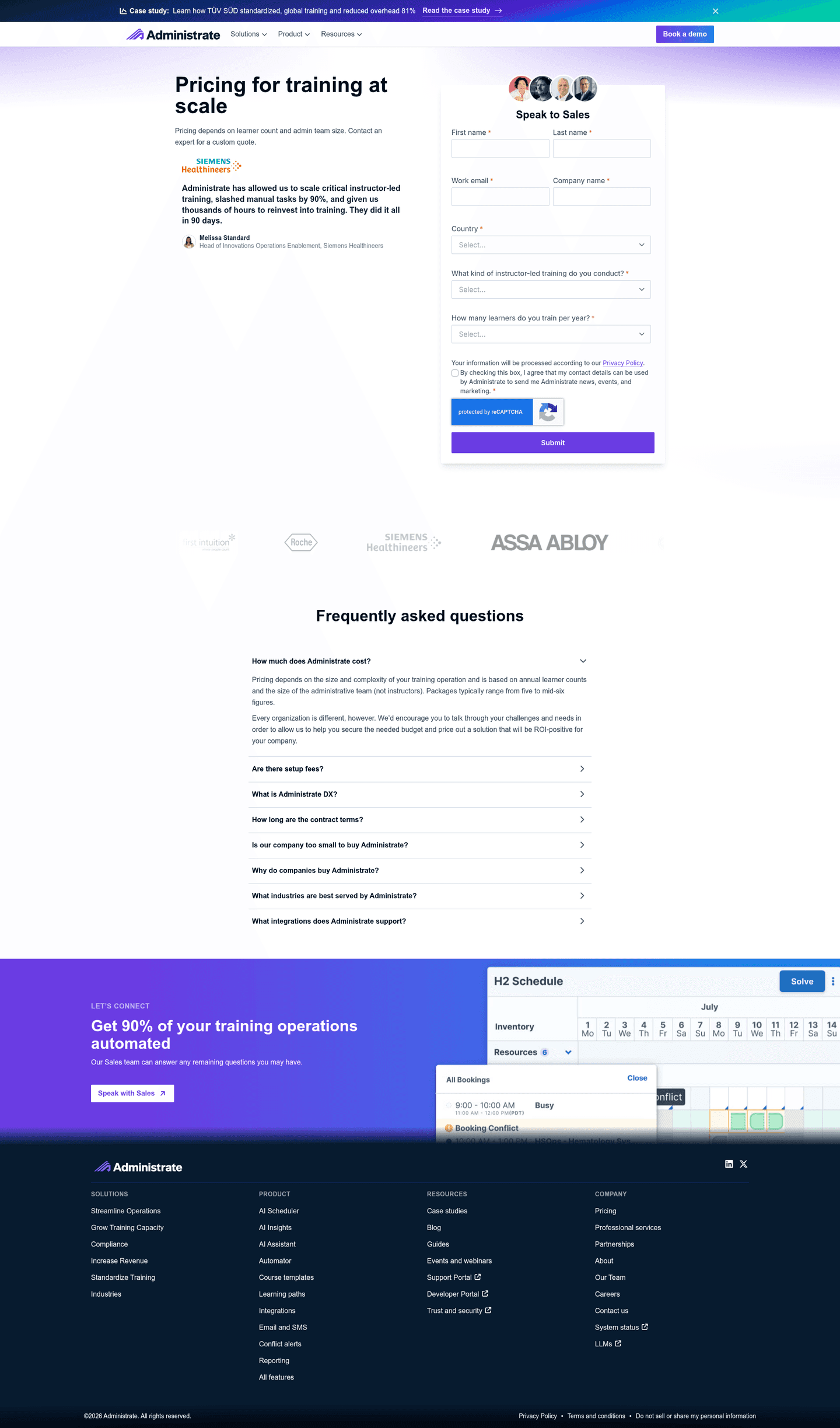
88% of these pages hide the price, and 40% ask for an email address. Visitors who came to compare prices get asked who they are, so make that a deliberate choice.
Add testimonials
With no plan grid there is no comparison table, no billing toggle and almost never a free tier. Those blocks all describe tiers, so testimonials do more of the work, and 52% of these pages show them.
Add an FAQ
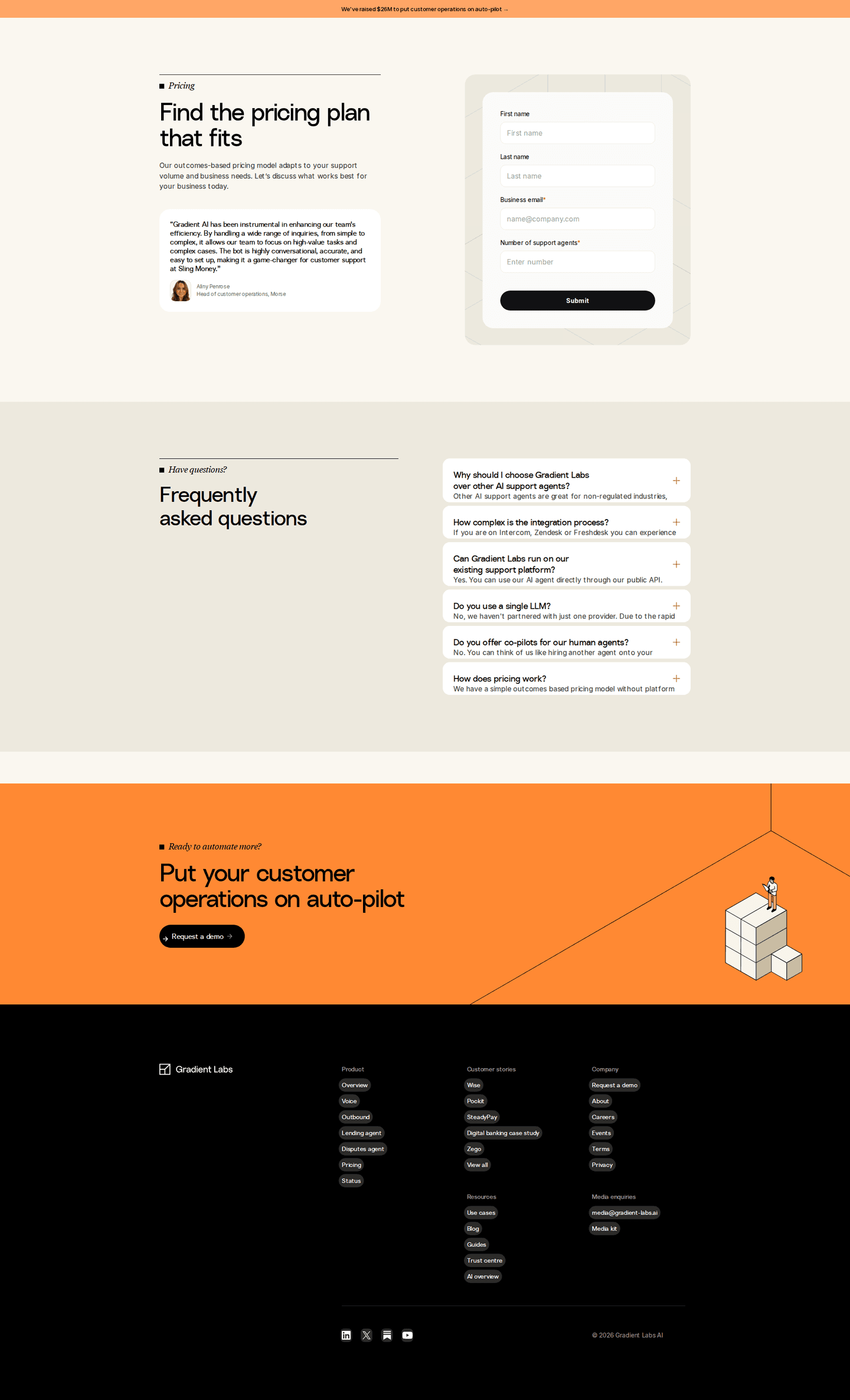
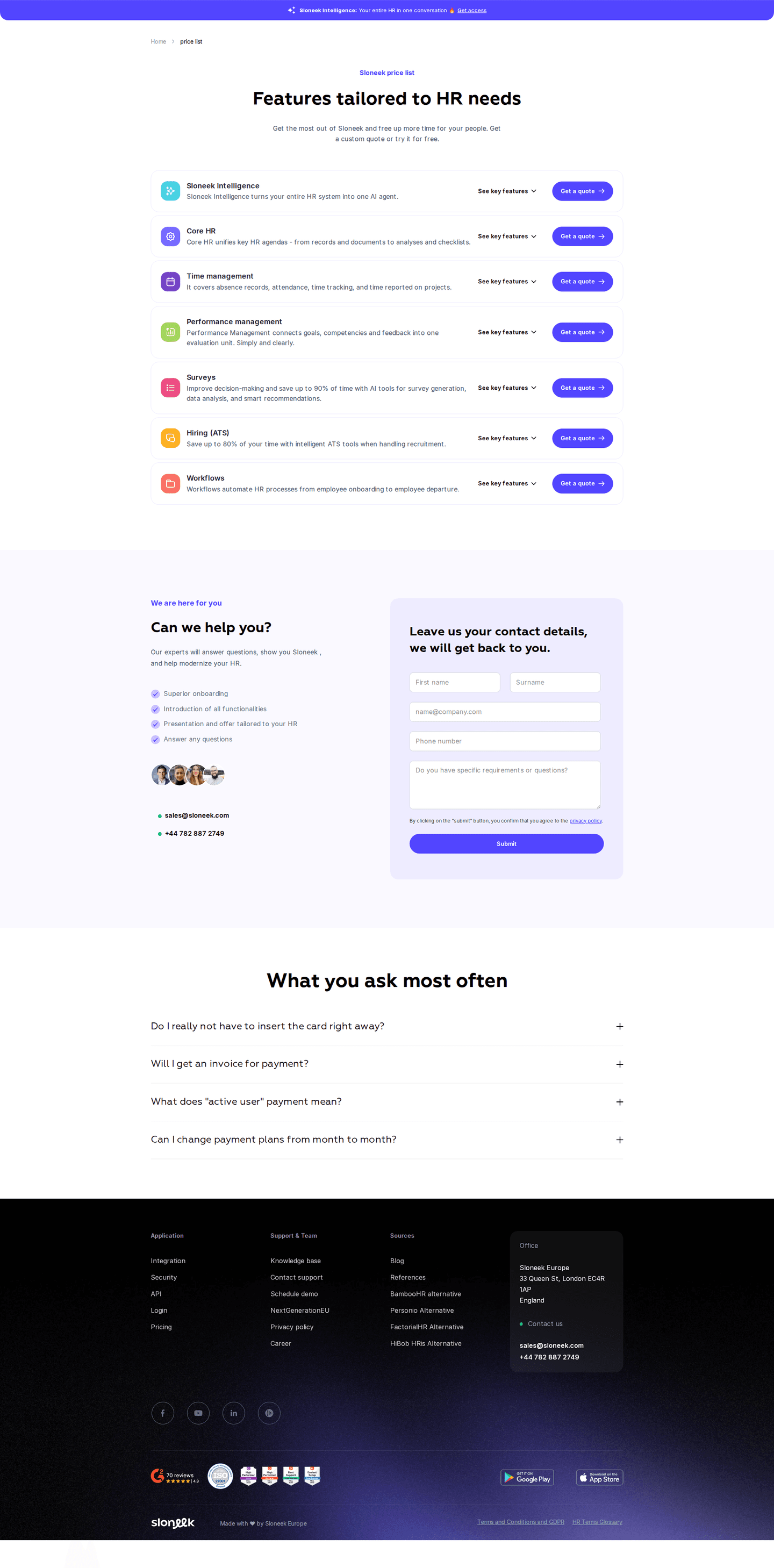
91% of the best pricing pages have an FAQ, and only 48% of these pages do. A page with no price has the most to explain, starting with what drives the cost, and an FAQ is a cheap way to do it.

Curated by
Gabriel Amzallag , Founder, Web Anatomy
5 years CRO + SEO at Qonto (2021–2025). After advising 15+ SaaS on their websites (Payfit, Pigment…), the same patterns kept breaking, so I decided to build the source of truth on what works on the web: the intelligence layer every tool, builder, and team uses to ship sites that perform.
Go further than pricing pages
MCP
Section ideas, from inside your editor
Ask your coding agent for the strongest sections of a pricing page in your industry. It answers from this benchmark, section by section.
Library
The analysis behind every page here
Each pricing page on this page, section by section, with what works and what does not. Free account.
Browse more pricing pages
Pick another group below, see every pricing page, or browse the sections these pages are built from.
Is your pricing page actually a contact page?
Paste your pricing page. Get a scored breakdown against the same best practices these pages were measured on, with the fixes ranked by impact. Free, no signup.
Quote-only pricing pages, answered
What sits on a pricing page with no plans, from the 25 here.
How many pricing pages show no plans at all?
01Very few. Almost all of them are enterprise software or services sold by quote, where the company has decided it can't publish a set price.
Is this still a pricing page?
02It works more like a lead capture page that happens to sit at a pricing URL. Most of them hide the price, where pages with a grid rarely do, and they ask for an email address far more often. The visitor shows up to compare prices and gets asked for their details.
What is missing compared with a normal pricing page?
03The parts that depend on a plan grid. None of them has a comparison table or a billing toggle, which many pages with a grid carry. Almost none offers a free tier, and very few even name an enterprise tier, where most pages with a grid do. Without tiers, those blocks have nothing to describe.
What carries the page instead?
04Testimonials and award badges. These pages show both far more often than pages with a grid. With no prices to compare, the page has to convince the visitor that the company is worth contacting.
What is the biggest thing these pages miss?
05An FAQ. Fewer than half of them have one, while most pages with a grid do, which is backwards. A page that won't publish a price has more to explain than any other pricing page, and the FAQ is where it can do that.