
TL;DR
- The ads that keep running sell one of eight angles: the eligibility, the quiz, the fee, the insurance, the clock, the customer with a number, the explainer, the series. Noom and Teladoc Health each show up under six of the eight. Noom sends its ads to one page; Teladoc Health spreads them over six.
- Five angles are almost empty in healthcare: a named competitor, trust as the headline, the switch, a clinician on the card, the gift.
- Social ads never land on the homepage (0 of 123, against 28% for search). Noom has sent 56 ads to one quiz page for 530 days; Teladoc Health builds a page per condition.
- The ad and the page make the same promise. Teladoc Health promises a doctor in minutes with or without insurance, and its page answers both in the hero.
12 companies, every brand ad in the public Meta and Google libraries, August 2026. How we did it is at the end.
The sample: 12 healthcare companies, their ads, and where the ads land
| Company | Meta ads on file | Ran 45 days or more | Still live | Oldest live ad | Where the ads land |
|---|---|---|---|---|---|
| Noom | 60 | 46 | 39 | 530 days | one quiz page, every ad |
| Lively (LivelyCycle) | 60 | 45 | 49 | 222 days | the App Store, every ad |
| Teladoc Health | 60 | 11 | 60 | 169 days | hypertension, diabetes, weight, 24/7 care, mental health, start |
| GoodRx | 60 | 7 | 19 | 119 days | 57 ads carry no link; three condition videos; Google, the homepage |
| Hims & Hers | 19 | 4 | 19 | 151 days | no link on any ad |
| Zocdoc | 18 | 3 | 18 | 89 days | dentists, dermatologists, psychologists |
| Ro | 7 | 7 | 7 | 85 days | Google only, a weight-loss quiz page |
| Lucis (FR) | 1 | 0 | 0 | none | lucis.life/fr |
| One Medical | 0 | 0 | 0 | none | nothing brand-verified |
| Recursion | 0 | 0 | 0 | none | nothing brand-verified |
| Anterior | 0 | 0 | 0 | none | nothing brand-verified |
| Amwell | 0 | 0 | 0 | none | see the method: a namesake |
Noom and Lively have ads that last: 46 and 45 of 60 on file have passed 45 days, and the oldest ones are still live. Teladoc Health is still testing. It has 60 ads, all live, 11 older than 45 days, and 41 of the 60 launched on August 14 or later.
Ad analysis: the eight angles healthcare ads use
Every message on Meta fits one of eight angles. For each one: the ads that ran longest, one creative to look at, and why it keeps running. The number in brackets is how many days the ad had been running when we looked. Two of the eight do not exist in fintech, and they come first.
1. The eligibility
The ad asks the reader to see if they qualify, and the page runs the check.
- Teladoc Health: "Eligibility requirements apply. Check if you're eligible." as the headline on every diabetes and blood-pressure ad (138 days, 115 days, 34 days).
- Hims & Hers: "Get a treatment recommendation today, 100% online, if eligible" (61 days). 13 of its 15 readable ads carry an if eligible or if prescribed.
- Noom: "Take the quiz to see if you qualify!" closes the Aging & Metabolism course-pack ads (523 days, 209 days).
- Ro on Google: "Ro Checks Your Insurance For Free" and "Free GLP-1 Insurance Check", both to the quiz page.
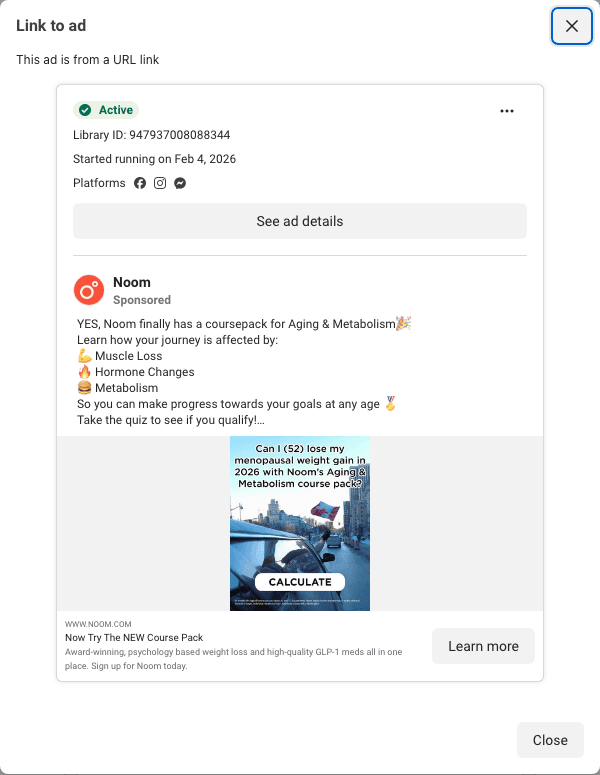
Why it runs: the card cannot promise a treatment the reader might not qualify for. So the ad sells the check, which is free, and the page runs it.
2. The quiz
This is Noom's whole account, and it has the longest-running creatives in the set. Noom is the only company that runs it openly on Meta. Ro runs the same thing on Google.
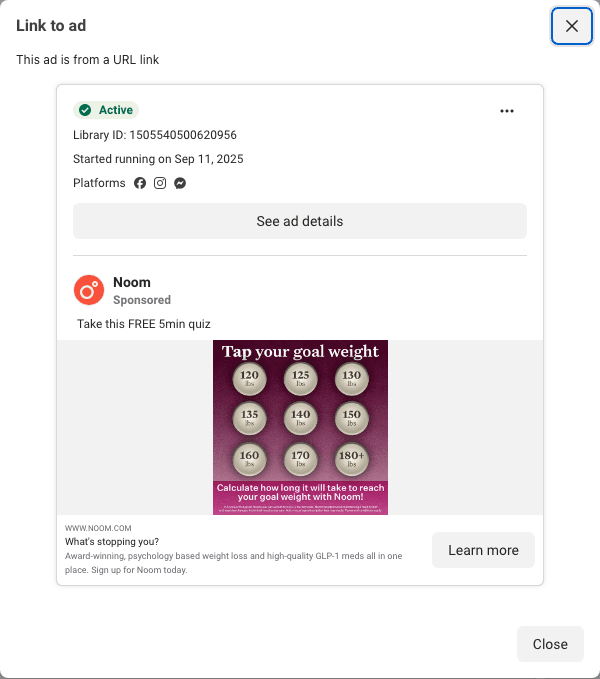
- Noom: "Take this FREE 5min quiz" over a grid of goal weights, Tap your goal weight, with a kg version and a lbs version (406 days, 355 days, 354 days).
- Noom: "When can I reach my goal weight with the Noom Aging & Metabolism Course Pack?" over a selfie, one Calculate button (523 days, live, the second-oldest ad in the sweep).
- Ro on Google: 12 of the 17 search ads with a readable path land on ro.co/lp/weight-loss/quiz, "One Weekly Shot to Lose Weight" among them.
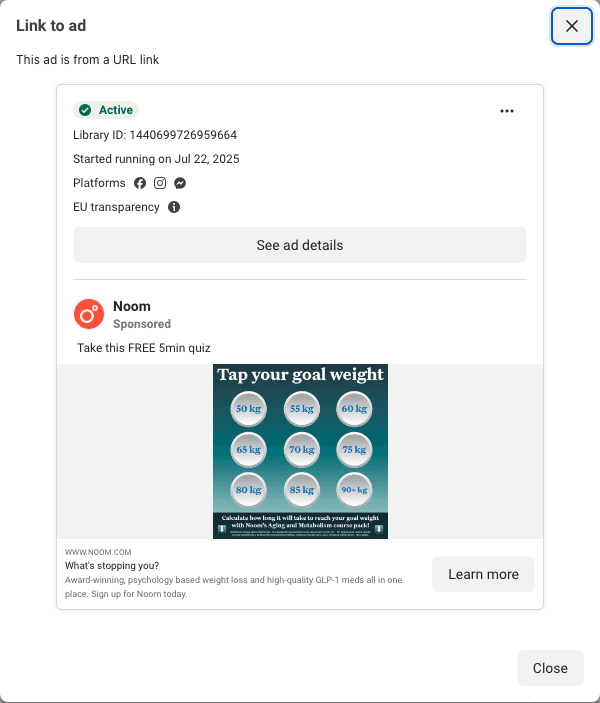
Why it runs: the card asks for one tap. The reader taps their own goal weight, so the answer on the page is about them.
3. The fee
$0 and free, the way fintech says no fees.
- Teladoc Health: "$0 cost to you" as the headline on the weight ads (117 days, 90 days, 83 days), "at no cost to you" on the diabetes ads (138 days), "Care for as low as $0" on every 24/7 care card.
- Lively: "Cycle Syncing, Try For Free" (222 days).
- GoodRx: "GoodRx is free to use at pharmacies nationwide" (29 days), and the one company with a real price on the card: "Estring can cost as little as $249" (119 days, live), Ozempic "starting at $149 for the all-new pill and $199 for the pen" (34 days).
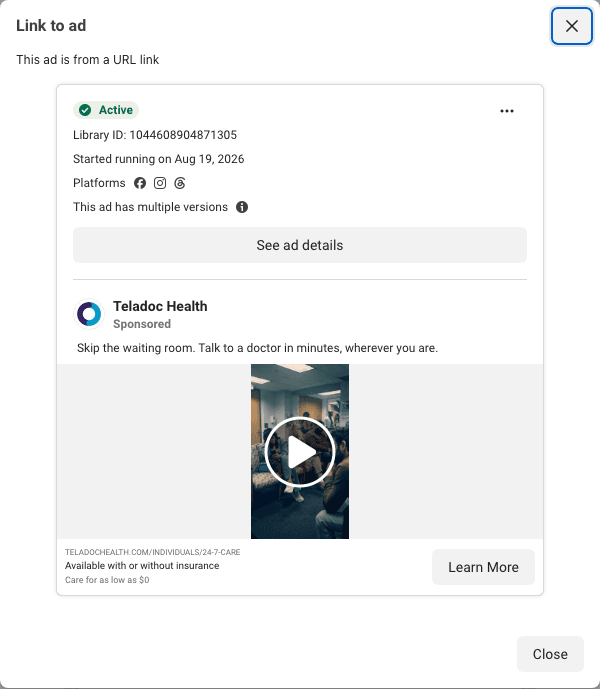
Why it runs: before clicking a healthcare ad, people worry about the bill. $0 answers that before the click, and a real price answers it better than the word affordable.
4. The insurance
The question here is whether the reader's plan will pay.
- Zocdoc: "Find a dentist who takes your insurance" over six insurer logos, Aetna to UnitedHealthcare (71 days), the same block on the dermatologist creative (41 days), and "Still haven't found a primary care doctor?" over a Venn diagram of takes your insurance and open appointments near you (41 days).
- Teladoc Health: "Available with or without insurance" as the link headline on every 24/7 care, mental health and start ad (32 days, 13 days, 12 days).
- GoodRx: "Not covered? No problem" (29 days).
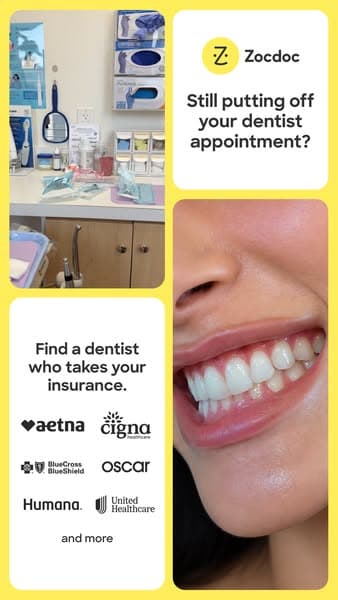
Why it runs: the reader scans the row of insurer logos for their own plan, the way a B2B buyer scans a row of customer logos.
5. The clock
Speed, given as a number: minutes to a doctor, weeks to a result.
- Teladoc Health: "Talk to a doctor in minutes, wherever you are" (13 days), "board-certified doctors in minutes" (32 days), "24/7 virtual care" on every August card.
- Noom: "Lose 15 lbs in 15 weeks" (200 days), "The 15-week reset for menopausal weight gain" (162 days), "Only 10 minutes a day" (162 days, 120 days).
- Zocdoc: "Has availability this week?" on the checklist creative (41 days), "stop spending time on hold" (71 days).
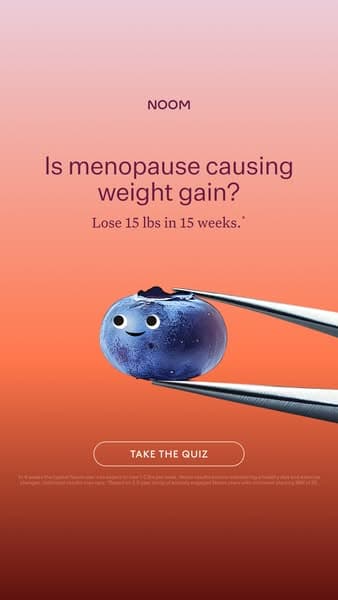
Why it runs: a number of minutes or weeks is a promise the reader can check.
6. The customer with a number
Social proof counts when it carries a figure or a face. In healthcare it is usually a face, filmed at home.
- Noom: "15 months on Noom and I'm down nearly 90 pounds. Completely changed my life!", Deborah M, over raspberries (441 days, live).
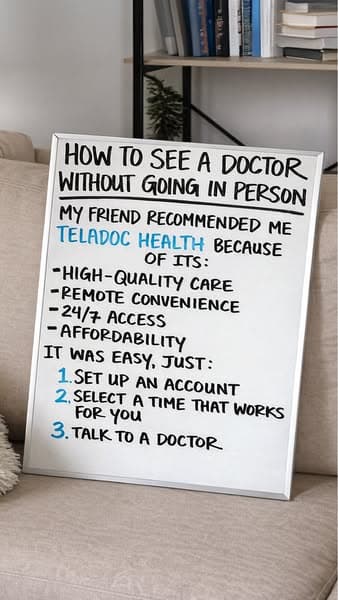
- Teladoc Health: a whiteboard on a sofa, "My friend recommended me Teladoc Health because of its high-quality care, remote convenience, 24/7 access, affordability" (13 days, 6 days, 5 days).
- Hims & Hers: "join the hundreds of thousands of guys who've found true results" (61 days).
- Lively: "300.000+ Happy Users" beside a calendar screenshot (119 days).
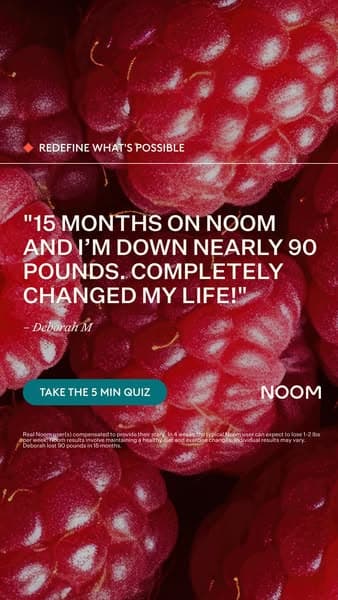
Why it runs: the fine print under Deborah's quote says a typical user loses 1 to 2 pounds a week. The ad still leads with 90, because the reader wants the best case and the footnote keeps it legal.
7. The explainer
The card sells nothing. It explains a condition or reads like a letter from a friend. The two oldest ads in the set are explainers.
- GoodRx: "Causes of Anemia: What Are Myelodysplastic Syndromes (MDS)?" (487 days) and "What Are Symptoms and Complications of Beta Thalassemia?" (486 days), both to a video page with a Watch more button. The oldest ads in the sweep, both ended.
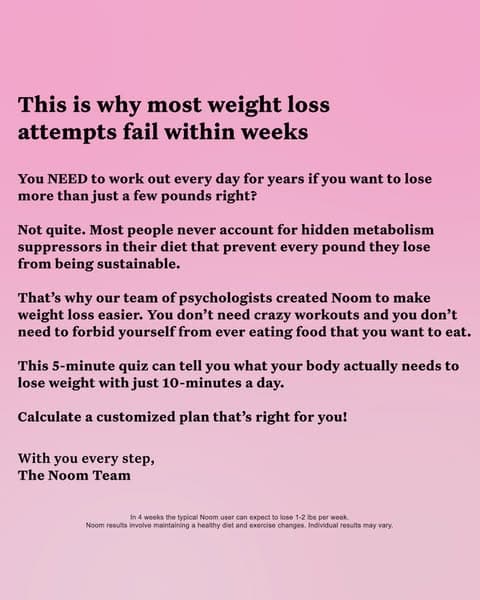
- Noom: the pink letters, "Want to lose weight in 2025 without medication? Read this." (138 days), "This is why most weight loss attempts fail within weeks" (143 days), signed With you every step, The Noom Team.
- Noom: "Menopause weight gain feels unfair. You didn't change that much. But your body did." (120 days).
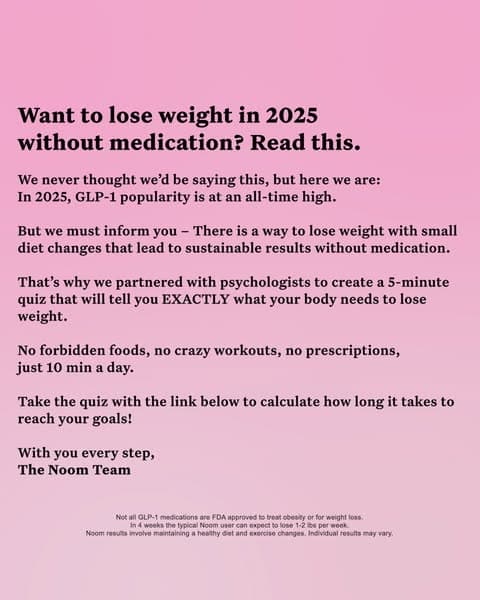
Why it runs: a person searching their own diagnosis will read 300 words. The product appears at the end, or on the page, so the ad does not go out of date.
8. The series
One template, many versions. In healthcare, the part that changes from ad to ad is usually the condition.
- Teladoc Health: one page and one ad family per condition, hypertension (169 days), diabetes (152 days), weight (131 days).
- Zocdoc: one page per specialty, dentists (89 days), dermatologists (41 days), psychologists (19 days).
- Noom: the menopause line (200 days, 162 days, 120 days), the goal-weight grid in kilos and in pounds (406 days, 355 days), the "Aging & Metabolism" course pack (523 days).
- GoodRx: one ad per drug in the same week of August, Wegovy, Foundayo, Zepbound, all "plans for $39/mo., plus medication costs" (6 days each).
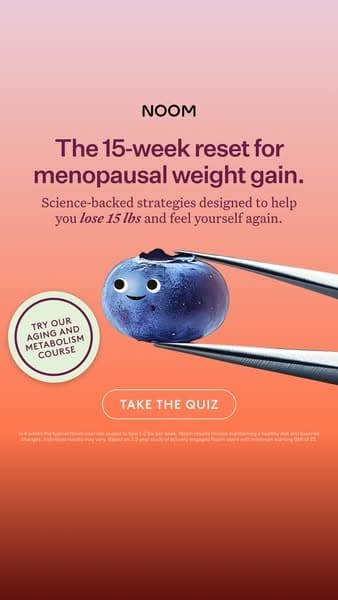
Why it runs: by the second ad the reader knows the format, and by the third they only read the part that changed. A condition works well as that part, because the reader has one.
One thing sits outside the eight because a single company runs it: the sale. Noom's "New Year's Sale, 6 months free with a 12-month plan" ran for 15 days in December, four variants, and nobody else in the set has run a dated discount.
Ad analysis: five angles almost nobody in healthcare uses
Read against every ad in the set, these five appear in two ads or fewer. The ads that do exist are listed, because they are where to start. One fintech gap is closed here: the price on the card, which GoodRx runs.
- A named competitor. No ad names one. The closest are Noom's letter, "Want to lose weight in 2025 without medication?" (138 days), which argues against GLP-1 drugs without naming one, and Zocdoc's "Urgent care isn't a primary care doctor" (12 days), which names a category.
- Trust as the headline. Board-certified lives in the body of Teladoc Health's ads (32 days, 13 days). HIPAA and privacy appear in Noom's page footer and in no ad we could read. No creative leads with this is private.
- The switch itself. Lively's "I can't believe I am JUST NOW finding a period app made BY women for women" (222 days) is the one ad that implies the reader is using something else. Nobody promises the move: bring your records, keep your doctor, we transfer the prescription.
- The clinician on the card. Teladoc Health's page puts a doctor on a phone screen in the hero; its ads show a whiteboard, a box, a pair of jeans. Zocdoc's one clinician-fronted creative, a dentist who raps about flossing (32 days), is a post with no link.
- The gift. No ad in the set offers one. In fintech, companies give an Apple Watch for a demo. Healthcare has nothing like it.
A sixth, for the calendar: in an August sweep only Noom's New Year's sale used a date, and it ran 15 days. Open enrollment and allergy season are likely to change that.
Landing page analysis: what happens after the click
Here is where the ads send people, and the two channels do it differently:
- On Google, 28% of the ads point at the homepage. All 34 are GoodRx's, "Coupons For Your Prescriptions" and "Get Birth Control Pills Online" to goodrx.com. Ro sends 0 of its 60 there; 12 land on the weight-loss quiz page.
- On Meta, 0% do. 0 of the 123 ads that link to the brand's own site. And 88 of the 291 Meta ads carry no link at all, 57 of GoodRx's and all 19 of Hims & Hers's. Lively's 60 go to the App Store.
- So the pages worth studying are the social ones. The kind of page sorts healthcare advertisers into four tiers. Every page below is linked, so open them.
| Tier | The ad points at | In the sweep |
|---|---|---|
| 0 | The homepage | 0 of 123 ads |
| 1 | A product page that already existed | Teladoc Health's hypertension page, Zocdoc's dentists page |
| 2 | A page that exists because the ad does | Teladoc Health's start page, Ro's weight-loss quiz |
| 3 | A version number or a market in the path | Noom's exsf01 quiz, Zocdoc's botox-treatment-88, Lucis in French, GoodRx's Spanish shingles video, Ro's wegovy/pdp/s/2 on Google |
Tier 1: the ad points at a product page that already existed
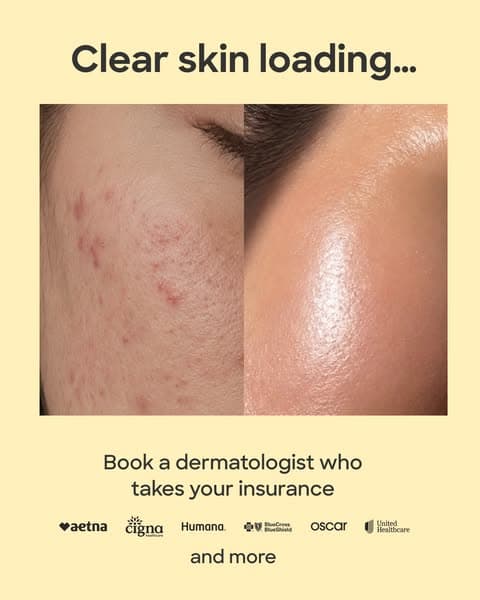
- Zocdoc's dermatologist creative lands on book.zocdoc.com/visit/dermatologists, the specialty search an organic visitor reaches from the site. Six ads point there, the oldest 41 days.
- Teladoc Health's condition pages are the same tier: hypertension since March 16, 2026 (169 days), 9 ads on that page.
- GoodRx's two 487-day explainer ads pointed at video pages that have since been taken down. A tier 1 page can disappear under a running ad.
Tier 2: the ad points at a page built for that ad
- Teladoc Health's "When something's off, just go to Teladoc Health first!" (32 days) lands on teladochealth.com/start, a page with no place in the navigation. Three ads, 76 days at most.
- Ro's Google ads do the same with ro.co/lp/weight-loss/quiz: the
lpin the path is a family of paid pages, and "$45 to Start Today" could not point anywhere else.
Tier 3: the ad points at a versioned or per-market page
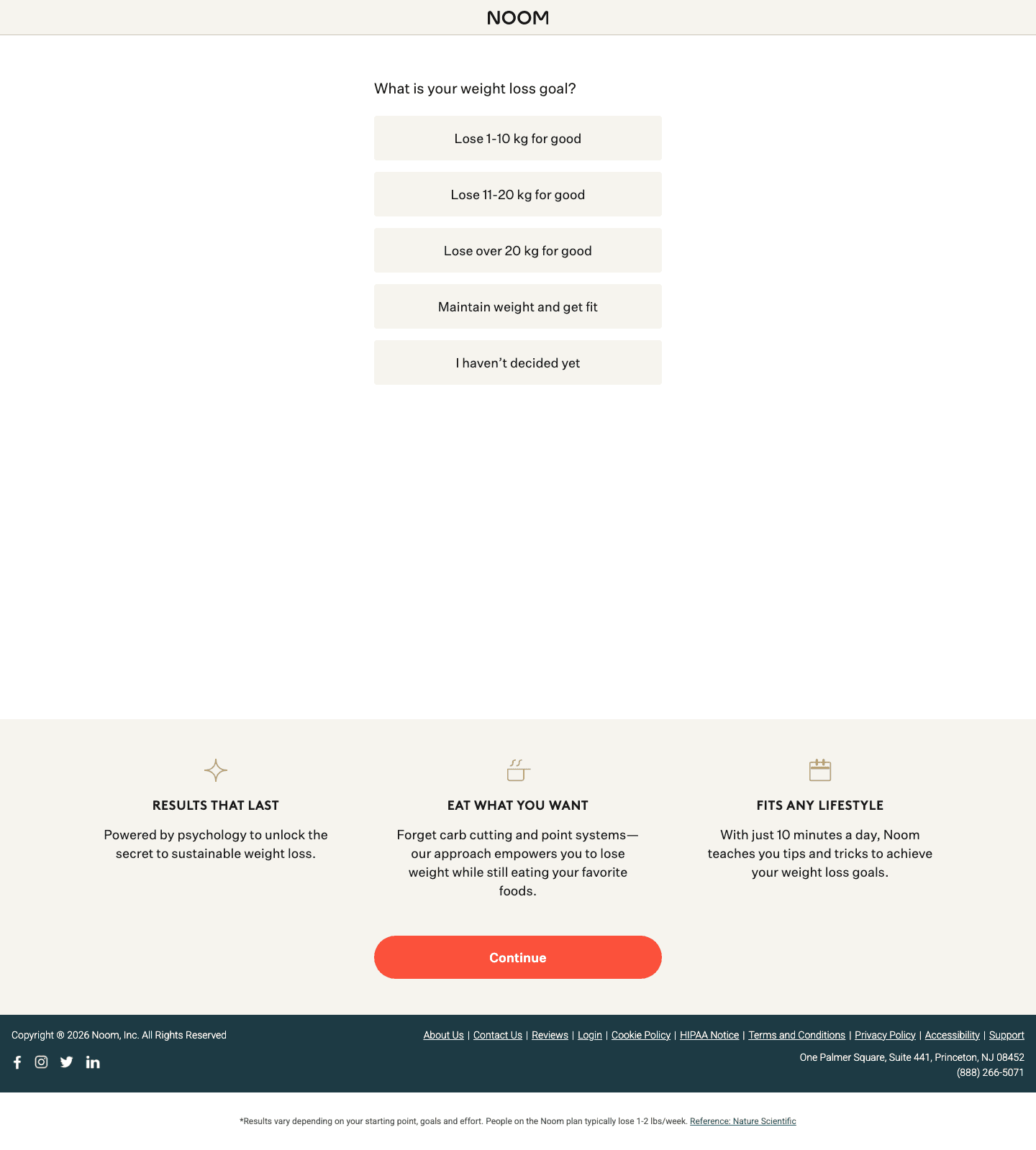
- Every Noom ad, kilos or pounds, lands on noom.com/programs/health-weight/exsf01. The suffix marks it as one page in a numbered set. That one address has taken 56 ads over 530 days.
- Zocdoc's Botox page carries the same kind of suffix,
botox-treatment-88(41 days). Ro's Wegovy page on Google readspdp/s/2, version 2 of a product page. - Market in the path is thin here: Lucis's one ad goes to
/fr, GoodRx's Spanish shingles video ran 379 days at/es/. The US companies make new versions by offer rather than by country.
How many paid pages each company runs
| Company | Brand-site Meta ads | Distinct pages | Of which per-market |
|---|---|---|---|
| Teladoc Health | 46 | 6 | 0 |
| Zocdoc | 17 | 5 | 0 |
| GoodRx | 3 | 3 | 1 |
| Noom | 56 | 1 | 0 |
| Lucis | 1 | 1 | 1 |
- The table shows two ways to run a paid account. Teladoc Health spreads 46 ads over 6 pages, one per condition. Noom points 56 at one page and lets the quiz do the sorting.
- Page counts separate companies where ad counts cannot: Teladoc Health and Noom both have 60 ads on file.
- Lively, Hims & Hers and most of GoodRx are left out: their ads go to the App Store or carry no link. Ro's paid pages are visible only on Google.
Try it on yourself. Open your own Ad Library entry, click the ad, look at where it lands. The homepage puts you on tier 0, and in this market nobody is there. A version number puts you on tier 3. Most teams are on tier 1, with one page for every ad.
Teardown 1: Teladoc Health
Two campaigns taken apart the way we take apart a page in a client audit: the ad, the page it lands on, the gaps. We picked Teladoc Health because its ad and its page match more closely than anyone else's in the set, and Noom because one page has carried 56 ads for 530 days.
The campaign. 8 ads point at the 24/7 care page, all launched between August 17 and August 26, 2026, all live on the September 1 sweep: three dynamic ads and a video on August 19, image versions of the whiteboard on August 23 and 26. It sits beside 13 mental-health ads launched since late July and the condition campaign that has run since March. Every ad is active, so everything below is checkable in the Ad Library today.
The ads
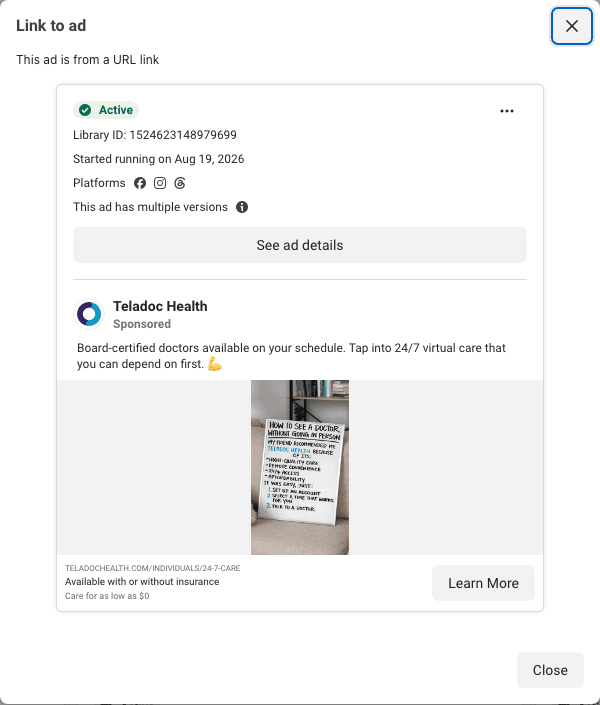
Read the card from the top. The primary text makes two promises in one line (board-certified doctors available on your schedule, 24/7 virtual care you can depend on first). The creative is a whiteboard leaning on a sofa, hand-lettered: a friend's recommendation with four reasons (high-quality care, remote convenience, 24/7 access, affordability) and three steps (set up an account, select a time, talk to a doctor). Under the link, two lines close the sale: Available with or without insurance and Care for as low as $0. Nothing on the card is a stock photo of a doctor.
The second creative is a video, and its card carries the speed angle: "Skip the waiting room. Talk to a doctor in minutes, wherever you are." Same two closing lines under the link. A third, "Still scrolling for answers? You can Teladoc that." (12 days), is written for the person reading symptoms on their phone at midnight, which is who a 24/7 page is for.
The landing page
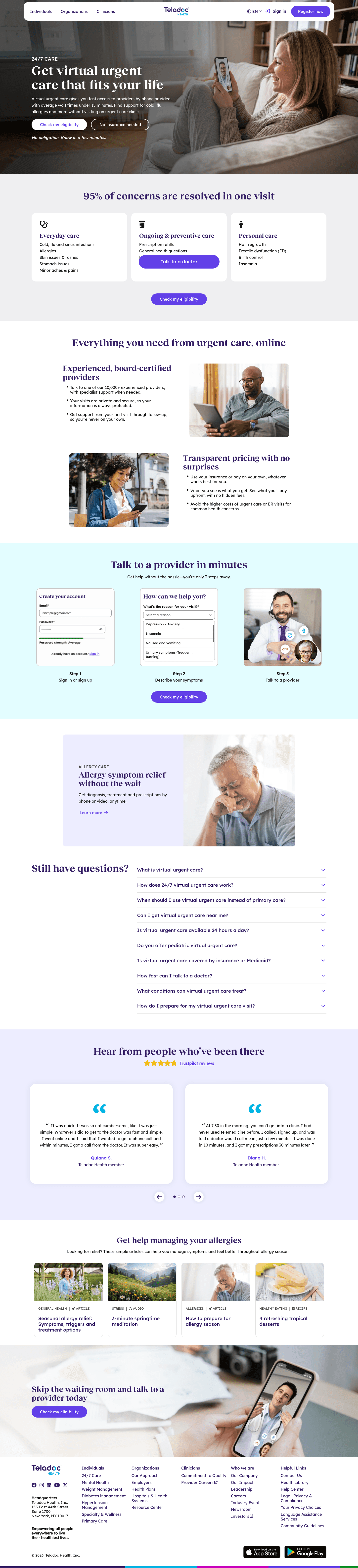
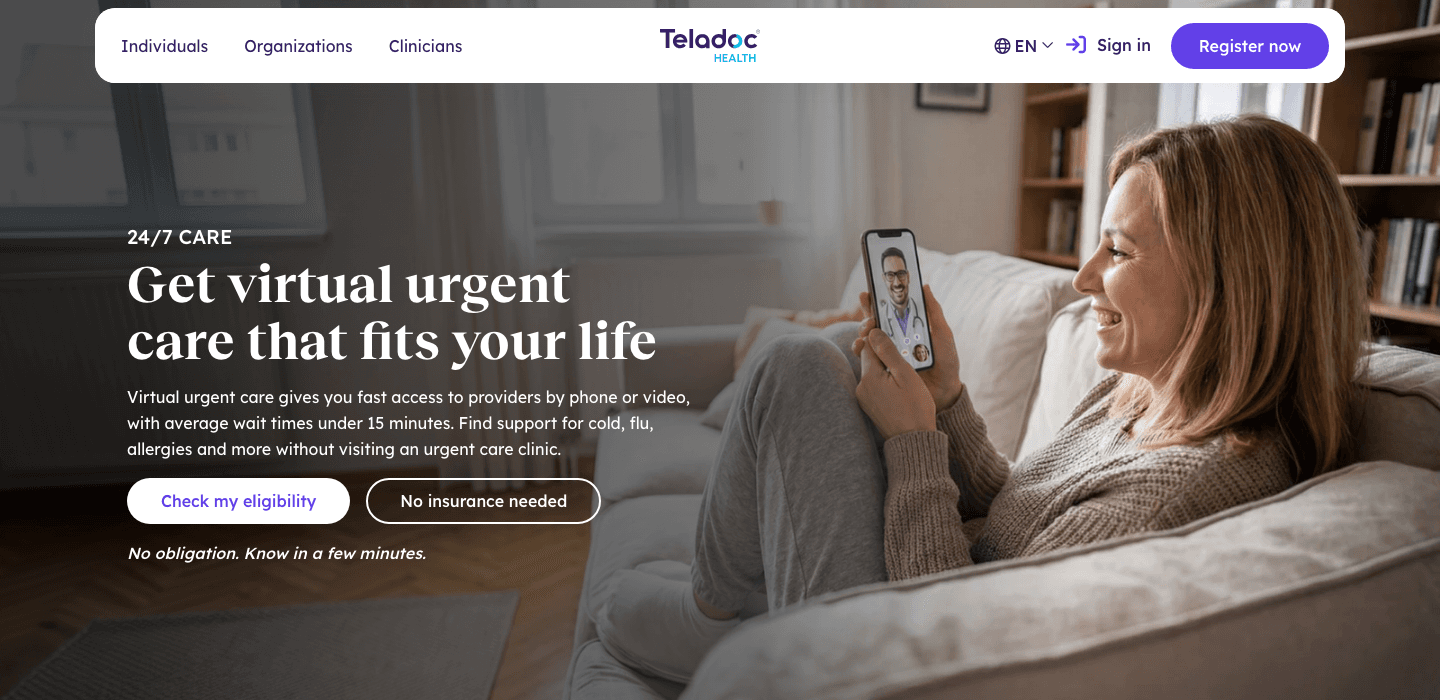
The hero. The eyebrow says 24/7 care, the headline says Get virtual urgent care that fits your life, and the subhead backs the ad's promise with a number: average wait times under 15 minutes. Then two buttons: Check my eligibility for the insured visitor and No insurance needed for the other one. The ad said "with or without insurance", and the hero gives each case its own button.
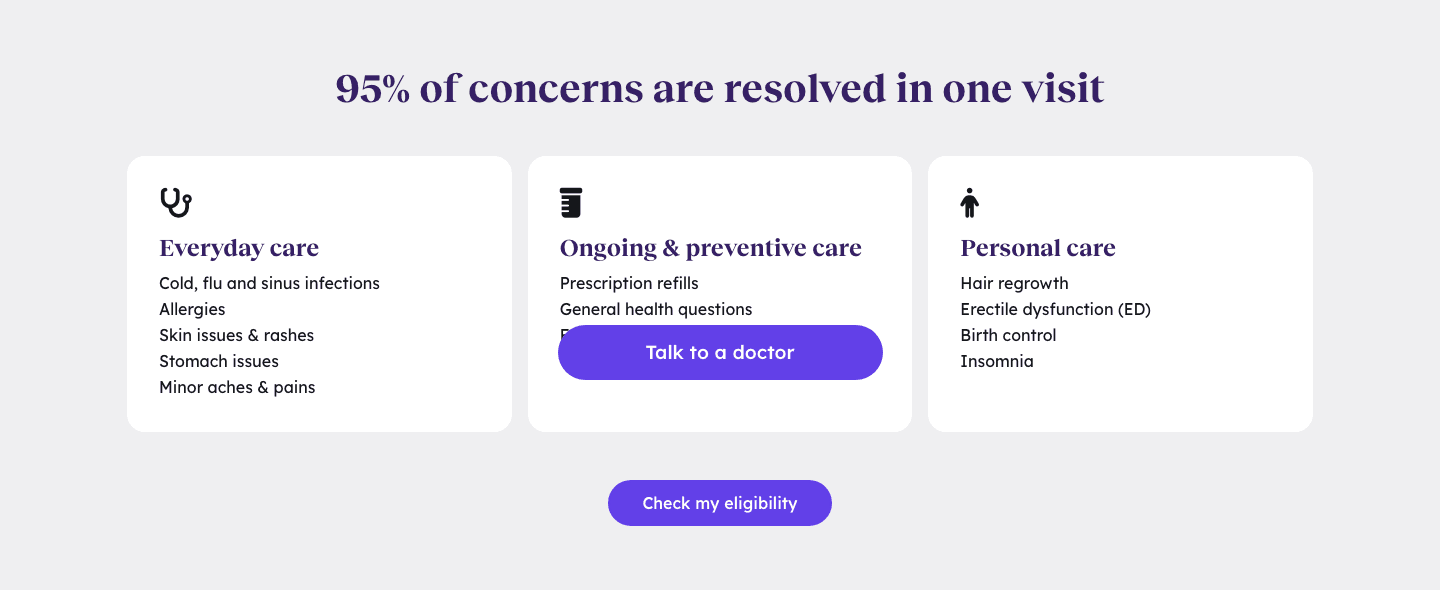
The condition grid. A claim (95% of concerns are resolved in one visit) over three columns of plain lists: cold, flu and sinus infections, prescription refills, hair regrowth, insomnia. Here the person reading at midnight finds out whether their problem is on the list.
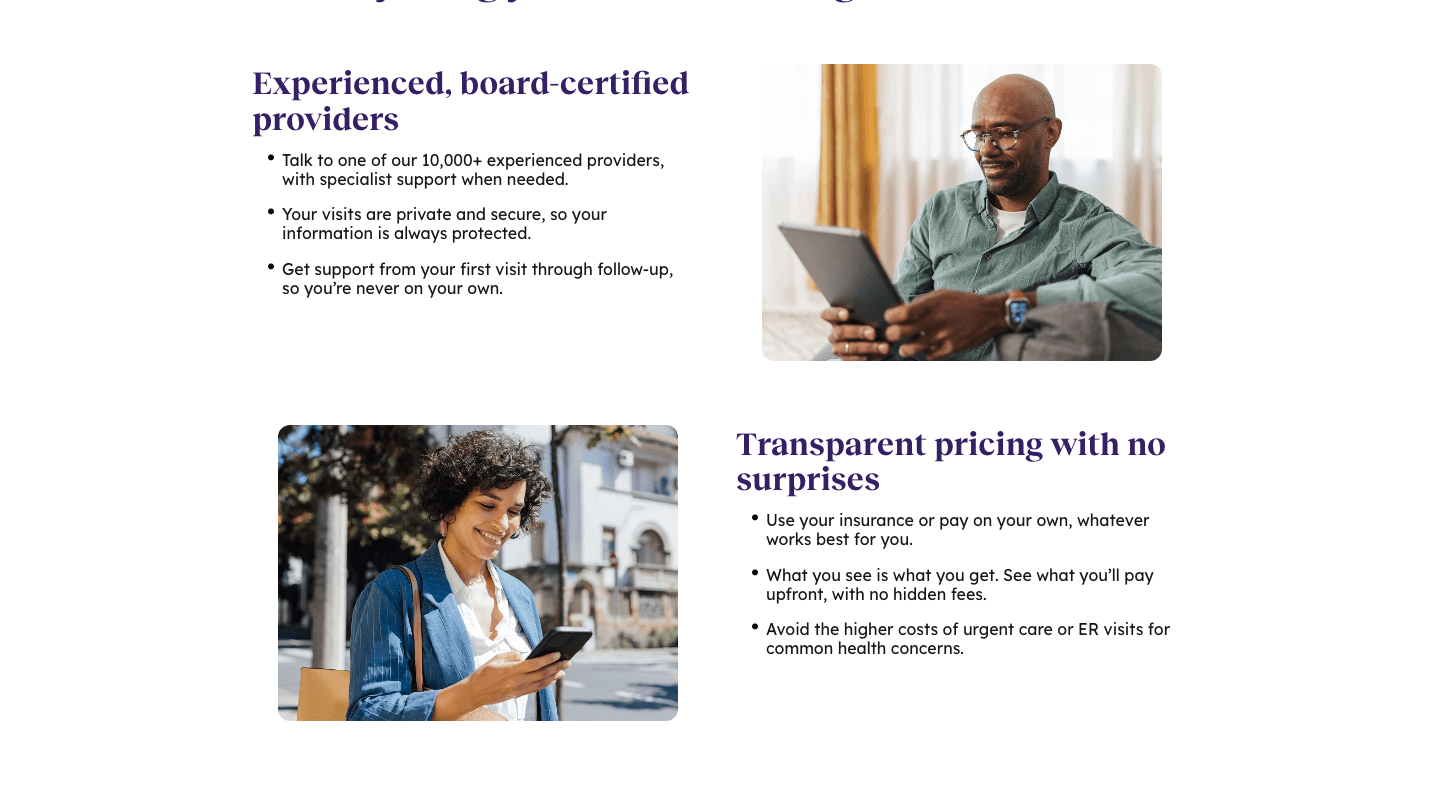
The proof. Two blocks, the whiteboard's four reasons expanded. Experienced, board-certified providers: 10,000+ providers, private and secure visits, support through follow-up. Transparent pricing with no surprises: use your insurance or pay on your own, see what you'll pay upfront. The ad's affordability and high-quality care each get a heading.
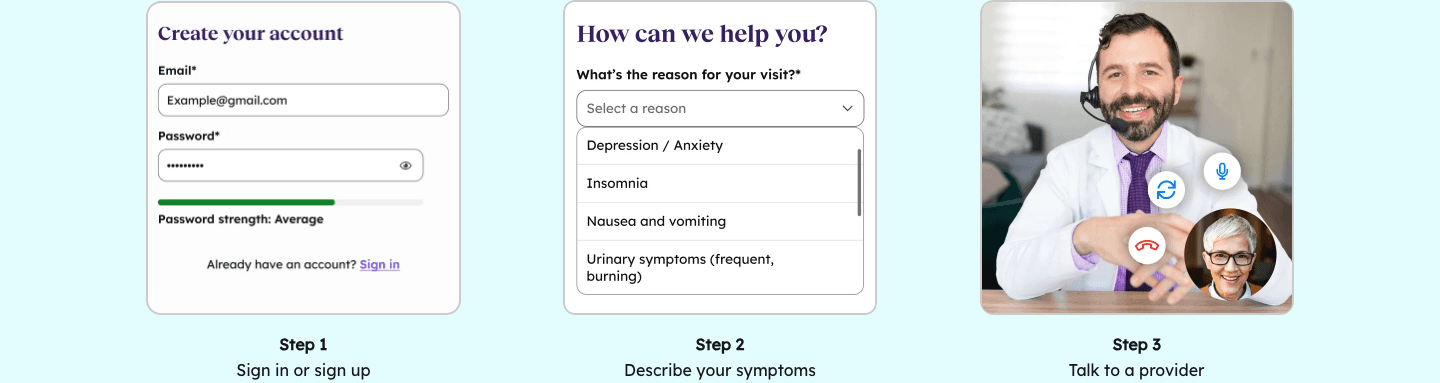
The three steps. Talk to a provider in minutes, you're only 3 steps away, then the steps as product screenshots: the account form, the reason-for-visit dropdown, a doctor on a video call. The whiteboard listed three steps in marker; the page shows the same three as screens.
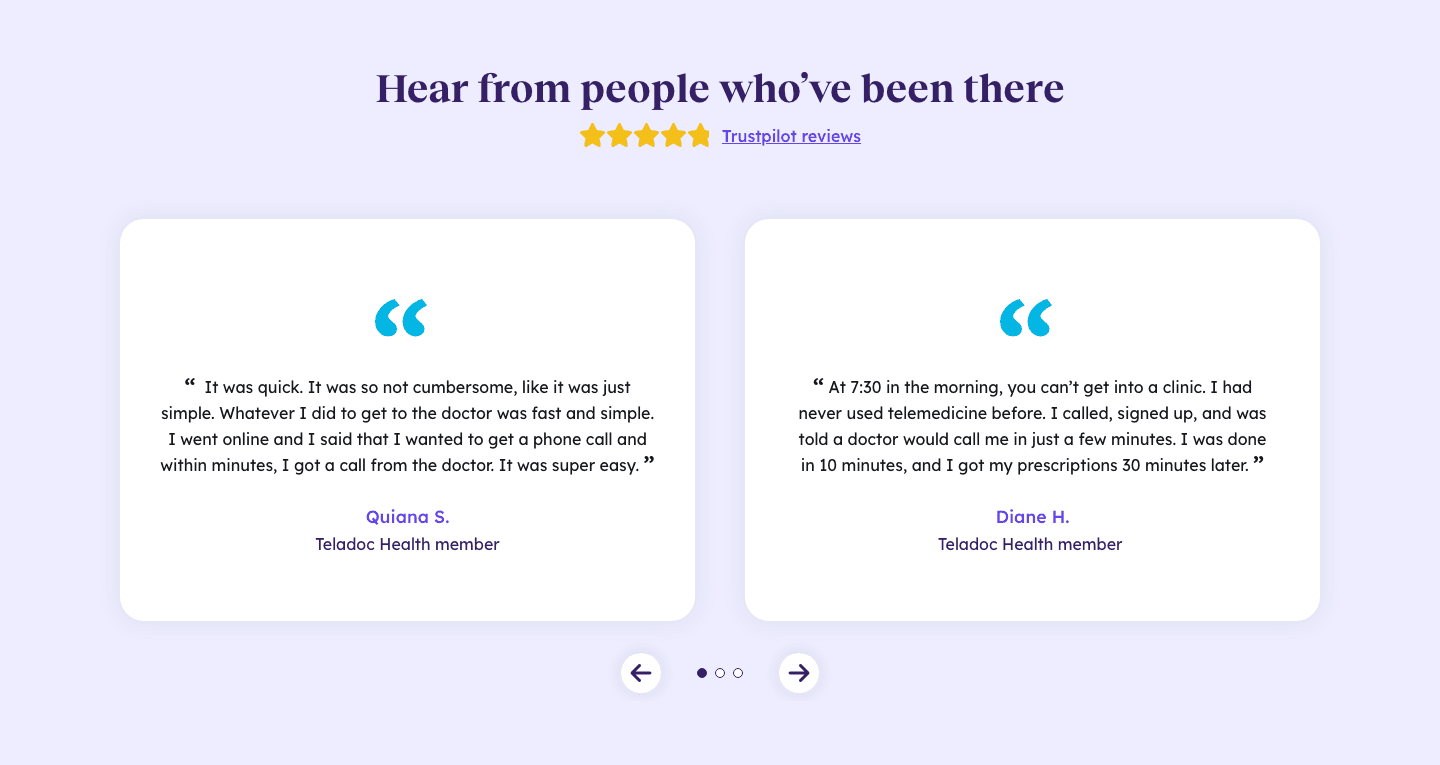
The proof, again. Ten questions in an accordion, then two member quotes under Trustpilot stars, both about the clock: within minutes, I got a call from the doctor and I was done in 10 minutes, and I got my prescriptions 30 minutes later.
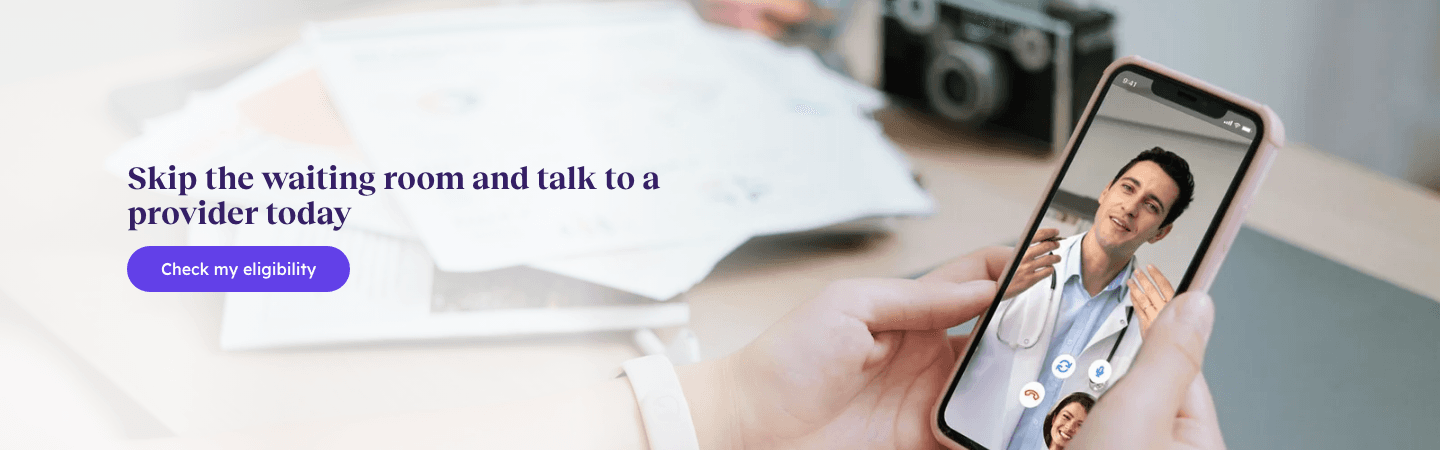
The closer. Skip the waiting room and talk to a provider today, the video ad's first four words, over a phone showing a doctor, and the eligibility button one more time.
Message match
| The ad says | The page proves it with |
|---|---|
| Talk to a doctor in minutes | Average wait times under 15 minutes; two members timing their call |
| Available with or without insurance | Two hero buttons, one per case |
| Board-certified doctors | 10,000+ experienced, board-certified providers |
| Set up an account, select a time, talk to a doctor | The three-step strip, as screenshots |
| Skip the waiting room | The closer, word for word |
The gaps
Two gaps, both fixable in a week. The card says Care for as low as $0 and the page never shows a number: Transparent pricing with no surprises is a heading with three sentences and no price under it. The ad's only number, $0, never appears on the page. And the page's main button, repeated four times, is Check my eligibility, an insurance check, on a page whose ads lead with with or without insurance; the uninsured visitor gets one button in the hero, and after that the page keeps asking them to check insurance they do not have.
The competitive audit does this same reading on your own paid pages.
Teardown 2: Noom
The campaign. 60 ads on file, 56 pointing at one address, the oldest live since March 20, 2025: 530 days on the September 1 sweep. 46 of the 60 have passed 45 days and 39 are still live. Three creative families share the page: the goal-weight grid (406 days), the Aging & Metabolism course pack (523 days) and the menopause blueberry (200 days), plus the pink letters and the raspberry testimonial. 21 of the 60 are dynamic ads, so their copy comes back as templates and the angle has to be read off the creative.
The ads
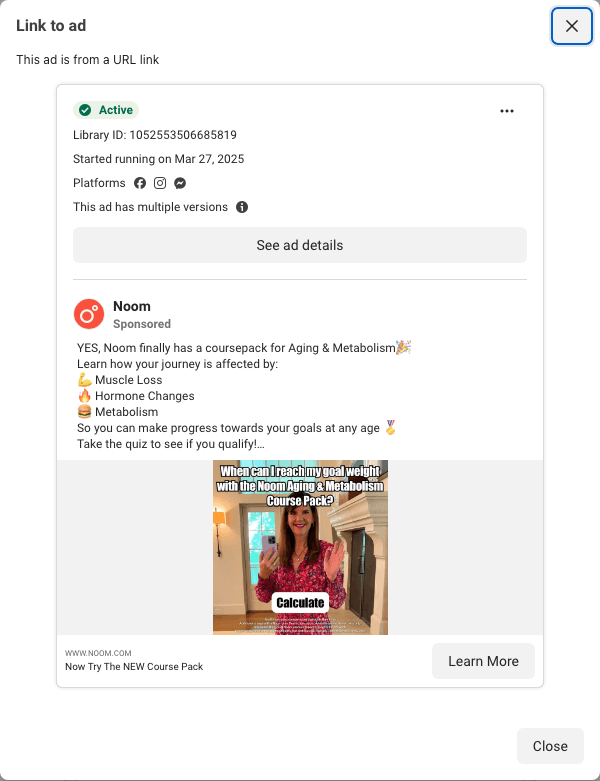
The oldest readable creative in the set is a selfie with a question written over it, "When can I reach my goal weight with the Noom Aging & Metabolism Course Pack?", and a white Calculate button drawn onto the photo. The primary text ends on the eligibility line, Take the quiz to see if you qualify!, and the link headline is Now Try The NEW Course Pack, on an ad running since March 2025.
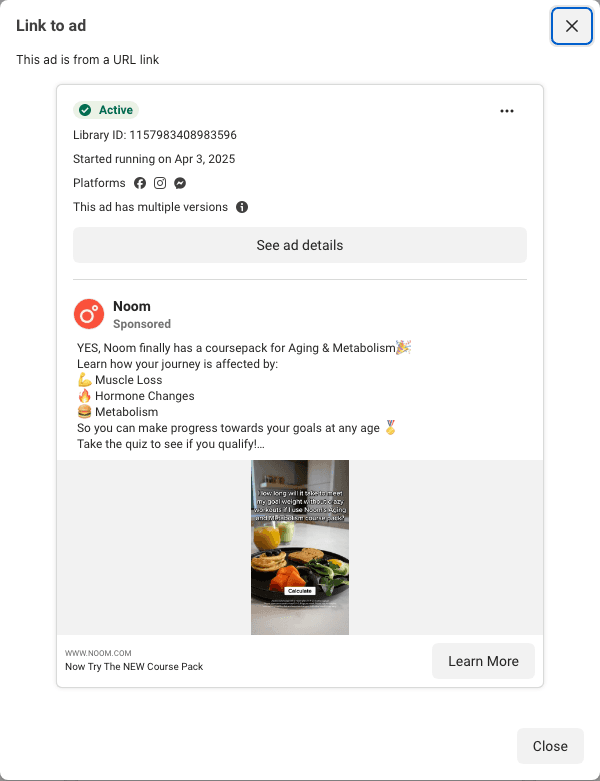
The second card is the same ad with the photo swapped: a plate of eggs and oranges, the same question, the same button. Noom tests this way: the text stays the same, the photo changes, and the address never changes.
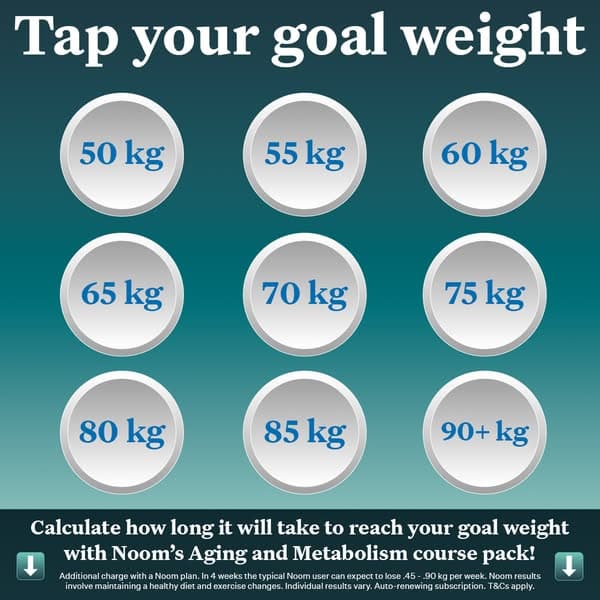
The third is the grid. Tap your goal weight, nine circles from 50 kg to 90+ kg, and one line under them: Calculate how long it will take to reach your goal weight. The primary text is five words, Take this FREE 5min quiz. There is a pounds version (355 days) with the same layout, and two rows of fine print on the creative itself: results vary, 1 to 2 pounds a week.
The landing page
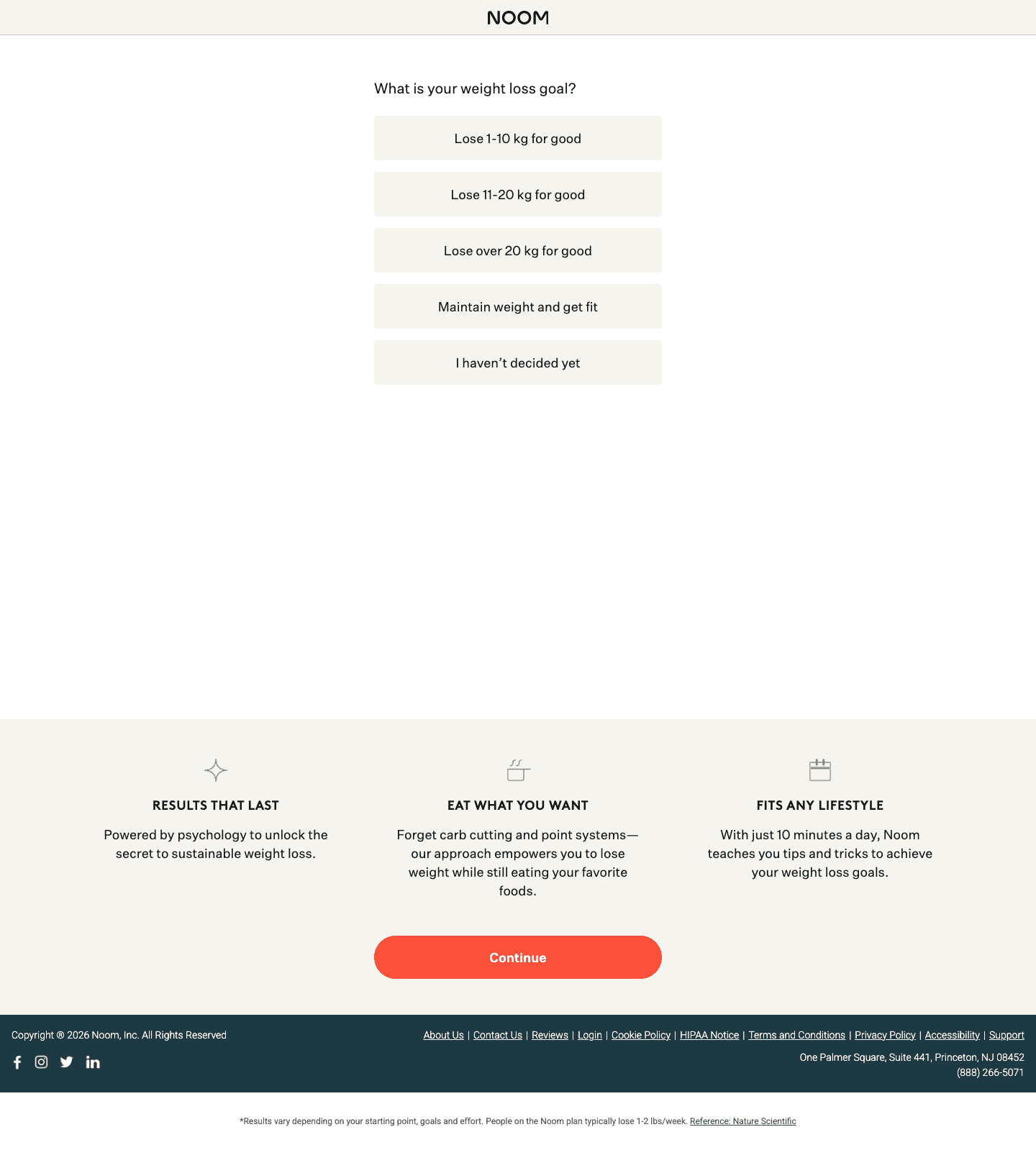
The first question. The page is 1,599 pixels tall, and it is question one of the quiz the ad sold: What is your weight loss goal?, five buttons, no hero, no headline, no navigation, the Noom wordmark alone at the top.
The three reasons. Under the buttons, on a beige band: Results that last, Eat what you want, Fits any lifestyle (with just 10 minutes a day). The pink letters' three promises, printed under the first question in case the visitor came from a different creative.
The compliance footer. The HIPAA notice, the Princeton address, a phone number, and under it the same footnote the creatives carry: People on the Noom plan typically lose 1-2 lbs/week, with a citation.
Message match
| The ad says | The page proves it with |
|---|---|
| Tap your goal weight | Question one: what is your weight loss goal, five buttons |
| Take this FREE 5min quiz | The page is the quiz; no price, no signup before the first answer |
| Only 10 minutes a day | Fits any lifestyle, with just 10 minutes a day |
| No food is forbidden | Eat what you want |
| Typical user loses 1-2 lbs per week | The same footnote, with a citation |
The gaps
Two gaps. The card promises a calculation, how long it will take to reach your goal weight, and nothing on the first screen says that number is coming: no progress bar, no 5 minutes, no your timeline at the end. And one page carries 56 ads: the visitor who clicked Is menopause causing weight gain? and the one who clicked the kilo grid land on the same generic question, with no trace of the ad they came from. The quiz can personalise later questions, but the first screen is the same for every ad. Find revenue opportunities for your website, backed by real data. Get your 3 free opportunities by email.
Key takeaways: five things to do with this
- Sell the eligibility check. The eligibility line is on Teladoc Health's 138-day diabetes ad, 13 of 15 Hims ads and Noom's 523-day course pack.
- Send the ad to a page built for the offer. 0 of 123 social ads here land on the homepage. Teladoc Health has a page per condition, Noom has one quiz page for 56 ads. Pick one of the two.
- Answer the bill and the plan on the card. $0, free, takes your insurance, with or without insurance: the long runners carry one of them under the link, and GoodRx's $249 has been live for 119 days.
- Put the ad's sentence on the page. Teladoc Health's whiteboard lists three steps; the page shows the same three as screenshots. Noom's card says tap your goal; the page's first screen is that tap.
- Try one of the five open angles. A named competitor, privacy as the headline, a clinician on the card. Almost nobody in this market runs them.
How to run this analysis on your own competitors
The Meta Ad Library and the Google Ads Transparency Center are public and free. Search the brand's page, not a keyword, set the country, filter to active ads, sort by start date. Then:
- Group the ads by angle. Use the eight above. In this set, brands run between two (Hims & Hers, Ro, Lively) and six (Noom, Teladoc Health).
- Keep the ones that have run 45 days or more. The advertiser keeps paying for them. Click through and read the page each one lands on.
- Write down the angles they are not running. Start your next campaign from that list.
Or send us the URL and we do it for you.
How we did the analysis
- Sample: the healthcare companies on the benchmark leaderboard, picked by traffic, not by advertiser status, plus GoodRx and Ro, which sit on the fintech list but sell healthcare and were set aside from the fintech post for this one. Fifteen were selected; Alan, Tempus AI and Doseform were not swept. That leaves 12, of which One Medical, Recursion and Anterior had no brand-verified Meta ad. Two more passed the filter but failed a manual check: Amwell's 4 ads belong to a South African wellness page called Am Well that shares the name, and Ro's 2 readable Meta ads render a Hero FinCorp loan creative for an Indian app listing. Both are set aside; Ro's 60 Google ads are its own and are used. Lucis's one ad is a French video with no readable creative.
- Sources: the Meta Ad Library, searched by brand page, and the Google Ads Transparency Center, both through Apify. The Meta sweep found 291 brand ads, the Google sweep 120 (GoodRx and Ro, 60 each).
- Filter: brand-verified ads only. An ad counts when the landing host is the brand's own domain, an app store, or a Meta short link from the brand's page. Everything else is dropped: 522 ads whose landing host did not match, 352 whose page name did not.
- Ranking: days active. The floor of interest is 45 days, the point at which an ad has survived at least one budget review.
- Reading: every distinct message on Meta was read by hand and put in one angle. Dynamic ads return a template instead of copy, so those were read from the creative image and the landing path; 127 ads with a template and no rendered creative count only in the totals.
- Limits: the library returns about 60 ads per brand per market, so the counts per company are a sample floor, and the shares inside the sample are what to read. Lively's, Hims & Hers's and most of GoodRx's ads carry no brand-site link. Zocdoc's booking pages sit behind a bot wall and were not captured. Meta publishes reach only in the EU and never publishes spend.
Every ad above links to its primary source in the sources list, so you can check every claim yourself.
Sources
Primary sources, all public and checkable today. Open any Meta ad with its Library ID at facebook.com/ads/library/?id=ID.
- Teladoc Health's whiteboard ad, Library ID 1524623148979699, active since August 19, 2026: facebook.com/ads/library/?id=1524623148979699
- Teladoc Health's video ad, Library ID 1044608904871305, active since August 19, 2026: facebook.com/ads/library/?id=1044608904871305
- Noom's course-pack ad, Library ID 1052553506685819, active since March 27, 2025: facebook.com/ads/library/?id=1052553506685819
- Noom's goal-weight grid, Library ID 1440699726959664, active since July 22, 2025: facebook.com/ads/library/?id=1440699726959664
- The creatives shown above: Noom 947937008088344, 1362862782193831, 717288391202603, 767806852476347, 830196620098474, 1365709038080796, 1505540500620956 and 1157983408983596; Teladoc Health 1524623148979699 and 1044608904871305; Zocdoc 1059312866756699 and 1550622783127749.
- Other ads quoted: Noom 1174038617682476 (the oldest live ad, 530 days), 1936501263658764, 1188579763343031 and 1319147103166168; Zocdoc 1565151801988648 (the Venn diagram); Teladoc Health 911053658657044, 3919390771700840, 1053771710856115, 1709177920258460, 1519674279696031, 1015251324727306, 1288782933195732, 1073157905574375, 1392100746395111, 1564306605469196 and 1601249401130928; Zocdoc 2273894493150522, 899956002797566, 1395125952764790, 4163899043741831, 1929776370996907 and 1061945913189435; GoodRx 374519548377138, 1409132679734536, 1475372787371514, 2778463509190829, 1856553309049300, 2381147769011773 and 822041516670936; Hims & Hers 1744020396628052 and 1995067031077817; Lively 1187087223147554, 956830623552221, 922074417421137, 1447828156580431, 1329760275665924 and 916155070925644; Lucis 1495135372121757.
- The open-angle ads: Noom 767806852476347 and 1365709038080796, Zocdoc 899956002797566, 2273894493150522 and 1061945913189435, Lively 922074417421137, Teladoc Health 1015251324727306.
- The landing pages, live: teladochealth.com/individuals/24-7-care, noom.com/programs/health-weight/exsf01, teladochealth.com/start, book.zocdoc.com/visit/dentists, ro.co/lp/weight-loss/quiz. GoodRx's two anemia video pages answered 404 on September 5, 2026.
- The sample: the healthcare leaderboard of the Web Anatomy benchmark, selected by traffic, and the sibling post on fintech ads.
- The Google Ads Transparency Center for the search ads: adstransparency.google.com
- Ad sweeps made August 25 to September 1, 2026 (Meta by brand page, Google by advertiser); the landing-page captures made September 1, 2026.
Data collected August 2026. Ad statuses and run lengths change; the library links above always show the current state.

Written by
Gabriel Amzallag , Founder, Web Anatomy
5 years CRO + SEO at Qonto (2021–2025). After advising 15+ SaaS on their websites (Payfit, Pigment…), the same patterns kept breaking, so I decided to build the source of truth on what works on the web: the intelligence layer every tool, builder, and team uses to ship sites that perform.
More from the blog
Playbooks
We analyzed the ads the top developer tools companies run. Here is what works.
Which developer tools ads kept running in September 2026, the eight angles they use, and the pages behind them. With the ads to open and read yourself.
 Gabriel Amzallag23 min read
Playbooks
We analyzed the ads the top HR tech companies run. Here is what works.
Which HR tech ads kept running in 2026, the eight angles they use, and the pages behind them. The takeaways, with the ads to look at.
Gabriel Amzallag26 min readPlaybooks
We analyzed the ads the top marketing software companies run. Here is what works.
Which marketing software ads keep running in 2026, the angles they use, and the pages behind them. Seven angles that work, five almost nobody runs.
Gabriel Amzallag23 min read