
TL;DR
- The ads that keep running sell one of eight angles: the fee, the clock, the busywork, the document, the customer with a number, the gift, the joke, the series. Most brands in the lists below run two to four of them, and Ramp runs seven.
- Five angles are almost empty in fintech: a named competitor, trust as the headline, the price on the card, the switch itself, interactive proof in the ad.
- Social ads almost never land on the homepage (4%, against 64% for search). The best teams build a page per offer and version it, and you can see it in the URL.
- The ad and the page say the same thing. TaxGPT promises tax returns in 10 minutes, and its page shows it happening.
13 companies, every brand ad in the public Meta and Google libraries, August 2026. How we did it is at the end.
The sample: 13 fintech companies, their ads, and where the ads land
| Company | Meta ads on file | Ran 45 days or more | Still live | Oldest live ad | Where the ads land |
|---|---|---|---|---|---|
| Lemonade | 60 | 59 | 59 | 386 days | car, pet, UK |
| SoFi | 60 | 57 | 59 | 105 days | one tracked loan page |
| Coinbase | 81 | 67 | 61 | 260 days | the app store, every ad |
| Deel | 60 | 50 | 46 | 225 days | case studies, guides, localized payroll pages |
| Qonto (FR) | 60 | 48 | 7 | 447 days | open an account, the card, company creation |
| Plaid | 60 | 45 | 60 | 149 days | contact, reports, events |
| Ramp | 60 | 35 | 60 | 190 days | business cards, startups, Ramp is for everyone |
| Rippling | 60 | 34 | 42 | 152 days | demo forms, the homepage |
| Robinhood | 120 | 35 | 4 | 145 days | EU crypto pages, Instagram |
| Chime | 61 | 21 | 56 | 107 days | three join pages |
| TaxGPT | 17 | 3 | 17 | 48 days | tax preparation, tax planning |
| Gusto | 63 | 2 | 58 | 27 days | payroll, consider Gusto |
| Stripe | 0 | 0 | 0 | none | Google only |
Lemonade and SoFi have found their ads: every one on file has passed 45 days and almost every one is still live. Gusto is looking: 63 ads, two older than 45 days, the whole account relaunched around its AI assistant in July.
Ad analysis: the eight angles fintech ads use
Every message on Meta fits one of eight angles. For each one: the ads that ran longest, one creative to look at, and why it keeps running. The number in brackets is how many days the ad had been running when we looked.
1. The fee
The oldest consumer angle in fintech, and still the most used.
- SoFi: "Never met a fee we liked" (104 days). Thirteen creatives built on one sentence, no fees required, one athlete, one blue.
- Lemonade: "Don't overpay for contents insurance" (122 days, UK) and "save up to 90% on vet bills" (124 days).
- Chime: fee-free overdraft, no hidden fees, no minimum balance, on one checklist card.
- Qonto: a month free (148 days).
- Ramp Canada: "1% back on CAD and USD, no FX fees."
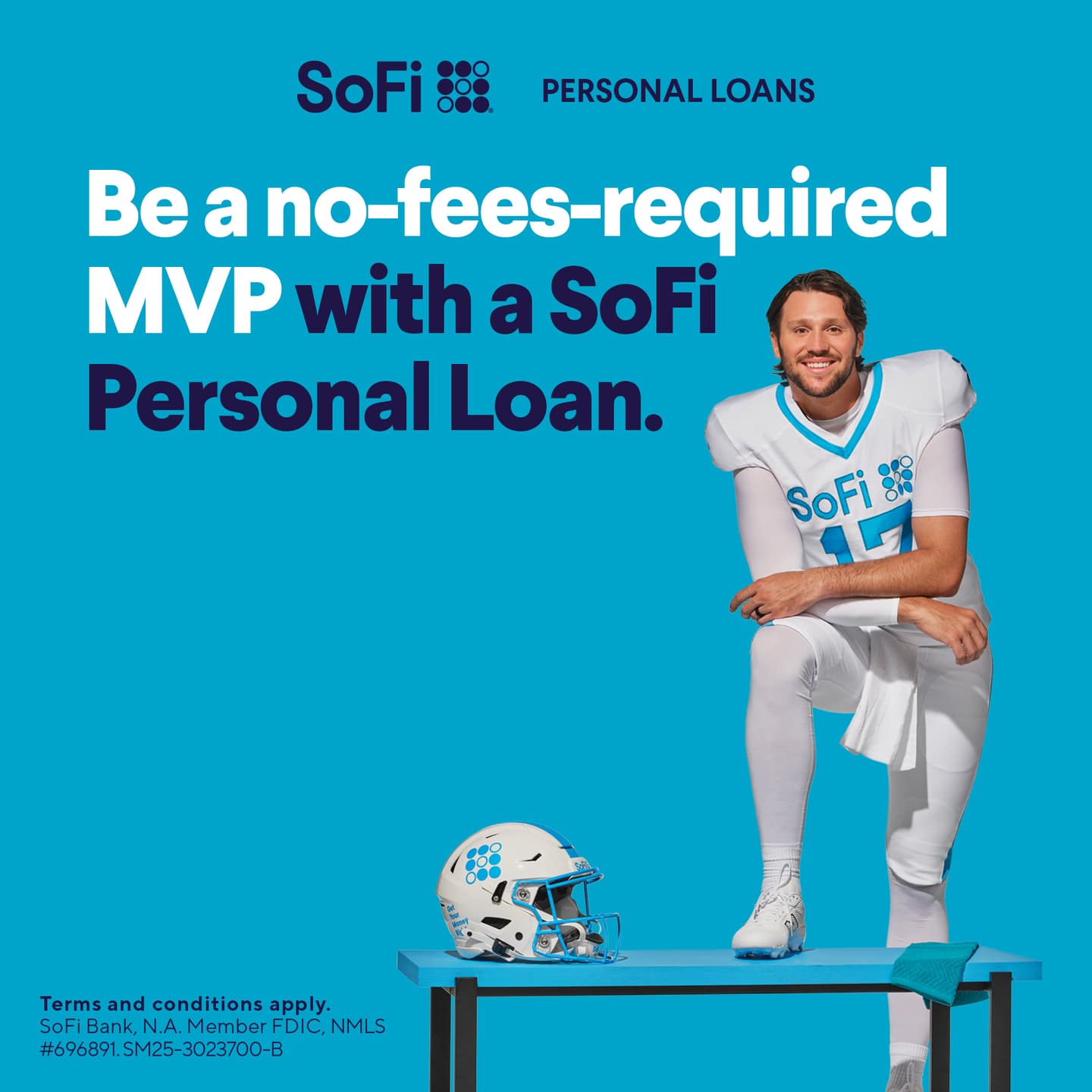
Why it runs: no and fees are the most repeated pair of words in the consumer set, and the fine print sits on the card, so the ad answers "is this legit" before the click.
2. The clock
Speed, always as a number. Not one speed ad in the set says fast without a unit.
- Chime: "Open a Chime Checking Account in 2 minutes, we'll spot you up to $200" (326 days, the longest-running text card in the set).
- Qonto: "Ouvrez votre compte en 10 min" (183 days).
- Rippling: "Onboard new hires in 90 seconds. Seriously." (101 days).
- Ramp: "Open in under a minute" (79 days).
- TaxGPT: "Prepare tax returns in 10 minutes" (48 days).
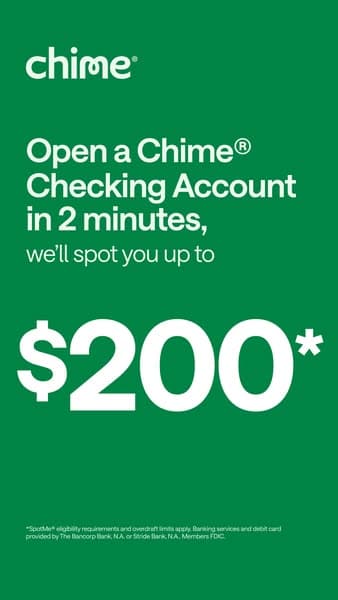
Why it runs: a number of minutes is something the reader can check after signing up.
3. The busywork
The B2B pain angle: spreadsheets, manual work, tools that do not talk to each other.
- Ramp: "Automate the busywork" (143 days), "Close your books faster with automated expenses" (132 days), "Ramp replaces the spreadsheet" (65 days).
- Deel: "If global team management feels like it's held together by duct tape and spreadsheets, you're not alone" (138 days).
- Rippling: "All your HR work, done in one place" (70 days).
- Qonto: "Fini les factures à récupérer manuellement" (149 days).
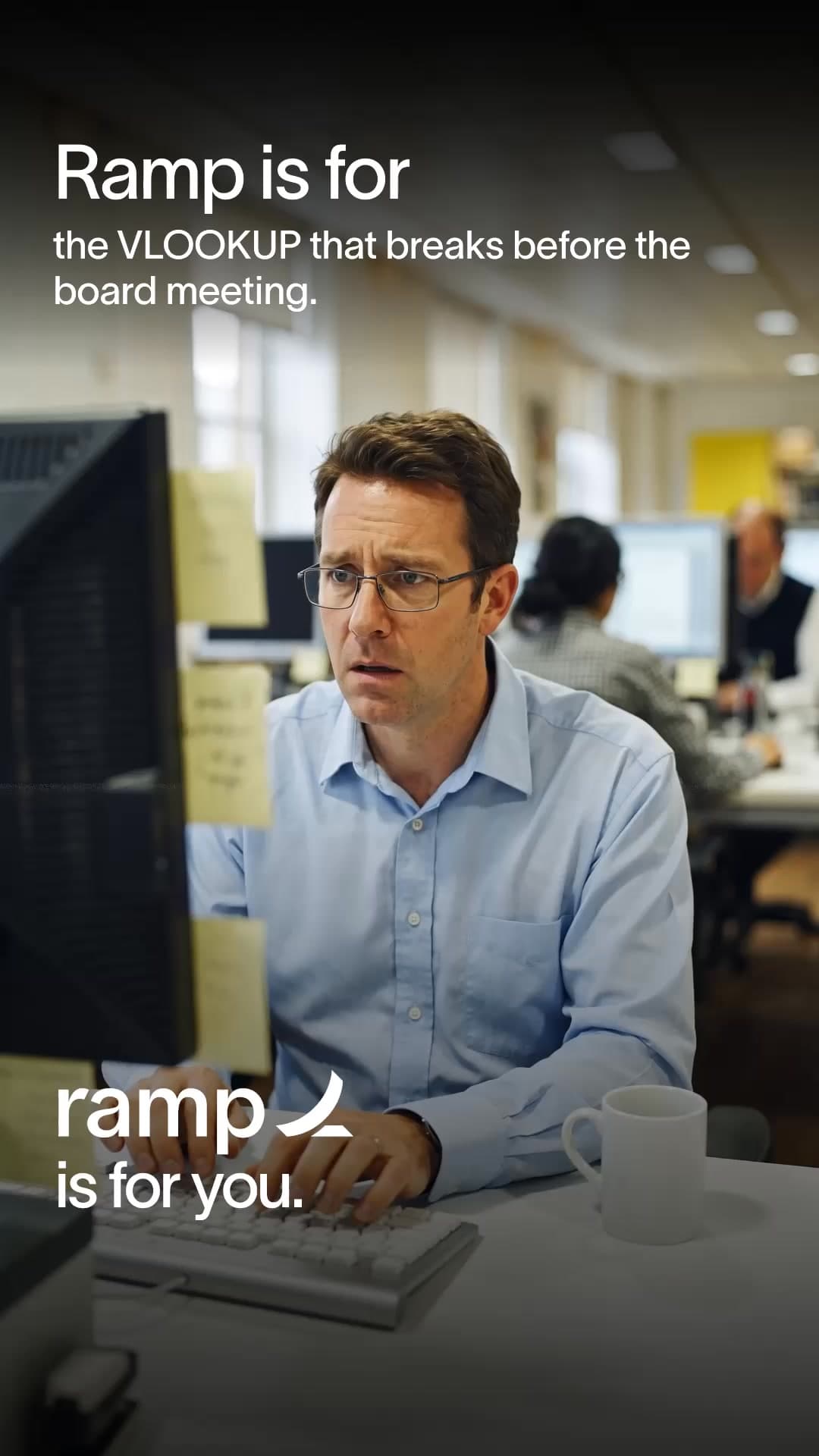
Why it runs: it names a chore the buyer already hates and promises to take it away.
4. The document
Nothing for sale on the card. A guide, a report or a checklist in exchange for an email, and the B2B advertisers run these longer than anything else they make.
- Ramp: "The practical guide to using AI for accountants" (154 days, live), and the 2026 CPA firm benchmarking guide with CalCPA.
- Plaid: "$27B in fraud losses. What's your defense?" for a white paper (139 days); a report on modern ACH with Payments Dive (123 days).
- Deel: a founder's guide to the US visa (122 days), a talent management playbook (98 days), an offboarding checklist in Spanish (133 days).
- SoFi: "The Cost of Admission 2025", a survey of 3,500 families (103 days).
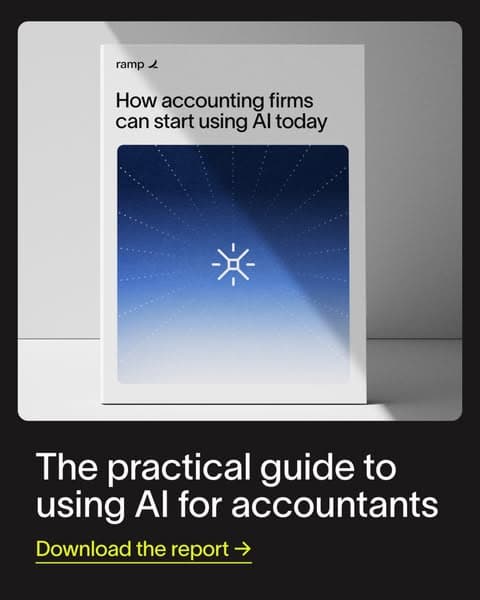
Why it runs: the product appears on the page the ad opens, never on the card, so the ad does not go out of date.
5. The customer with a number
Social proof counts here only when it carries a figure and a name.
- Deel: "BCG grew 30% in 4 years and centralized its global payroll for 6 countries" (146 days); "Mynewsdesk saves 120 hours and covers 160 salaries across four countries" (190 days).
- Ramp: "4,000+ construction companies run expenses through Ramp" (73 days); "Cursor, Notion, Perplexity, and Vercel all run on Ramp" (79 days).
- Plaid: underwriting tips from Rent App's CTO (140 days).
- Chime: "1 million+ 5 star app reviews."
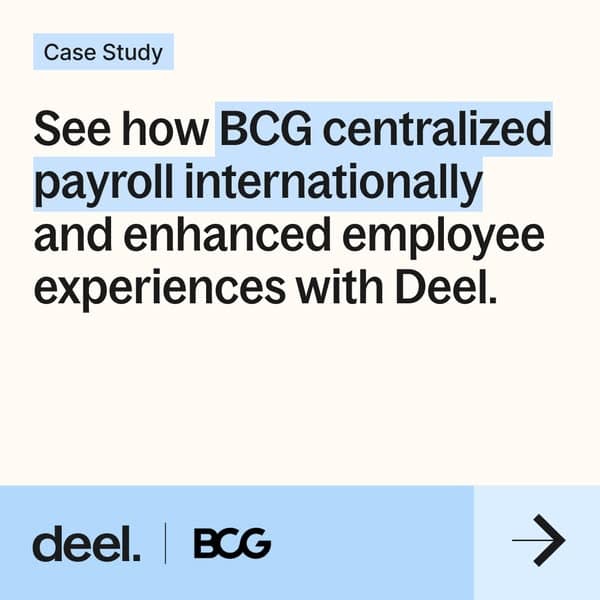
Why it runs: "trusted by" without a number is rare among the long runners. Most of them use a logo plus a percentage.
6. The gift
Only two companies buy demos with hardware.
- Rippling: "Take a demo today and score an Apple Watch" (133 days); "Take a Demo, Claim Your Apple AirPods 4" (101 days).
- Ramp: "Free Oura Ring for Accounting Partners" (58 days); AirPods Pro (41 days); "Get a Blackstone Grill when you take a demo with Ramp" (35 days).

Why it runs: these go to Meta lead forms, not to a page. The gift takes the place of a price, and neither company puts a price in an ad.
7. The joke
Lemonade's whole car and pet lines, and the longest-running creatives in the set.
- A four-panel meme about "getting car insurance online" (386 days, live).
- "We're not mad you're under 25", a cake with 25 candles (324 days).
- "Car insurance that rewards your lack of speeding tickets, instead of penalizing you for your lack of birthdays" (312 days).
- Pets: "Also covers accidentally swallowing socks, bottle caps, rocks, or anything else your pet picks up while you're not looking" (119 days).
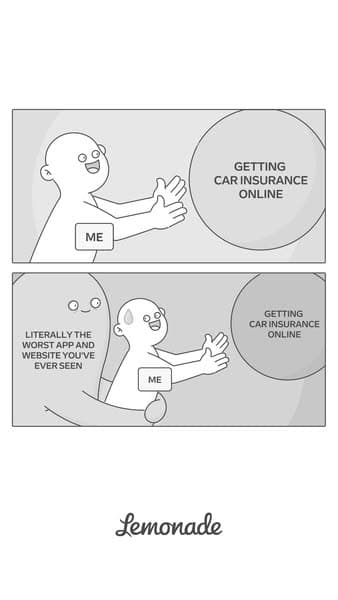
Why it runs: Rippling tried it once (24 days), Deel once (16 days). Only Lemonade keeps it going, because jokes are how the whole brand talks.
8. The series
One template with many versions, so an account can run a lot of ads that still look like one campaign.
- Ramp: "Ramp is for everyone", one ad per vertical (manufacturing, retail, healthcare, construction, 46 to 73 days), each ending "If that rings true, Ramp is for you."
- Coinbase: "Simplify Bitcoin with Coinbase", then Ethereum, Solana, XRP, Dogecoin, one asset per ad, all 254 days, all to the app store.
- Chime: three join pages, one per offer (debit, intro offer, Prime versus Plus).
- Deel: the same payroll ads in Spanish, Portuguese and French (85 to 145 days).

Why it runs: by the third ad, the reader knows the format and only reads the part that changes.
One angle sits outside the eight because a single company runs it: the cause. Coinbase, "Coinbase is your way out. Ready to take the first step out of the broken financial system?" (134 days, eleven variants). Nobody else in the set sells a belief before a product.
Ad analysis: five angles almost nobody in fintech uses
Read against every ad in the set, these five appear in two ads or fewer. The ads that do exist are listed, and linked in the sources, so you can start from them.
- A named competitor. SoFi's "Others vs SoFi" table, four red crosses against four green ticks, has been running for 103 days and is the only comparison creative in the set. It does not name the other. Chime compares its own tiers. Nobody says "switch from" a brand.
- Trust as the headline. FDIC, the issuing banks and NMLS live in the footnote of every SoFi and Ramp card. Plaid's fraud paper is the closest, and it sells to banks. Not one consumer ad leads with your money is safe.
- The real price on the card. Three ads in the whole set: Gusto's "$55 a month", running for 20 days, Lemonade's "$5/month", running for 35 days, and Qonto's 5%. Among Ramp, Rippling, Deel and Plaid, not one ad says what the product costs.
- The switch itself. Two ads: Rippling's "a modern payroll engine built to replace the systems you won't miss", running for 17 days, and Robinhood's transfer match. Nobody promises the migration.
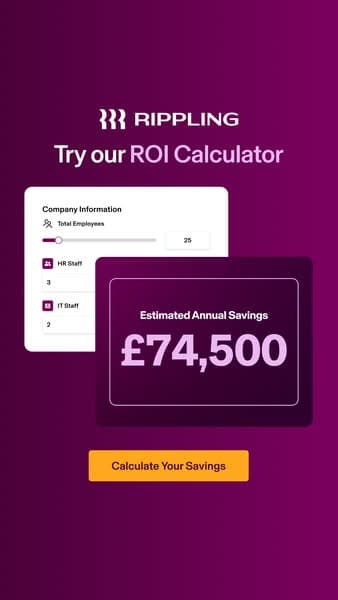
- Interactive proof in the ad. Rippling's ROI calculator card, "Estimated Annual Savings £74,500", running for 49 days, is the only calculator on a card in the set. TaxGPT has one on its page and never in an ad. No other company in any vertical here runs a "see your number" creative.
A sixth, for the calendar: in an August sweep only SoFi's "apply by 9/3/26" discount and Gusto's payroll tax deadline used a date. Tax season may change that.
Landing page analysis: what happens after the click
Here is where the ads send people, and the two channels do it differently:
- On Google, 64% of the ads point at the homepage. Stripe sends 48 of 51 there, SoFi 49 of 54, Gusto all 22. A search ad answers a query the visitor typed, so the homepage can carry it.
- On Meta, 4% do. 23 of the 527 ads that link to the brand's own site. A social ad has to create the intent, and the page then has to deliver what the ad said.
- So the pages worth studying are the social ones. Click any of the ads above and look at where it lands. The kind of page sorts fintech advertisers into four tiers, from the homepage to a page built and versioned for one ad. Every page below is linked, so open them.
| Tier | The ad points at | In the sweep |
|---|---|---|
| 0 | The homepage | 23 of 527 ads |
| 1 | A product page that already existed | Lemonade's car page, Ramp's business cards page |
| 2 | A page that exists because the ad does | Chime's intro offer page, Ramp's TBPN page |
| 3 | A version number or a market in the path | Chime's Prime vs Plus page, Gusto's payroll-041 page, Deel in Portuguese, Qonto for Belgium |
Tier 1: the ad points at a product page that already existed
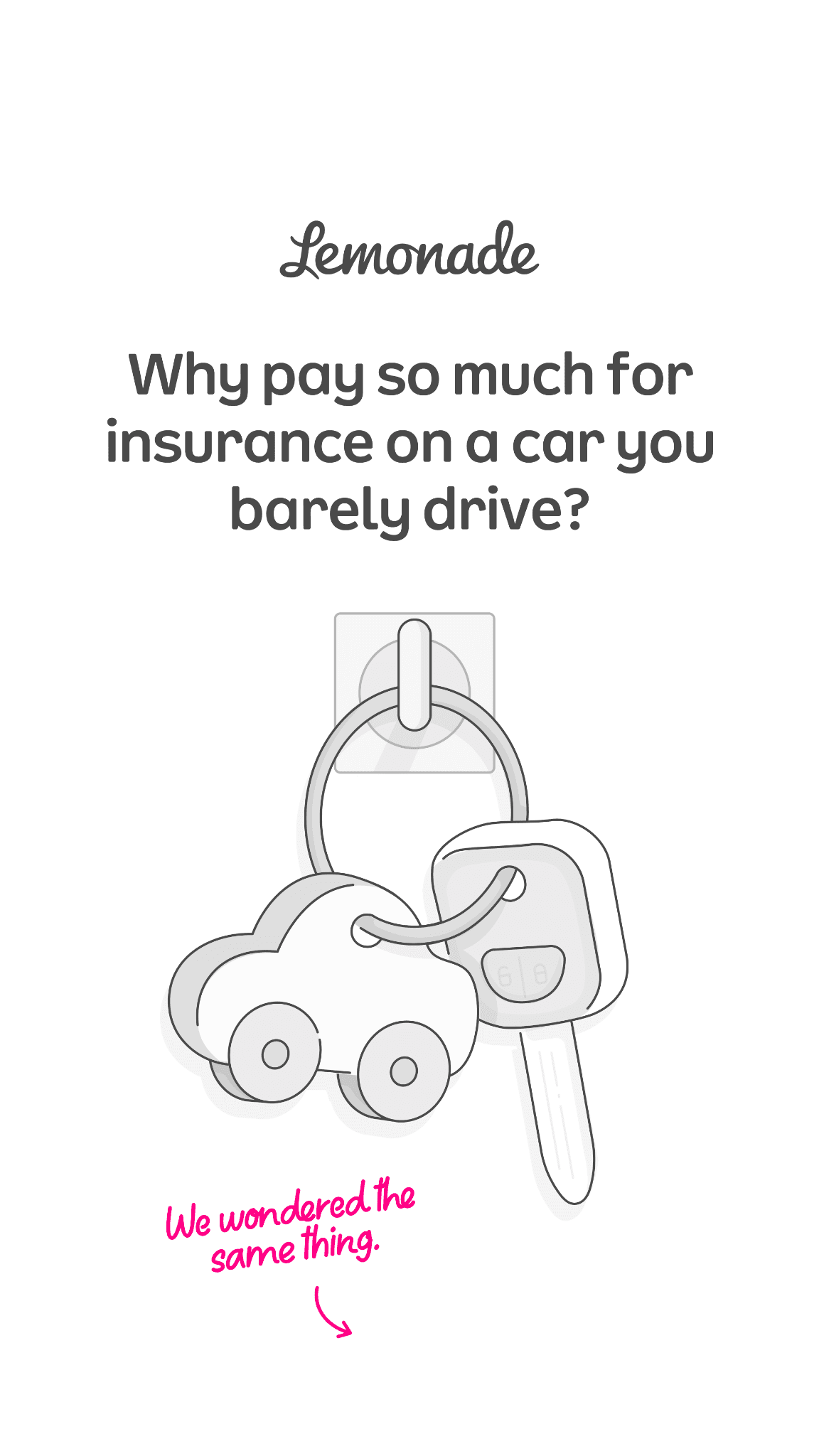
- Lemonade's 386-day creative asks one question in the brand's handwriting.
- It lands on lemonade.com/car, the page an organic visitor reaches from the nav.
- Nothing was built for the campaign. It is the cheapest tier, and for a company with one product it is often enough.
Tier 2: the ad points at a page built for that ad
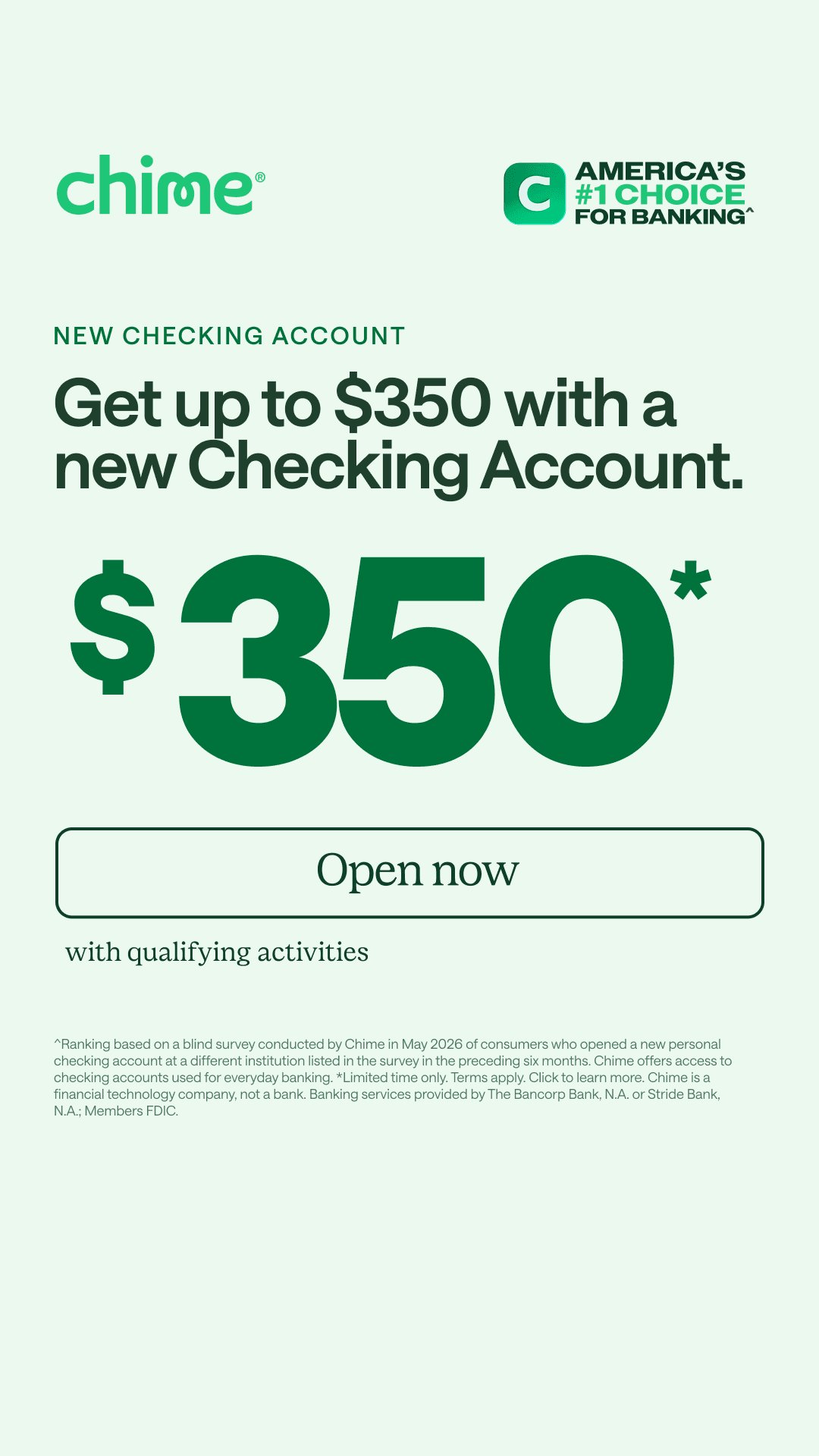
- Chime's $350 creative lands on a page you cannot reach from Chime's navigation. It exists to keep the promise the ad just made.

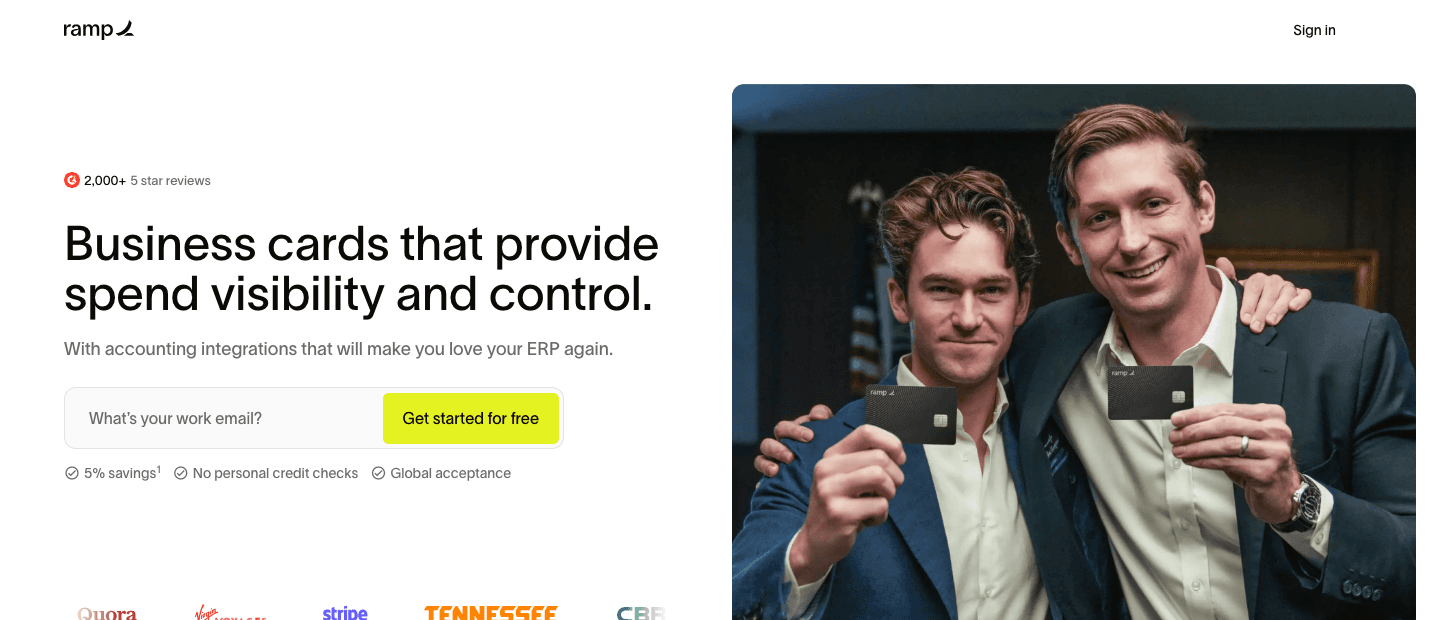
- Ramp's TBPN creative lands on ramp.com/lp3/tbpn: the business-cards page, section for section, under its own address so the show's traffic can be measured on its own.
- The
lp3in that address is a numbered template family. Ramp has built enough of these pages to need a system for them.
Tier 3: the ad points at a versioned or per-market page
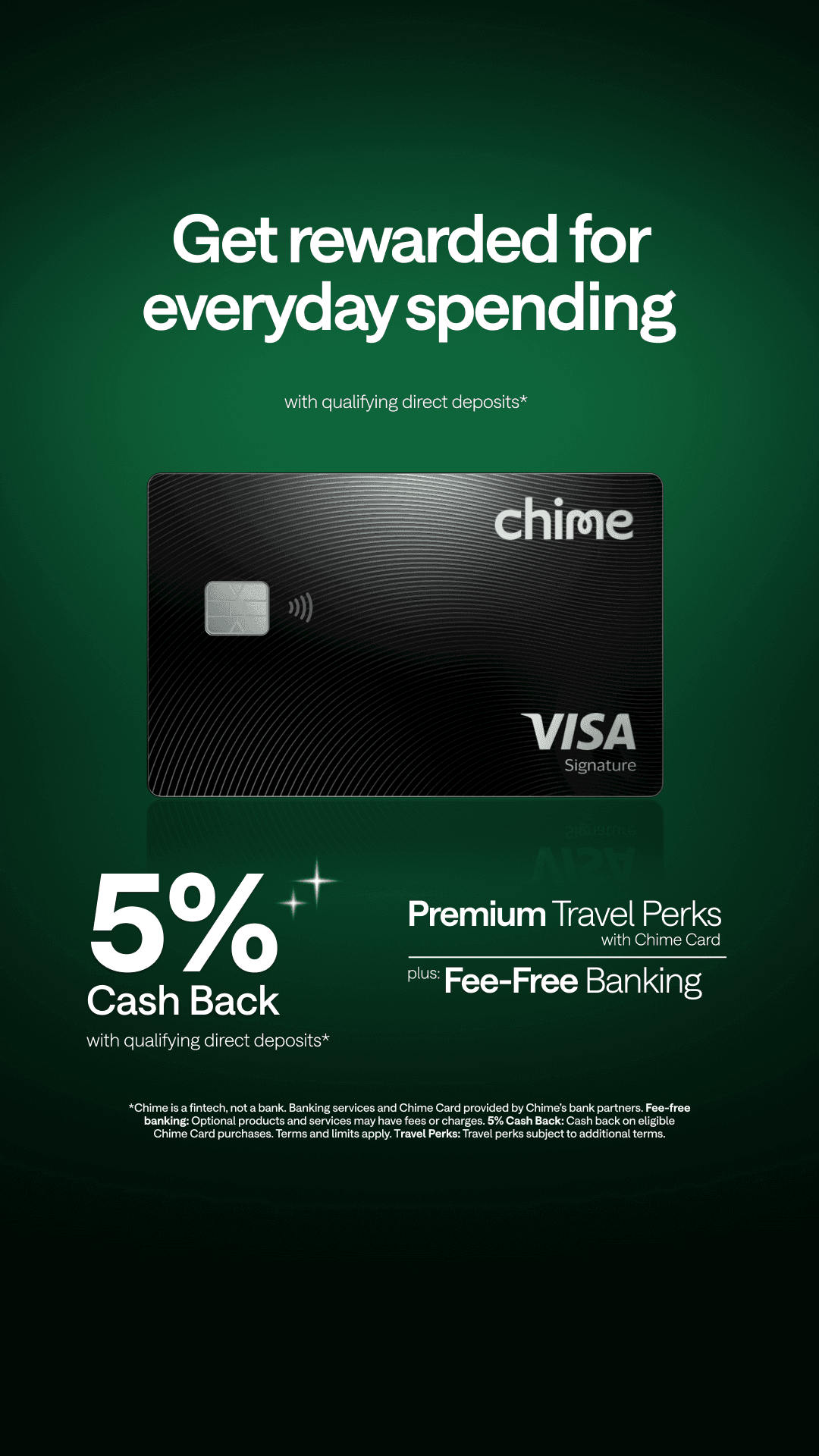
- Chime's card creative lands on Prime vs Plus; its checking creative on intro-offer-v2b. Read the suffix: version 2, variant b. Gusto does the same with payroll-041.
- A number like that means the company is testing versions of the page, and anyone can see it from outside. The ad points at the version that is winning.
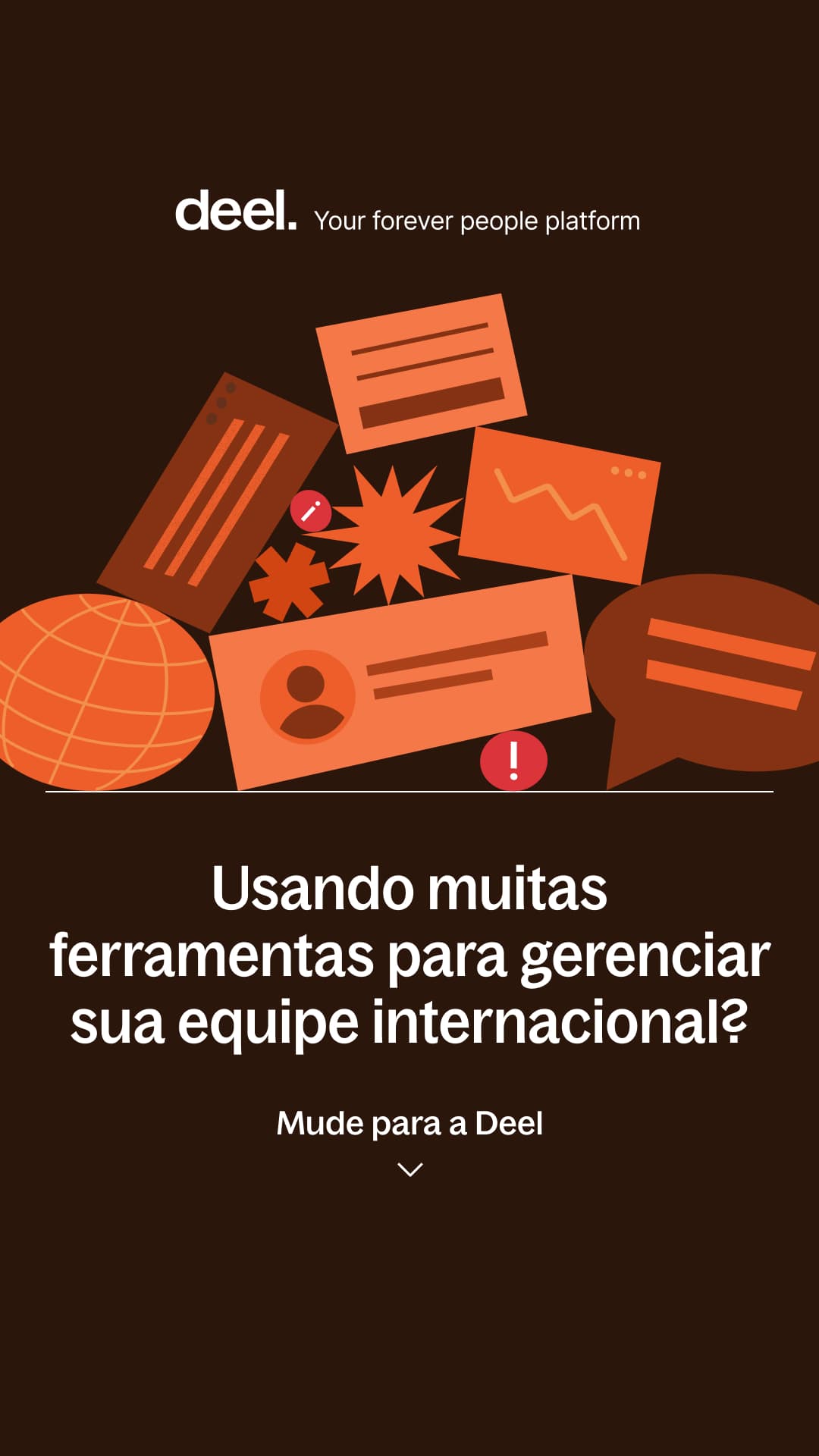
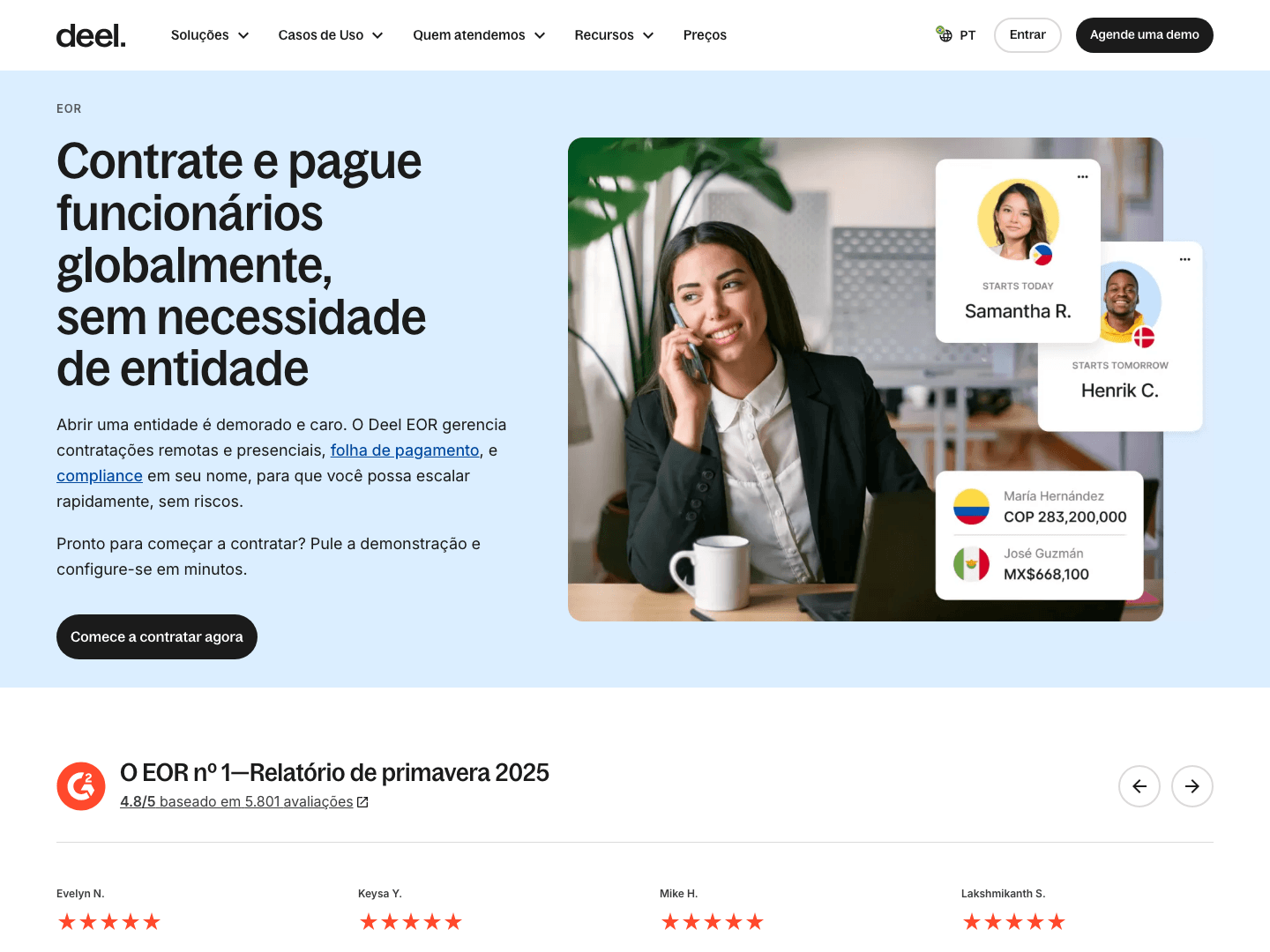
- Deel's Portuguese creative lands on a Portuguese payroll page, Spanish creatives on Spanish ones. Qonto runs paid pages for France, Belgium, Portugal, Germany, Spain and Italy.
How many paid pages each company runs
| Company | Brand-site Meta ads | Distinct pages | Of which per-market |
|---|---|---|---|
| Qonto | 59 | 26 | 25 |
| Deel | 52 | 16 | 8 |
| Ramp | 52 | 12 | 0 |
| Robinhood | 61 | 11 | 0 |
| Lemonade | 60 | 10 | 1 |
| Gusto | 60 | 7 | 0 |
| Rippling | 18 | 7 | 0 |
| Chime | 58 | 6 | 0 |
| Plaid | 31 | 6 | 0 |
| TaxGPT | 16 | 3 | 0 |
- Ad counts barely separate these companies, because the library stops at about 60 per brand. Page counts do, from TaxGPT's 3 to Qonto's 26.
- Qonto and Deel, the two companies selling in several markets, are the two with a paid page per market.
- SoFi is left out: all 60 of its ads point at one tracking redirect, so its page count cannot be read from the library.
Try it on yourself. Open your own Ad Library entry, click the ad, look at where it lands. The homepage puts you on tier 0. A version number or a market code puts you on tier 3. Most teams are on tier 1, with one page for every ad.
Teardown 1: TaxGPT
Two campaigns taken apart the way we take apart a page in a client audit: the ad, then the page it lands on, section by section, then the gaps. We picked TaxGPT because its ad and its page match more closely than any other pair in the set, and Ramp because one of its ads has run for 190 days.
The campaign. 23 brand ads live simultaneously as of August 5, 2026 (17 still admitted by the brand filter on August 27), all launched between July 10 and July 16. Two destinations: the AI-tax-preparation page and the AI-tax-planning page. They all started within one week, so this is one planned campaign. Every ad is active right now, so you can check everything below in the Ad Library today.
The ads
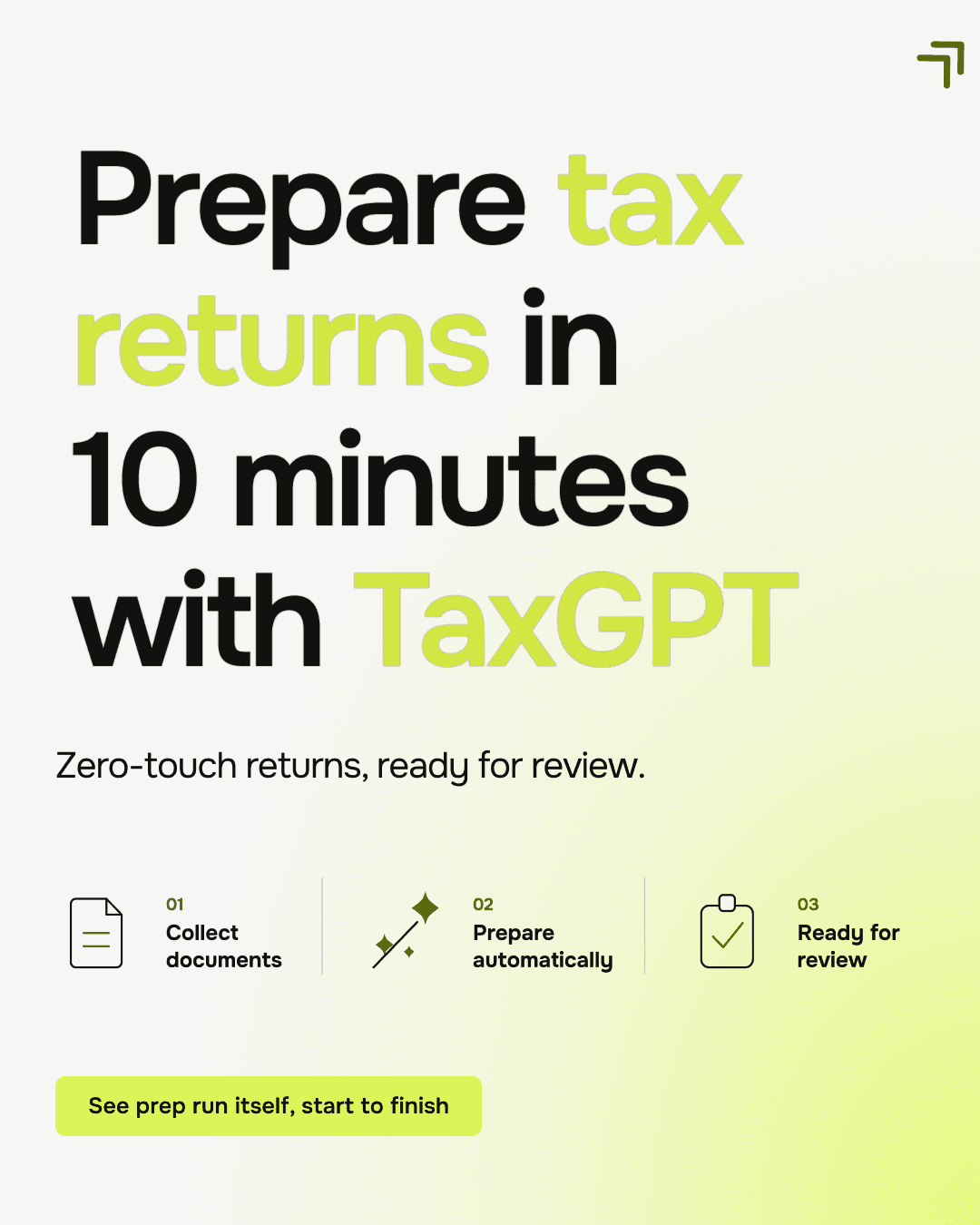
The first creative attacks the effort objection. A headline with a time promise (prepare tax returns in 10 minutes), a one-line reassurance (zero-touch returns, ready for review), a numbered three-step strip (collect documents, prepare automatically, ready for review), and a CTA that sells the demo rather than the product (see prep run itself, start to finish).
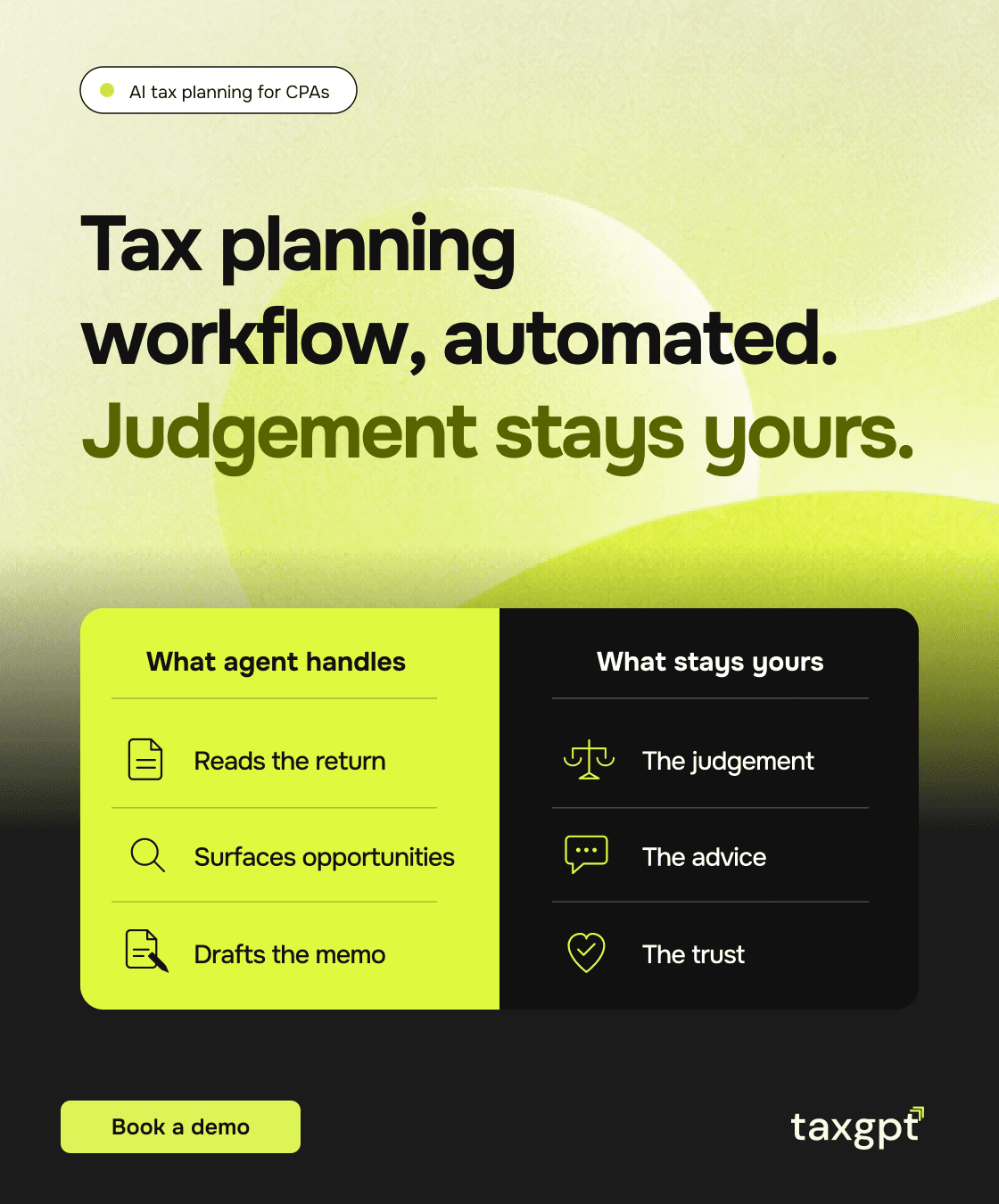
The second creative goes after trust, which is what stops a CPA from buying AI software. A split table: what the agent handles (reads the return, surfaces opportunities, drafts the memo) against what stays yours (the judgement, the advice, the trust). The headline says it outright: tax planning workflow, automated. Judgement stays yours.
The landing page
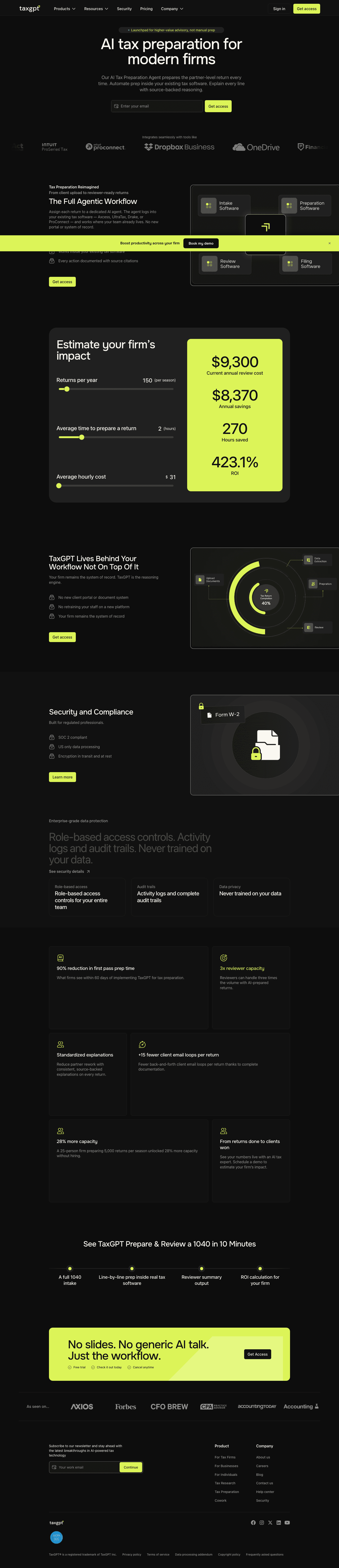
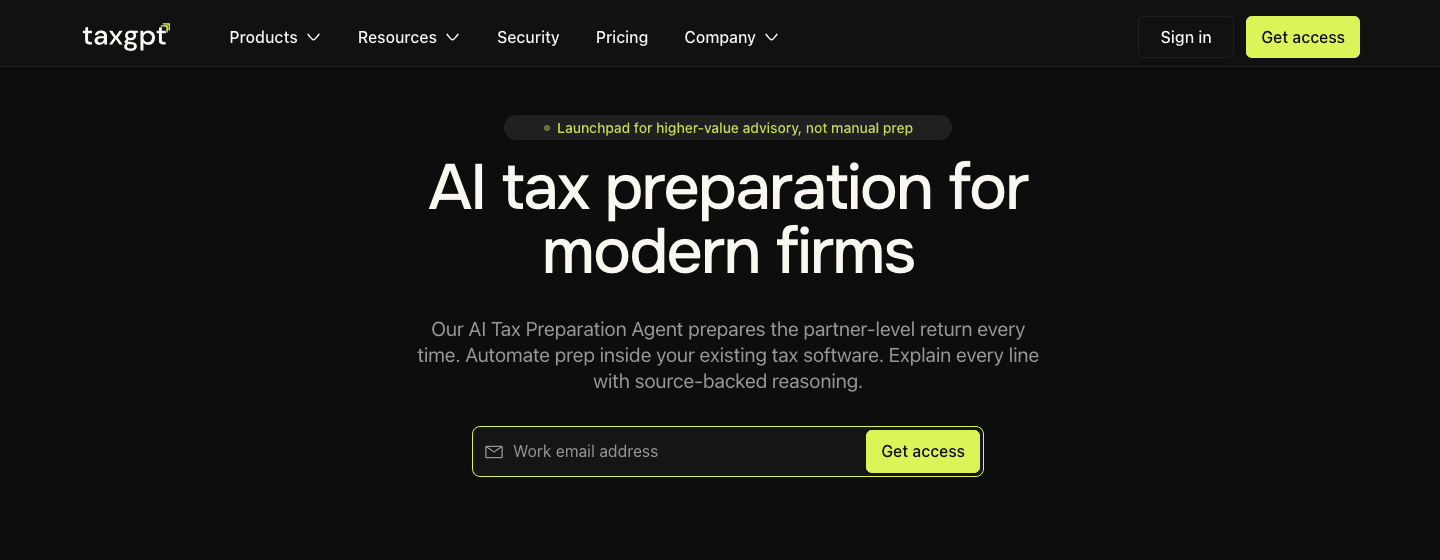
The hero. The headline names the buyer, not the product (AI tax preparation for modern firms). The subhead answers the three questions a tax professional asks in order: what quality (the partner-level return every time), what changes in my stack (automate prep inside your existing tax software), and can I check it (explain every line with source-backed reasoning). One email field, one button. The integration row underneath (SmartVault, ATX, CCH Axcess, TaxAct, Intuit ProSeries) matters a lot to this buyer, who will only use a tool that works with the tax software they already have.
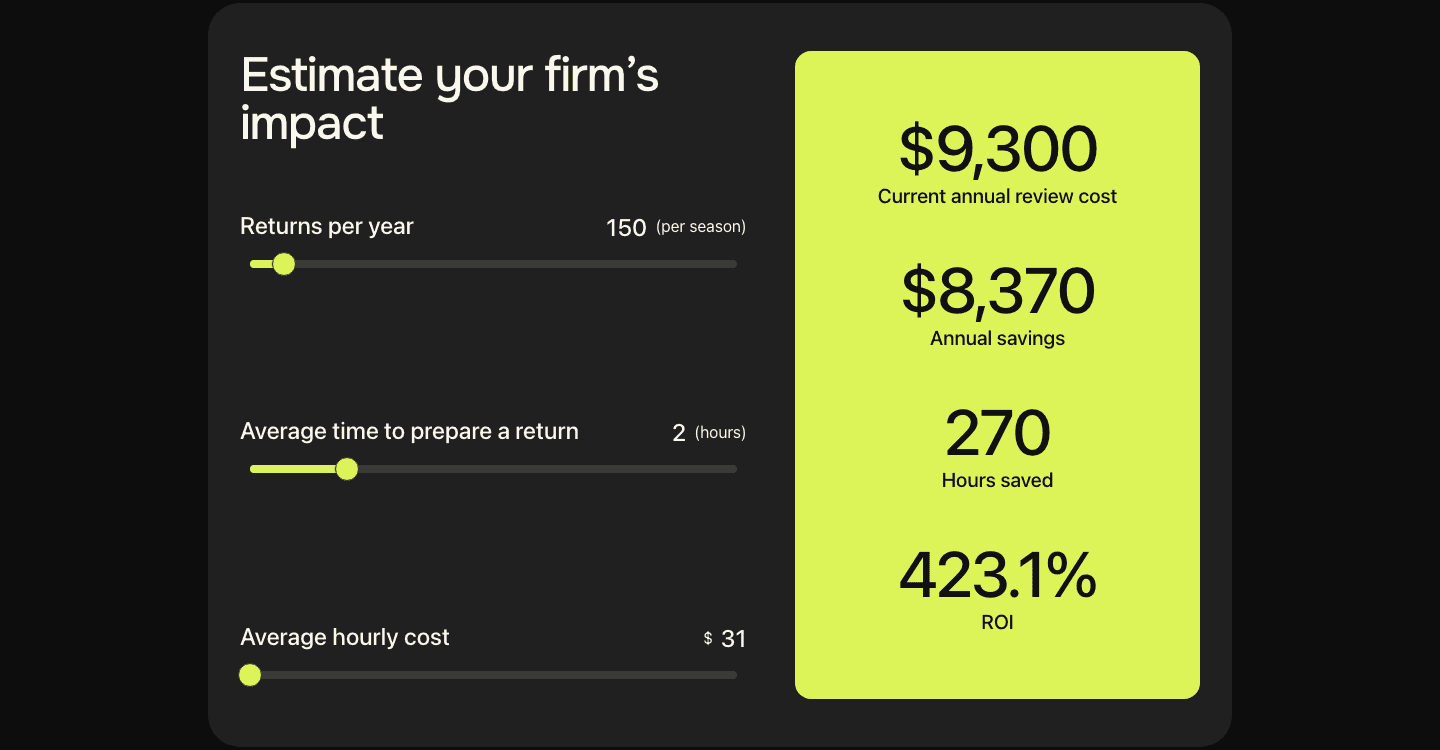
The ROI calculator. Three sliders (returns per year, average time to prepare a return, average hourly cost) output a personalized case: at 150 returns and 2 hours per return, the page claims $8,370 annual savings, 270 hours saved, 423.1% ROI. This section changes the claim from "firms save time" to "your firm saves this much," and it is the section most likely to win over a paid visitor.
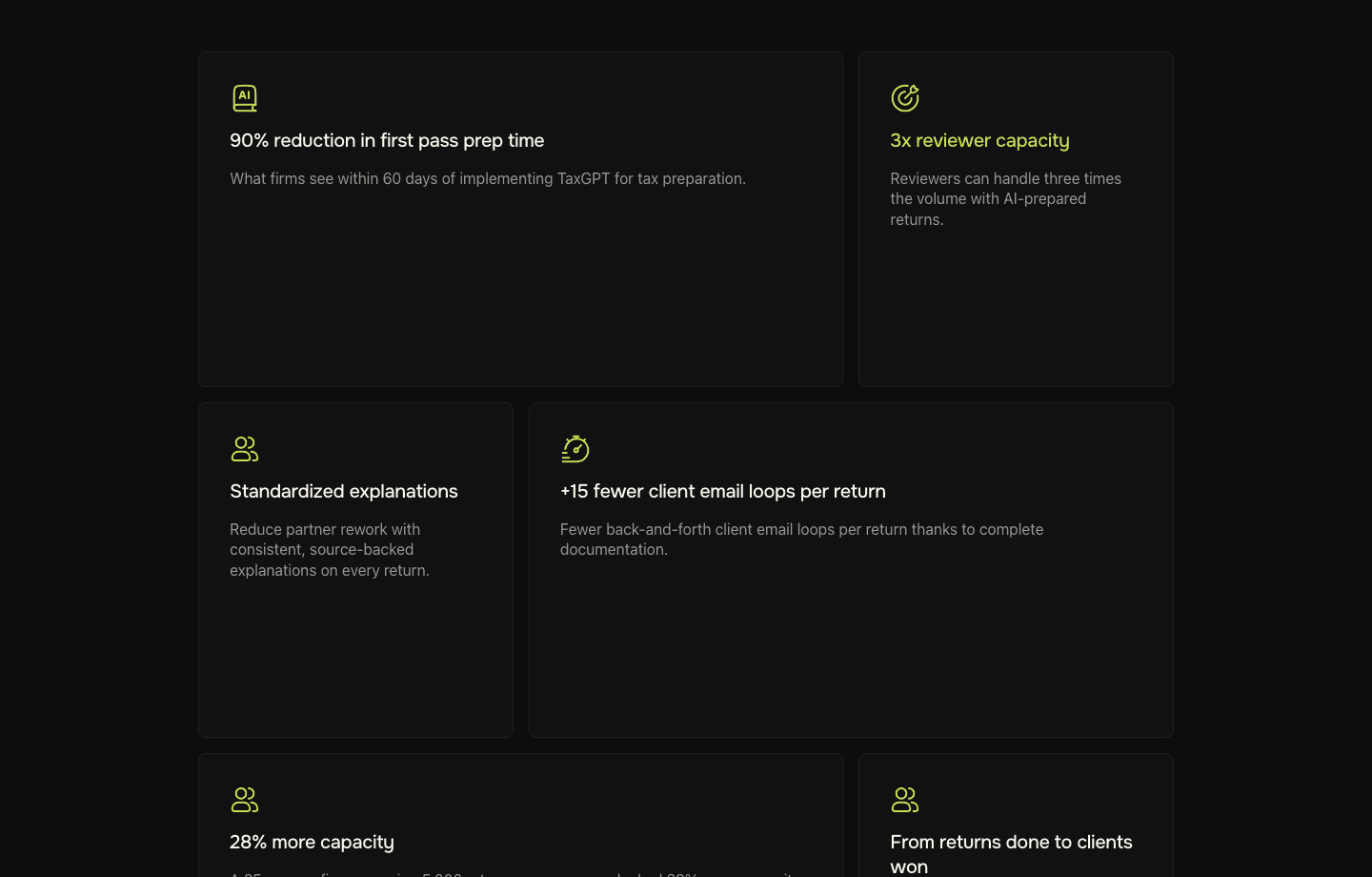
The proof wall. A grid of operational numbers: 90% reduction in first-pass prep time, 3x reviewer capacity, 28% more capacity without hiring, 15 fewer client email loops per return. Each stat is one sentence that says how it happens. All of them measure how much work the firm gets through, which is what a firm pays for.
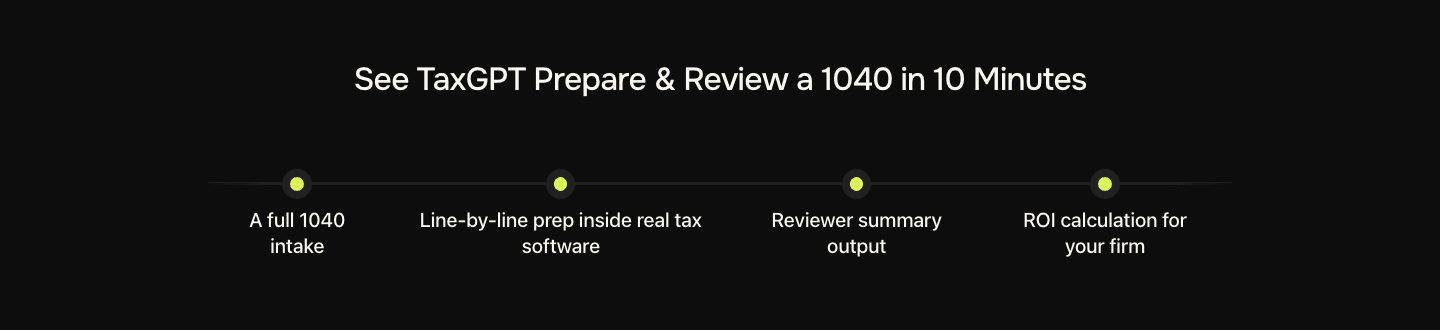
The 10-minute demo. The ad promised tax returns in 10 minutes. This section shows exactly that: see TaxGPT prepare and review a 1040 in 10 minutes, with a four-step strip (a full 1040 intake, line-by-line prep inside real tax software, reviewer summary output, ROI calculation for your firm). Most paid pages have no section like this. It exists only because the ad made a promise that needed proof.

The closer. This band promises no slides, no generic AI talk, just the workflow, with reassurance chips under the headline (free trial, check it out today, cancel anytime). A press row follows it (Axios, Forbes, CFO Brew, Accounting Today), the last thing before the footer.
Message match
| The ad says | The page proves it with |
|---|---|
| Prepare tax returns in 10 minutes | A literal 10-minute 1040 demo section |
| Zero-touch returns, ready for review | The three-step agentic workflow block |
| Judgement stays yours | Reviewer summary output, source-backed reasoning per line |
| See prep run itself | Demo CTA repeated in every section |
The gaps
Two gaps, both fixable in a week. Not one stat on the proof wall is attributed to a named firm or a named partner, so the strongest numbers on the page read like the company's own estimates. And a sticky promo band (boost productivity across your firm, book my demo) covers the workflow diagram mid-scroll, and that diagram is the one section that explains how the product works.
The competitive audit looks for gaps like these on your own pages, the same way.
Teardown 2: Ramp
The campaign. One dynamic-creative ad unit, active since February 17, 2026: 169 days when we captured the page on August 5, 190 by the August 25 sweep, still running, delivered across Facebook, Instagram, Messenger and Threads in multiple versions. Dynamic creative means Meta puts the ad together for each viewer. The offer and the destination stay the same.
The ad
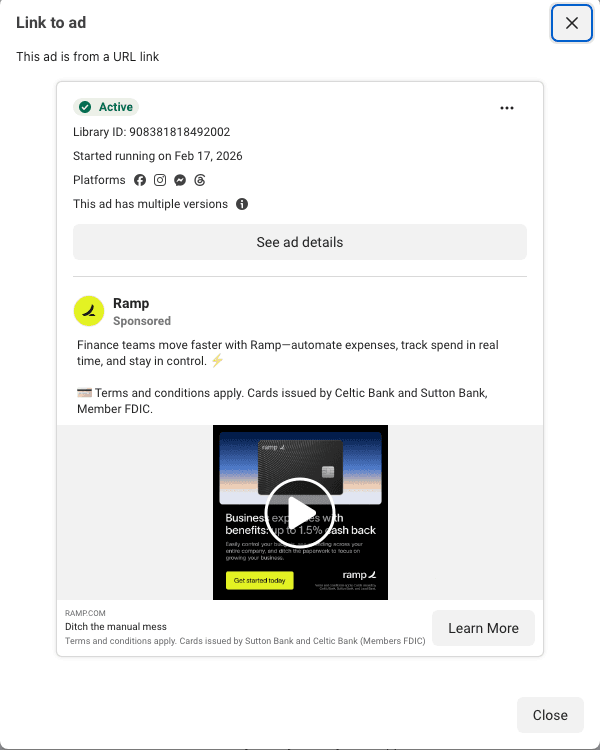
Read the card from top to bottom. The primary text squeezes the pitch to one sentence with three verbs (finance teams move faster with Ramp: automate expenses, track spend in real time, and stay in control). The video creative leads with a number (business expenses with benefits: up to 1.5% cash back) over a yellow get-started-today button. The link headline is five words about the chore (ditch the manual mess). And twice on one card, the compliance line (terms and conditions apply, cards issued by Celtic Bank and Sutton Bank, Member FDIC).
The landing page
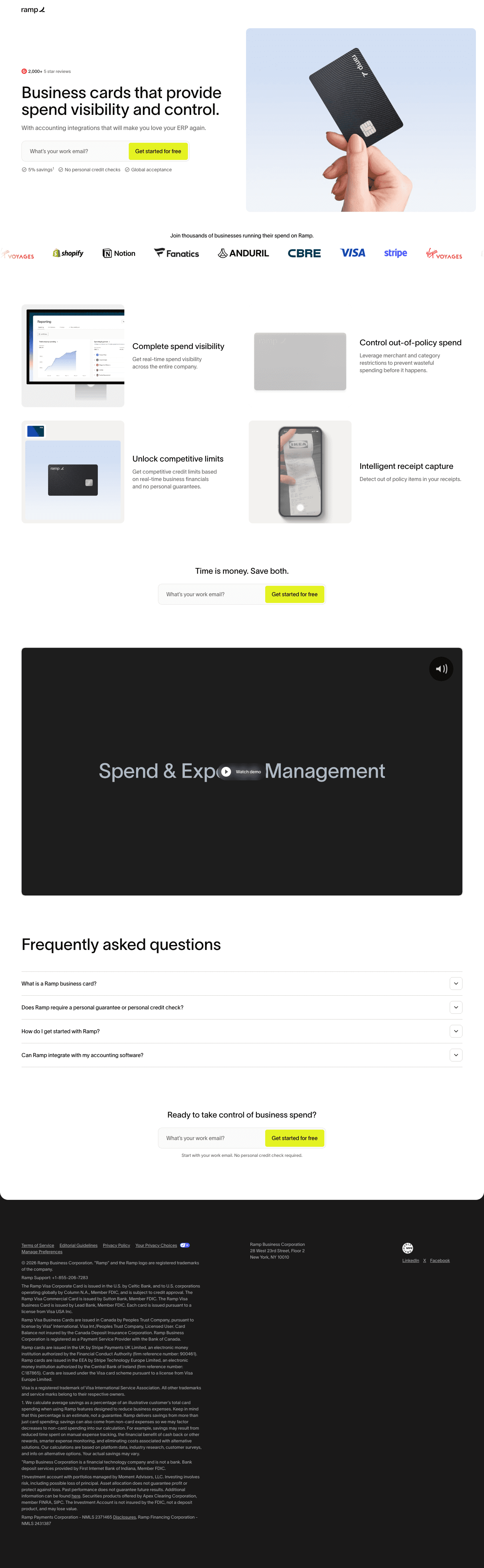
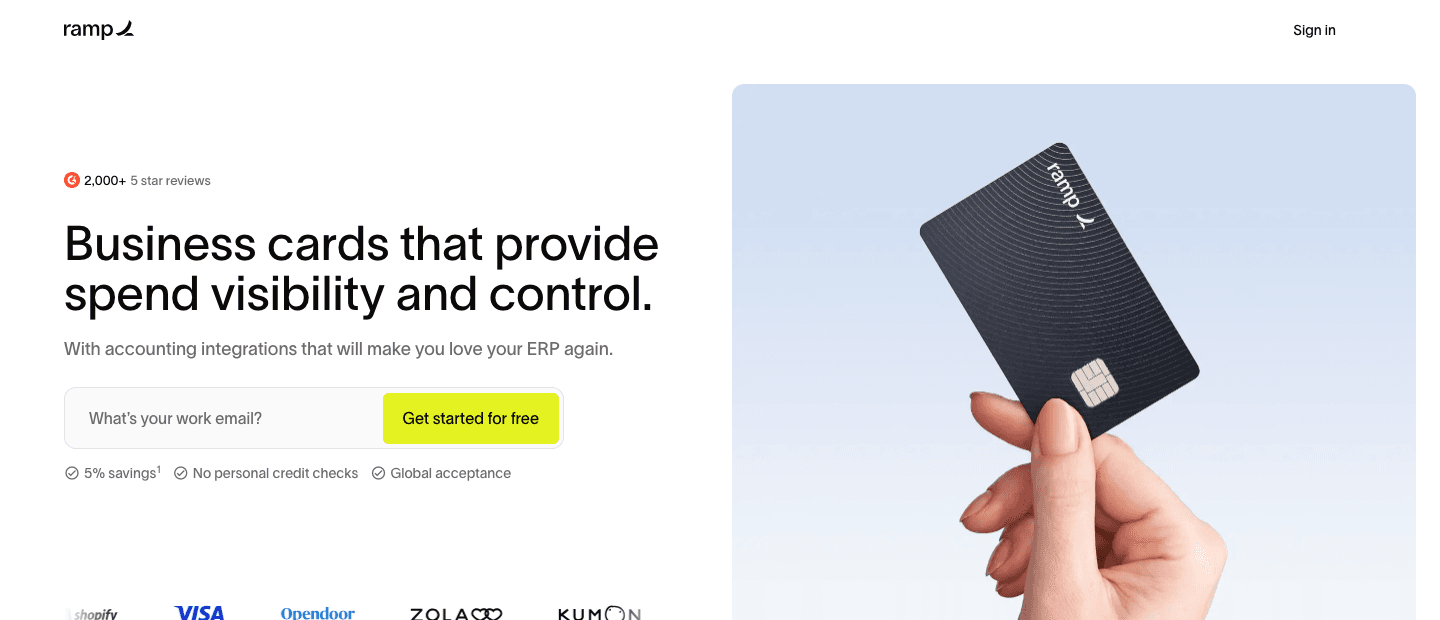
The hero. Four things on one screen: a G2 badge with 2,000+ five-star reviews above the headline, a headline that sells the outcome (business cards that provide spend visibility and control), an email-first form with a single button (get started for free), and a risk-reducer row directly under it (5% savings, no personal credit checks, global acceptance). The subhead makes a small joke about the buyer's daily work (accounting integrations that will make you love your ERP again). A dynamic ad can show any version of the creative, so this hero assumes the visitor knows nothing and still asks for the email on the first screen.
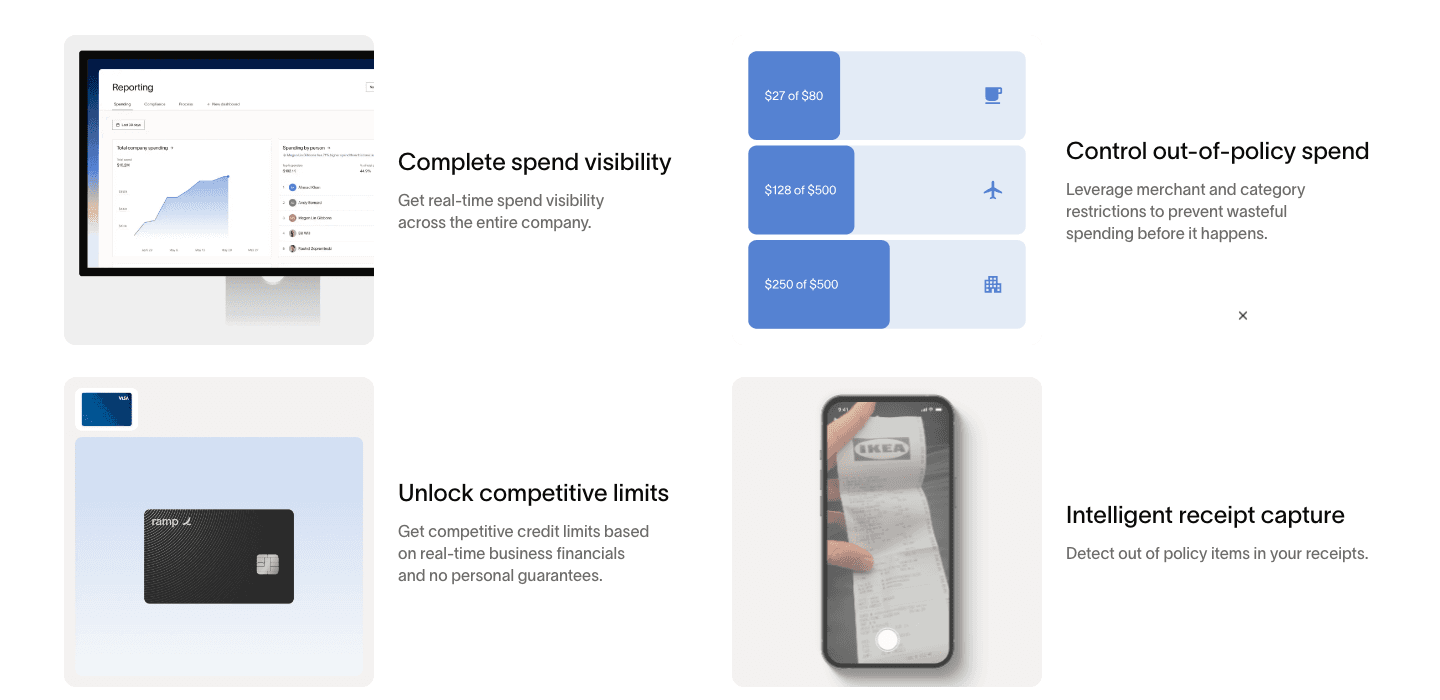
The feature grid. Four blocks, and they are the ad's promise expanded one-to-one: complete spend visibility (track spend in real time), control out-of-policy spend with merchant and category restrictions (stay in control), competitive credit limits on real-time financials with no personal guarantees, and intelligent receipt capture that detects out-of-policy items (automate expenses, ditch the manual mess). Each block pairs one benefit sentence with a picture of the product itself.
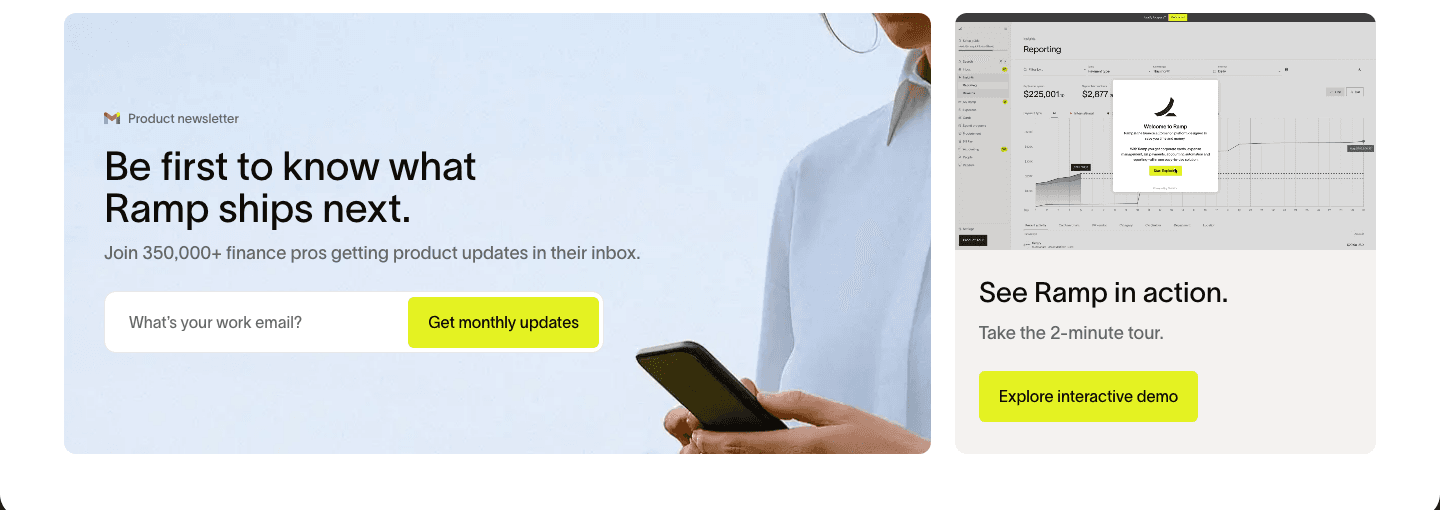
The demo layer. Below the features, the page offers a watchable product video, then closes with see Ramp in action, take the 2-minute tour, explore interactive demo. Same pattern as TaxGPT: the low-commitment ask (a 2-minute look) is always one click away for the visitor who is not ready to hand over an email.
The compliance footer. Issuing banks named, Member FDIC, NMLS number, and a sentence other fintechs could copy: Ramp Business Corporation is a financial technology company and is not a bank. The ad made a financial promise (1.5% cash back), and the footer repeats the ad's own compliance line word for word.
The gaps
Two gaps. The ad's number and the page's number nearly match but not quite: the creative promises up to 1.5% cash back, the hero leads with 5% savings carrying a footnote. Both are true, but the visitor who clicked for cash back has to reconcile two different numbers mid-scroll. And the page carries a second email form (the product newsletter, join 350,000+ finance pros) on a paid destination, which gives visitors who are not ready an easier, less valuable sign-up than the one the campaign pays for.
Key takeaways: five things to do with this
- Pick an angle before you pick a creative. The ads that run long sell one thing: a fee gone, a number of minutes, a spreadsheet gone, a guide, a customer with a figure. Decide which one you are.
- Build a page for each offer. 96% of the social ads here land somewhere other than the homepage. If your ad points at the homepage, that is the first fix.
- Put the ad's sentence on the page. If the ad says 10 minutes, the page shows 10 minutes. TaxGPT built a section for it.
- Put the version in the address. That is how Chime and Gusto know which page wins.
- Try one of the five open angles. The price on the card, a named competitor, trust as the headline. Almost nobody in this market runs them.
How to run this analysis on your own competitors
The Meta Ad Library and the Google Ads Transparency Center are public and free. Search the brand's page, not a keyword, set the country, filter to active ads, sort by start date. Then:
- Group the ads by angle. Use the eight above.
- Keep the ones that have run 45 days or more. The advertiser keeps paying for them. Click through and read the page each one lands on.
- Write down the angles they are not running. Start your next campaign from that list.
Or send us the URL and we do it for you.
How we did the analysis
- Sample: the fintech companies on the benchmark leaderboard, picked by traffic, not by advertiser status. Fifteen were selected; Wise and Revolut sit in the UK market and were not captured, GoodRx and Ro are on the fintech list but sell healthcare and were set aside. That leaves 13: Chime, Coinbase, Deel, Gusto, Lemonade, Plaid, Ramp, Rippling, Robinhood, SoFi, Stripe, plus Qonto in France and TaxGPT, added by name for the teardown.
- Sources: the Meta Ad Library, searched by brand page, and the Google Ads Transparency Center, both through Apify. Searching by page matters: a first pass on August 5 searched by keyword and found brand ads for only four companies. The page search found 762.
- Filter: brand-verified ads only. An ad counts when the landing host is the brand's own domain, an app store, or a Meta short link from the brand's page. Everything else is dropped: the ATV ramp company that shares a name with Ramp, the creative agency called Gusto.
- Ranking: days active. The floor of interest is 45 days, the point at which an ad has survived at least one budget review.
- Reading: every distinct message on Meta was read by hand and put in one angle. Dynamic ads return a template instead of copy, so those were read from the creative image and the landing path. Every claim below sits beside an ad you can open in the library today.
- Limits: the library returns about 60 ads per brand per market, so the counts per company are a sample floor, and the shares inside the sample are what to read. Robinhood's captures are mostly its EU ads and boosted Instagram posts. Meta publishes reach only in the EU and never publishes spend.
Every ad above links to its primary source in the sources list, so you can check the whole analysis yourself.
Sources
Primary sources, all public and checkable today. Open any Meta ad with its Library ID at facebook.com/ads/library/?id=ID.
-
Ramp's business-cards ad, Library ID 908381818492002, active since February 17, 2026: facebook.com/ads/library/?id=908381818492002
-
TaxGPT's speed-angle ad, Library ID 27490958273896220: facebook.com/ads/library/?id=27490958273896220
-
TaxGPT's control-angle ad, Library ID 1015300787883396: facebook.com/ads/library/?id=1015300787883396
-
The creatives shown above: SoFi 987180227019883, Chime 1208971087415789, Ramp 1505682641254381, 1289792406399534, 1038069355243029 and 1539824671071375, Deel 1758205818486879, Lemonade 1384250913056505, Rippling 1530392775354588. Other ads quoted: Lemonade 2058879381586479, Coinbase 1167471325110727, Deel 1888231575213664, SoFi 1323840946379990.
-
The open-angle ads: Gusto 1035963482400921, Lemonade 1649464336158608, Rippling 1247500043898713 and 1530392775354588, Robinhood 926025553717404, Coinbase 2062282834414176, SoFi 3244135612460820.
-
The landing pages, live: ramp.com/business-cards, taxgpt.com/ai-tax-preparation, taxgpt.com/ai-tax-planning
-
The sample: the fintech leaderboard of the Web Anatomy benchmark, selected by traffic.
-
The Google Ads Transparency Center for the search ads: adstransparency.google.com
-
Ad sweeps made August 25 to 27, 2026 (Meta by brand page, Google by advertiser); the teardown captures (ad cards and full landing pages) made August 5, 2026.
-
The creatives in the URL section: Lemonade 611546615011246, Chime 1020048563811338 (checking) and 1536479617869658 (card), Ramp x TBPN 844288765359643, Deel 2357092031370507 (Portuguese) and 2167444540389913 (Bitpanda), Gusto 1574847057477881. The Ramp TBPN and Deel Portuguese page captures were made September 5, 2026.
Data collected August 2026. Ad statuses and run lengths change; the library links above always show the current state.

Written by
Gabriel Amzallag , Founder, Web Anatomy
5 years CRO + SEO at Qonto (2021–2025). After advising 15+ SaaS on their websites (Payfit, Pigment…), the same patterns kept breaking, so I decided to build the source of truth on what works on the web: the intelligence layer every tool, builder, and team uses to ship sites that perform.
More from the blog
Playbooks
We analyzed the ads the top HR tech companies run. Here is what works.
Which HR tech ads kept running in 2026, the eight angles they use, and the pages behind them. The takeaways, with the ads to look at.
 Gabriel Amzallag26 min read
Playbooks
We analyzed the ads the top marketing software companies run. Here is what works.
Which marketing software ads keep running in 2026, the angles they use, and the pages behind them. Seven angles that work, five almost nobody runs.
Gabriel Amzallag23 min readGuides
Programmatic SEO: a practical guide from 10 city pages to 300
How Staycation went from 10 hand-made city pages to 300 with programmatic SEO, and grew purchases from search by 90%: how to find your topics, four rules, the template, and how to produce and measure the pages.
Gabriel Amzallag12 min read