
TL;DR
- The ads that keep running sell one of eight angles: the one job, the agent, the command, the customer with a number, the free tier, the event, the document, the series. JetBrains uses seven of the eight, Red Hat two.
- Five angles are almost empty in developer tools: a named competitor, a price in dollars, security as the headline, a benchmark number, anything interactive on the card.
- Social ads almost never land on the homepage (6%, against 56% for search). Atlassian runs 22 paid pages, Figma three, and one JetBrains address returned a 404 the day we captured it.
- The ad's number has to be on the page. Atlassian's 162-day card says Reddit saves $300k a year, and the Confluence page it opens says Reddit without the number.
Nine companies swept between 25 August and 3 September 2026, seven of them advertising on Meta. Every day count and every "still live" below is as of that window, not today. How we did it is at the end.
The sample: 9 developer tools companies, their ads, and where the ads land
| Company | Meta ads on file | Ran 45 days or more | Still live | Oldest live ad | Where the ads land |
|---|---|---|---|---|---|
| Plaid | 60 | 45 | 60 | 149 days | contact, mortgage, the Effects sessions |
| Figma | 60 | 35 | 46 | 154 days | Make, Agents |
| Atlassian | 60 | 27 | 16 | 162 days | Jira, Confluence, community articles |
| JetBrains | 60 | 20 | 12 | 169 days | the startup program, TeamCity for game dev, surveys |
| Red Hat | 60 | 12 | 59 | 83 days | webinars, Summit Connect registration |
| Vercel | 35 | 0 | 8 | 16 days | Ship, Ship SF, Drop, the homepage |
| GitHub | 29 | 0 | 29 | 5 days | one doubleclick redirect, every ad |
| Stripe | 0 | 0 | 0 | none | Google only |
| Canonical | 0 | 0 | 0 | none | nothing brand-verified |
Plaid and Figma have found their ads: 45 of Plaid's 60 and 35 of Figma's 60 had passed 45 days, nearly all still live. GitHub and Vercel were starting over, with 64 ads between them and none older than 16 days, because GitHub had just launched its Copilot CLI line and Vercel its Ship 26 tour. The oldest ad on file is JetBrains's TeamCity video for game studios at 267 days, and it had already stopped (Library ID 1216364240291007).
Ad analysis: the eight angles developer tools ads use
Every readable message on Meta fits one of eight angles. For each: the ads that ran longest, the creative where we hold it, and why it keeps running. The number in brackets is days running on the day of the sweep.
1. The one job
One task the tool does, named in the reader's own words, with nothing else on the card.
- JetBrains: "CI/CD that doesn't crash at 100GB. Ship large Unity & Unreal builds with confidence" (266 days), eight videos on one game-dev line.
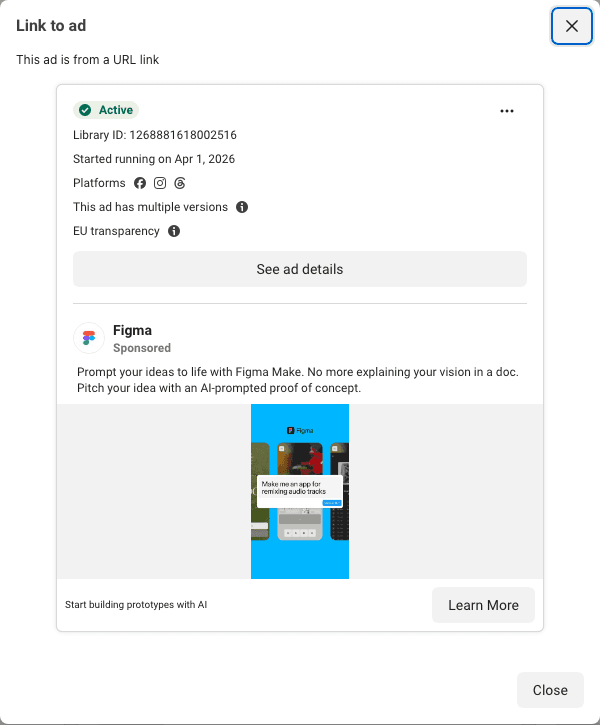
- Figma: "Prompt your ideas to life with Figma Make. No more explaining your vision in a doc" (154 days).
- Plaid: "Verify users faster" (85 days), "Link accounts instantly" (81 days), "Payouts built for speed" (78 days), "Close mortgage loans faster" (51 days).
- Vercel: "The deploy is
git push. That's it. Previews on every commit, rollback in one click" (14 days).

Why it runs: Plaid points six of these at its contact form and five of them passed 70 days. A reader who does the job the card names knows from one line whether the ad is for them.
2. The agent
The product is an AI teammate, and the card shows it doing a piece of work rather than describing it.
- Figma: "The agent tailor-made for design" (19 days) and "Speed up workflows with Figma's agent" (20 days), both to figma.com/agents.
- Atlassian: "Atlassian's Rovo is everywhere, for everyone" (9 days), with 3 million active users on the card.
- GitHub: "Use multiple models in your CLI. Did you know there's a Copilot agent in your terminal?" (4 days).
- JetBrains: "Coding agents are powerful. But power without coordination gets messy fast" (14 days).
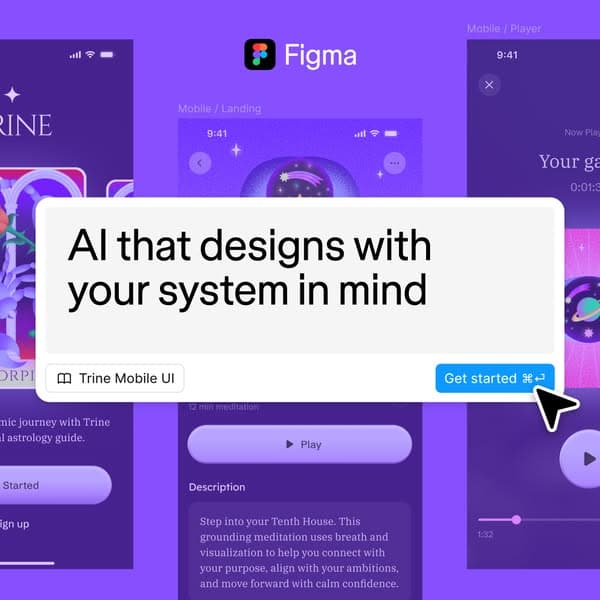
Why it runs: seventy-five of the Meta ads we collected mention AI, and the long runners name the task. Figma's 106-day card says "AI that designs with your system in mind", which answers what a designer objects to about generated work.
3. The command
The card prints the exact thing you type. Two companies run it.
- GitHub: "Go from /plan to /pr." (5 days), "Start in the CLI. Finish in a PR. Use /delegate to assign work to Copilot in the background" (5 days), "Shift+Tab to enter autopilot mode" (3 days), "Install Copilot CLI and run /fleet plan to compare how Claude, Codex, and Gemini would raise coverage to 80%" (5 days).
- JetBrains: "A coding sous-dev in your terminal. Plans first, codes second" (22 days).
We hold no creative for either company, so this copy comes from the library's own headline and body fields.
Why it runs: GitHub launched eleven of these inside one week, so none has reached the 45-day floor yet. A slash command is a claim the reader can test in a terminal before buying anything.
4. The customer with a number
A named company and a figure, on the first frame. Atlassian is the only advertiser in the set running it, on every product line it sells.
- Atlassian: "Reddit saves $300k+ a year by ditching disparate tools" (162 days), and the same number for Confluence (147 days).
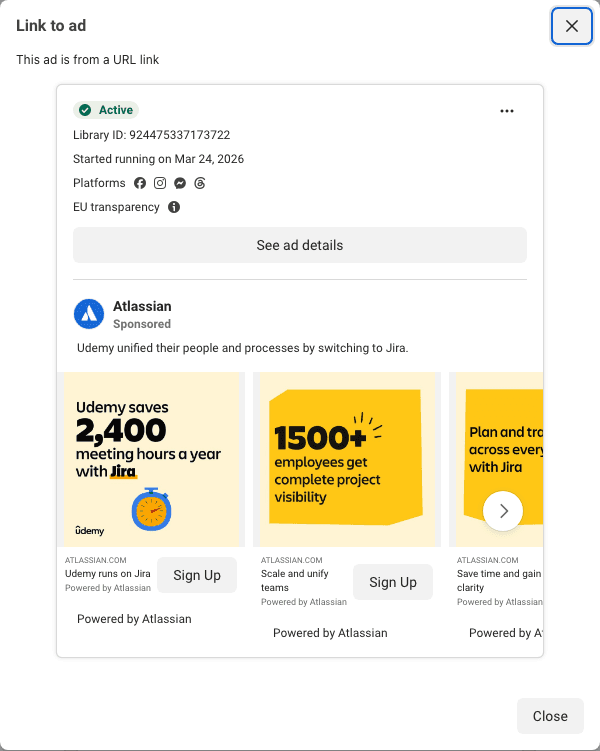
- Atlassian: "Udemy saves 2,400 hours a year with Jira" (162 days) and "Udemy got 2,400+ hours a year in meeting time back" with Confluence (147 days).
- Atlassian: "1500+ employees get complete project visibility", the second frame of the Udemy carousel (162 days).
- Atlassian: "The Thumbtack IT team is on track to save 350 hours every year", which ran from 17 December 2025 to 17 May 2026, 151 days.

Why it runs: these carousels are the longest-running designed creatives in the sample, all still live at 147 days or more. Reddit and Udemy are companies the buyer already knows, and these are the only numbers in the whole sample attached to a customer's name.
5. The free tier
What it costs to start, stated on the card. Four of the seven advertisers run it.
- Atlassian: "Jira is free for 10 users" (162 days), "Try Confluence for free" (146 and 141 days), "Start with Jira Service Management for free" (151 days).
- JetBrains: "Turn your MVP into a unicorn! Get a 50% discount on all JetBrains IDEs and AI plans" (169 days, the oldest live ad in the sample).
- Vercel: "Built by the team behind Next.js. Push to deploy. Free to start" (12 days), and a dynamic card that says "Start for free" (12 days).
- Figma: "Design at the speed of thought. Try Figma AI for free" (77 days).
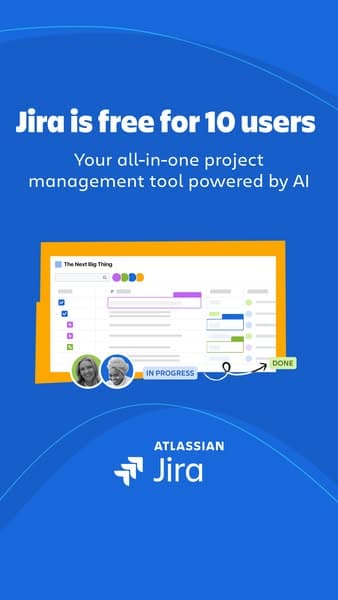
Why it runs: sixteen ads carry the word free, and the ones that last put a number beside it. Atlassian's "Jira is free for 10 users" had run 162 days and JetBrains's "Get a 50% discount on all JetBrains IDEs and AI plans" 169, so a team lead reads the limit on the card instead of going to look for it on a pricing page.
6. The event
A conference, a webinar or a user group, with a city and a date on the card. Five of the seven advertisers run it, and it took most of the recent spend.
- Vercel: "Ship what's next | San Francisco, Oct 15" (16 days) and "New York. Berlin. London. Sydney. San Francisco, you're up next" (15 days).
- GitHub: "The session lineup is live for GitHub Universe. (It's good.)" (5 days) and "Thousands of developers, unlimited hallway conversations" (5 days).
- Red Hat: "Reserve your seat. Join Red Hat Summit: Connect in NYC" (11 days), "RSVP: Ansible Automates" (9 days), "Virtual AgentOps Workshop" (9 days).
- JetBrains: "PHPverse 2026: A free online event for PHP developers" (28 days), "Python Unplugged, a free online conference on March 4" (13 days).
- Plaid: "Watch the sessions now. Up to 90% approval rates on ACH, without adding risk" (38 days).
Why it runs: 37 of Red Hat's 60 ads point at its own site, every one of them at a webinar, a registration flow or a user group, and 25 of the 37 were under 10 days old, because a date expires. Plaid's Effects cards were still running 38 days after the event, pointed at the recording.
7. The document
A report, a survey or an e-book in exchange for an email, with the product nowhere on the card.
- Plaid: "$27B in fraud losses. What's your defense?" for a white paper (139 and 134 days), "Build stronger defenses as a united industry" for a report (106 days), "Modernize ACH. Maximize revenue" with Payments Dive (123 days).
- JetBrains: "How Startup Developers Work in 2026: AI, Remote, and Speed" (72 days, three variants) and "Discover how developers in the world's most innovative companies are reshaping how software gets built" (43 days).
- Red Hat: "Download the e-book. Learn key considerations for building a trusted infrastructure foundation" (51 days), "Start your AI journey" (28 days).
Why it runs: Plaid's white-paper cards are the oldest ads it owns, 139 days against 85 for its best product ad. A report does not go out of date when the product ships a release.
8. The series
One template, one version per city, per customer or per region, so an account can run many ads that still read as one campaign.
- JetBrains: eight TeamCity videos on one game-dev line, 266 to 267 days, all to the same page.
- JetBrains: the same startup-program creative in three regional buys, at 169, 113 and 92 days, with identical body text.
- Red Hat: "Coming to Toronto" and "Coming to Scottsdale, AZ" on the same Summit Connect template (3 days each), plus Jacksonville (2 days).
- Atlassian: one carousel per customer, Reddit and Udemy, each three frames long.
Why it runs: JetBrains bought the startup-program creative three times from three regional accounts rather than once, which is how one creative reaches 169 days in one market and 92 in another. The reader sees one campaign, the advertiser gets three budgets it can stop separately.
One angle sits outside the eight because JetBrains is the only company running it: the prize draw, where the gift buys an answer rather than a demo. "Take the Developer Ecosystem Survey for the chance to win a MacBook Pro" (50 days), "Take a survey and you could be the lucky winner of a brand-new MacBook Pro" (3 days), "One problem. Two solutions. Share your pick to enter the USD 100 prize drawing" (7 days).
Ad analysis: five angles almost nobody in developer tools uses
Read against the 309 ads whose copy or creative we could open, these five appear in two ads or fewer.
- A named competitor. Atlassian's carousels say "by switching to Jira" and "by ditching disparate tools", and never say which tools. GitHub's CLI ad names Claude, Codex and Gemini, but as models its own product runs, not as rivals (5 days). Not one ad in the set says switch from a named product.
- A price in dollars. The only money on any card is Atlassian's "free for 10 users" (162 days) and JetBrains's "50% discount" (169 days). Across Figma, Vercel, GitHub, Plaid and Red Hat, no ad says what the product costs per seat or per month.
- Security as the headline. Two ads in the set lead with risk, both from Plaid and both about bank fraud rather than about the developer's own data (140 days and 123 days). Nobody leads with SOC 2, uptime, data residency or "your code is never used for training", which is the first question an engineering manager asks about an AI tool.
- A benchmark number. The closest is GitHub's "raise coverage to 80%" (5 days) and Plaid's "up to 90% approval rates" (38 days). Atlassian publishes "44% more accurate results while consuming 48% fewer tokens" on the Jira page and on no card. No ad in the set puts a build time, a p95 latency or a bundle size on the creative.
- Anything interactive on the card. No calculator, no live editor, no "try it here". Figma gets nearest by showing a prompt being typed into its own product (154 days).
A sixth, for the engineering buyer: "no credit card" appears on two JetBrains cards (22 days each) and nowhere else, although four of the seven advertisers put a free tier on a card.
Landing page analysis: what happens after the click
The two channels behave differently, and the gap is wider here than the ad counts suggest:
- On Google, 56% of the ads point at the homepage. Stripe sends 47 of its 60 there, Plaid 46 of 60, GitHub 22 of 60. A search ad answers a query the reader typed, so the homepage can carry it.
- On Meta, 6% do. 17 of the 268 ads that link to the advertiser's own site, and 12 of those 17 are Vercel's, from an account two weeks old.
- GitHub is a case of its own. All 29 of its Meta ads point at a doubleclick redirect, so the destination cannot be read from the library at all. Its pages are absent from every count below.
| Tier | The ad points at | In the sweep |
|---|---|---|
| 0 | The homepage | 17 of 268 ads |
| 1 | A product or content page that already existed | Jira, Figma Make, the JetBrains startup program |
| 2 | A page that exists because the ad does | JetBrains CLion promo, an Atlassian community learning path |
| 3 | A version, a campaign code or a market in the path | jetbrains.com/go/devops, the devecosystem-startups page, Figma's report in Japanese |
Tier 1: the ad points at a page that already existed
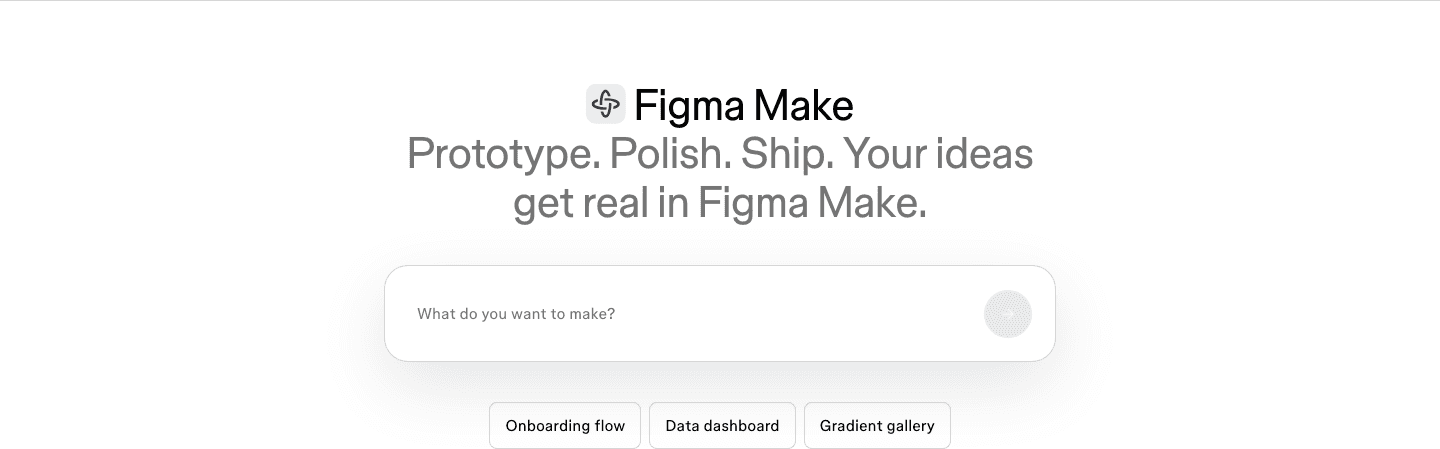
- 221 of the 268 brand-site ads land on tier 1, which makes it the normal case in this industry by a long way.
- Figma points 37 ads at figma.com/make and 17 at figma.com/agents, the two pages an organic visitor reaches from the nav.
- The existing page is enough when the product has one job: Make's hero is a prompt box, which is the product.
Tier 2: the ad points at a page built for the ad
- Five ads in the whole sweep, the smallest tier here and the opposite of what the fintech advertisers do.
- JetBrains's CLion promo page carried two ads (36 and 35 days); three Atlassian ads point at community learning paths that exist to be advertised (15, 13 and 7 days).
- Neither page is in our capture set, so this is the one tier below with no screenshot.
Tier 3: the ad points at a versioned, coded or per-market page
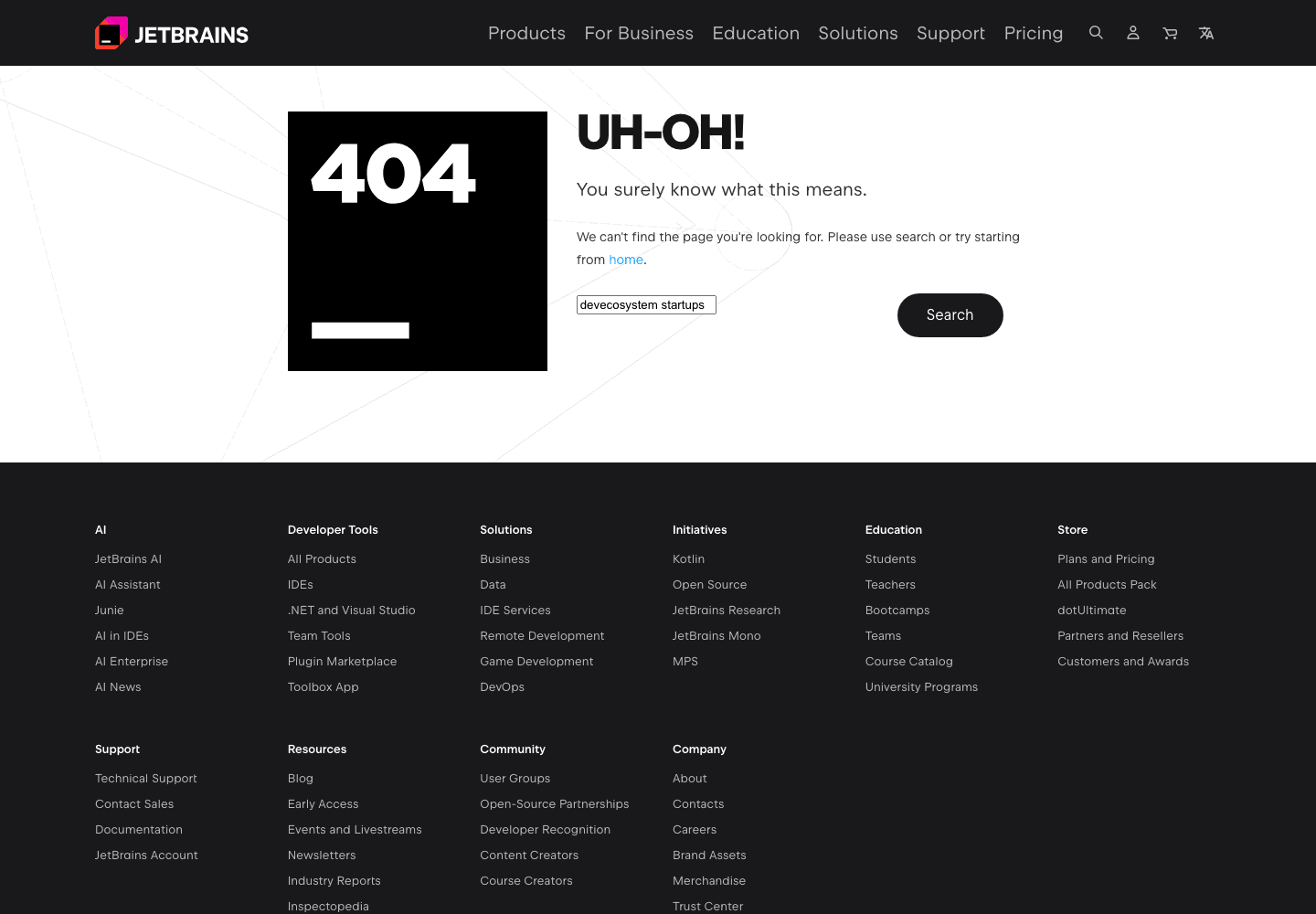
- JetBrains uses four path prefixes for paid traffic:
/lp/,/go/,lp.jetbrains.comandsurveys.jetbrains.com. The prefix tells you which team bought the ad. - Five ads, the oldest at 72 days, pointed at jetbrains.com/lp/devecosystem-startups. When we captured that address on 3 September 2026 it returned the JetBrains 404 page.
- Figma's one per-market page is the Japanese edition of its designer report, carrying two ads at 113 days.
How many paid pages each company runs
| Company | Brand-site Meta ads | Distinct pages | Of which per-market |
|---|---|---|---|
| Atlassian | 55 | 22 | 0 |
| JetBrains | 49 | 22 | 2 |
| Red Hat | 37 | 15 | 0 |
| Plaid | 31 | 6 | 0 |
| Figma | 56 | 3 | 1 |
| Vercel | 23 | 4 | 0 |
- Ad counts barely separate these companies, because the library stops at about 60 per brand per market. Page counts separate them completely, from Figma's 3 to Atlassian's and JetBrains's 22.
- The two with 22 pages are the two with many products. Figma puts 56 ads on 3 pages because it was selling two things that month.
- GitHub is left out: all 29 of its ads point at a tracking redirect, so its pages cannot be read from the library.
Try it on yourself. Open your own Ad Library entry, click an ad, look at where it lands. The homepage puts you on tier 0, a campaign code or a market in the path puts you on tier 3. Then click every paid URL you own, because nothing in the Ad Library tells you a destination has stopped working.
Teardown 1: Atlassian
Two campaigns taken apart the way we take apart a page in a client audit: the ads, then the page they land on, crop by crop, then the gaps. We picked Atlassian because it runs the longest-lived designed creatives in the set, and JetBrains because its oldest live ad and its page say almost the same sentence.
The campaign. Twenty-three Meta ads pointed at atlassian.com/software/jira and four at atlassian.com/software/confluence. The Jira group started on 24 March 2026 and was 162 days old at the sweep, the Confluence group on 8 April 2026 at 147 days. Both are built from the same two customer stories, Reddit and Udemy, in two formats: a three-frame carousel and a dynamic single image.
The ads
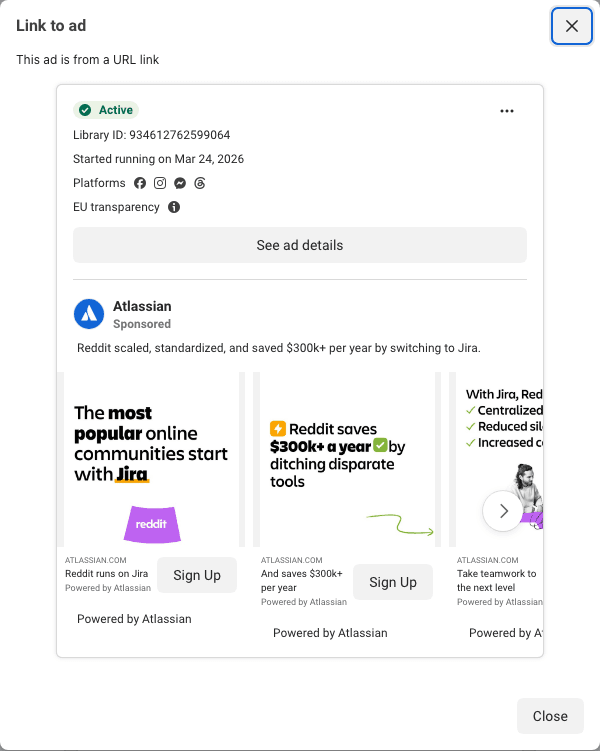
The Reddit carousel reads in three steps. Frame one claims the category, "The most popular online communities start with Jira", with Reddit's wordmark under it. Frame two carries the number, "Reddit saves $300k+ a year by ditching disparate tools". Frame three turns the story into a list the reader can check against their own team: centralized work, reduced silos, increased collaboration. Each frame has its own link headline and the same Sign Up button.
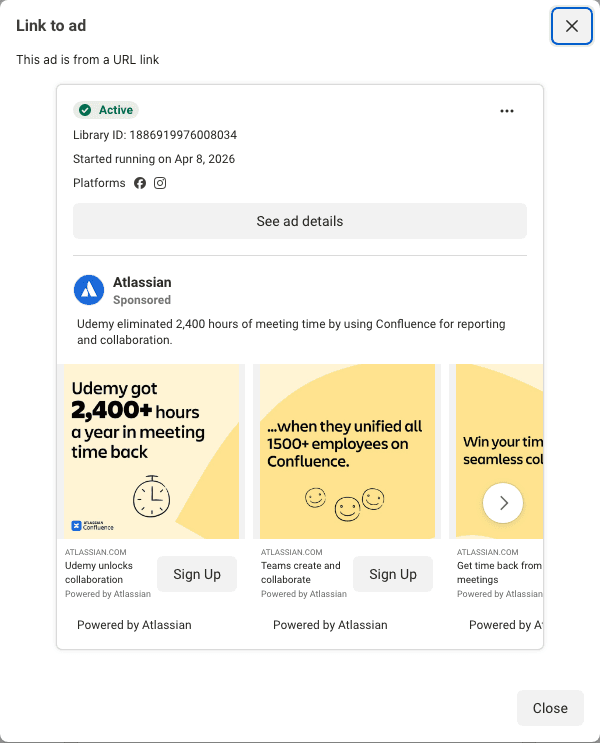
The Confluence carousel runs the same shape with time instead of money: "Udemy got 2,400+ hours a year in meeting time back", then "...when they unified all 1500+ employees on Confluence". Those two frames are one sentence split across a swipe, so the reader has to move to get the proof.
The third creative drops the customer and leads with the offer: "Jira is free for 10 users", a screenshot of a board with an IN PROGRESS to DONE arrow, and the link headline "Plan, track, and manage projects". It has run as long as the carousels, 162 days.
The landing page

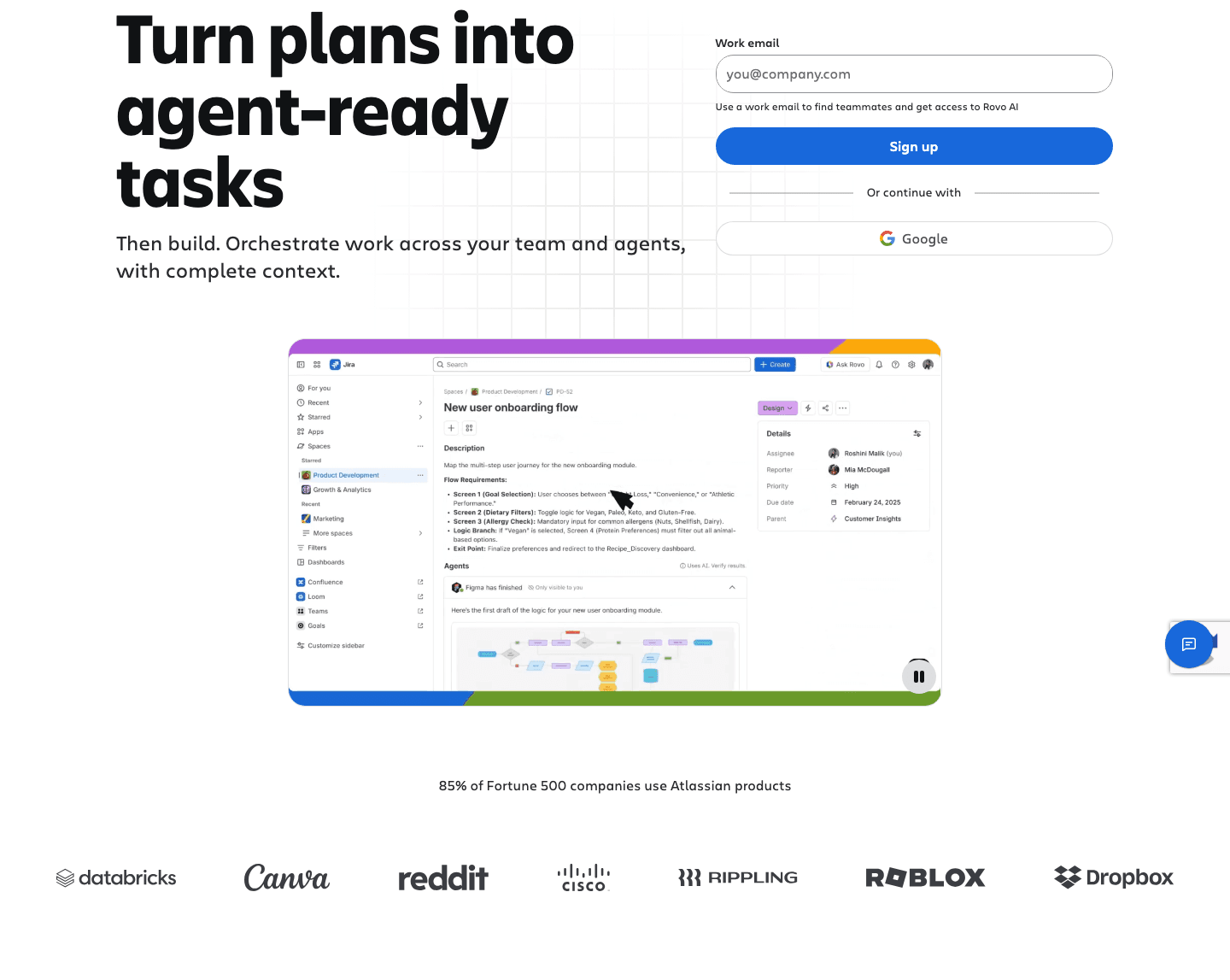
The hero. The headline sells this year's product, not the ad's offer: "Turn plans into agent-ready tasks. Then build. Orchestrate work across your team and agents, with complete context." The form is one work-email field with a Sign up button and a Google option, and the note under it earns the work address: "use a work email to find teammates and get access to Rovo AI". Below the product shot, "85% of Fortune 500 companies use Atlassian products" and a logo row: Databricks, Canva, Reddit, Cisco, Rippling, Roblox, Dropbox. Reddit is on this page as a logo, and the ad that brought the reader here is about Reddit saving $300,000.
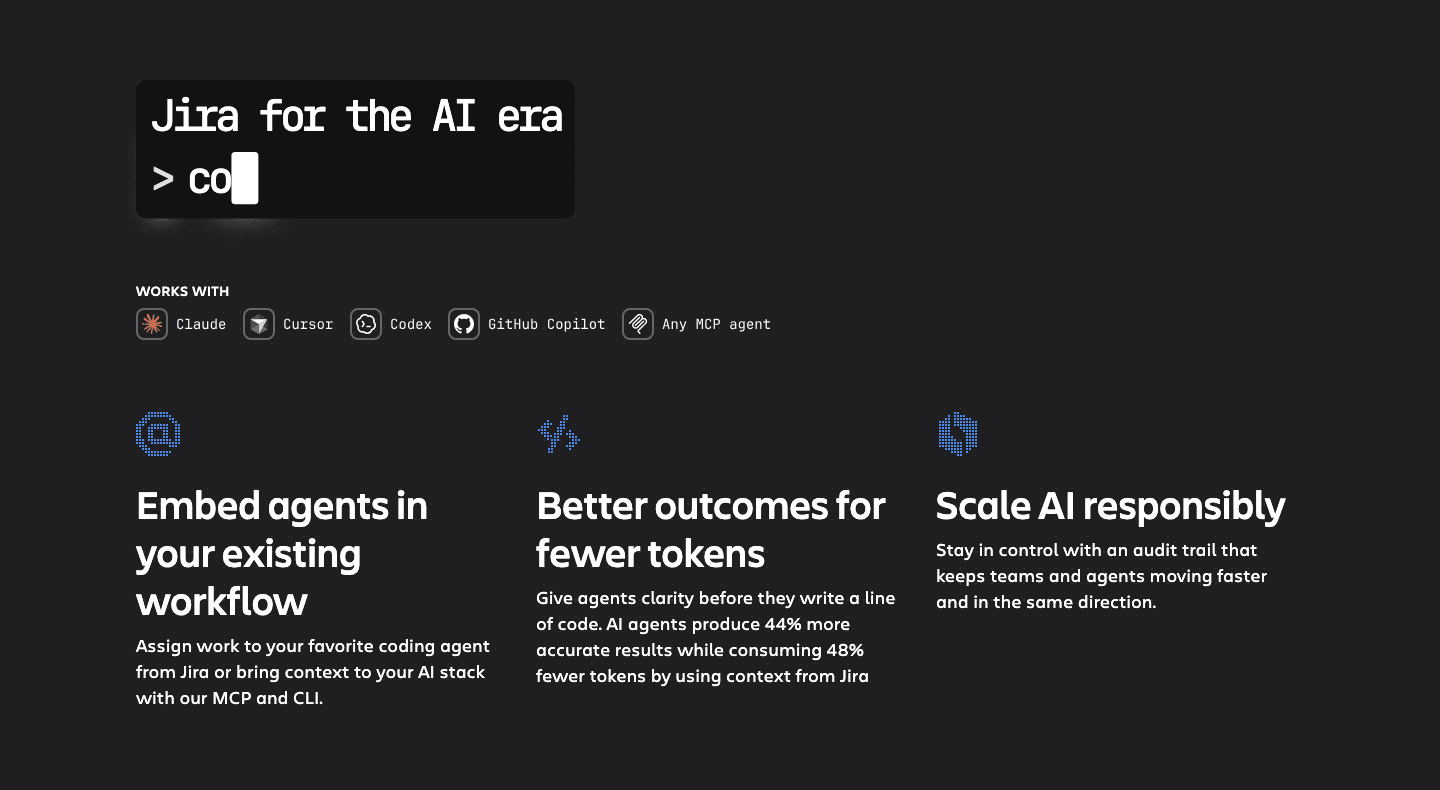
The developer band. A black band with a terminal window typing "Jira for the AI era", then a row of tools the reader already uses: Claude, Cursor, Codex, GitHub Copilot, any MCP agent. The three claims under it are written for an engineer: embed agents in your existing workflow, "44% more accurate results while consuming 48% fewer tokens", scale AI responsibly with an audit trail. It is the only part of the page addressed to the engineer who will have to run it.
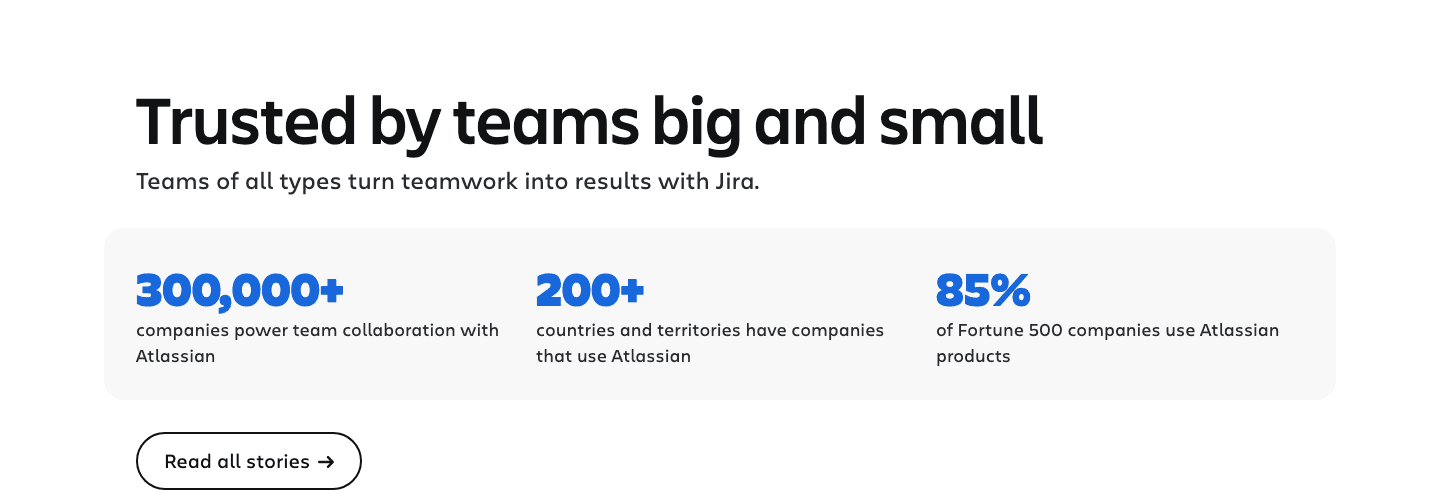
The proof. Three numbers in a grey band: 300,000+ companies, 200+ countries and territories, 85% of Fortune 500 companies. All three count customers. None measures what a customer got, which is what both ads promised.
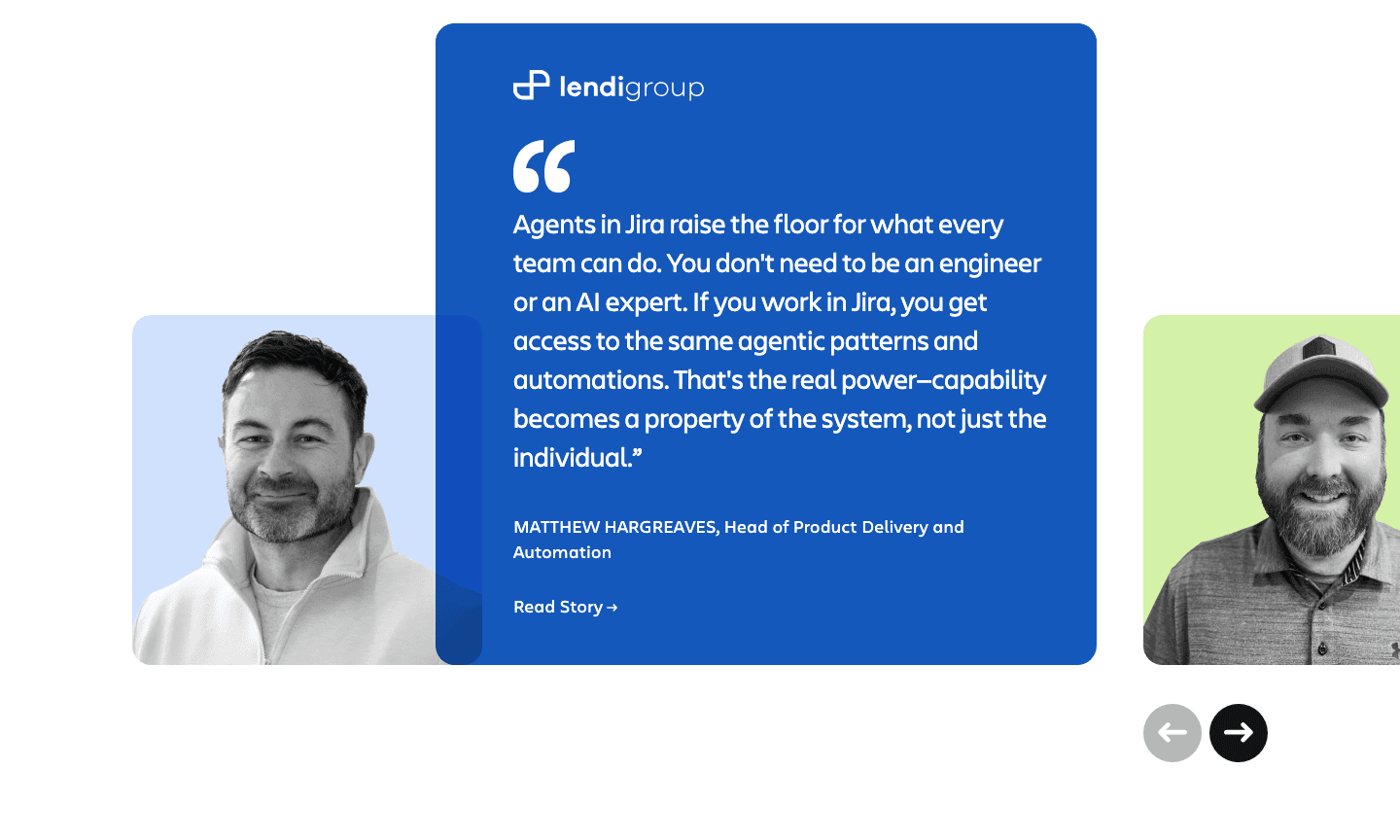
The stories. A carousel of named people, starting with Matthew Hargreaves of Lendi Group: "Agents in Jira raise the floor for what every team can do. You don't need to be an engineer or an AI expert." Neither Reddit nor Udemy is quoted, and no figure appears in the band.
Message match
| The ad says | The page proves it with |
|---|---|
| Reddit saves $300k+ a year by ditching disparate tools | Reddit's logo in the hero row, and nothing else |
| Udemy saves 2,400 hours a year with Jira | Nothing on this page; the figure is in the ad only |
| 1500+ employees get complete project visibility | 300,000+ companies, 200+ countries, 85% of the Fortune 500 |
| Jira is free for 10 users | "Get started for free" mid-page, with no seat count |
The gaps
Two gaps, both fixable in a week. The number that bought the click is missing from the page: four creatives sell Reddit's $300k and Udemy's 2,400 hours for 147 days or more, and the page they open carries neither figure, so a reader who came for the case study has to go and find it. And the free tier is sold on the card with a seat count and on the page without one, so the reader who clicked "free for 10 users" lands on a work-email form that does not repeat the promise.
The competitive audit looks for gaps like these on your own pages, the same way.
Teardown 2: JetBrains
The campaign. One creative, three regional buys, all pointed at jetbrains.com/store/startups. The oldest started on 18 March 2026 and was 169 days old at the sweep, still live; the second started 13 May and the third 3 June, at 113 and 92 days. The campaign parameters in the links name the regions (amer, emea, apac) and the body copy is identical in all three.
The ad

The creative is one joke and one offer. "Turn your MVP into a unicorn!" over a black card with a magenta gradient, then "Get a 50% discount on all JetBrains IDEs and AI plans!", then the JetBrains Startup Program lockup. The post text adds the audience and the proof: "Professional tools for early-stage growth. Join over 55K startups scaling with JetBrains IDEs and AI tools." The button is Apply now, not Sign up, which tells the reader there is a form and a decision at the end of it.
The landing page

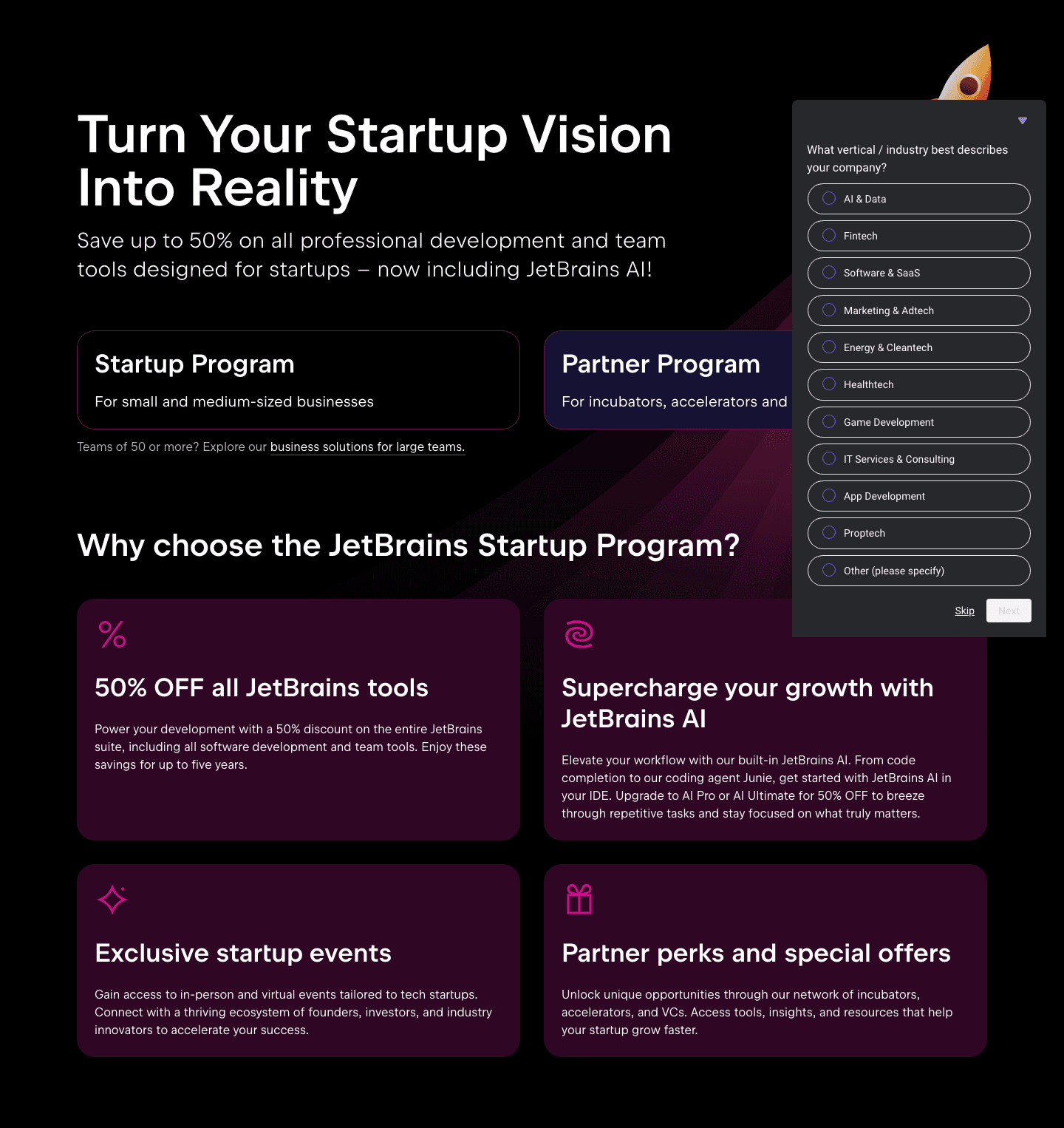
The hero. "Turn Your Startup Vision Into Reality" repeats the ad's promise in the ad's register, and the subhead repeats the offer: "Save up to 50% on all professional development and team tools designed for startups, now including JetBrains AI!" Two cards split the audience on the first screen, Startup Program for small and medium businesses and Partner Program for incubators, accelerators and VCs, with a third line for teams of 50 or more. Four benefit cards follow: 50% off for up to five years, JetBrains AI, startup events, partner perks. On our capture a survey panel sits over the right half of the hero and covers the Partner Program card.
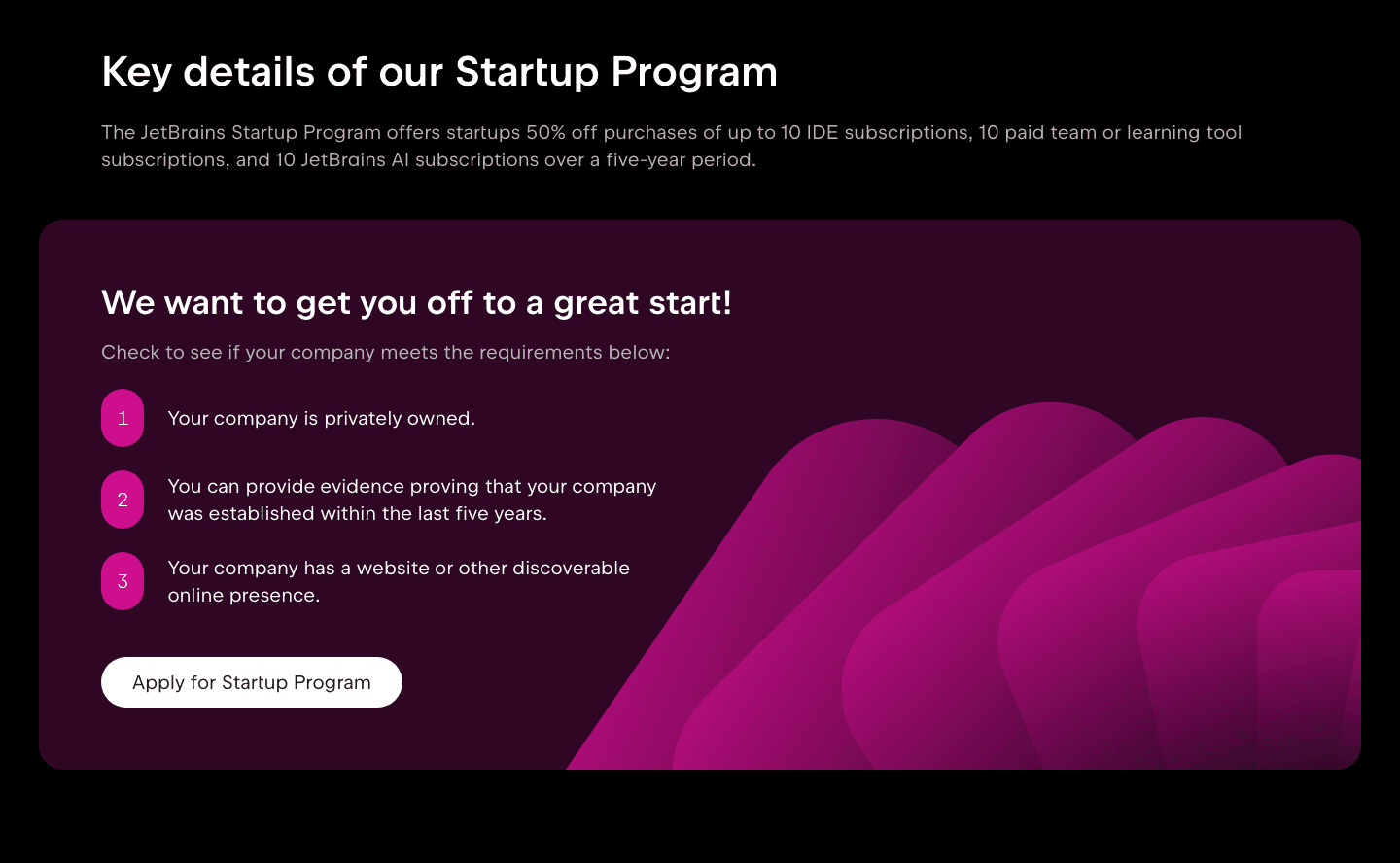
The rules. "Key details of our Startup Program" puts the whole offer in one sentence, 50% off up to 10 IDE subscriptions, 10 team or learning tool subscriptions and 10 JetBrains AI subscriptions over five years, then three numbered conditions: privately owned, founded within the last five years, a discoverable website. A reader who fails one of the three knows it before filling in anything.
The proof. "Trusted by more than 50,000 startups" over four quotes, each with a logo and a named person: Colamda, Lucid Reality Labs, Conundrum and STABL Energy, from a co-founder, a founder and CEO, a lead ML engineer and a director of engineering. Two of the four name the product they use, PyCharm and CLion.
The FAQ. Twenty questions in two columns, and they are the awkward ones: why did my 50% discount disappear, do I need to buy all 10 licenses immediately, can subsidiaries apply, how many plugins can I buy at 50%. A discount sold on a card raises exactly these, and the page answers them before support has to.
Message match
| The ad says | The page proves it with |
|---|---|
| Turn your MVP into a unicorn | "Turn Your Startup Vision Into Reality" as the h1 |
| 50% discount on all JetBrains IDEs and AI plans | "Save up to 50%... now including JetBrains AI", then the five-year terms |
| Join over 55K startups | "Trusted by more than 50,000 startups" |
| Apply now | Three eligibility rules and an Apply for Startup Program button |
The gaps
Two gaps. The ad says 55K startups and the page says more than 50,000, so the reader who counted on the card meets a smaller number one screen later, and one of the two is out of date. And the survey panel on our capture covers the Partner Program card, which is the whole audience split on a page that serves two different applicants, so an incubator landing from the ad sees one option where there are two. A page audit catches both in one pass.
Key takeaways: five things to do with this
- Pick the one job before you pick the creative. The longest-running ads in this set name a single task: CI/CD that survives a 100GB build, verify users faster, push to deploy. Plaid ran five of them past 70 days.
- Put a customer and a number on the first frame. Atlassian is the only advertiser in the set doing it, and those four carousels are its longest-lived designed creatives, all still live at 147 days or more.
- Say where the free part stops. Atlassian's "Jira is free for 10 users" (162 days) and JetBrains's "Get a 50% discount on all JetBrains IDEs and AI plans" (169 days) outlived every vaguer offer in the sample. Sixteen ads carry the word free and the specific ones are the old ones.
- Put the ad's number on the page. Atlassian's cards sell $300k and 2,400 hours; the pages behind them carry neither. That is a copy change, not a redesign.
- Try one of the five almost empty angles. A price in dollars, a named competitor, security as the headline, a benchmark number, something interactive. Across 309 readable ads, each one appears twice or less.
How to run this analysis on your own competitors
The Meta Ad Library and the Google Ads Transparency Center are public and free. Search the brand's page, not a keyword, set the country, filter to active ads, sort by start date. Then:
- Group the ads by angle. Use the eight above.
- Keep the ones that have run 45 days or more. The advertiser keeps paying for them. Click through and read the page each one lands on.
- Write down the angles they are not running. Start your next campaign from that list.
Or send us the URL and we do it for you.
How we did the analysis
- Sample: the developer tools companies on the benchmark leaderboard, picked by traffic, not by advertiser status. Fifteen were selected, nine swept: Plaid, Figma, Atlassian, JetBrains, Red Hat, Vercel, GitHub, Stripe and Canonical. Stripe runs no Meta ads and Canonical's Meta results all came from pages other than its own, so neither has a readable ad here. Supabase, Mistral AI, Sanity, MongoDB, DigitalOcean and Bitbucket were selected and never swept, so they are set aside rather than counted as having no ads.
- When: the sweeps ran between 25 August and 3 September 2026 and no new sweep was made for this article. Every day count, every ad count and every "still live" in this post is as of that window. Statuses change; the library links in the sources show the current state.
- Sources: the Meta Ad Library, searched by brand page, and the Google Ads Transparency Center, both through Apify.
- Filter: brand-verified ads only. An ad counts when the advertiser's page name and the landing host are the brand's own. That dropped 359 results on the page name and 277 on the landing host, mostly resellers and conference organisers using these brand names.
- Ranking: days active. The floor of interest is 45 days, the point at which an ad has survived at least one budget review. 139 brand-verified ads cleared it, 103 of them with copy or a creative we could read.
- Reading: every distinct message was read by hand and put in one angle. About half of Meta's headlines come back as a
{{product.name}}template and every video headline is a stub, so those were read from the creative image where we hold one and from the library's body field where we do not. - Limits: the library returns about 60 ads per brand per market, so the counts per company are a floor and the shares inside the sample are what to read. GitHub's destinations are unreadable because every ad goes through a doubleclick redirect. Meta publishes reach only in the EU and never publishes spend.
Every ad above links to its primary source in the sources list, so you can check the whole analysis yourself.
Sources
Primary sources, all public and checkable today. Open any Meta ad with its Library ID at facebook.com/ads/library/?id=ID.
- Atlassian's Reddit carousel, Library ID 934612762599064, running since 24 March 2026: facebook.com/ads/library/?id=934612762599064
- Atlassian's Udemy carousels: 924475337173722 and 1291153286204947 for Jira, 1886919976008034 for Confluence. The Jira Service Management card for Thumbtack: 1965946484263334. The Confluence card for Reddit: 25831209689889559.
- Atlassian's free-tier ads: 917447611187910 (Jira is free for 10 users), 2679328722441992 and 848750261574883 (Try Confluence for free), 2478919085860804 and 1236321585151991 (Get time back from meetings), 1710389509916898, 797031066809250, 2060470165344649 (Rovo).
- JetBrains's startup-program ads: 1476311327339427 (169 days), 3085084028350495, 1014407141453322, 922130333897056. The TeamCity game-dev line: 1216364240291007, 2824420764414298. The documents: 996611586603194, 2425773754501922, 1308203658061368, 1066508882700393. The prize draws: 2997571327100225, 869147316087959, 2109095499980414. The terminal ads: 2003166386995554, 27632442369755989. The events: 1291163439234770, 2288055088350837, 1445004886769797. GoLand for DevOps: 806026512187033.
- Figma: 1268881618002516 and 1012270771310979 and 1665850477751550 (Figma Make), 1890163895014834, 1157288153272174 (Try Figma AI for free), 1014459034919075 and 935163386293746 (the agent), 27237002229270601 (the Japanese report).
- Plaid: 2159853618112565 and 917945727942196 (the fraud white paper), 963110156638005, 1401362998373484, 1856355048654823, 1317345437177324, 1324005956488481, 1024772600366146, 1949330959029286.
- Red Hat: 1470361025268140, 1943322506386855, 1339327977976268, 2268593470584586, 1586038273000946, 1083258157474490. Vercel: 1681098249625791, 1362390682673747, 1623421662083191, 1664159514890528, 1331329855165538. GitHub: 1051010471042837, 2897197957308751, 1705582860537044, 1577990037113397, 1243785667896070, 1288725756558612, 1601404648370110.
- The landing pages, live: atlassian.com/software/jira, atlassian.com/software/confluence, jetbrains.com/store/startups, figma.com/make, figma.com/agents, jetbrains.com/lp/devecosystem-startups.
- The sample: the developer tools leaderboard of the Web Anatomy benchmark, selected by traffic. The sibling post on consumer finance: the fintech ads playbook.
- The Google Ads Transparency Center for the search ads: adstransparency.google.com. Ad sweeps made 25 August to 3 September 2026 (Meta by brand page, Google by advertiser); the landing-page captures made 3 September 2026.
Data collected September 2026. Ad statuses and run lengths change; the library links above always show the current state.

Written by
Gabriel Amzallag , Founder, Web Anatomy
5 years CRO + SEO at Qonto (2021–2025). After advising 15+ SaaS on their websites (Payfit, Pigment…), the same patterns kept breaking, so I decided to build the source of truth on what works on the web: the intelligence layer every tool, builder, and team uses to ship sites that perform.
More from the blog
Playbooks
We analyzed the ads the top HR tech companies run. Here is what works.
Which HR tech ads kept running in 2026, the eight angles they use, and the pages behind them. The takeaways, with the ads to look at.
 Gabriel Amzallag26 min read
Playbooks
We analyzed the ads the top marketing software companies run. Here is what works.
Which marketing software ads keep running in 2026, the angles they use, and the pages behind them. Seven angles that work, five almost nobody runs.
Gabriel Amzallag23 min readGuides
Programmatic SEO: a practical guide from 10 city pages to 300
How Staycation went from 10 hand-made city pages to 300 with programmatic SEO, and grew purchases from search by 90%: how to find your topics, four rules, the template, and how to produce and measure the pages.
Gabriel Amzallag12 min read