Footer|
Social proof carried into the footer gives the visitor one last piece of evidence at the bottom of the page, a review score, an award badge, or a customer count, right where the choice to leave gets made.
Key takeaways
Showing 1–28 of 74 examples
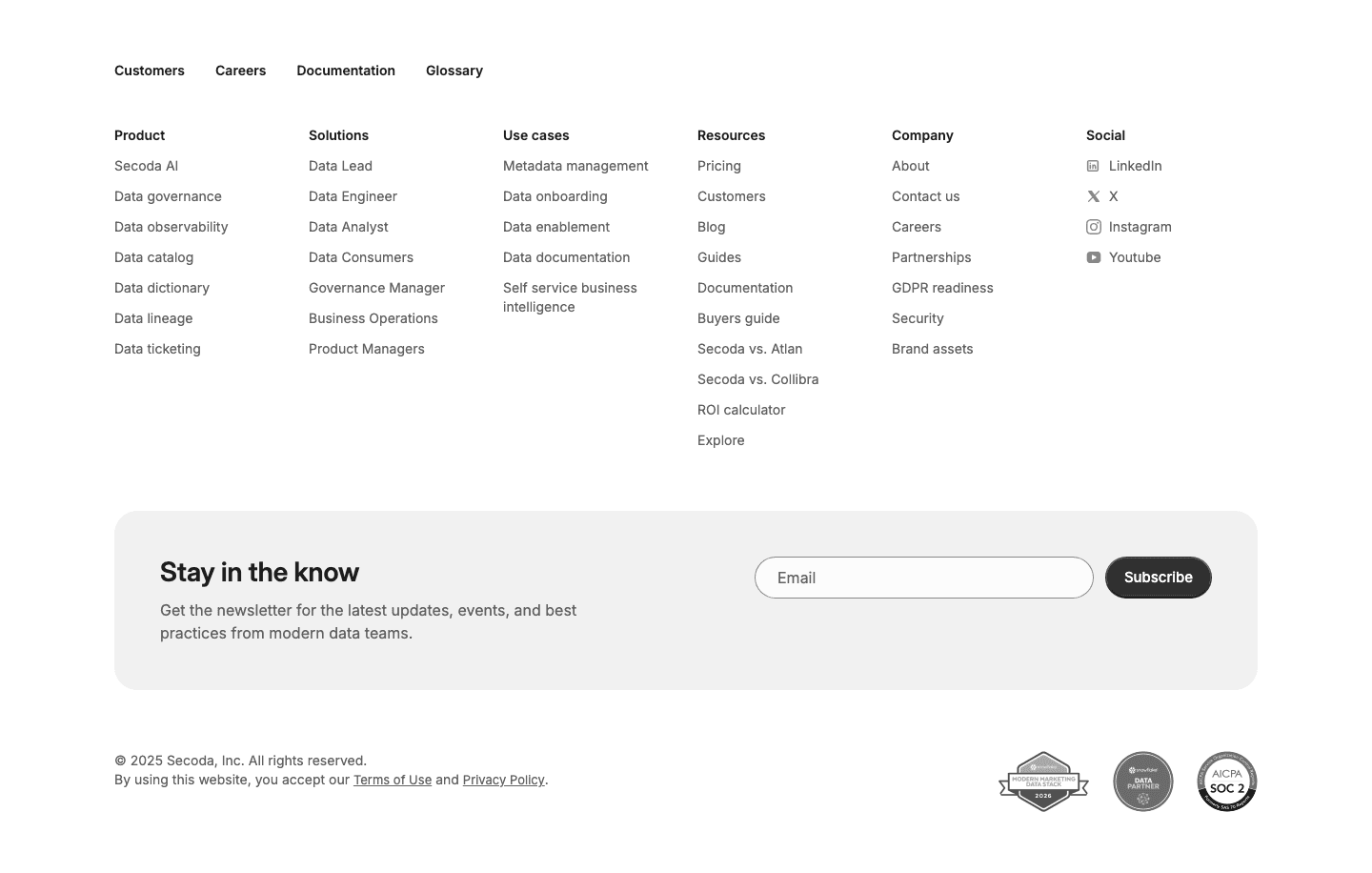
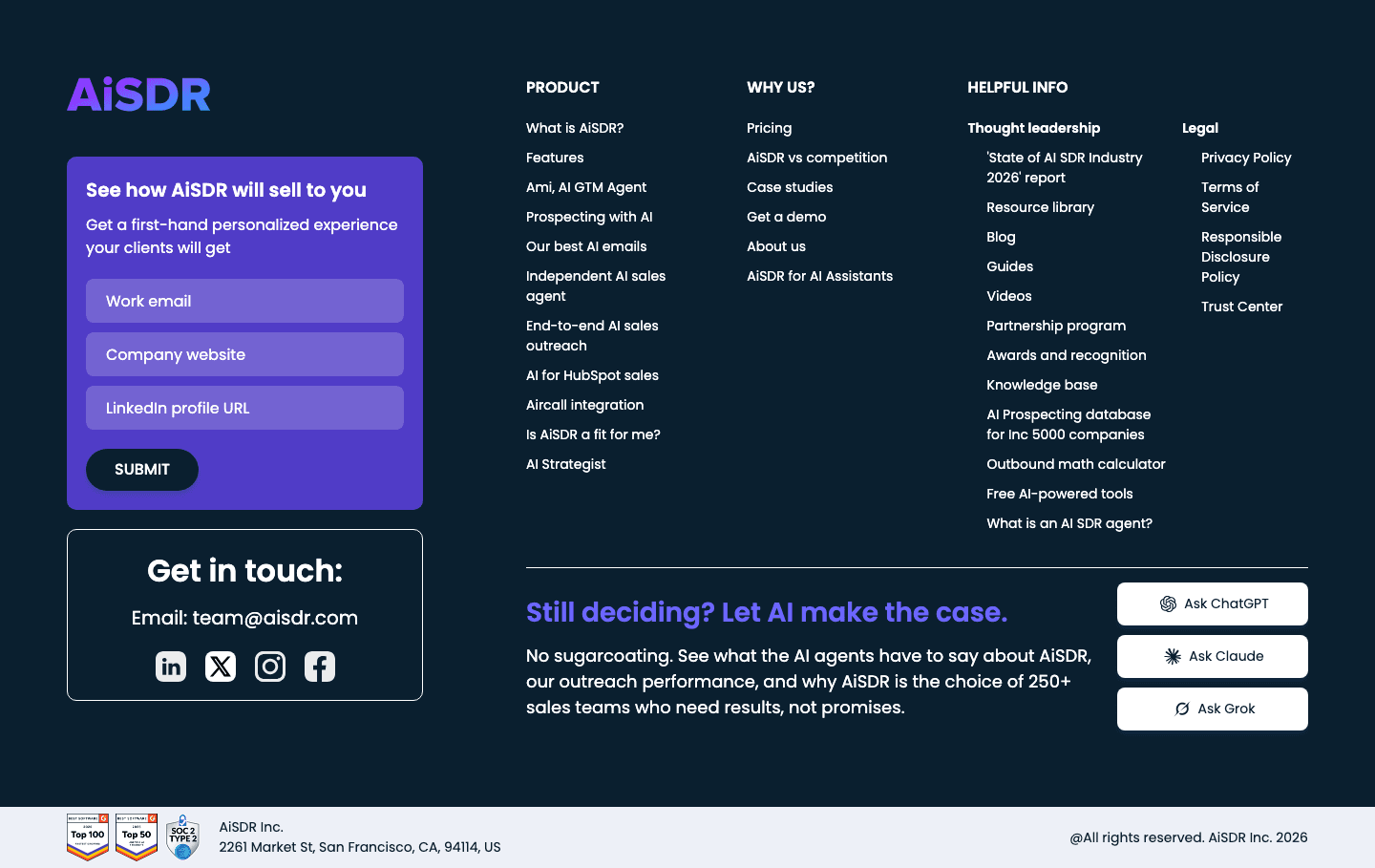
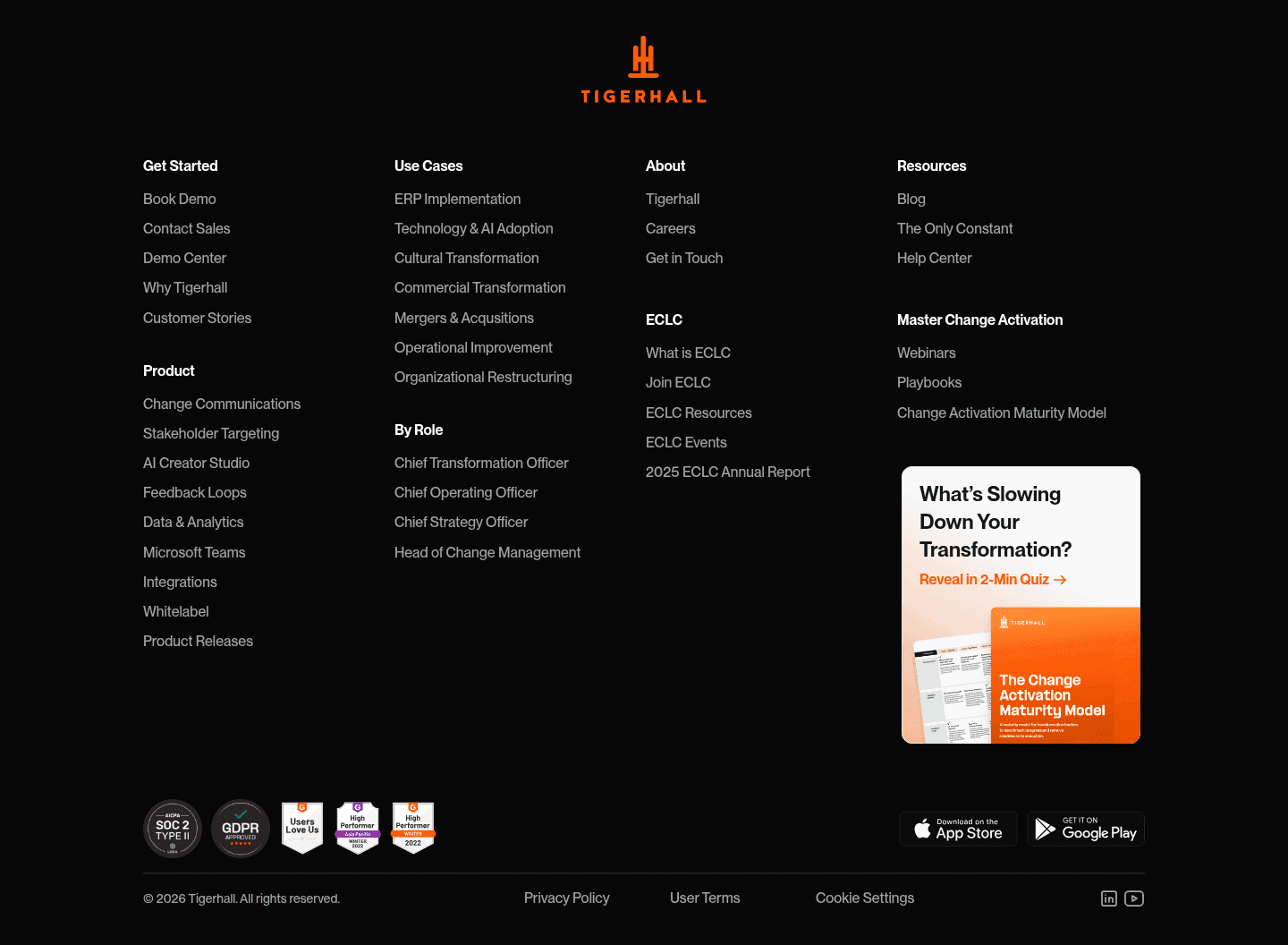

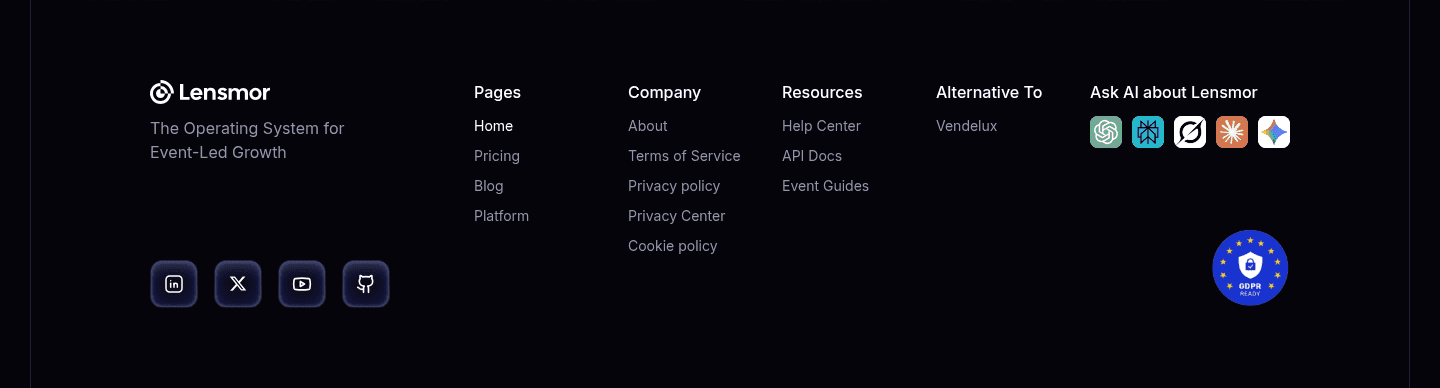
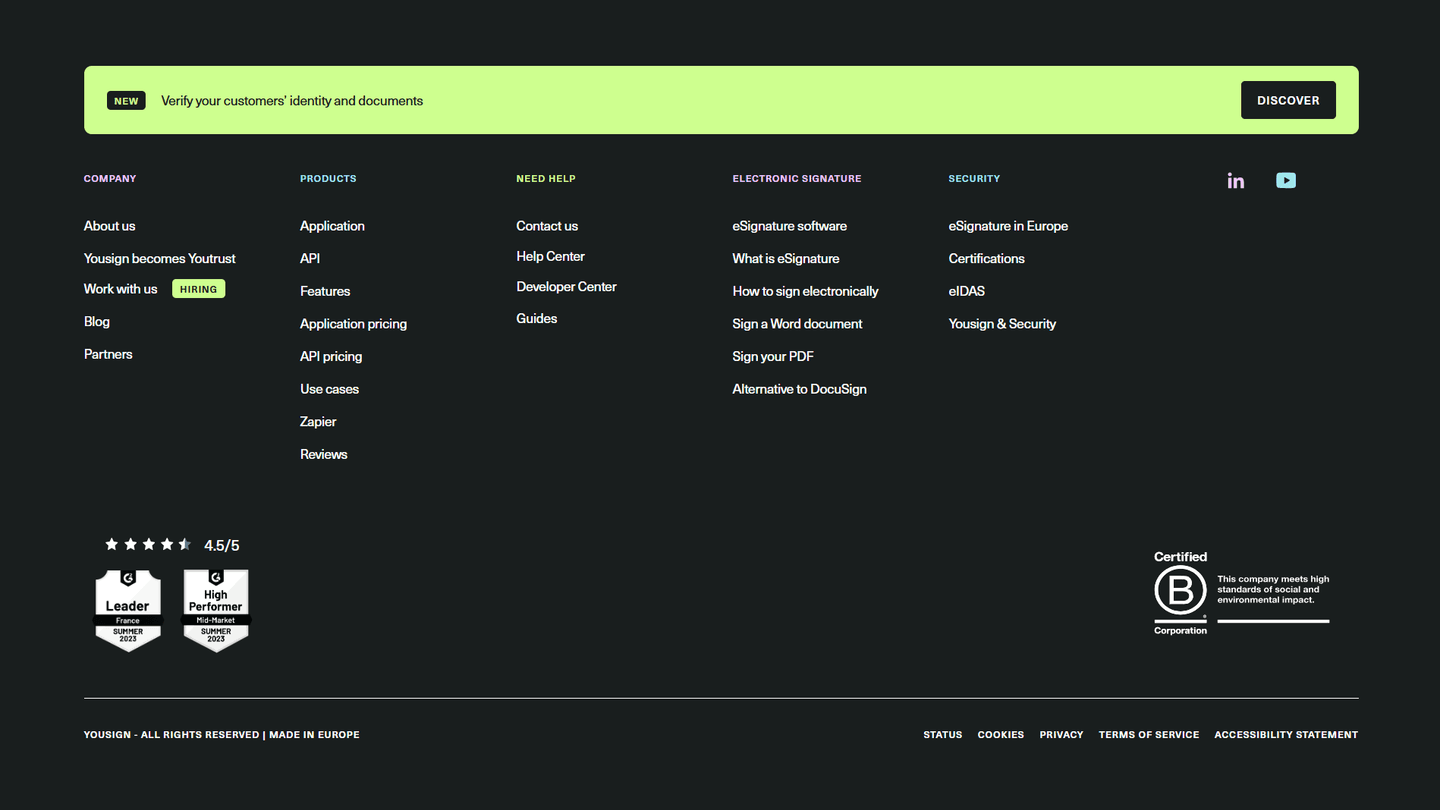
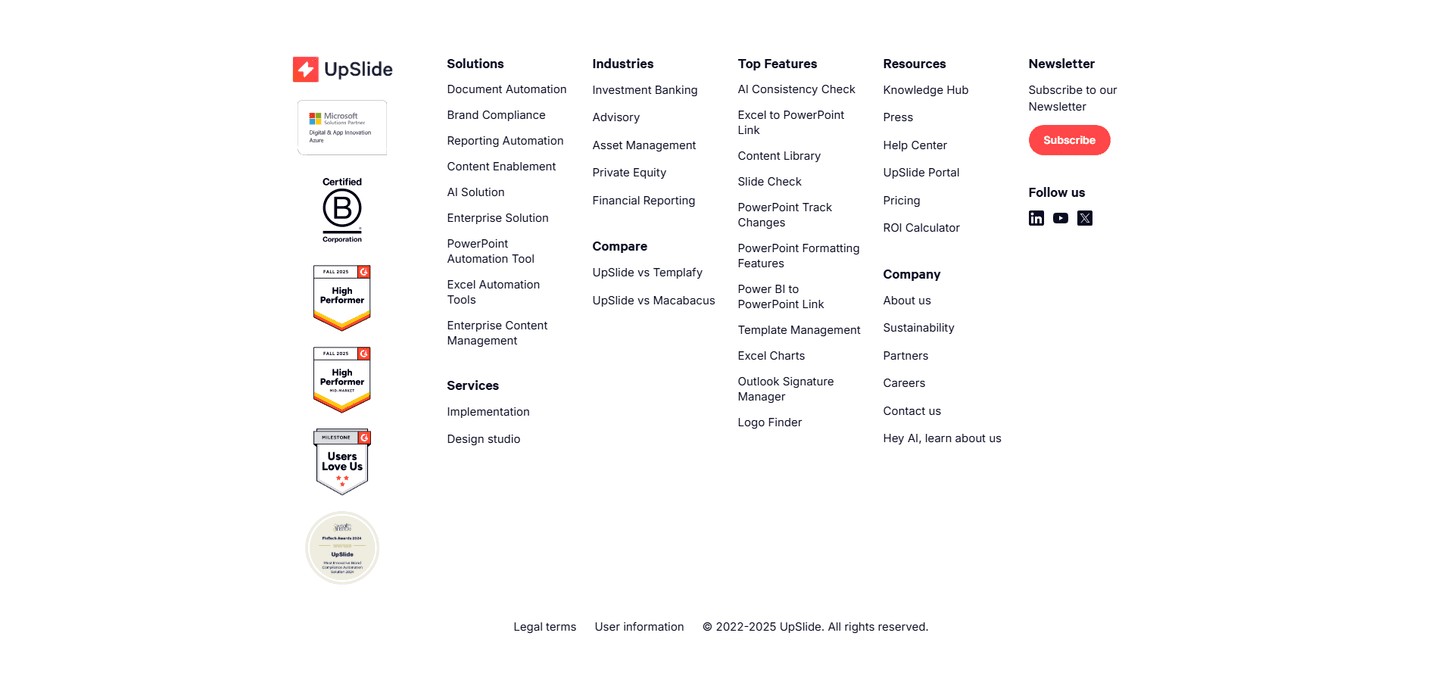
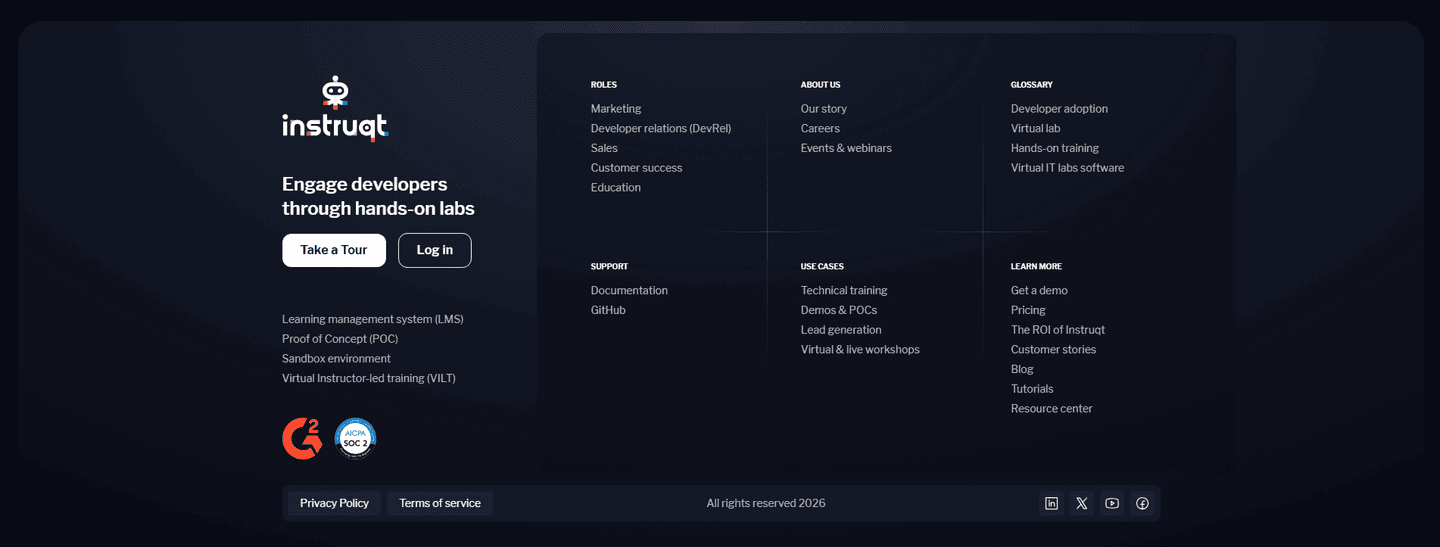
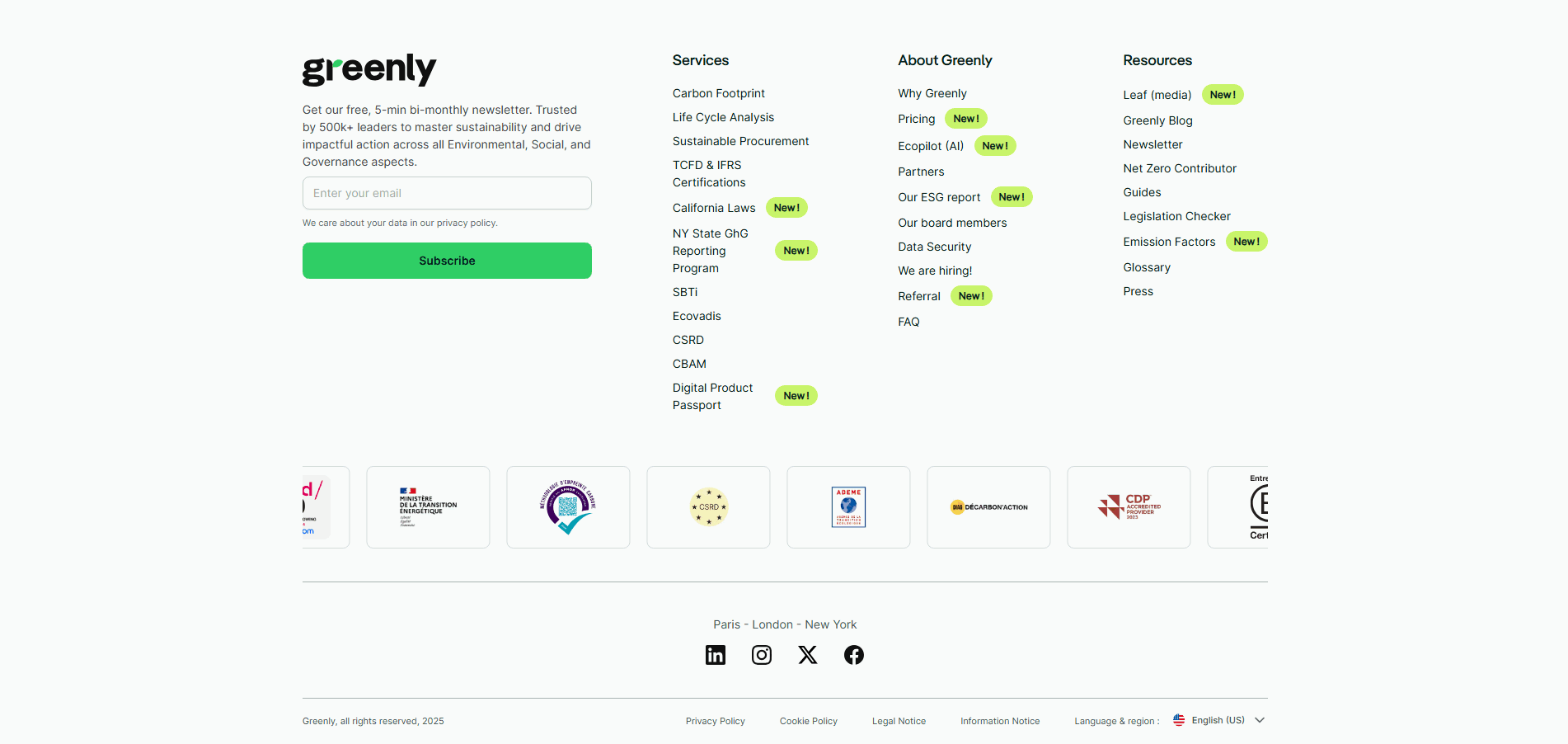
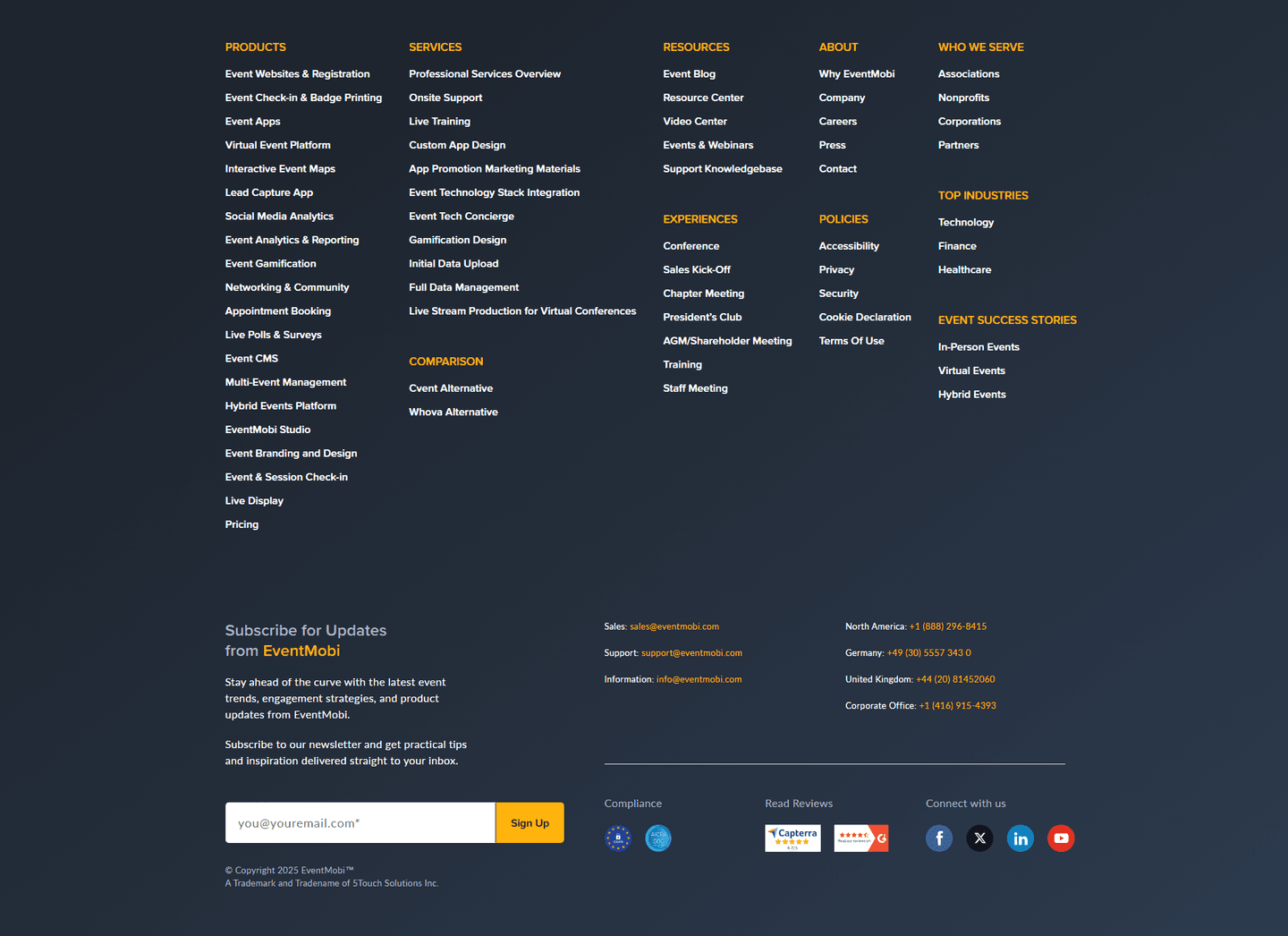
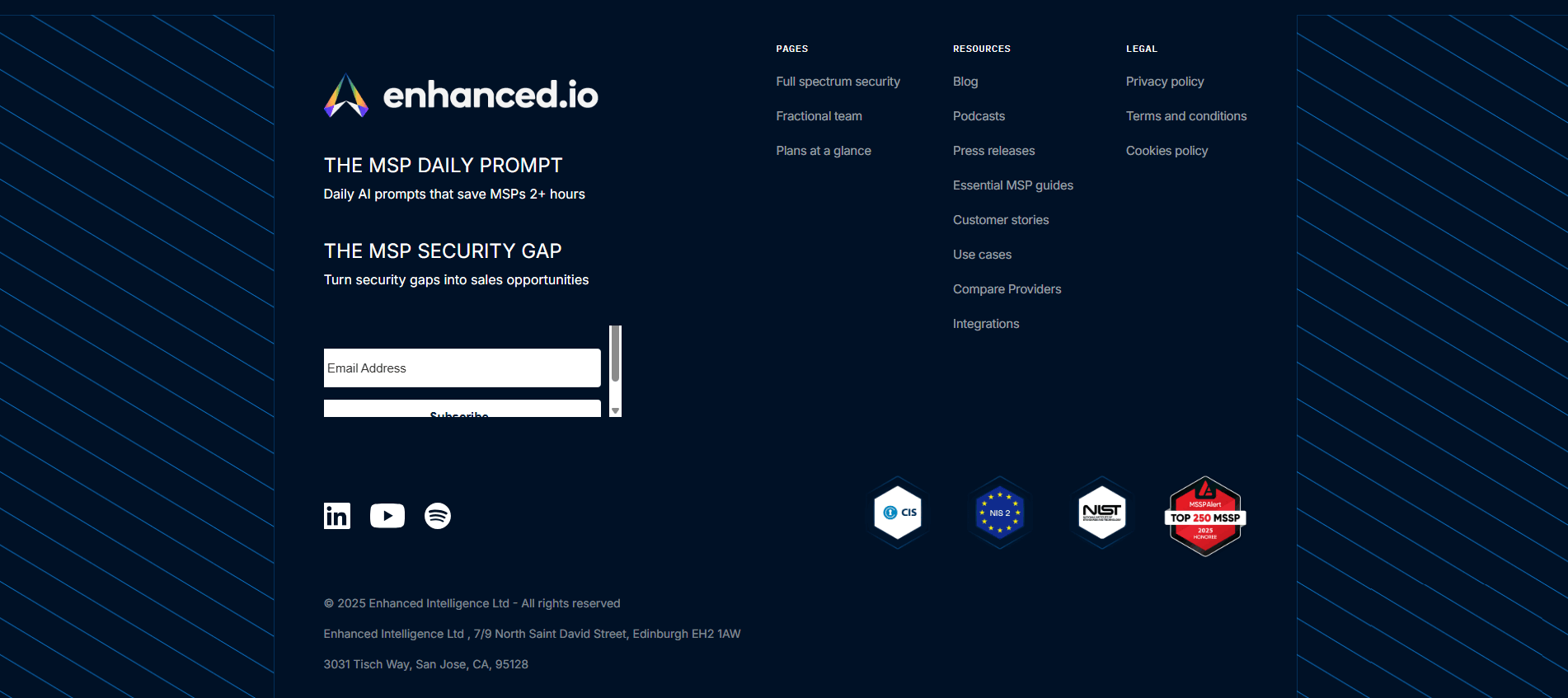
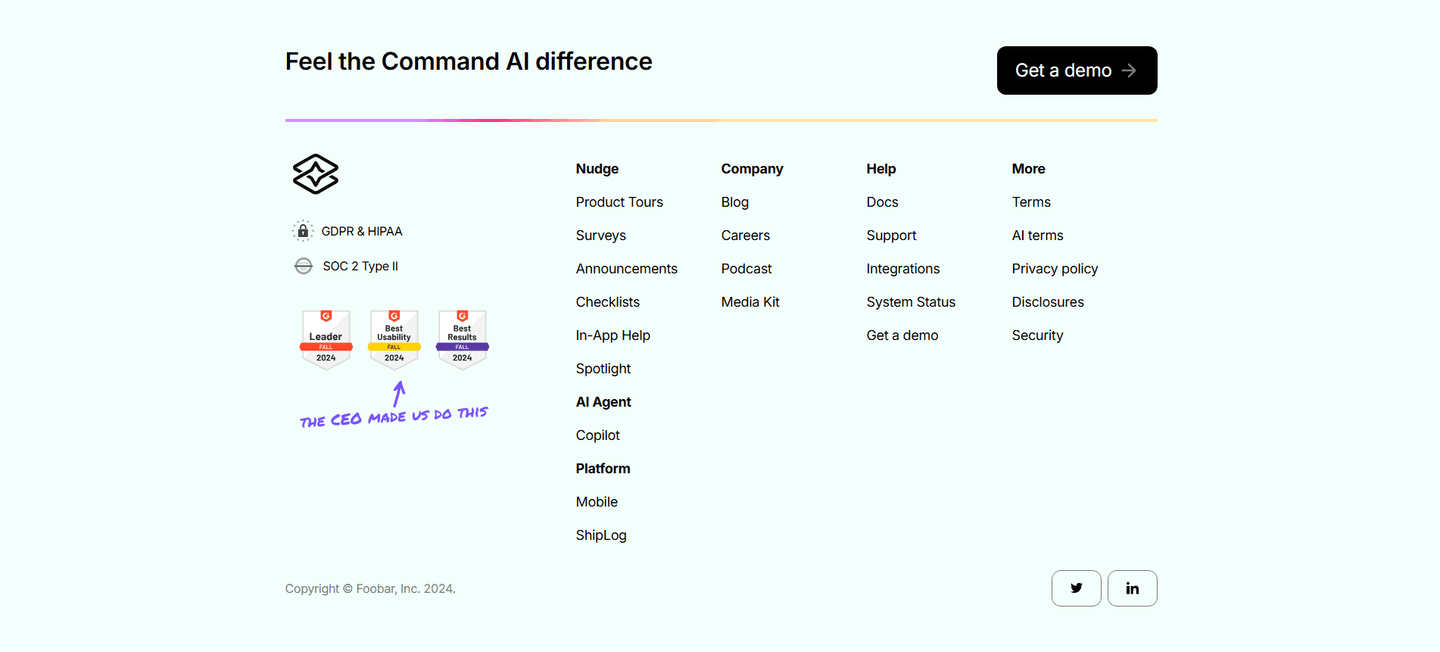
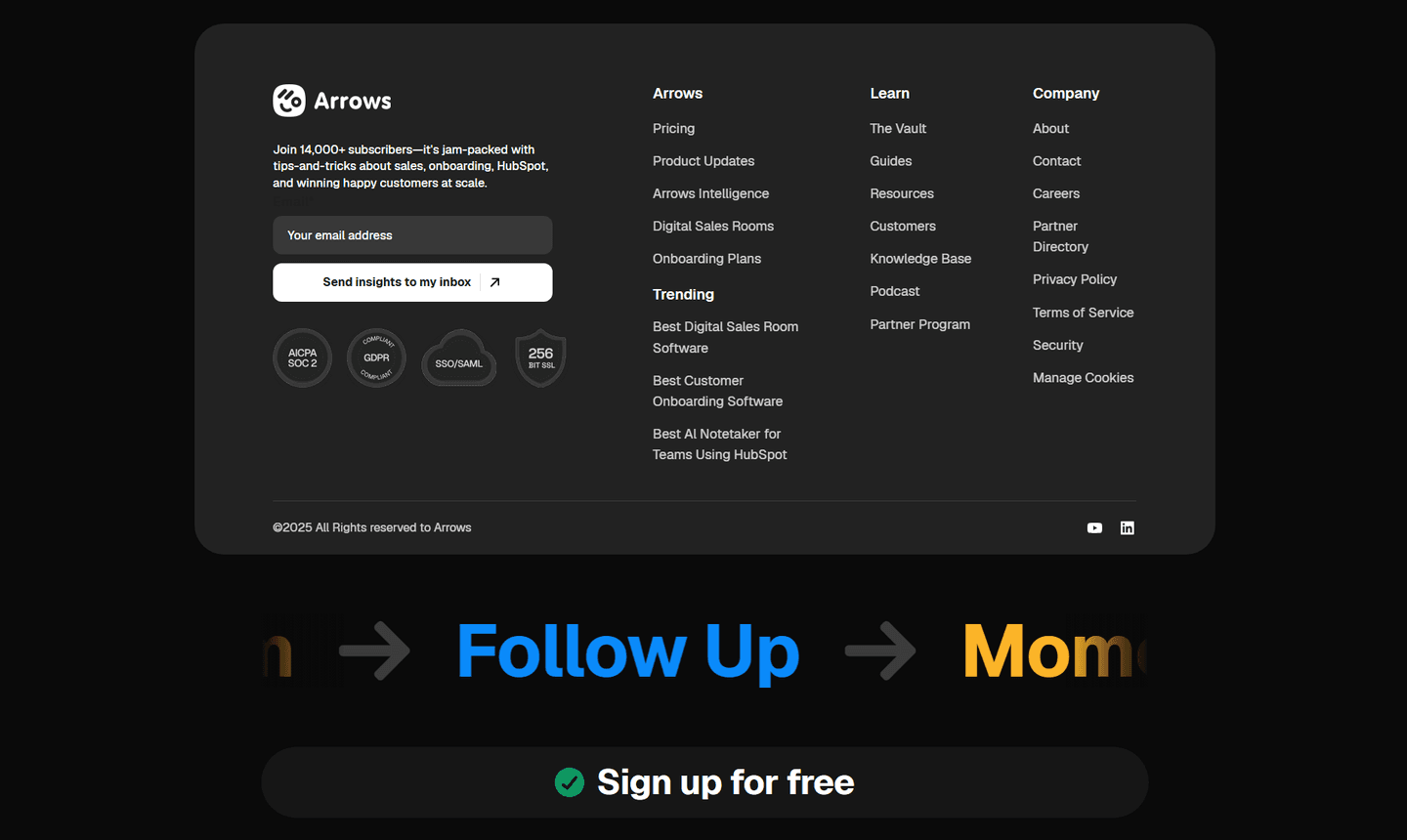
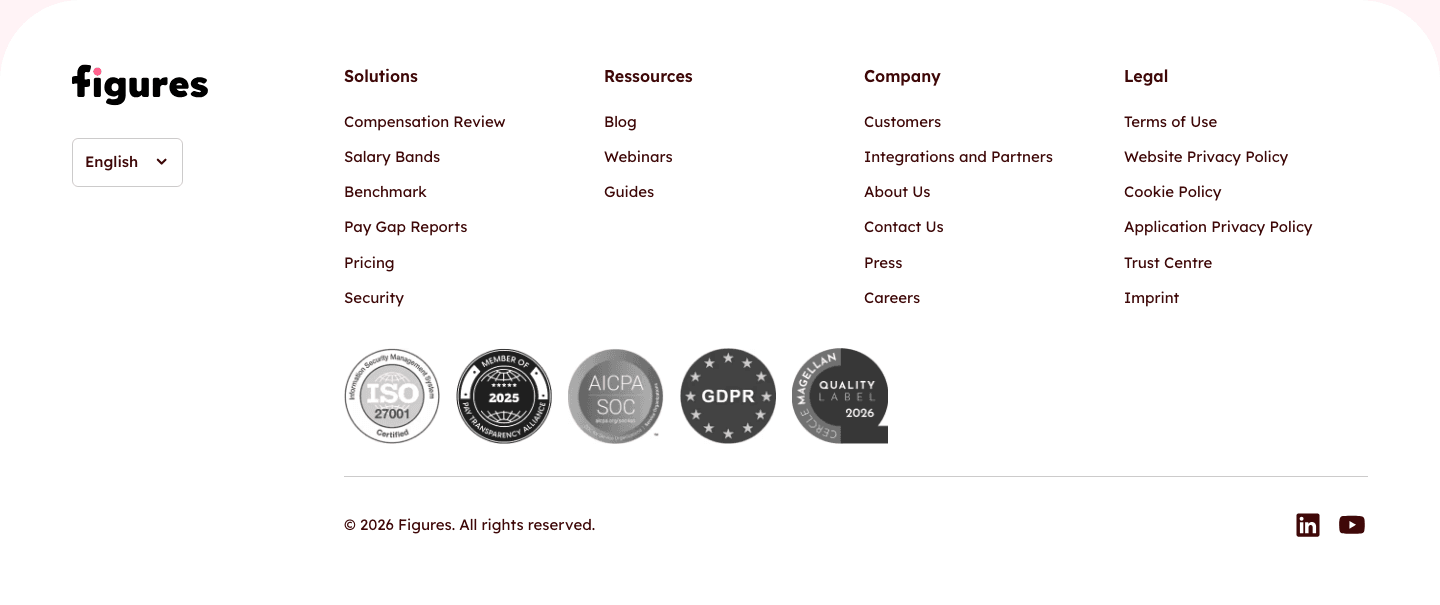
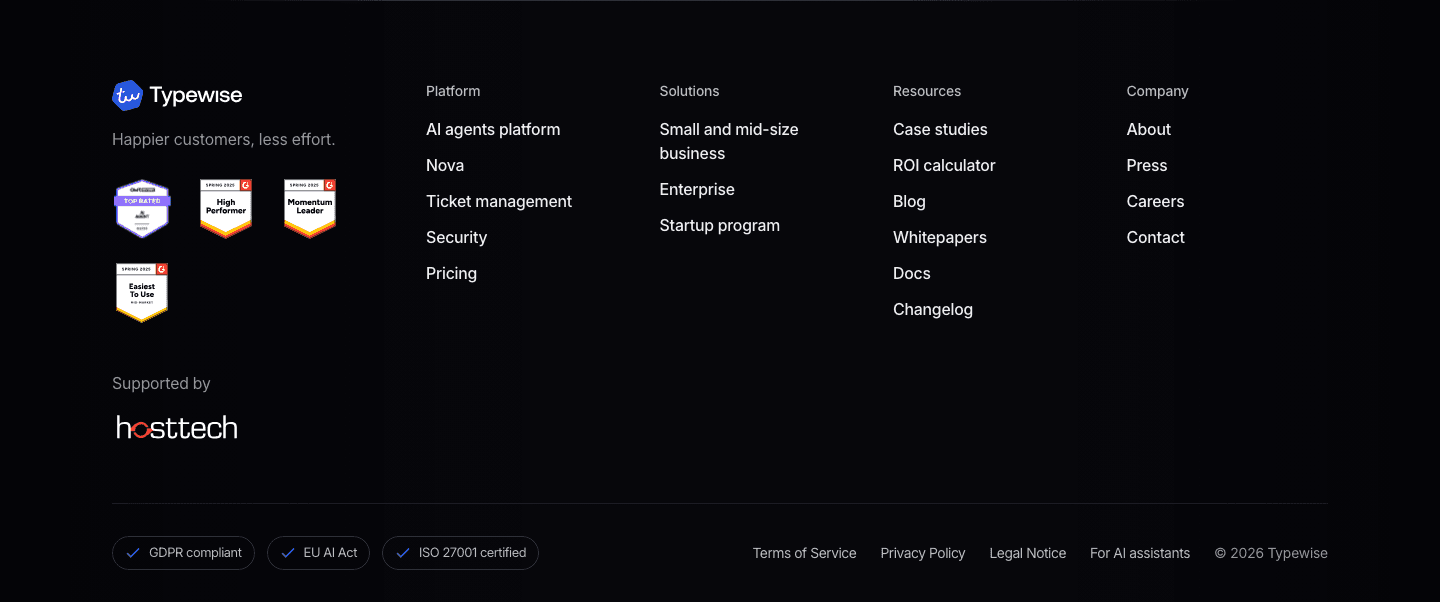
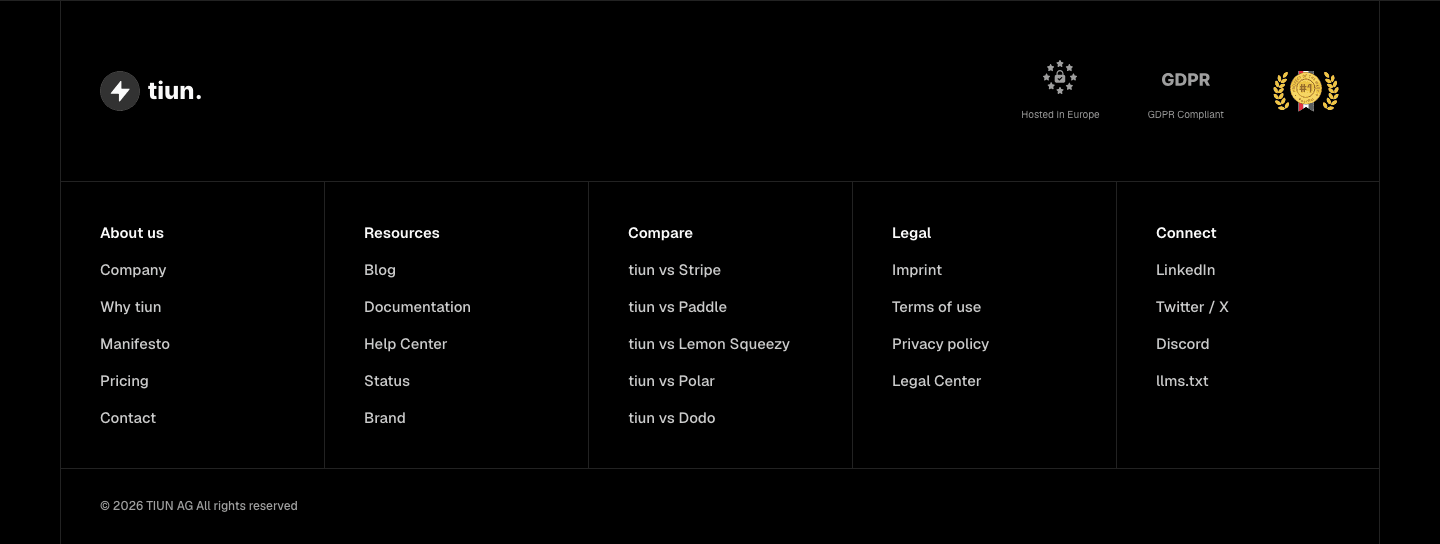
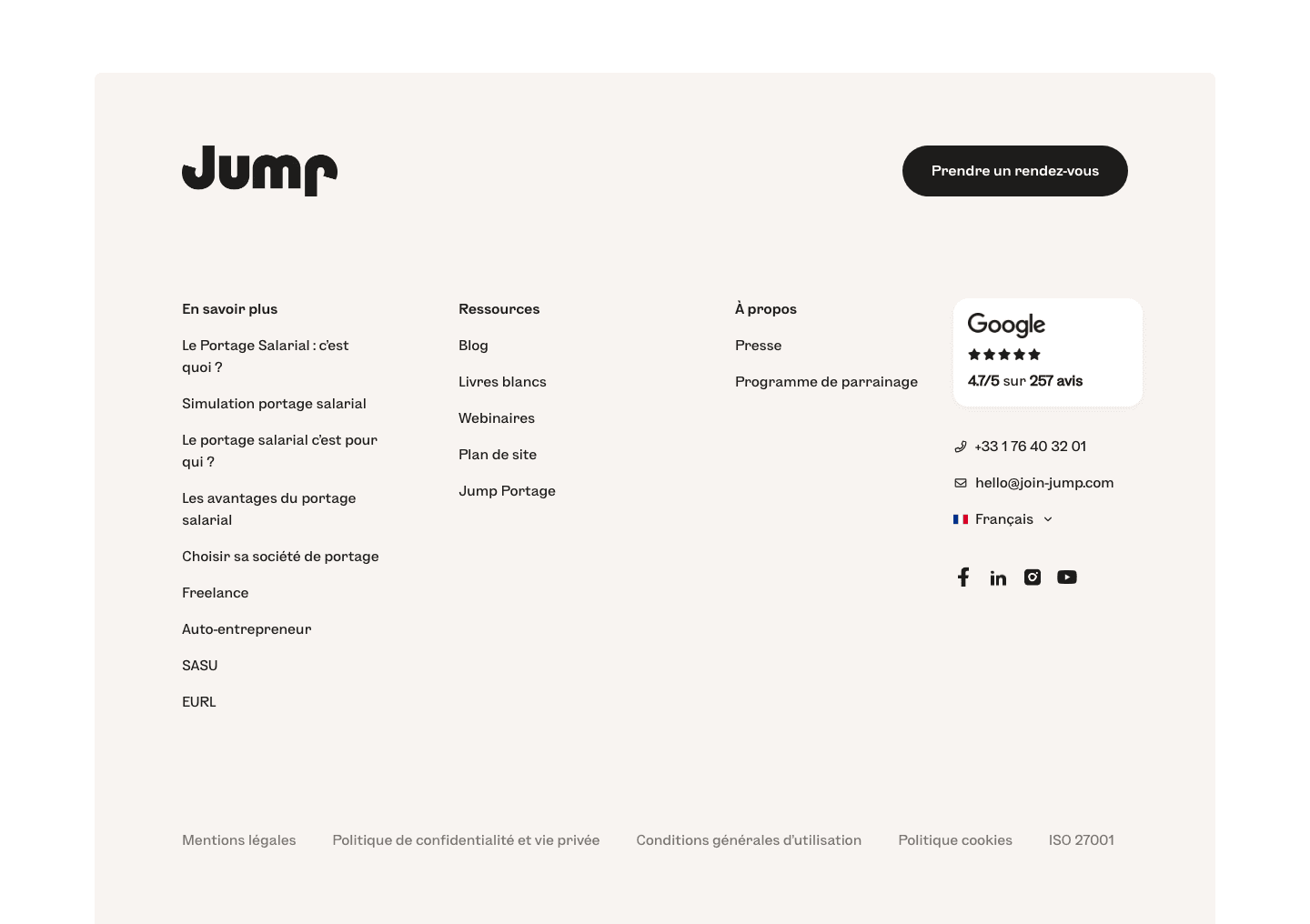
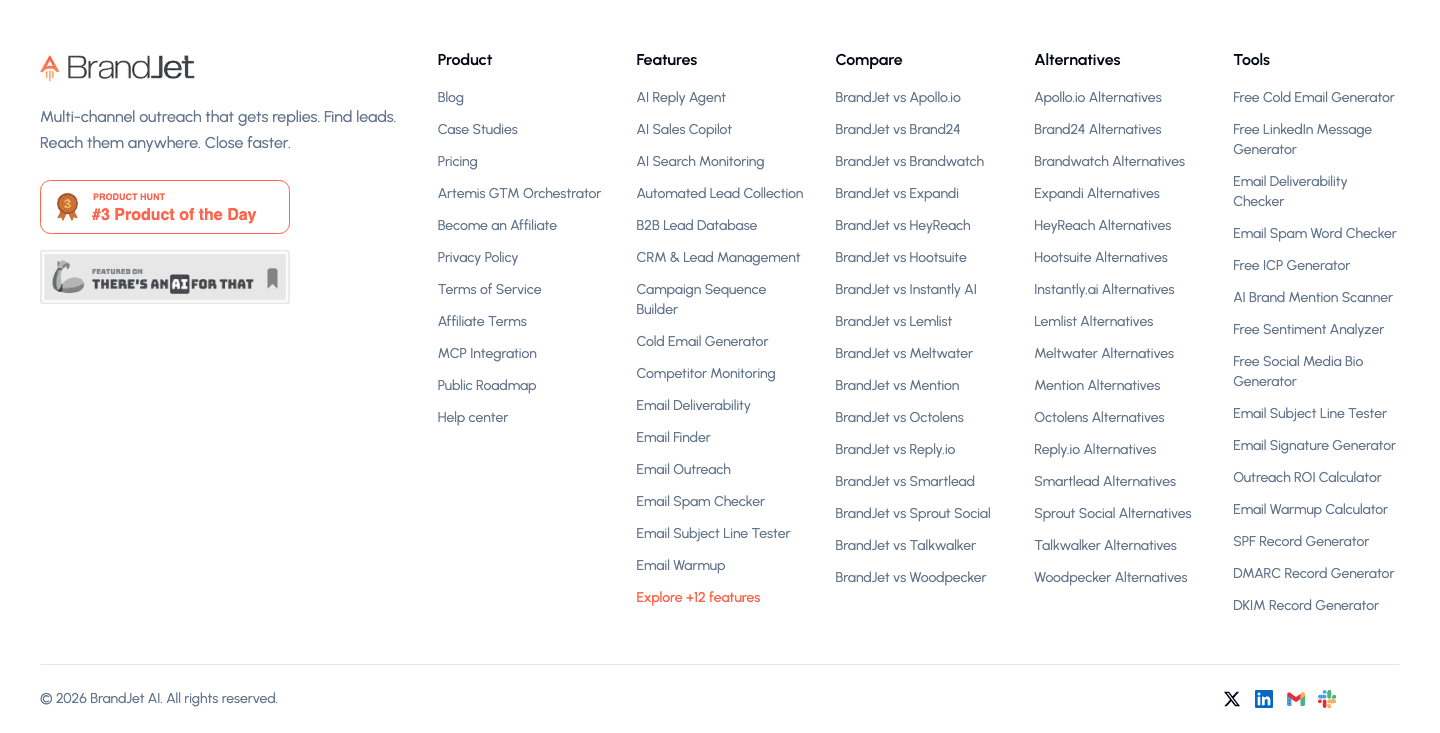
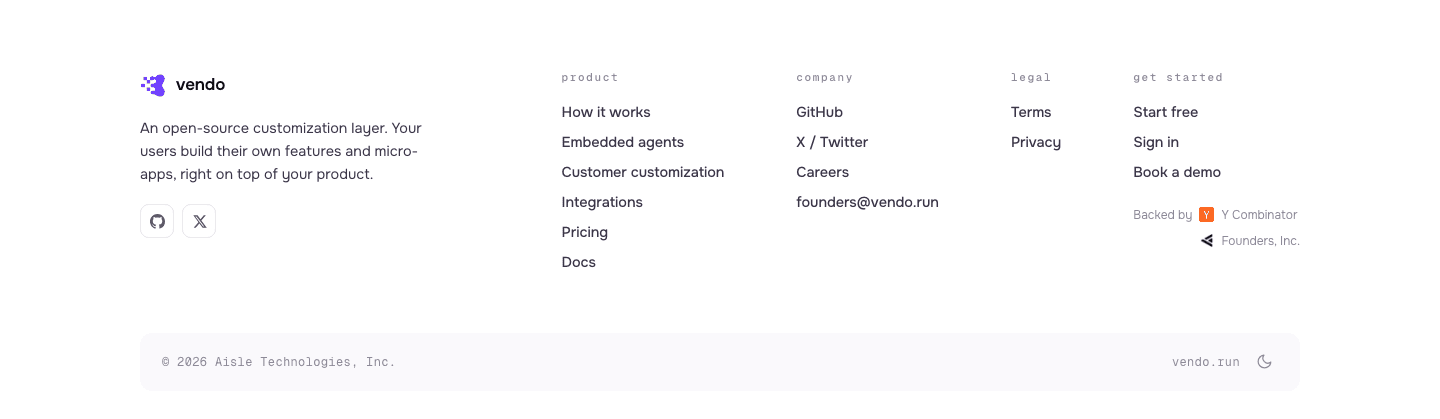
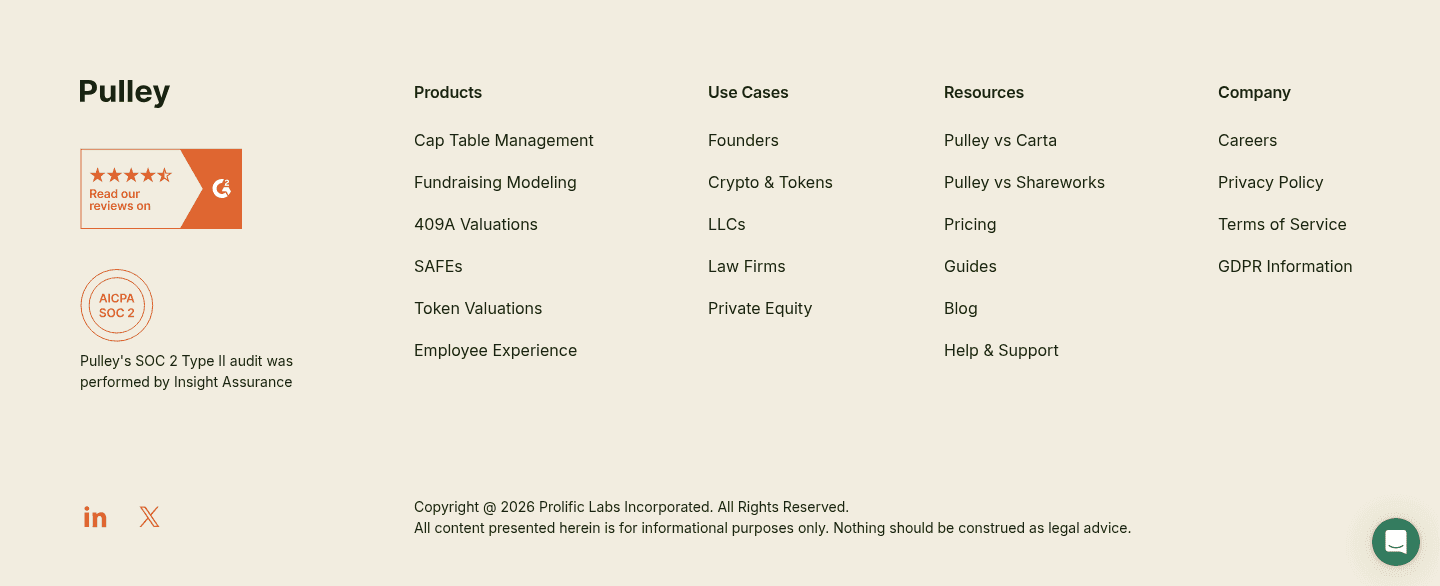
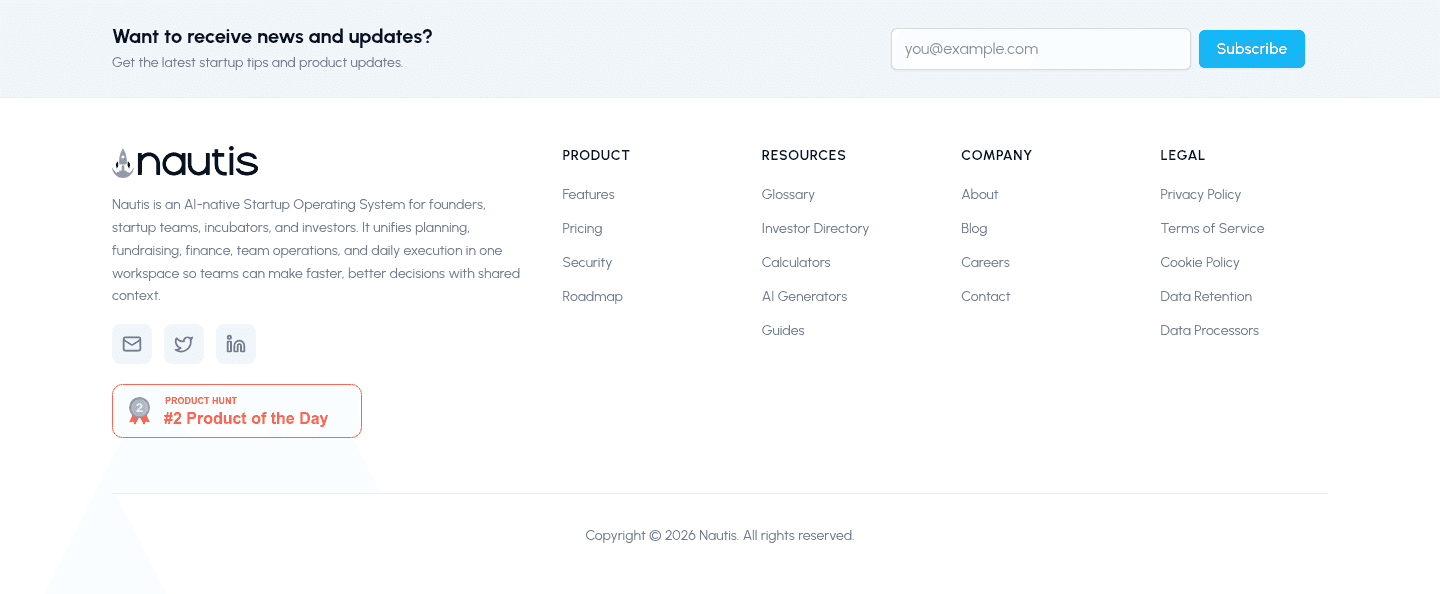
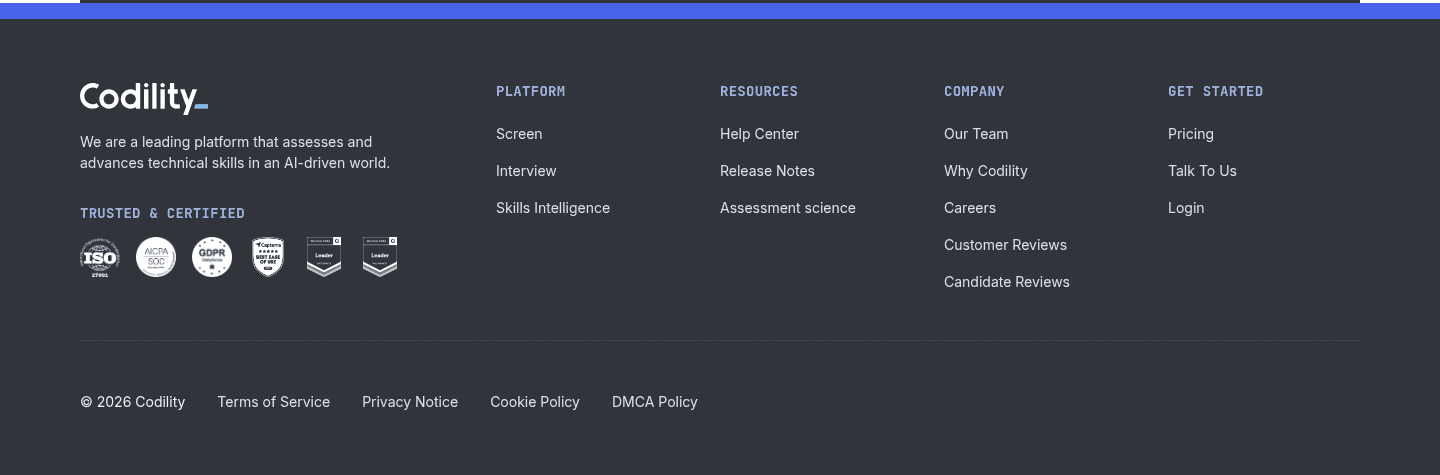
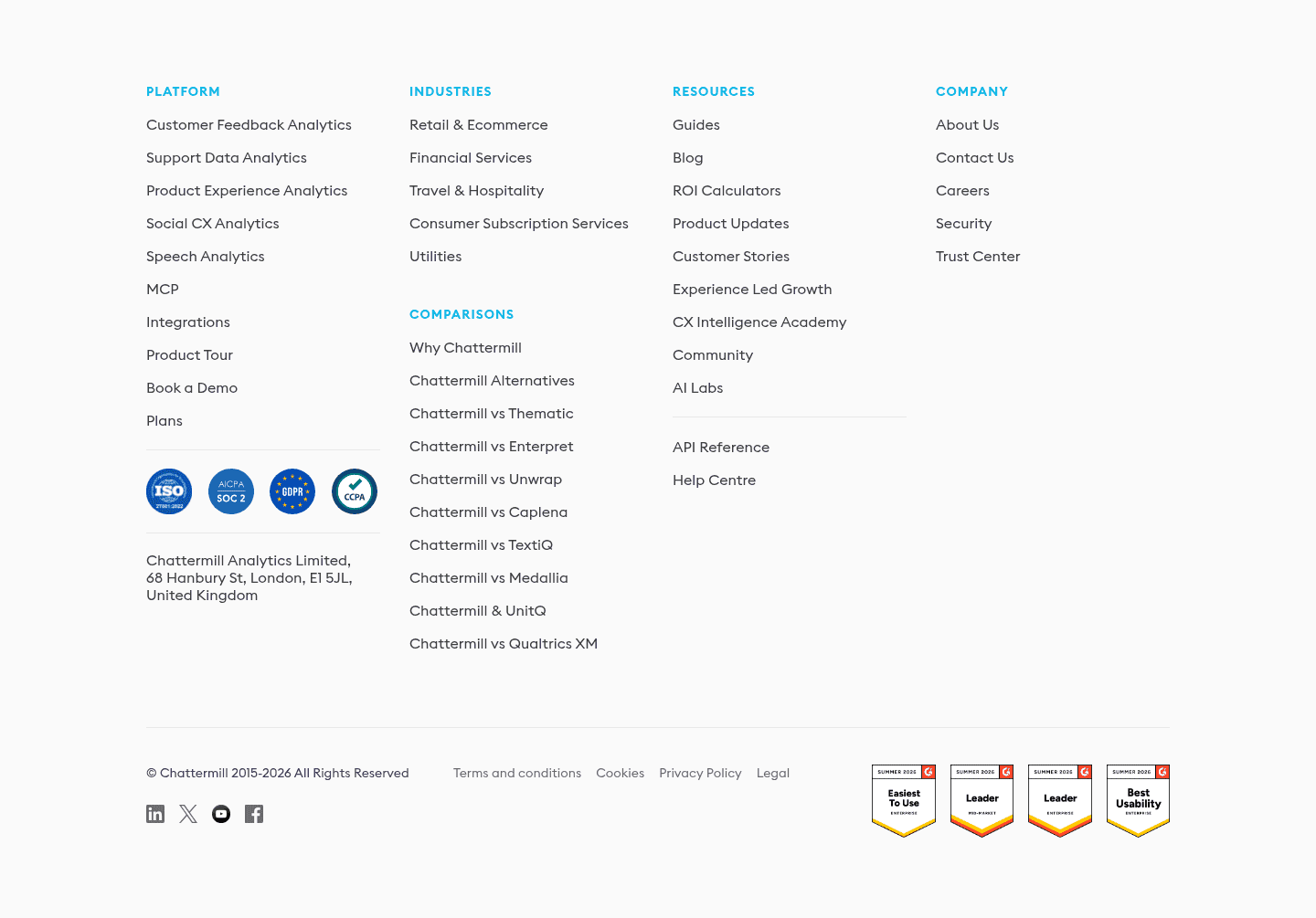

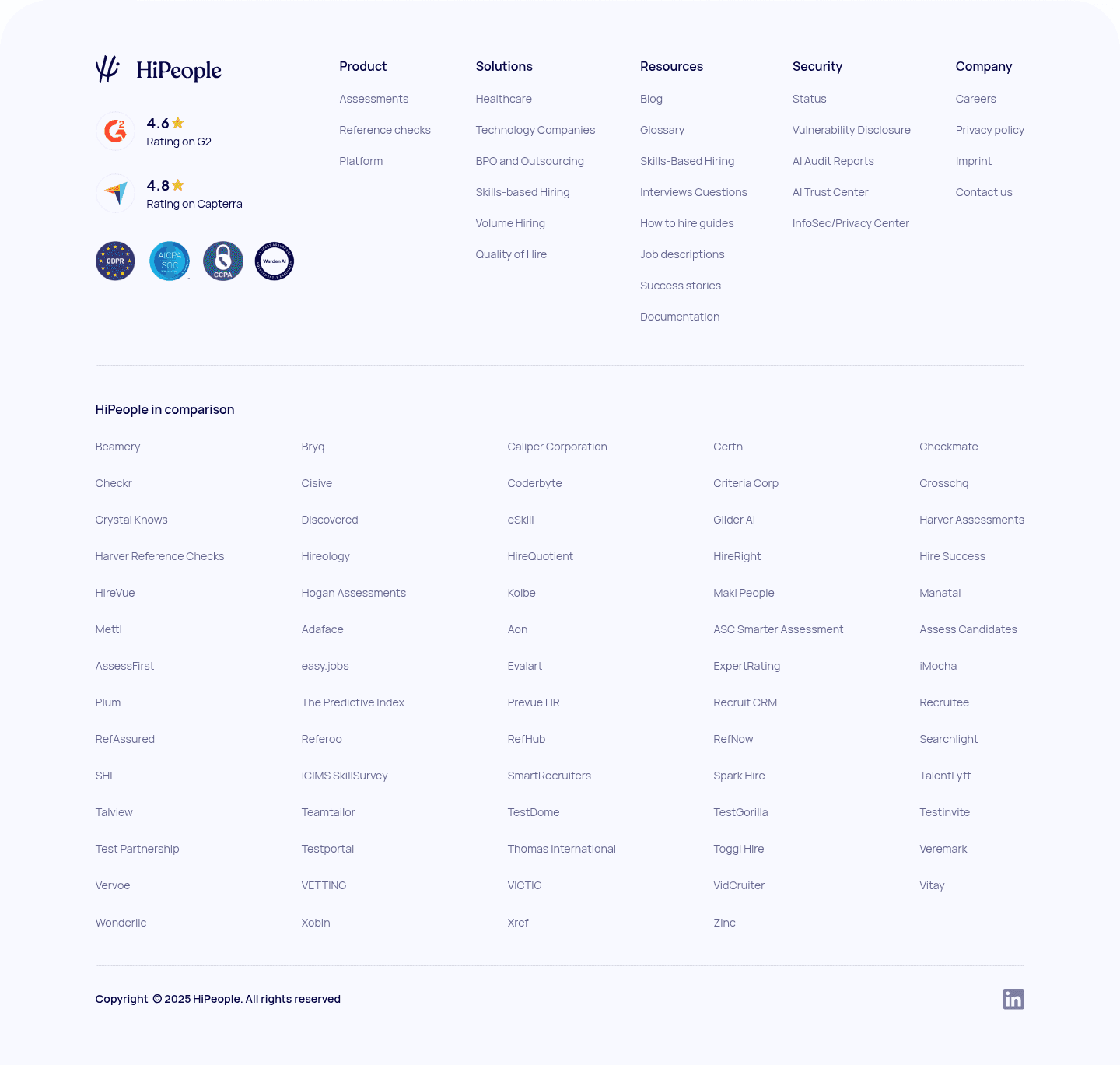
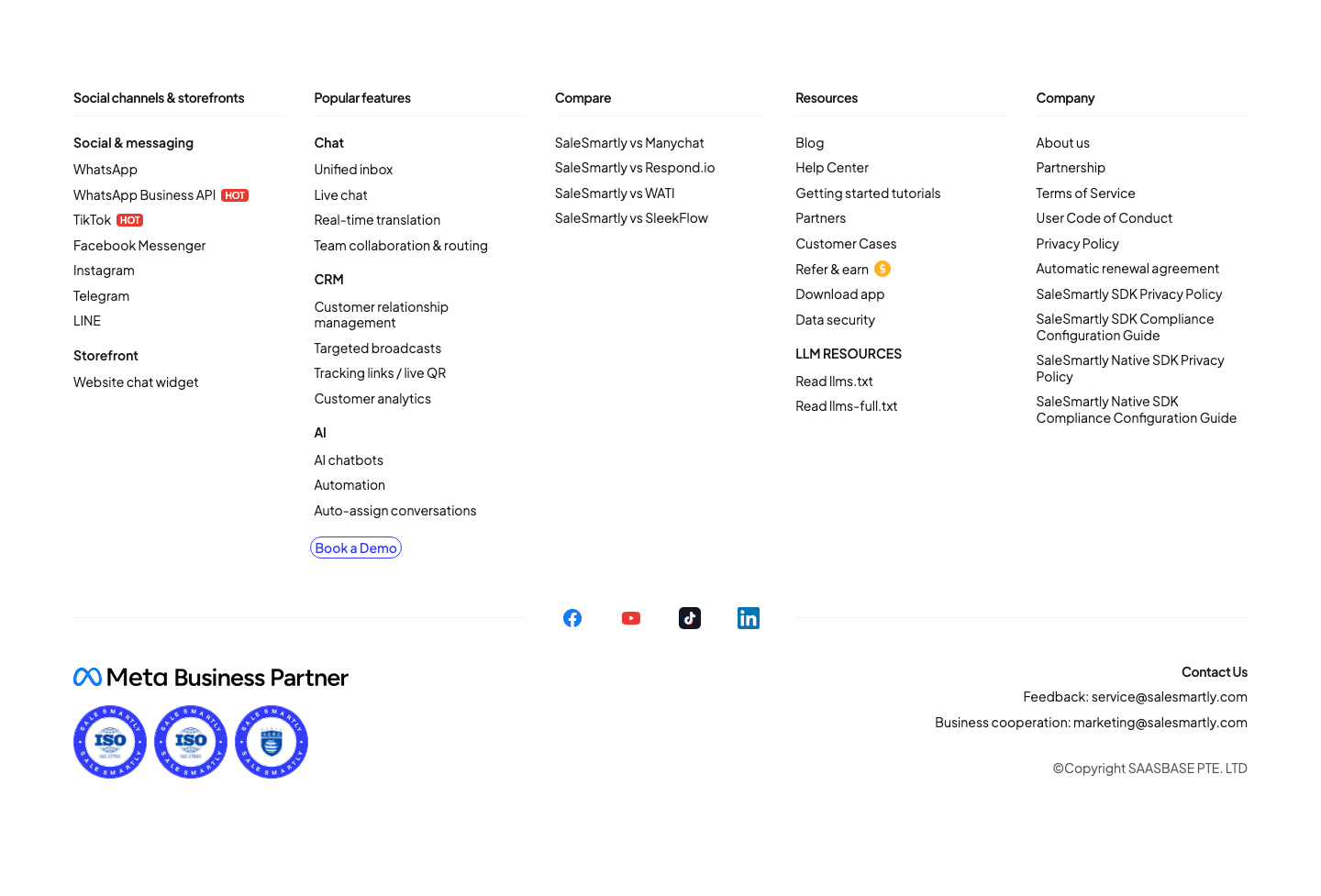
Browse every footer pattern by UX best practice.
Every footer is scored across 5 conversion best practices. Copy the best practice stack, not the design. See what converts and why.
Hand-picked from {companies} companies and analyzed by our AI conversion agent. Not a random dump of footers. Every entry earns its spot.
Found a footer you admire? Run yours through the same scoring engine. See where you stand on the same best practices, and what to fix first.
The footer is the strip at the very bottom of the page, the block a visitor lands on after reading everything above it. Social proof persistence treats that strip as a last place to show evidence rather than only links and legal text. The proof is third-party: a rating, an award, or a count that comes from outside the company, carried down to the exit so it reaches the visitor at the moment they decide whether to leave.
The best footers use one of four forms, sometimes more than one together:
Social media icons are the one thing this pattern is often confused with. A row of LinkedIn, X, and YouTube links is navigation, not proof, even when it shares space with the badges. The distinction matters: an icon points somewhere, a rating or a count vouches for the product.
A visitor who reached the footer read the whole page and is one scroll from leaving, which is exactly when late doubt tends to surface. A claim the company makes about itself has already been weighed and, often, discounted. A rating from G2, a score from Capterra, or a count of real customers comes from outside the company, so it answers that doubt with something the visitor did not have to take on faith.
Placement is the other half. Proof that only lives mid-page reaches the reader while they are still deciding to keep going, but it is gone from view by the time they finish. A footer echo puts one more checkable fact in front of the visitor at the exit, so the page ends on evidence rather than on a column of links and a copyright line.
About a third of the footers in our library carry social proof of some kind, not just navigation and legal links. Across the examples below, the move that works is specificity from an outside source. Leaddelta names both the score and the sample with a Chrome Web Store 4.8 out of 5 based on 114 ratings, which is harder to wave away than a bare star. Yousign pairs a G2 4.5/5 rating with Leader France and High Performer Summer 2023 badges, and 360learning repeats a row of G2 badges (Leader Enterprise, Best Software Top 50, #1 Learning Management Systems) so the recognition is dated and ranked. For a count, Ramp sits a Join the 50,000+ businesses line right above its footer CTA, and Greenly backs its signup with Trusted by 500k+ leaders, so the number reinforces the ask.
Proof rarely does the whole job at the bottom of the page on its own. The strongest footers set it next to the compliance seals that reinforce trust and a secondary call to action that recovers late intent, so the exit reassures, proves, and offers a next step at once. The examples below show how the best footers keep that proof legible and specific rather than tucked away.
100/100 0/100
0/100The usual failure is treating social media icons as social proof: a row of LinkedIn and YouTube links looks like credibility but only points away from the page, so the footer ends up with navigation where proof should be. The second failure is a bare, undated badge, a Leader mark with no score, quarter, or source, which reads as decoration rather than a fact a visitor can check, unlike Leaddelta naming 4.8 out of 5 based on 114 ratings. The third is proof that is technically present but effectively invisible, a badge in pale gray or six-point type that no one reads. Carry one specific, outside-sourced signal to the bottom of the page, name the number, and keep it legible, so the last thing a visitor sees is evidence rather than an afterthought.

Curated by
Gabriel Amzallag , Founder, Web Anatomy
5 years CRO + SEO at Qonto (2021–2025). After advising 15+ SaaS on their websites (Payfit, Pigment…), the same patterns kept breaking, so I decided to build the source of truth on what works on the web: the intelligence layer every tool, builder, and team uses to ship sites that perform.
We find every way to grow your website’s visibility and conversions: SEO, AI search (AEO), backlinks and mentions, and UX/UI. 3 free opportunities, delivered by email.
The common questions about carrying social proof into the footer, with answers drawn from 74 scored examples.
It means carrying a credibility signal into the footer so proof follows the visitor to the very bottom of the page. The common forms are a review-site rating with its stars, an award or Leader badge from a site like G2 or Capterra, a customer or subscriber count, and a third-party review badge. It is a last echo of evidence in the block a visitor lands on right before deciding whether to leave.
The footer is the last thing a visitor reads, and it is often where late doubt surfaces. A claim the company makes about itself is easy to discount. A G2 rating, a Capterra score, or a real customer count comes from outside the company, so it is harder to dismiss. Placed at the exit, that proof answers the hesitation that shows up right before someone closes the tab, instead of leaving the page to end on a column of links.
Social proof is third-party evidence: a review-site rating with a number, an award or Leader badge, a customer or subscriber count, or a recognizable review badge. Social media icons like LinkedIn, X, or YouTube are not social proof, they are navigation links, even when they sit in the same row. Compliance seals such as SOC 2 or GDPR reinforce trust but are the company's own certifications, not other customers vouching for it, so they belong to a different job in the footer.
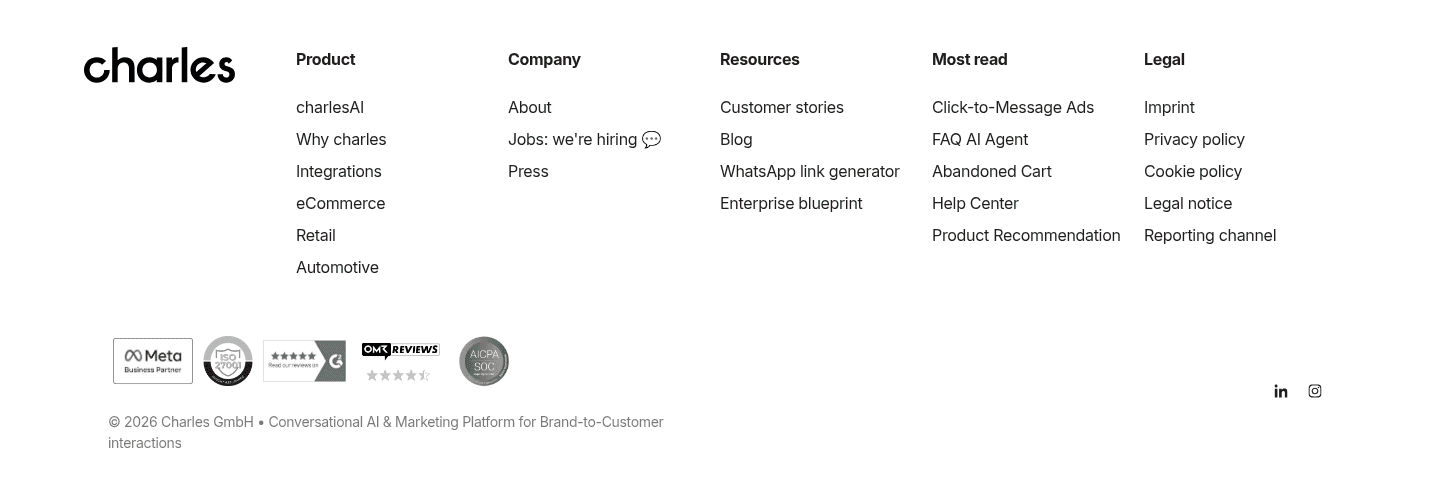
Four show up again and again. A review-site rating with a score, as with Yousign's G2 4.5/5, Hipeople's G2 4.6 and Capterra 4.8, and Leaddelta's Chrome Web Store 4.8 out of 5 based on 114 ratings. An award or Leader badge, as with CommandBar's three G2 Fall 2024 badges, Chattermill's four G2 Summer 2026 awards, and TestSprite's Product Hunt #2 Product of the Month. A customer or subscriber count, as with Arrows' Join 14,000+ subscribers, Greenly's Trusted by 500k+ leaders, and Ramp's Join the 50,000+ businesses. And a third-party review badge, as with Eventmobi's Capterra and G2 badges and Hello Charles' G2 and OMR badges.
Yes, especially when it carries a real score rather than a bare logo. Cal.com places G2 and Capterra review badges with 4.5-star ratings below the fold, Sendbird keeps a G2 Reviews badge with a 4.5-star rating, and Codility pairs a Capterra Best Ease of Use badge with two G2 Leader badges. The strongest versions name the number and, where they can, the quarter or the source, the way Leaddelta shows 4.8 out of 5 based on 114 ratings, so the badge reads as a checkable fact instead of decoration.