Faq|
Most FAQ sections stop at the answer. A few add a next step, a link to plans, a trial or a way to reach support, so the visitor whose doubt is cleared has somewhere to go.
Key takeaways
Showing 1–8 of 8 examples
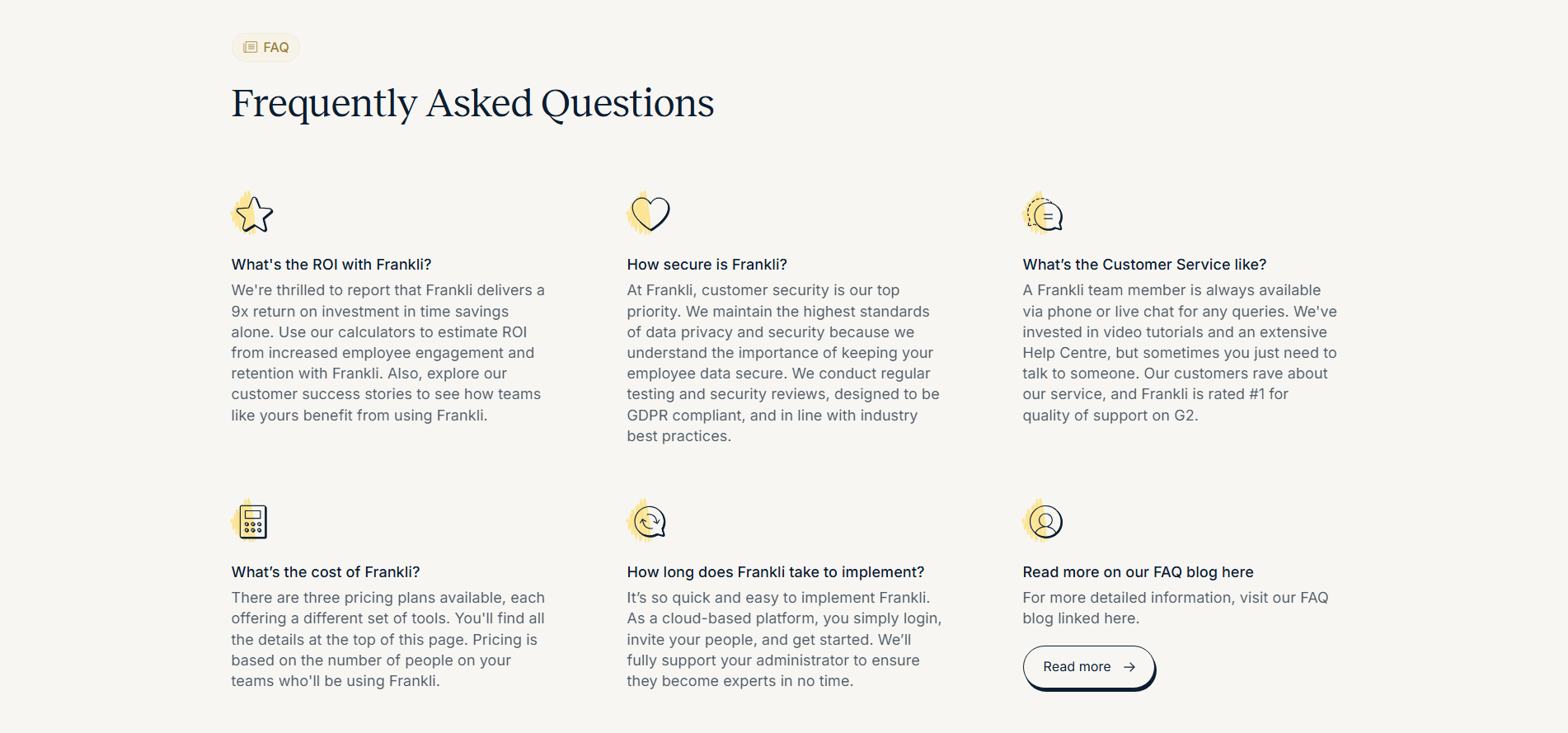
A next step inside an FAQ answer means the answer ends by pointing somewhere. It still settles the question in plain language first. Then, instead of leaving the visitor to scroll back up and hunt for the pricing or signup section, it hands them the link that matches what they just asked.
The best FAQ sections use one of three forms, often two together:
A visitor reads the FAQ with one specific doubt left. Once the answer clears it, they need a next step. A plain answer gives them nothing, so they have to find their own way back to the button, and some simply leave. A link in the answer, matched to the question, makes the next step the easy one. Compare the two kinds in the full FAQ gallery.
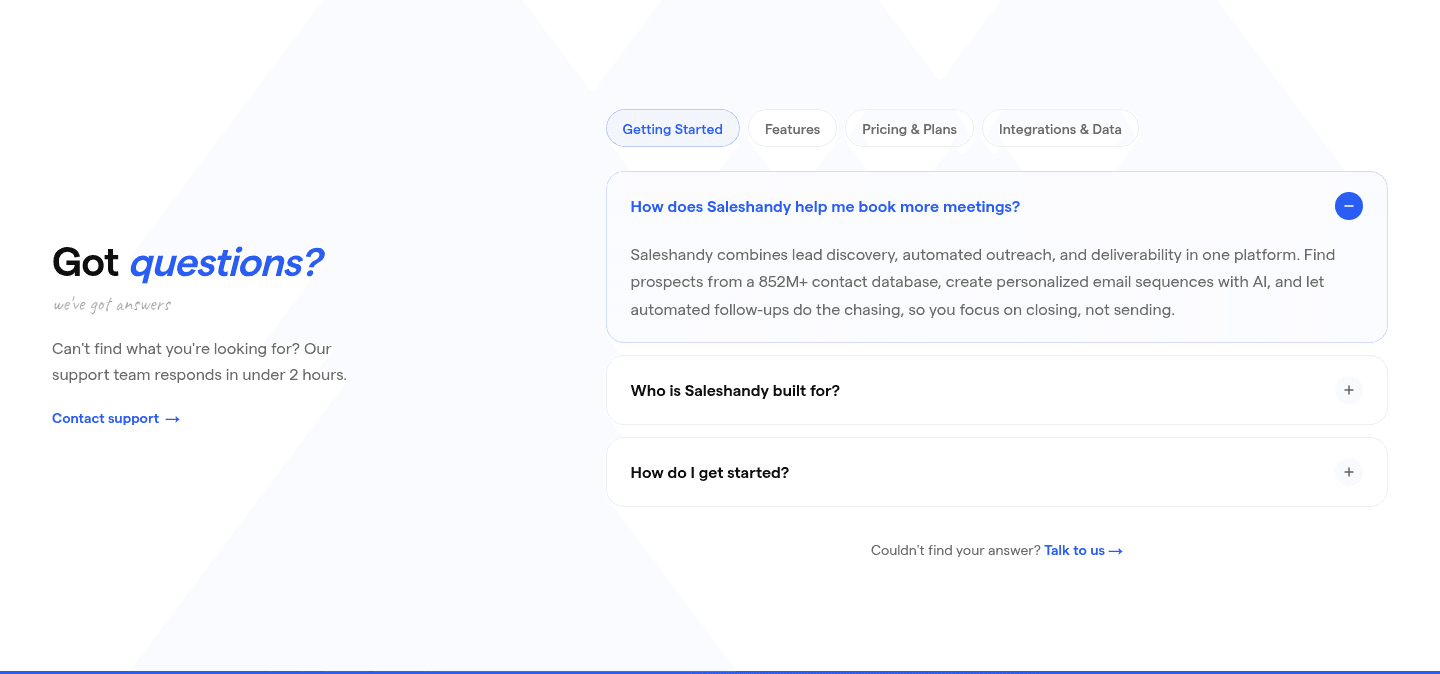
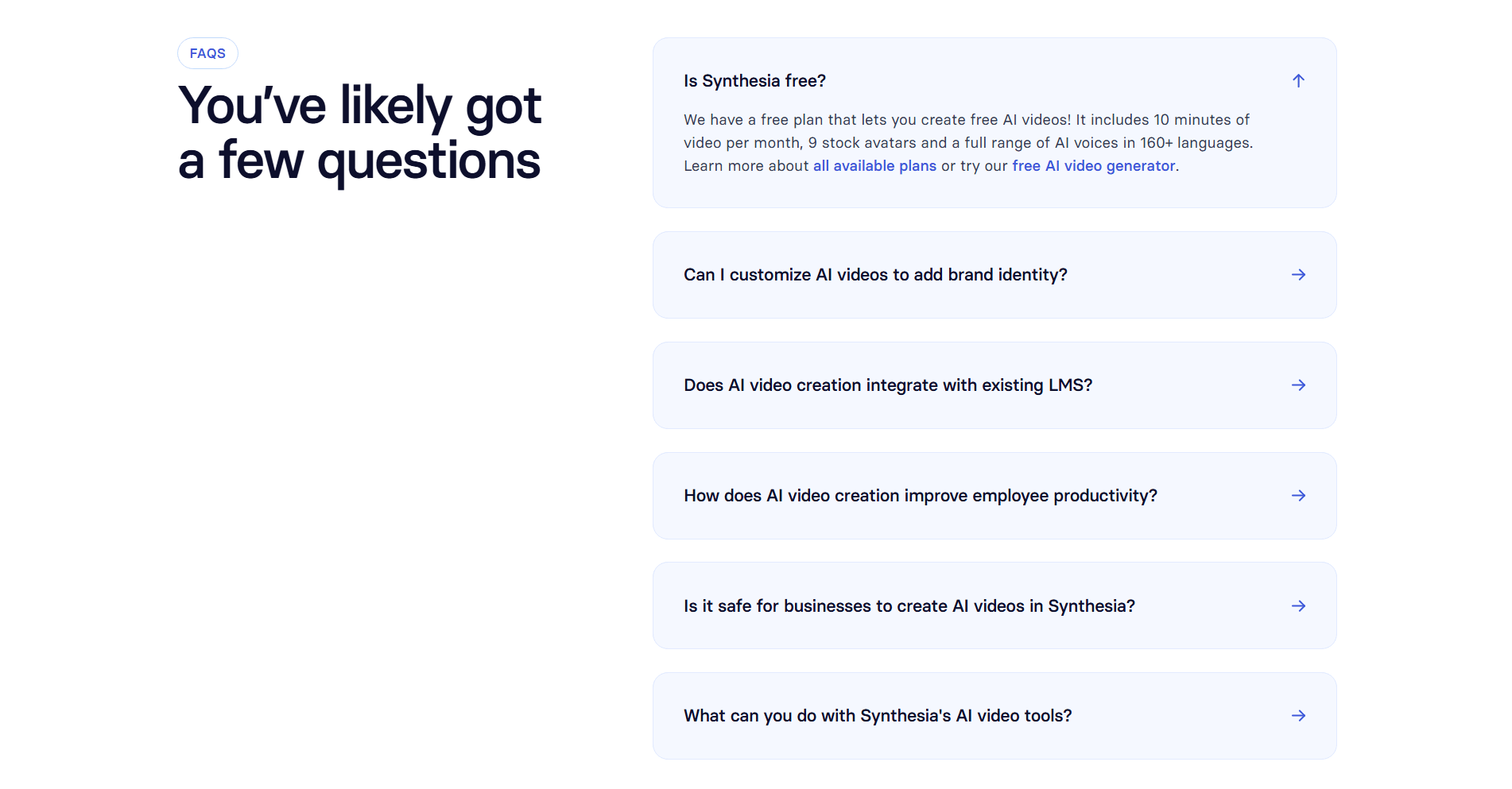
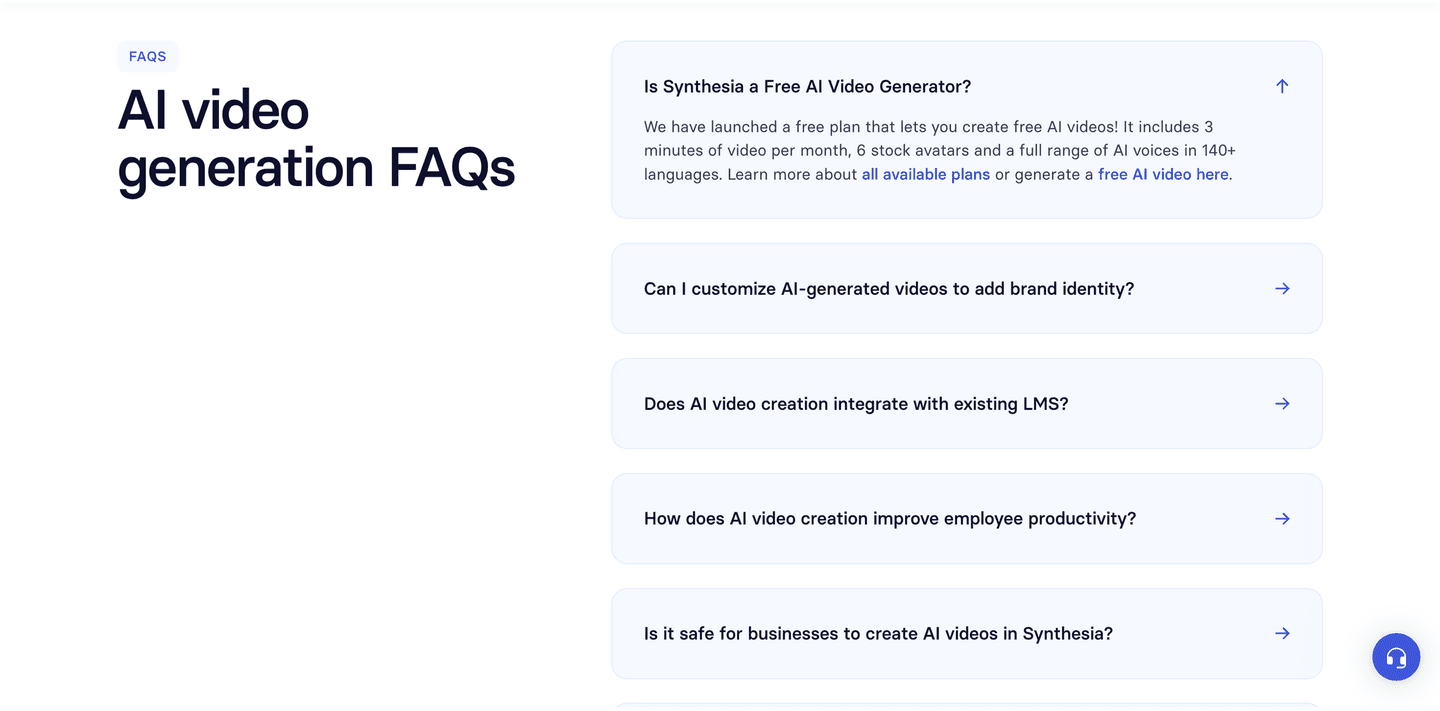
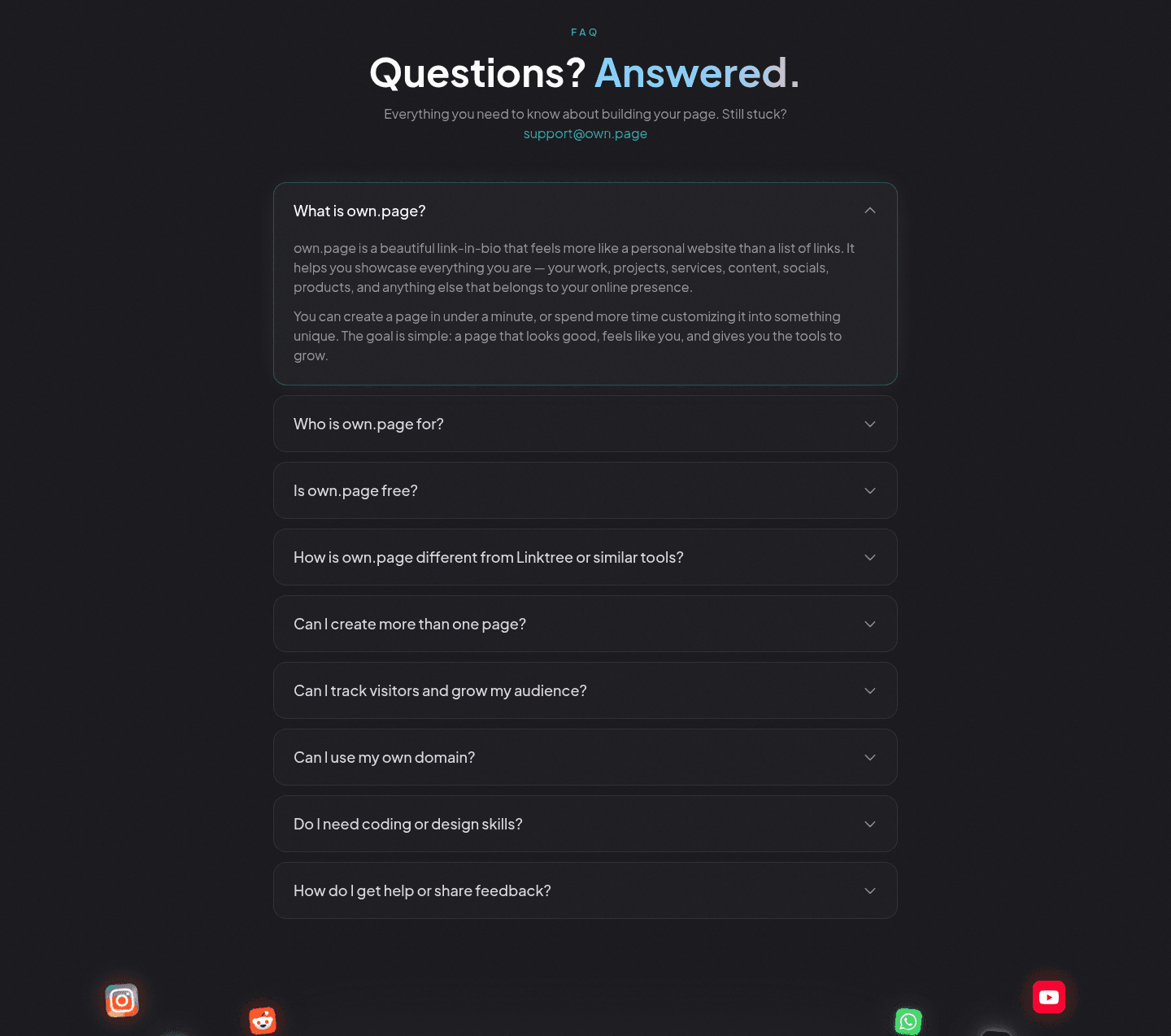
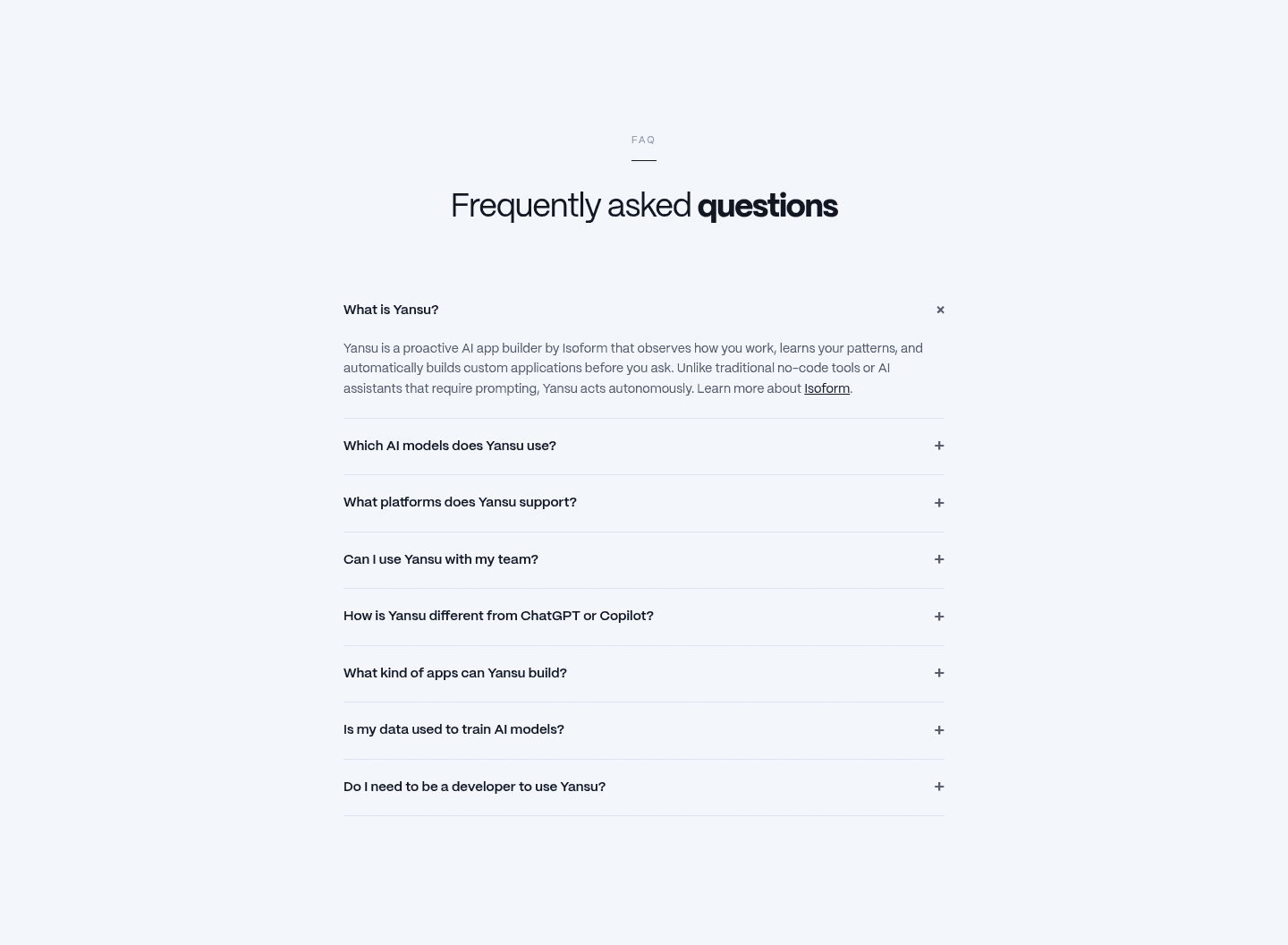
The examples below answer first, then point. Synthesia opens with the questions buyers actually ask (is it free, is it safe for businesses, does it integrate) and puts links to all the plans and the free AI video generator right in the answer. Saleshandy groups its questions behind topic pills for Getting Started, Features, Pricing and Integrations, then backs the section with a response-time promise and a contact-support link. own.page leads with an answer card that says what the product is and who it is for, and keeps a support email under the heading. Yansu turns its opening question into a value proposition, so the first answer also works as a first click.
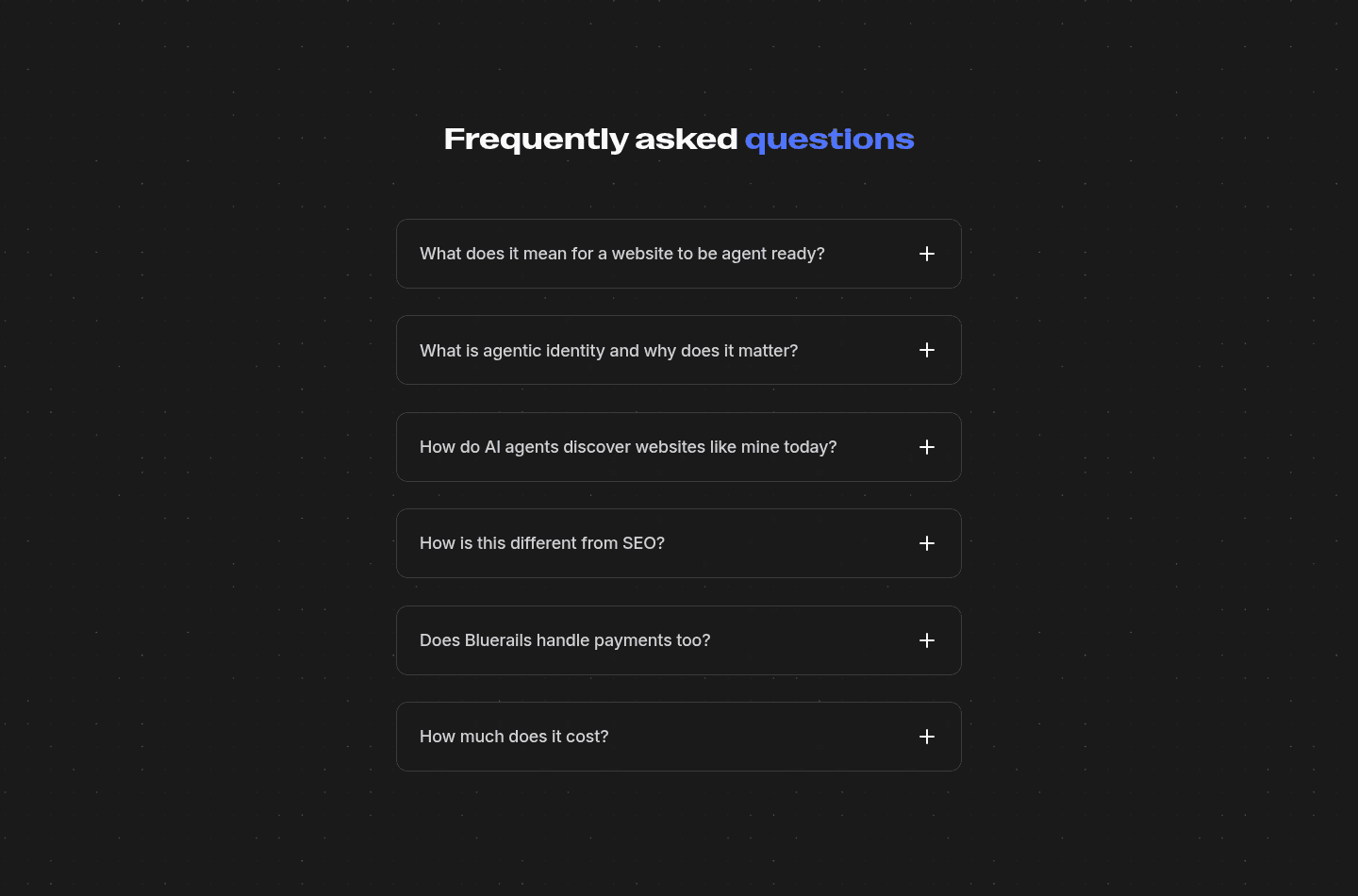
The usual failure is the dead-end answer: the question is settled, then nothing. No link, no route, so the visitor who is finally ready has to find their own way. The second is a generic link bolted on, the same "Get started" under every answer whatever was asked, instead of the step that matches the question.

Curated by
Gabriel Amzallag , Founder, Web Anatomy
5 years CRO + SEO at Qonto (2021–2025). After advising 15+ SaaS on their websites (Payfit, Pigment…), the same patterns kept breaking, so I decided to build the source of truth on what works on the web: the intelligence layer every tool, builder, and team uses to ship sites that perform.
The common questions about turning FAQ answers into a next step, with answers drawn from 8 scored examples.
Not when the answer comes first. Settle the question in plain language, then add the link as the natural next move, not as an ad wedged into the copy. Avoid a link in every answer: when each one ends in a pitch, the section stops reading as honest.
In two places. Inside the specific answer, where the link matches the doubt just cleared. And once for the whole section, a support email or contact link under the heading, for the visitor whose question is not listed.