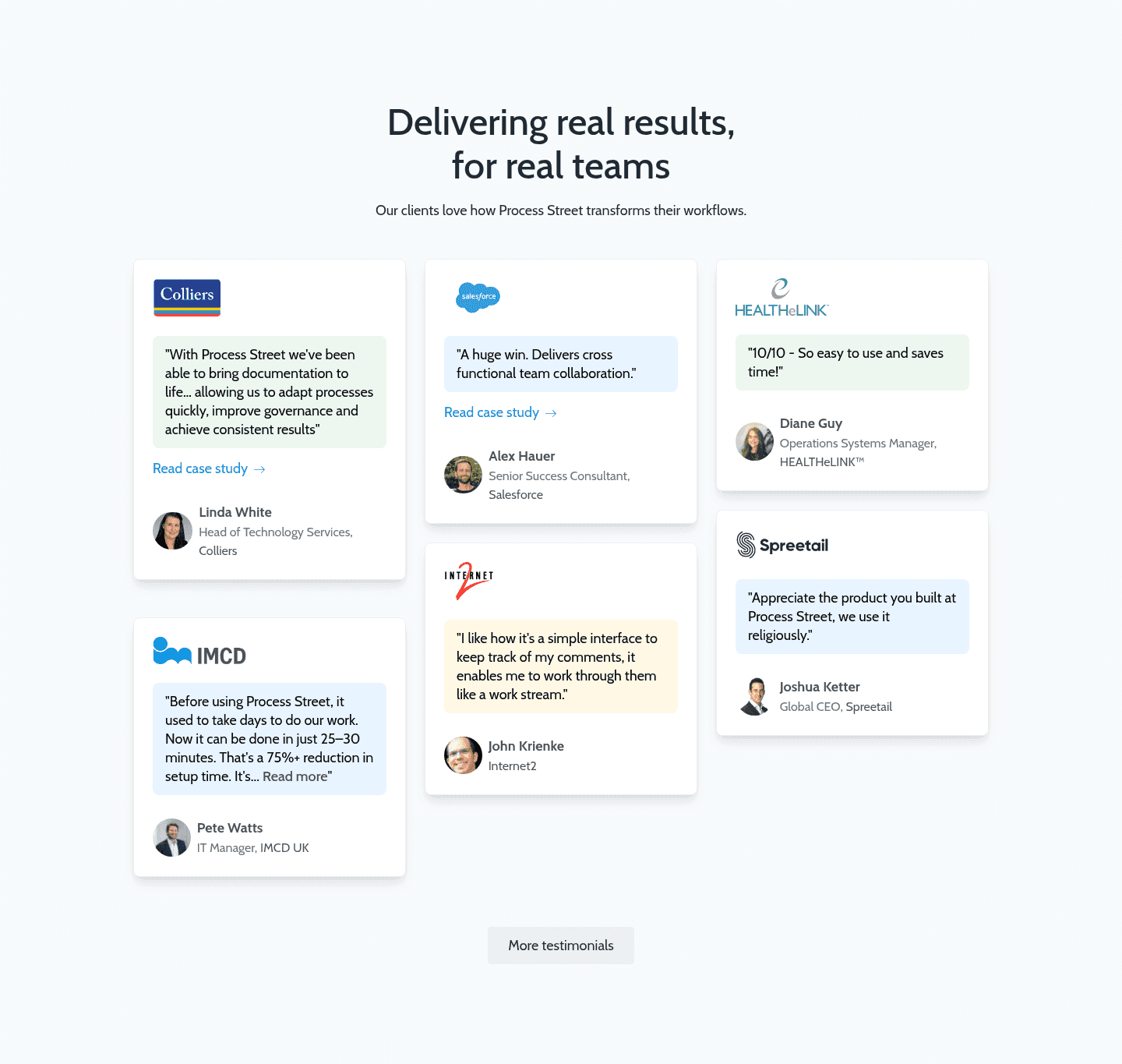
Testimonial|
Quoting customers from different roles and seniority levels lets a visitor see their own job represented, and shows that buy-in for the product spans the whole org.
Key takeaways
Showing 1–28 of 125 examples
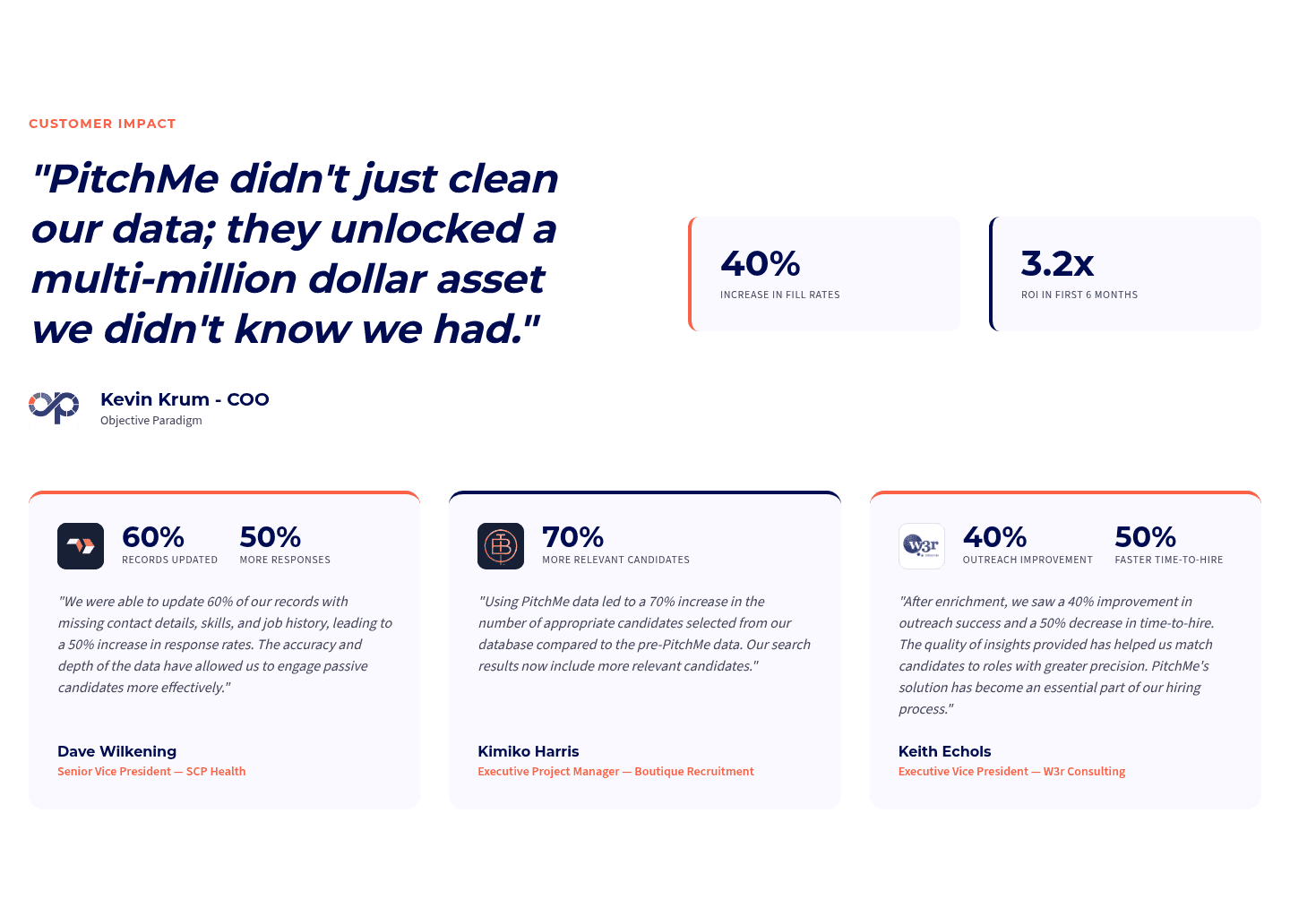
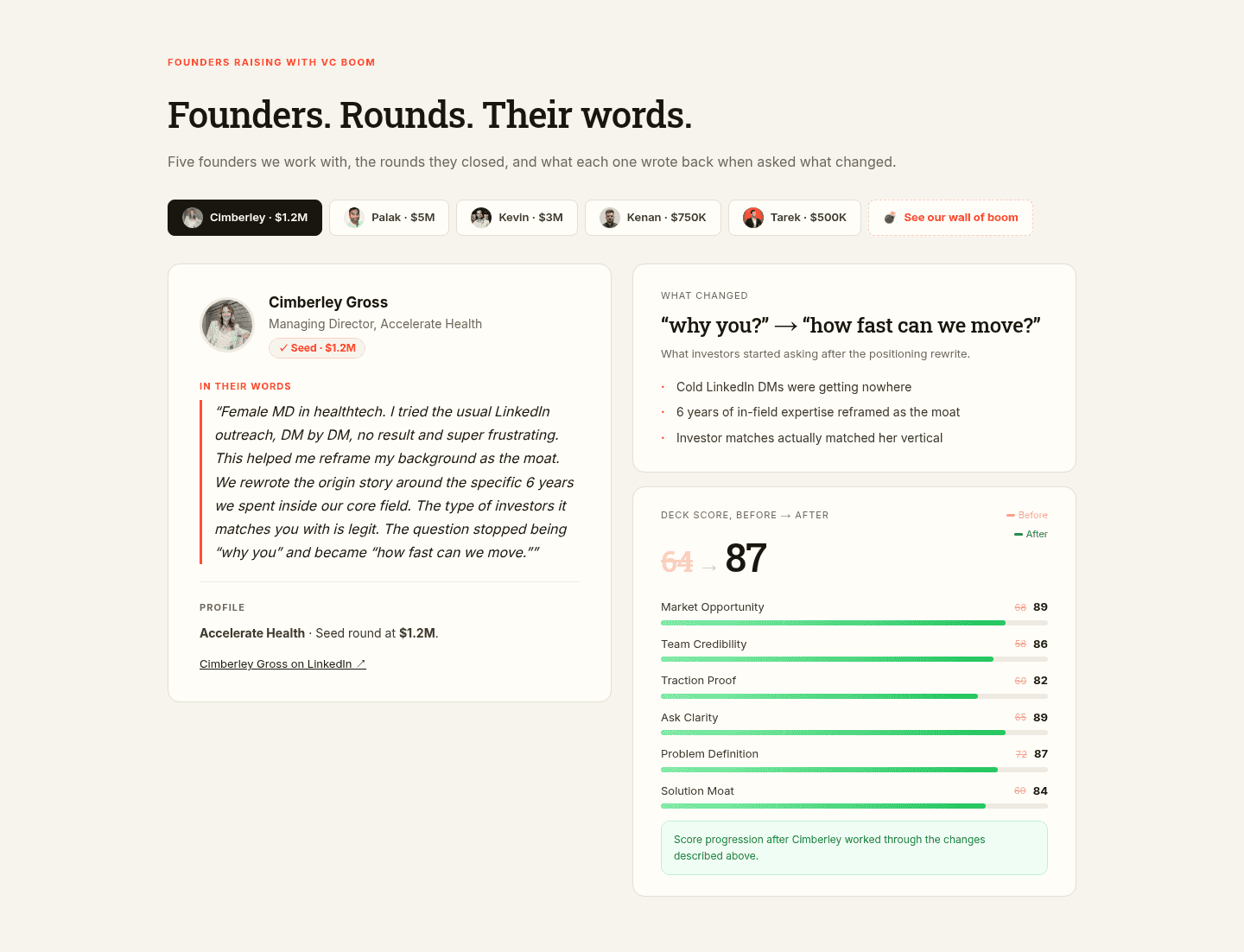
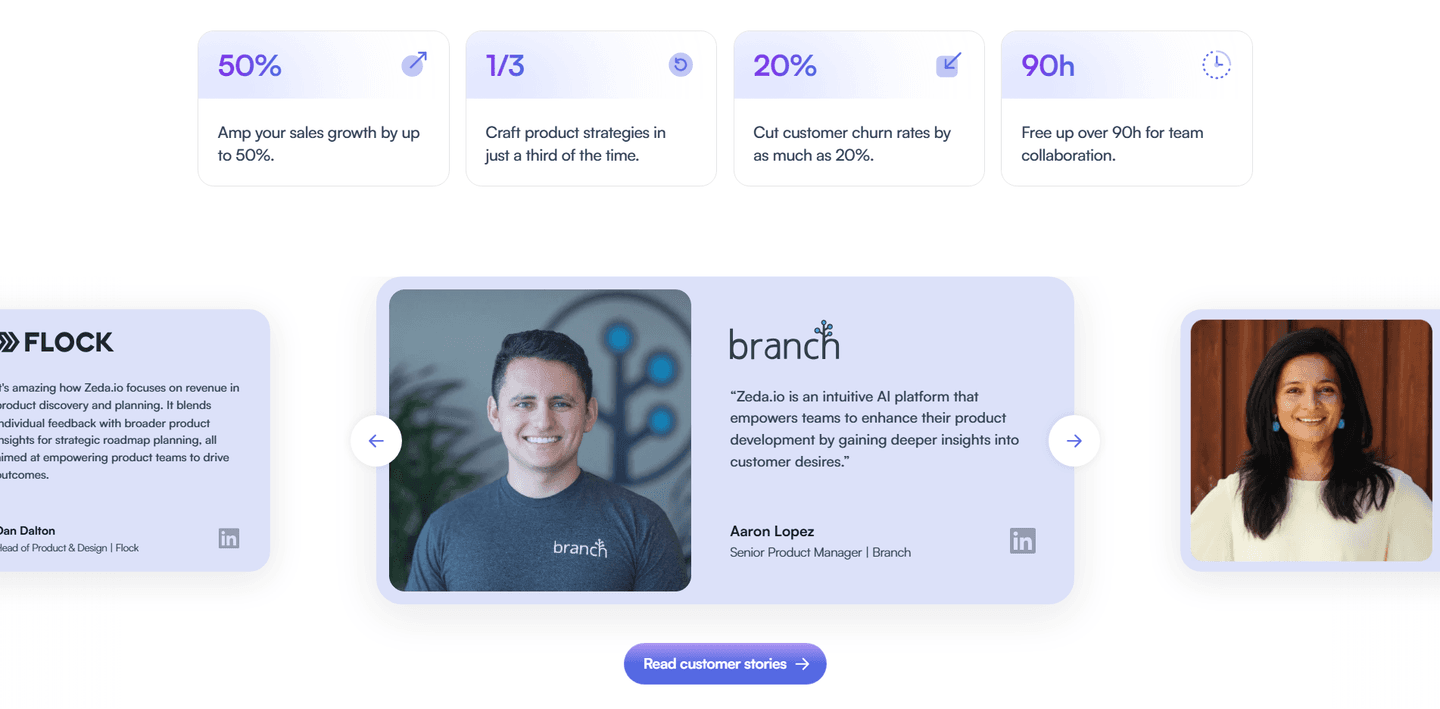
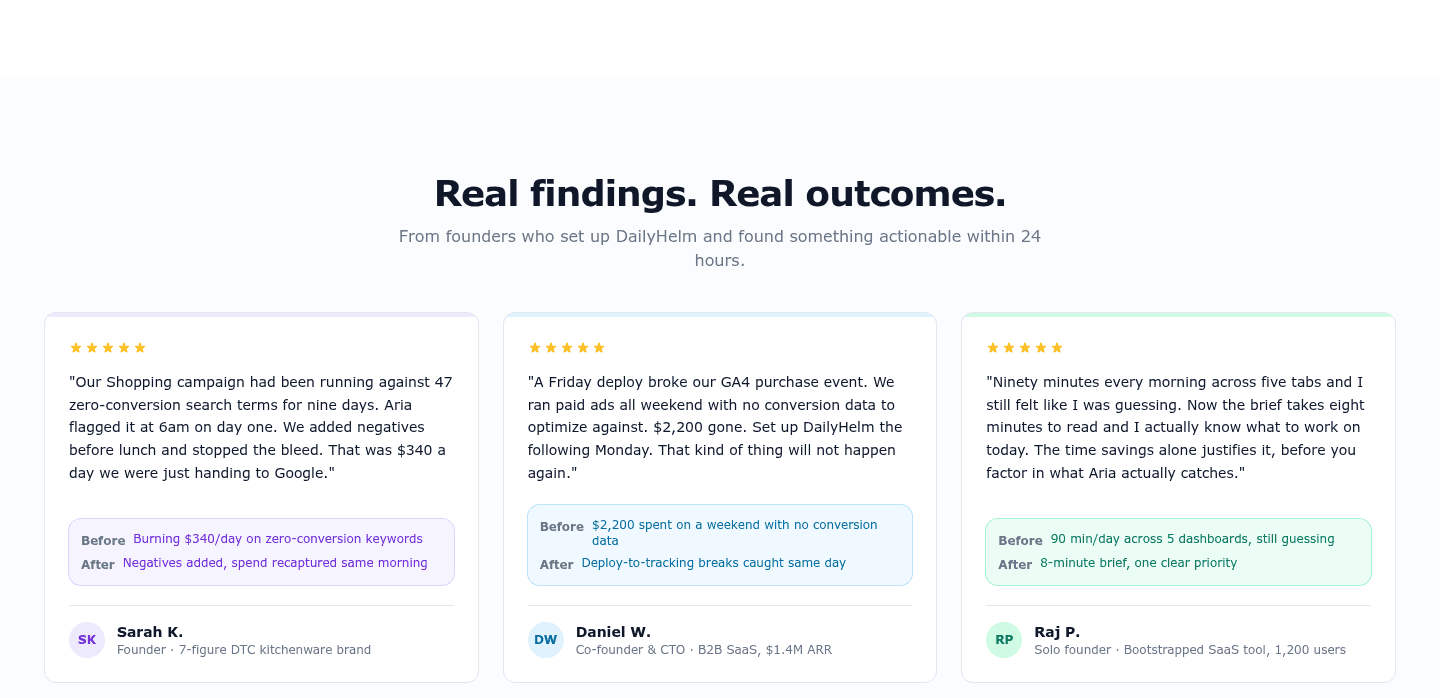
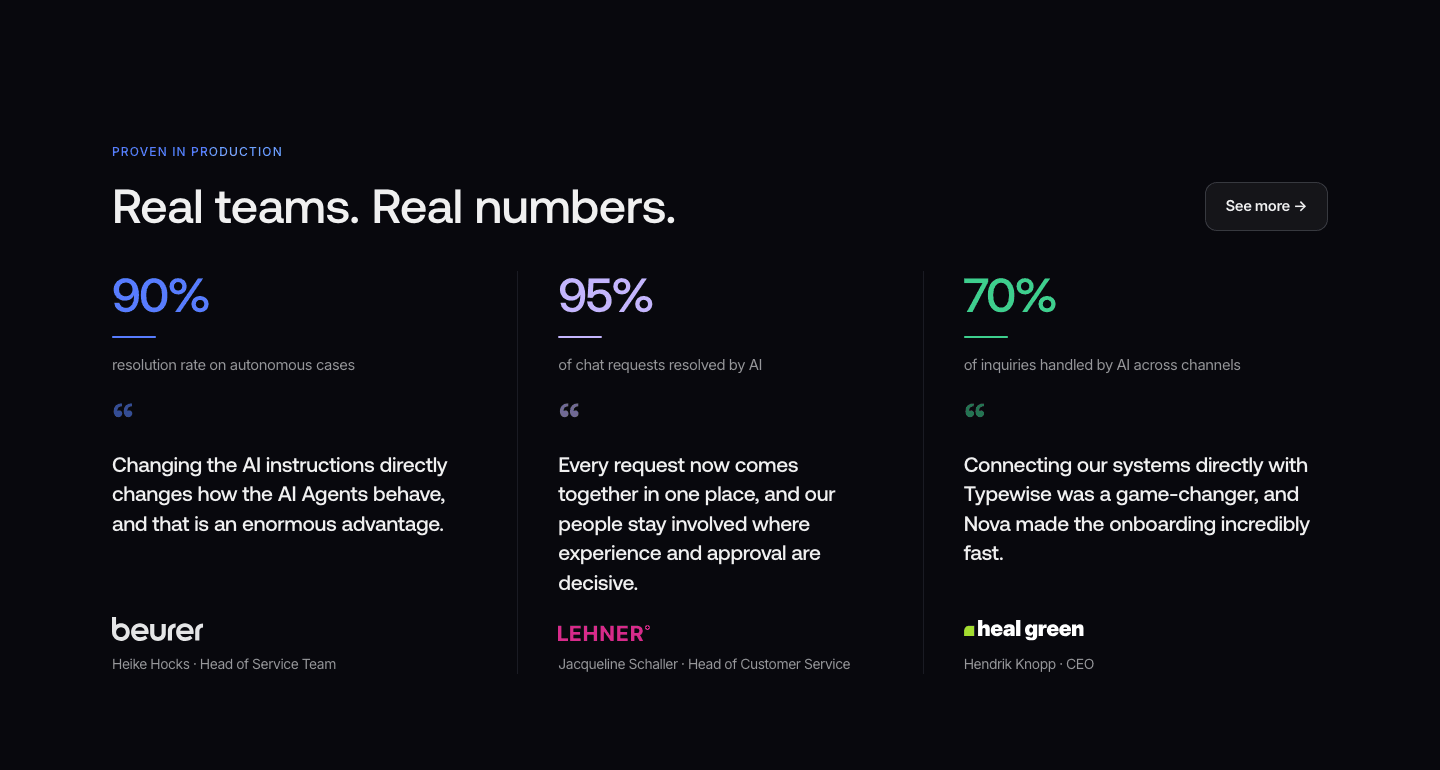
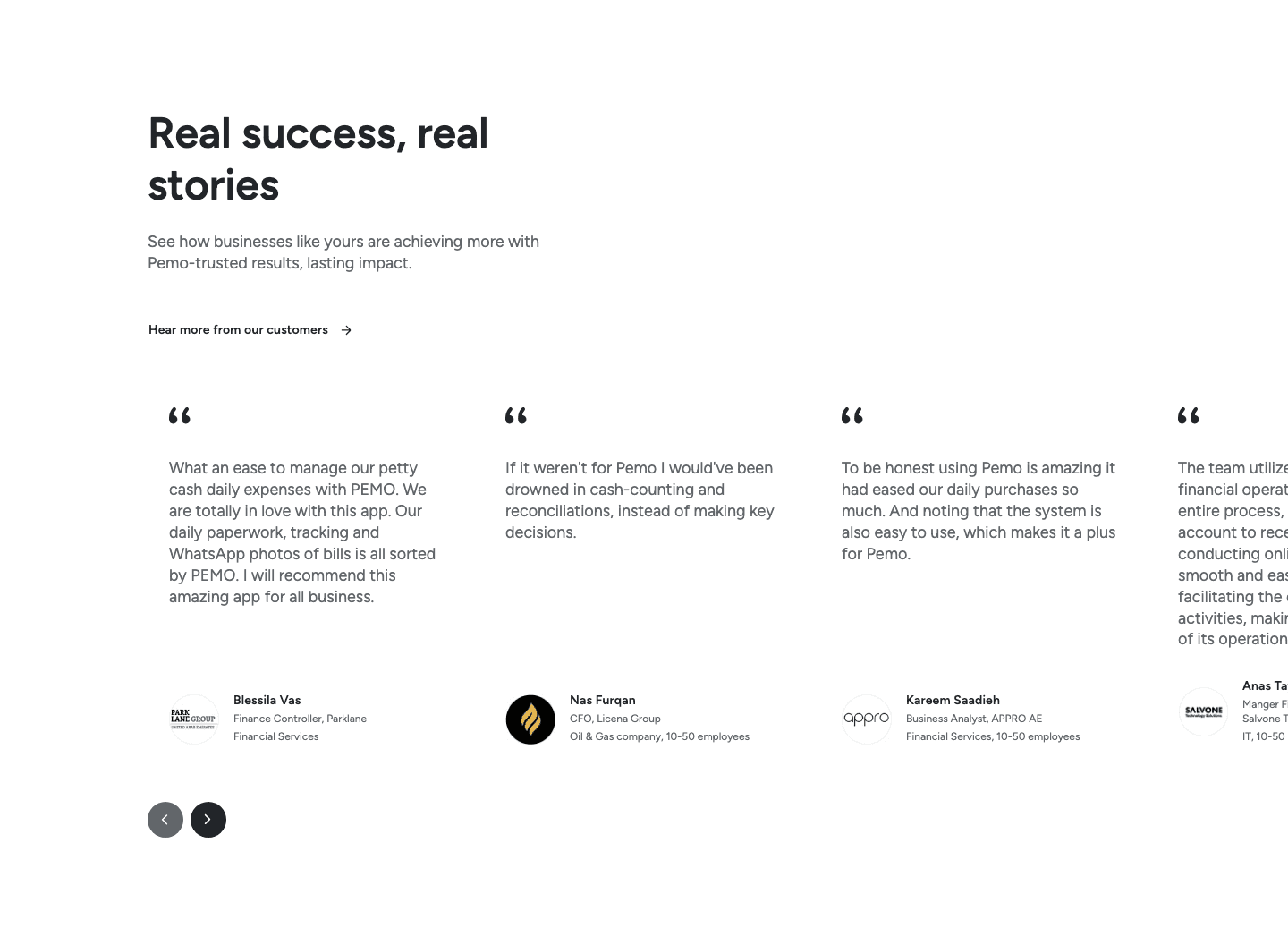
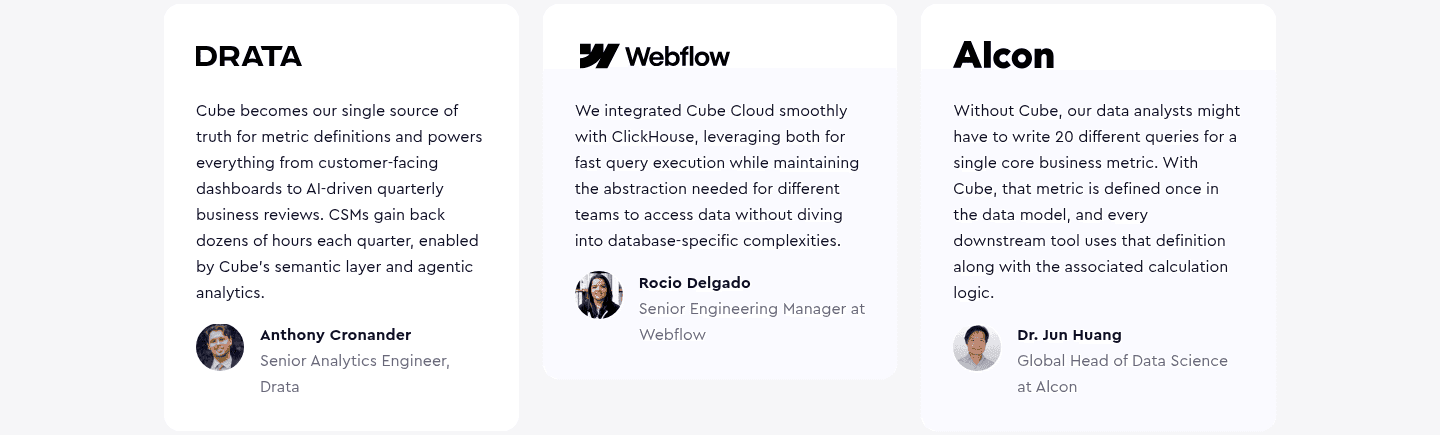
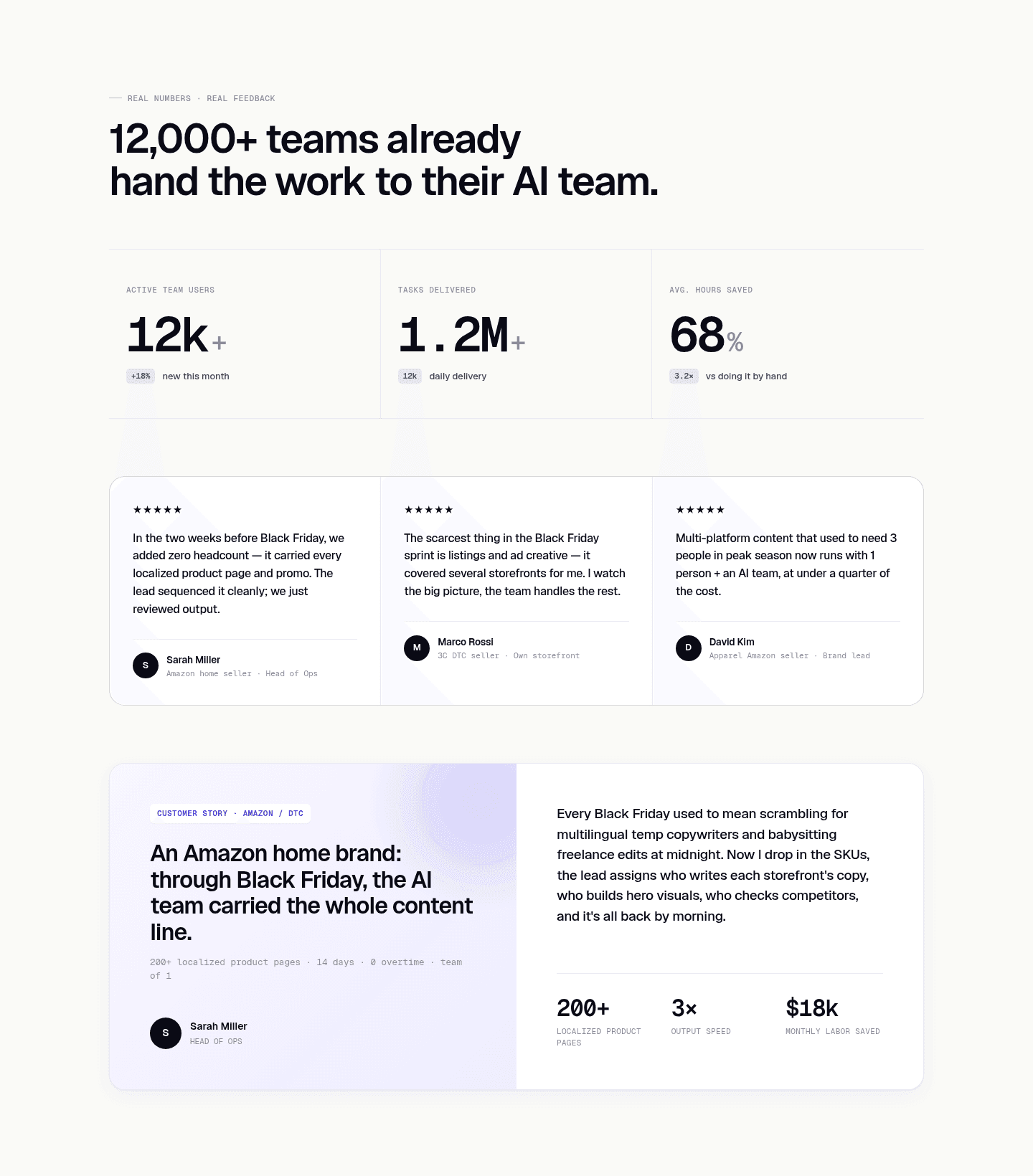
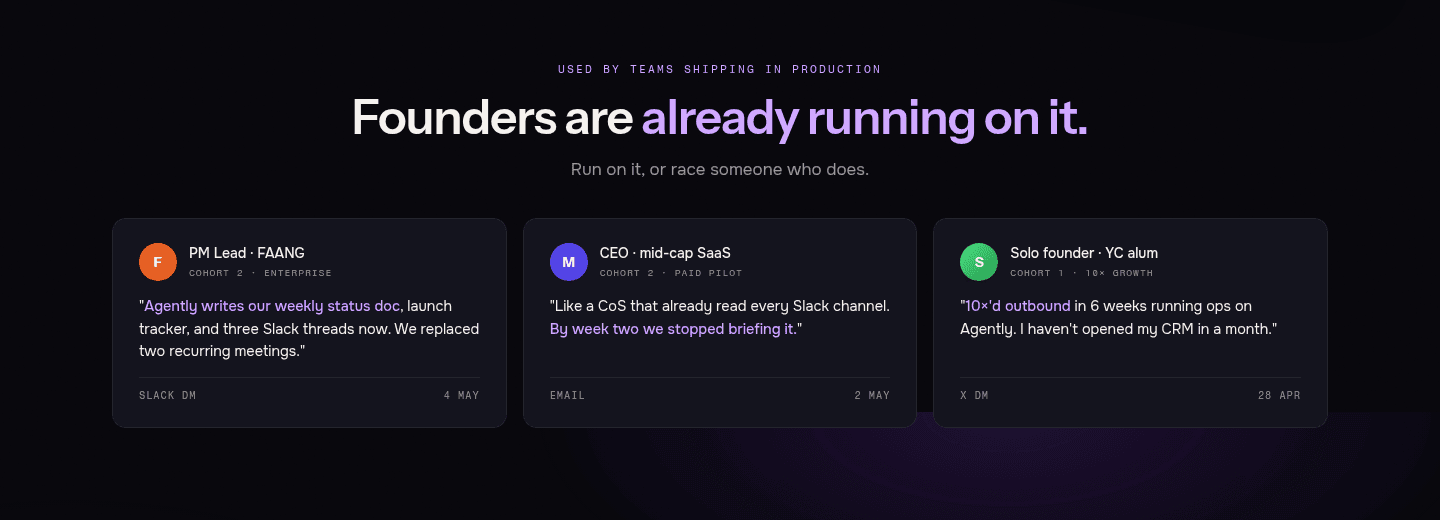
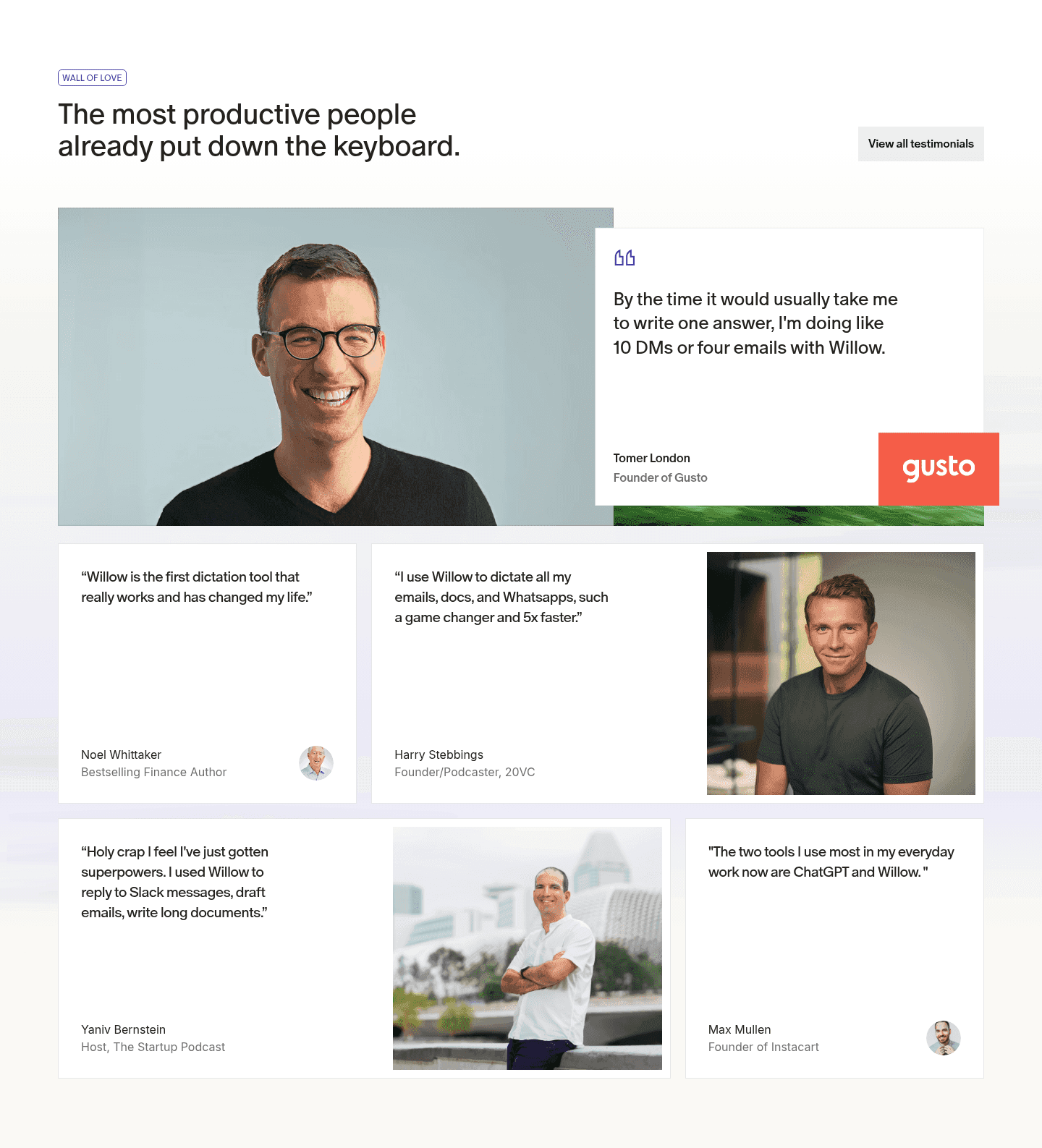
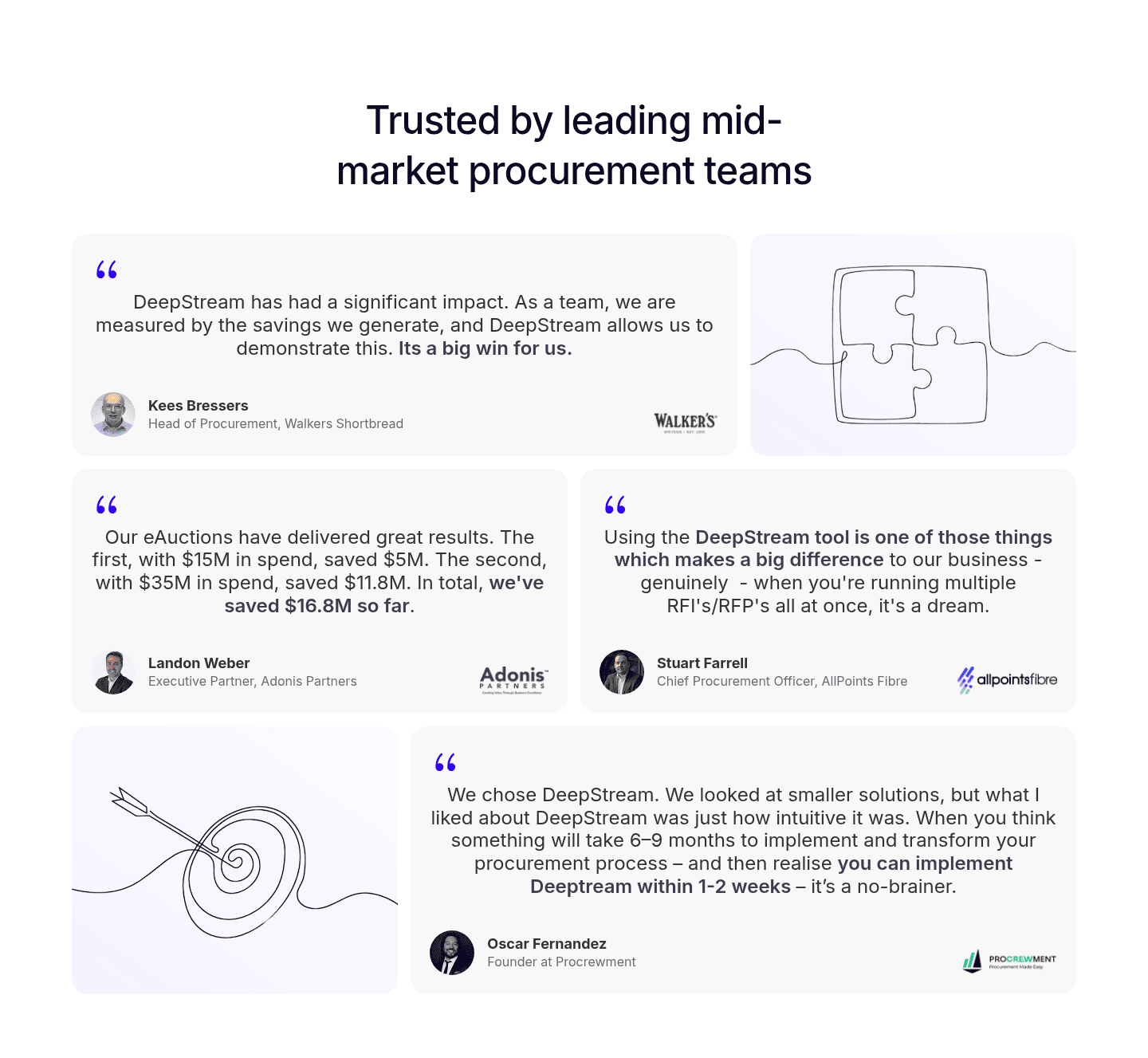

Browse every testimonials pattern by UX best practice.
Every testimonial section is scored across 6 conversion best practices. Copy the best practice stack, not just the layout. See what builds trust and what falls flat.
Hand-picked from {companies} companies and analyzed by our AI conversion agent. Not a random dump of quote cards. Every entry earns its spot.
Found a testimonial section you admire? Run yours through the same scoring engine. See where you stand on the same best practices, and what to fix first.
Role diversity is the choice to quote customers from different jobs and seniority levels in one testimonial section, instead of three people who all hold the same title. A B2B tool is bought by a committee, not a person, and each member of that committee reads a quote through the lens of their own seat. When the voices span the org, more of those readers find themselves in the proof.
The best testimonial sections use one of a few forms, sometimes more than one together:
A purchase decision in B2B usually needs several people to agree, and they care about different things. The person who uses the tool every day cares whether it is pleasant and fast. The manager cares whether the team ships more. The executive cares about cost and risk. A testimonial section that quotes only one of those roles convinces only one of those readers, and leaves the others to assume the product was not built for them.
Showing a range of roles solves both halves of the problem at once. Each visitor finds a voice that matches their own job, so the proof feels personal rather than generic. And the spread itself is an argument: if a developer, a project manager, and a CEO all vouch for the tool, a buyer reads that as buy-in that already cleared the org, which is exactly the hurdle a real deal has to clear.
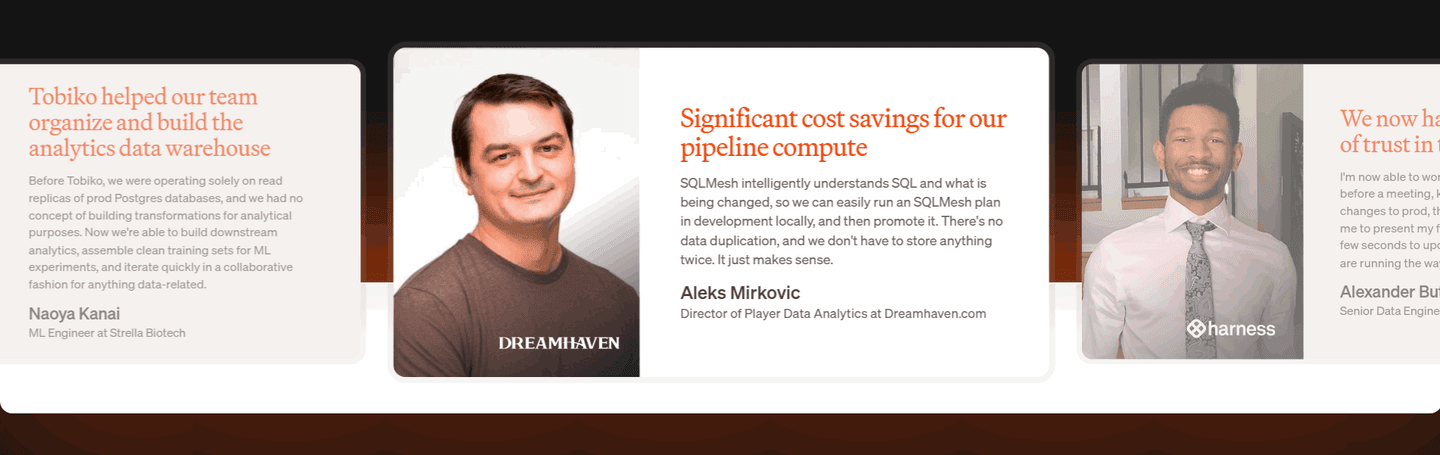
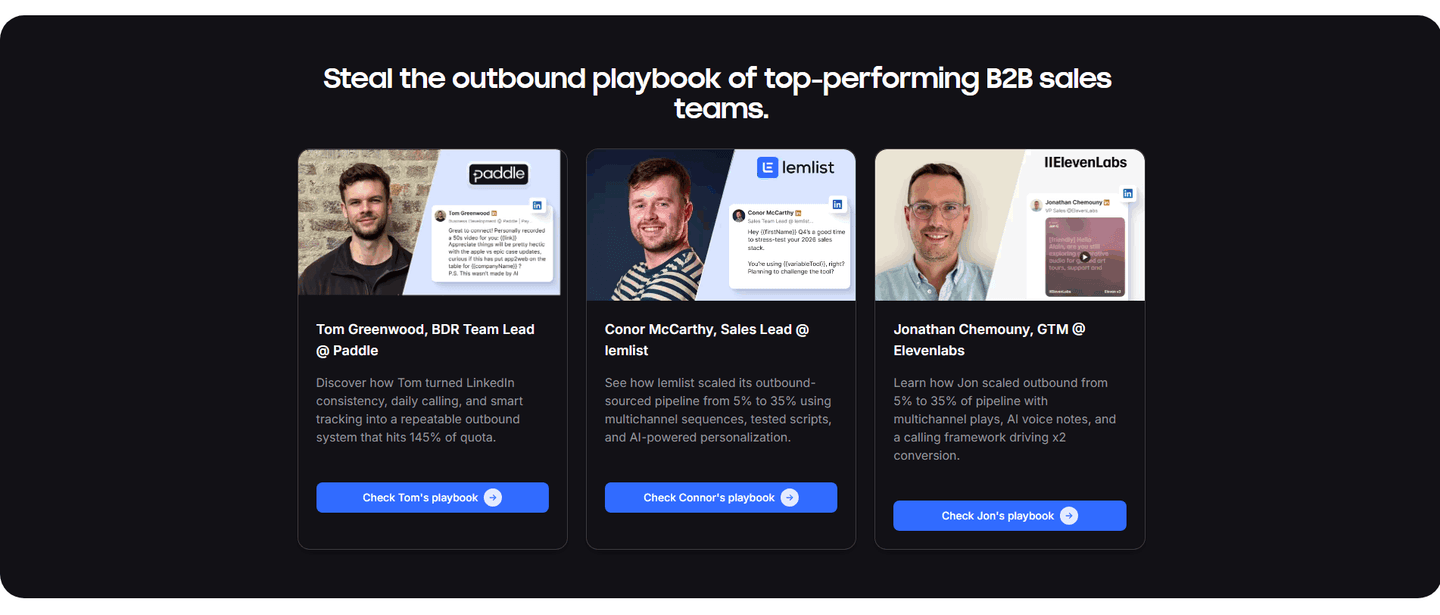
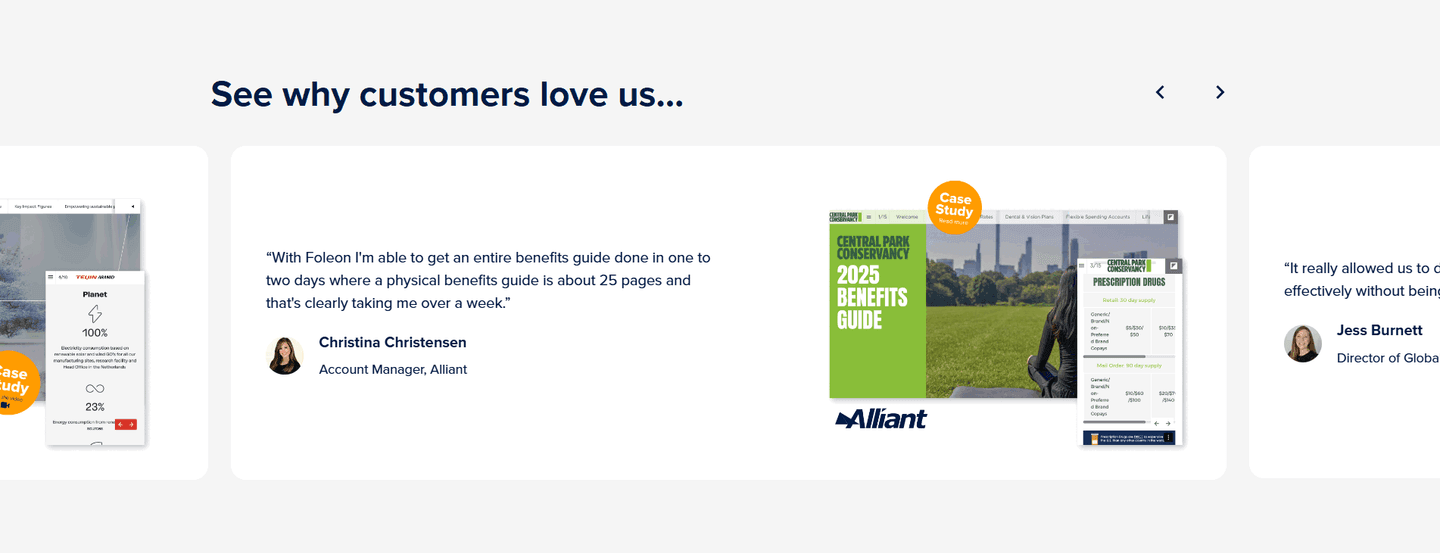
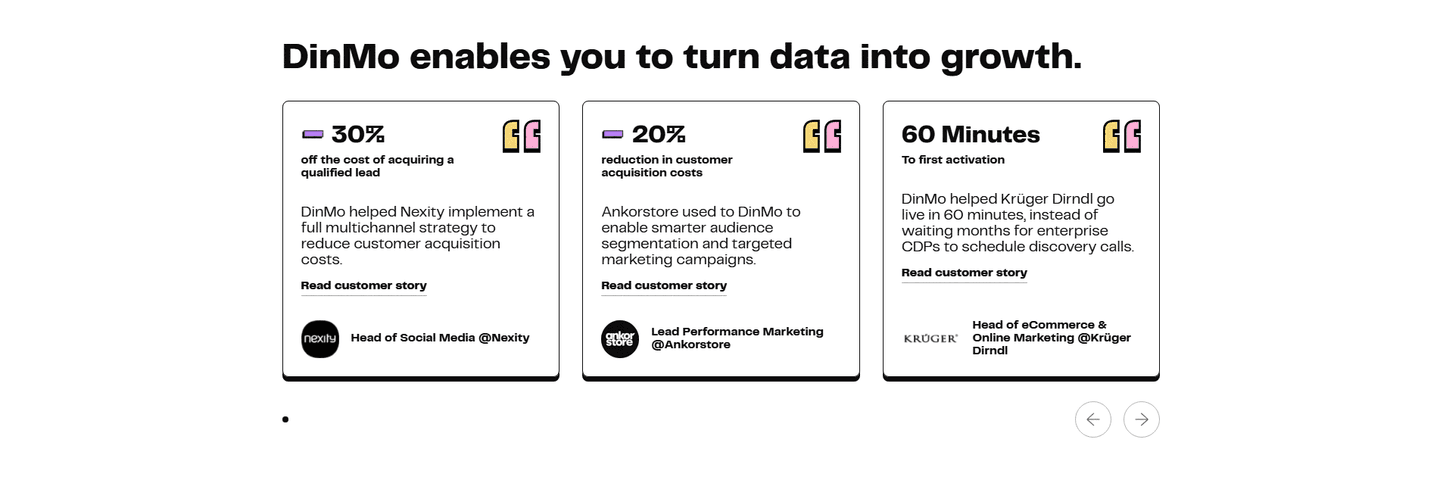
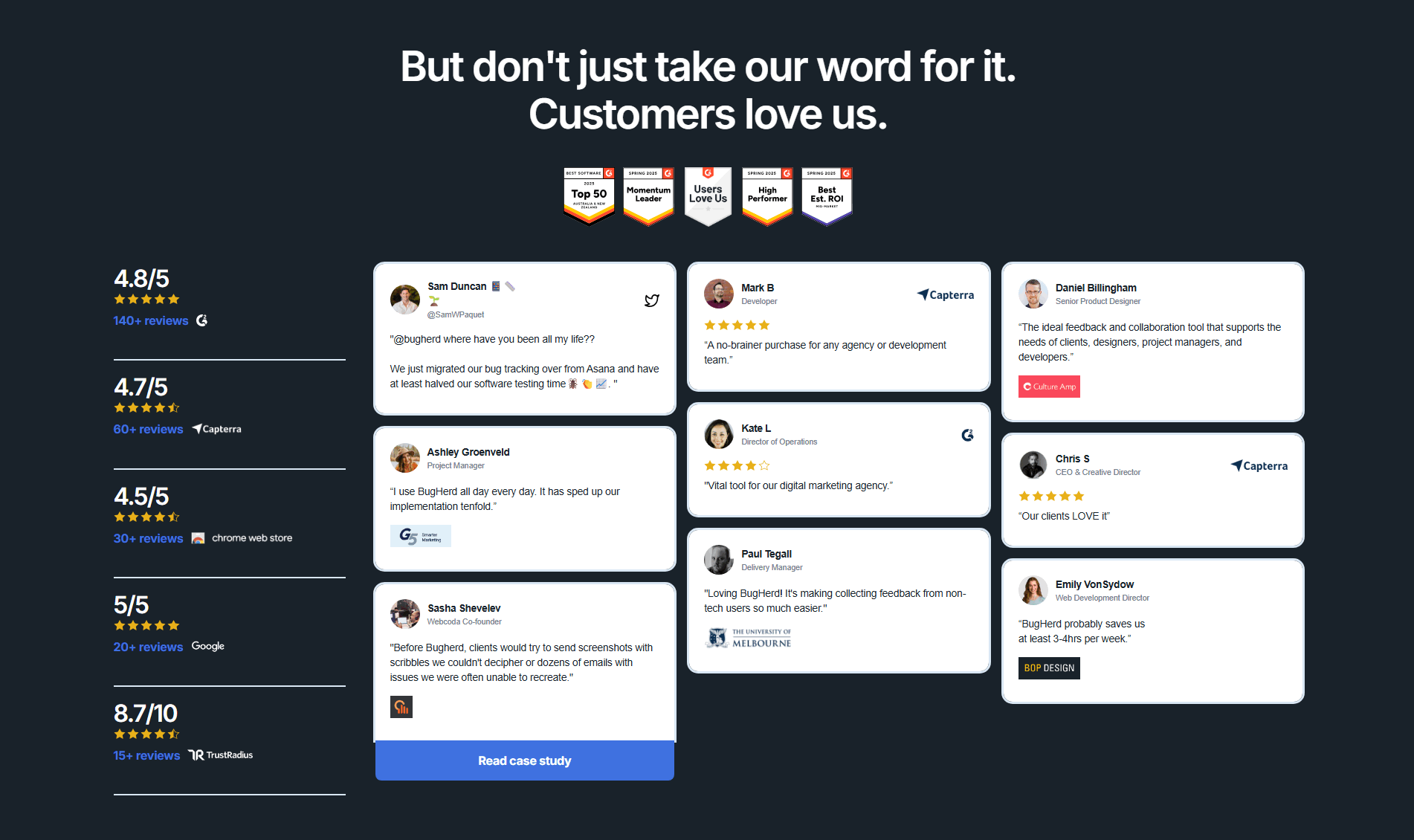
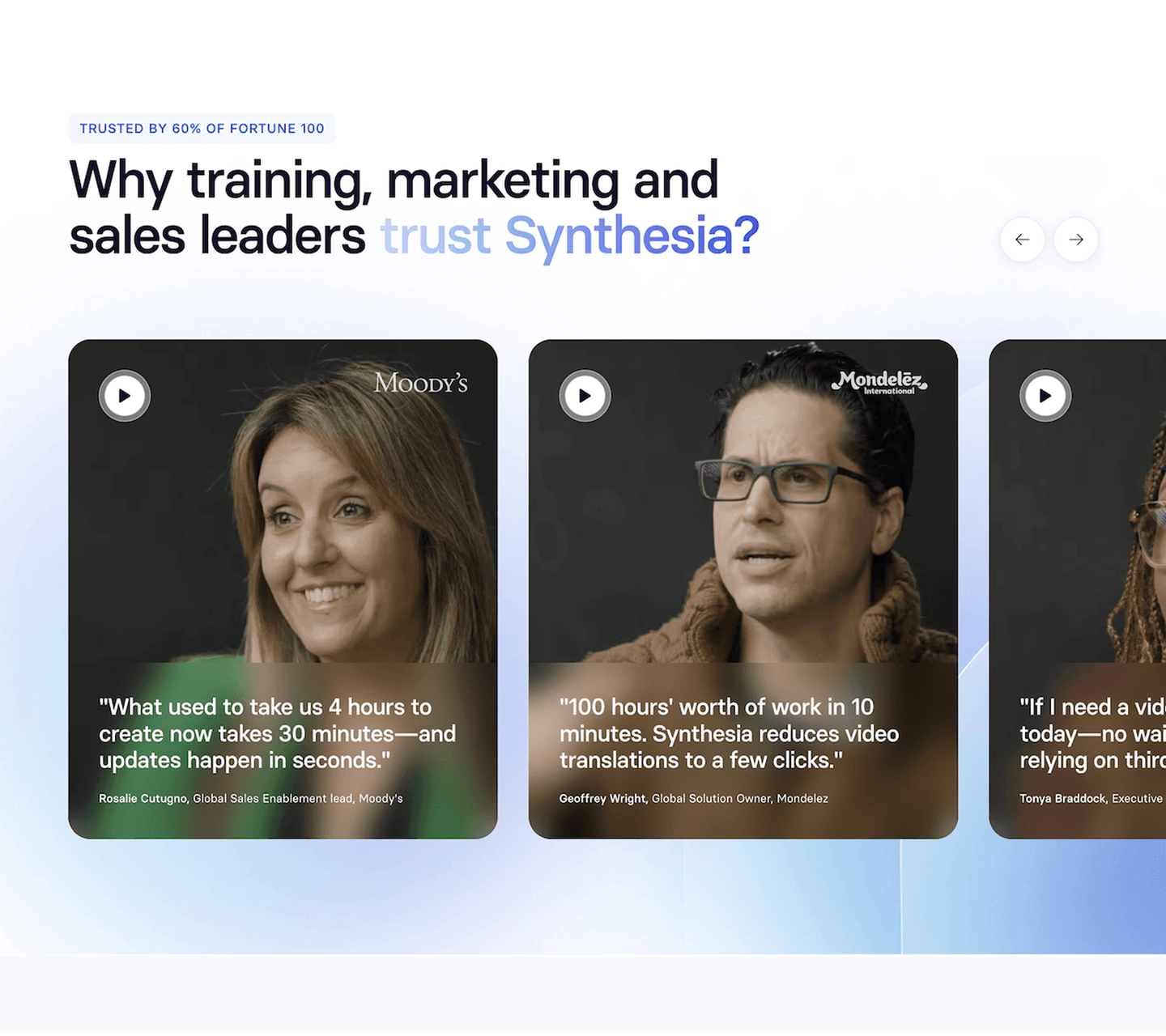
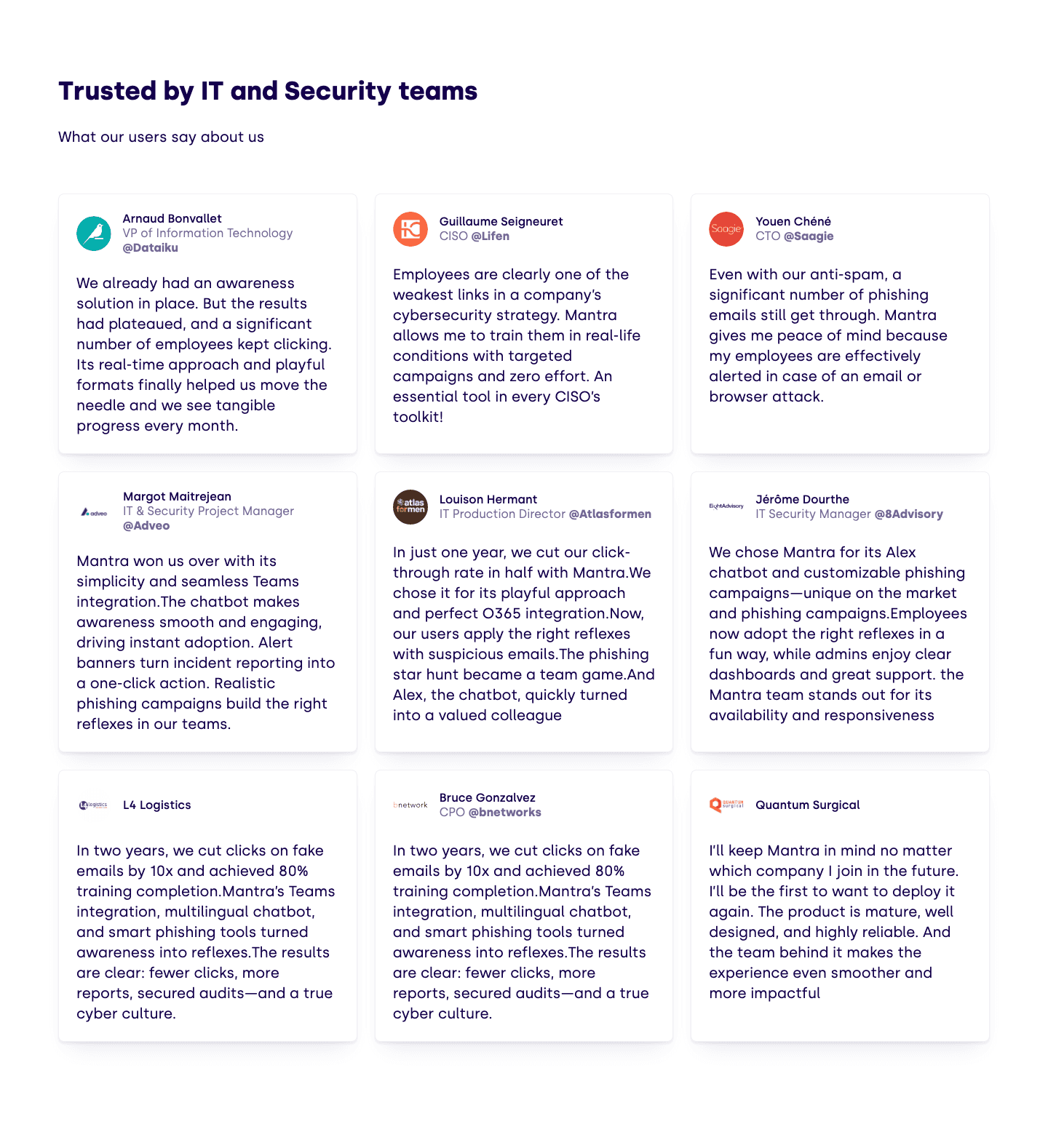
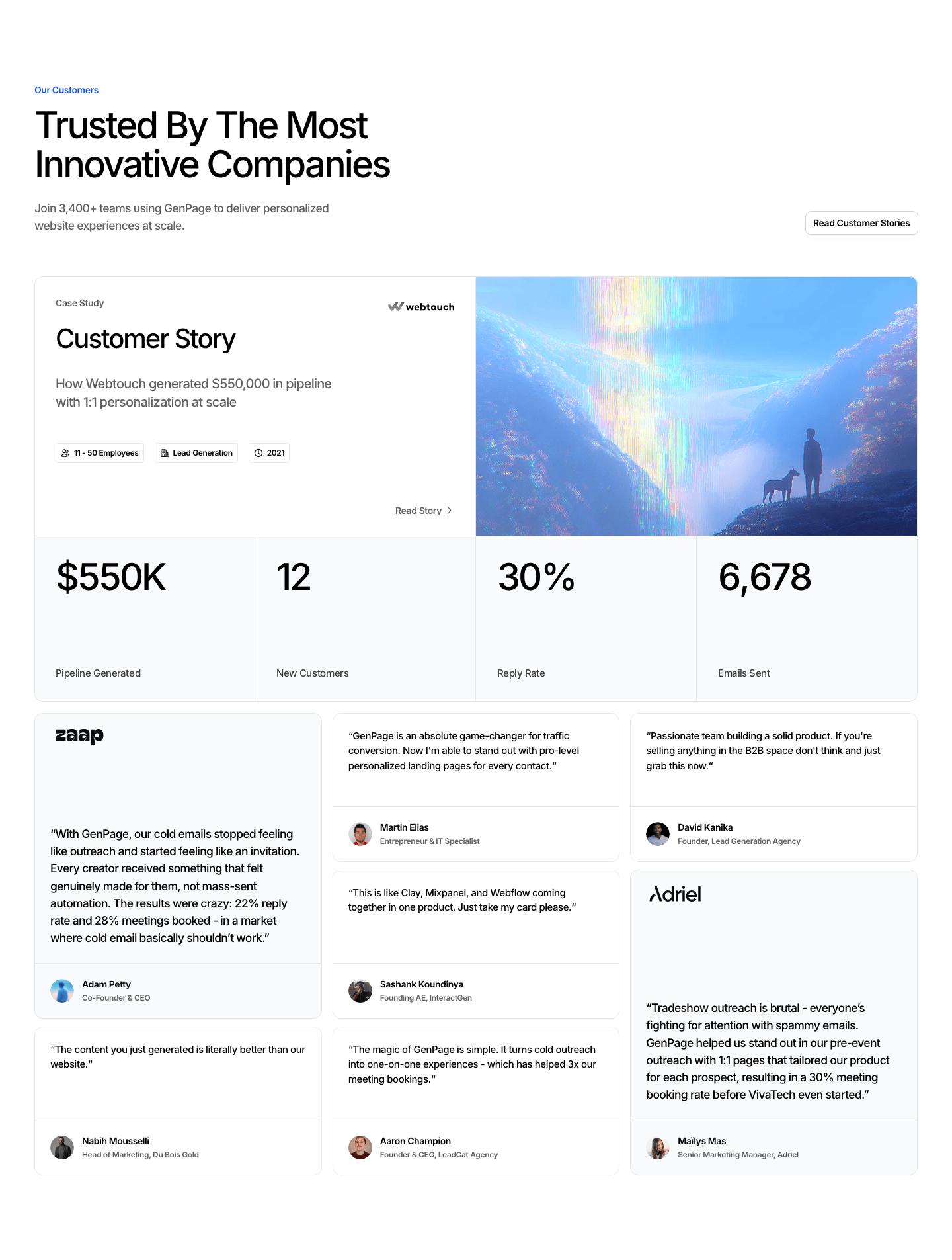
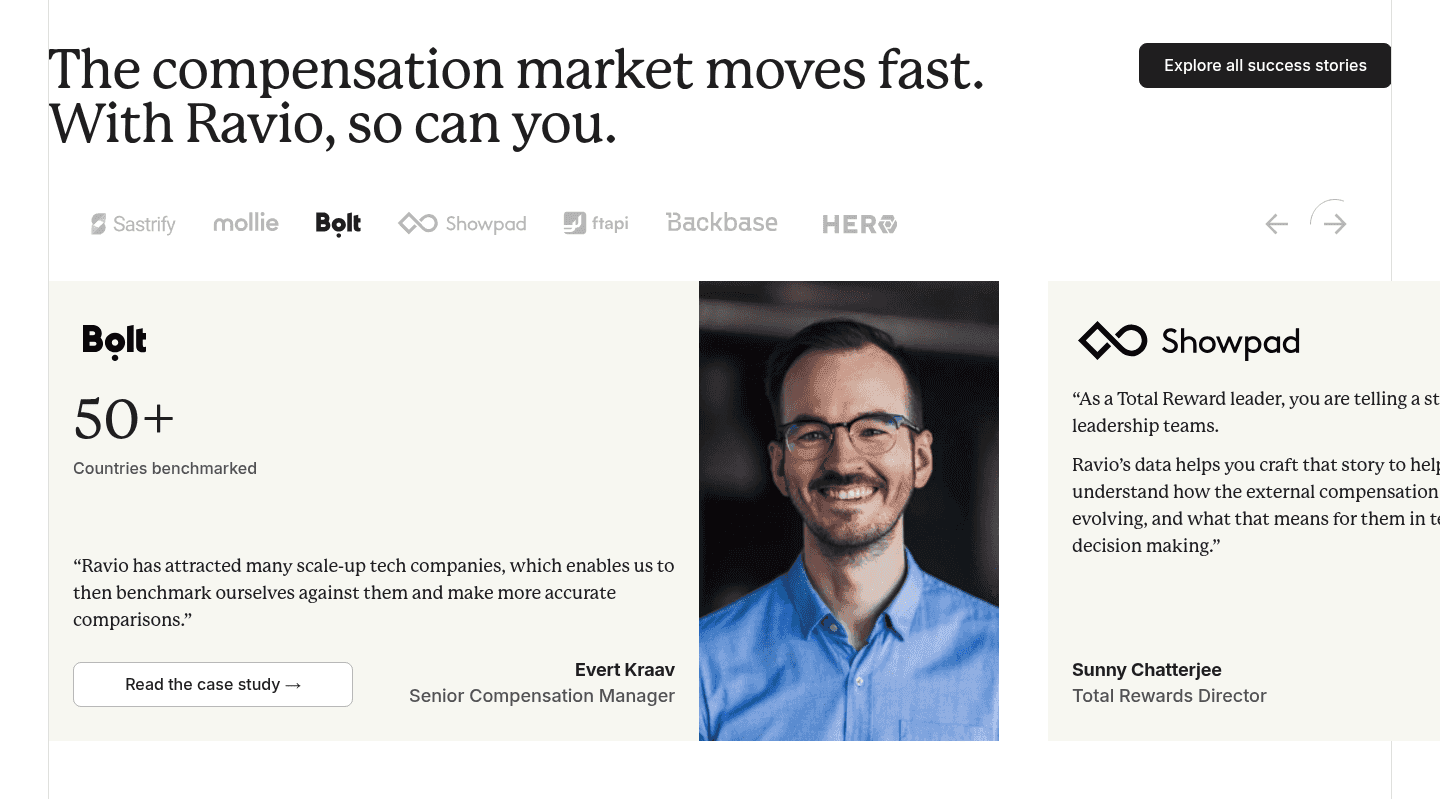
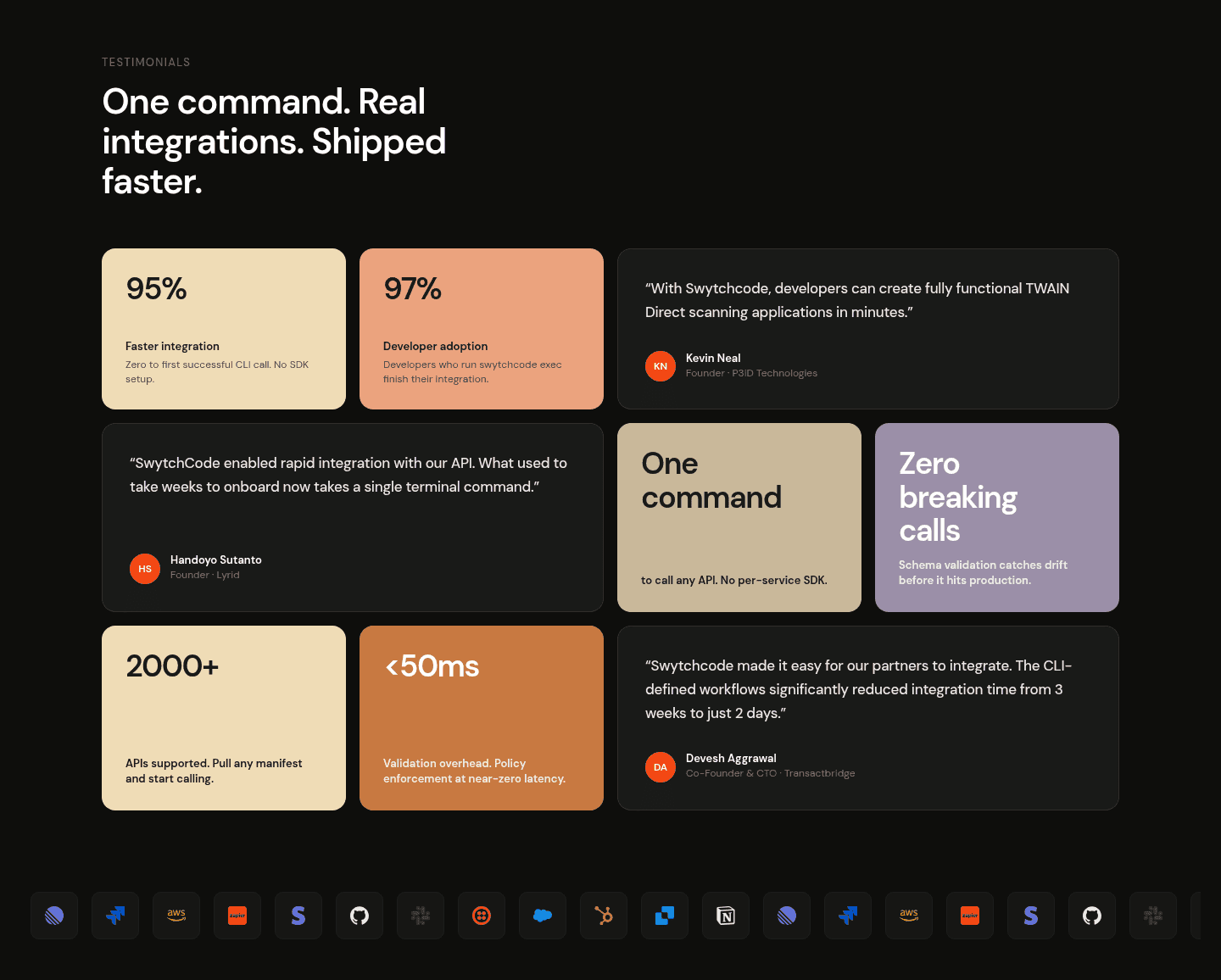
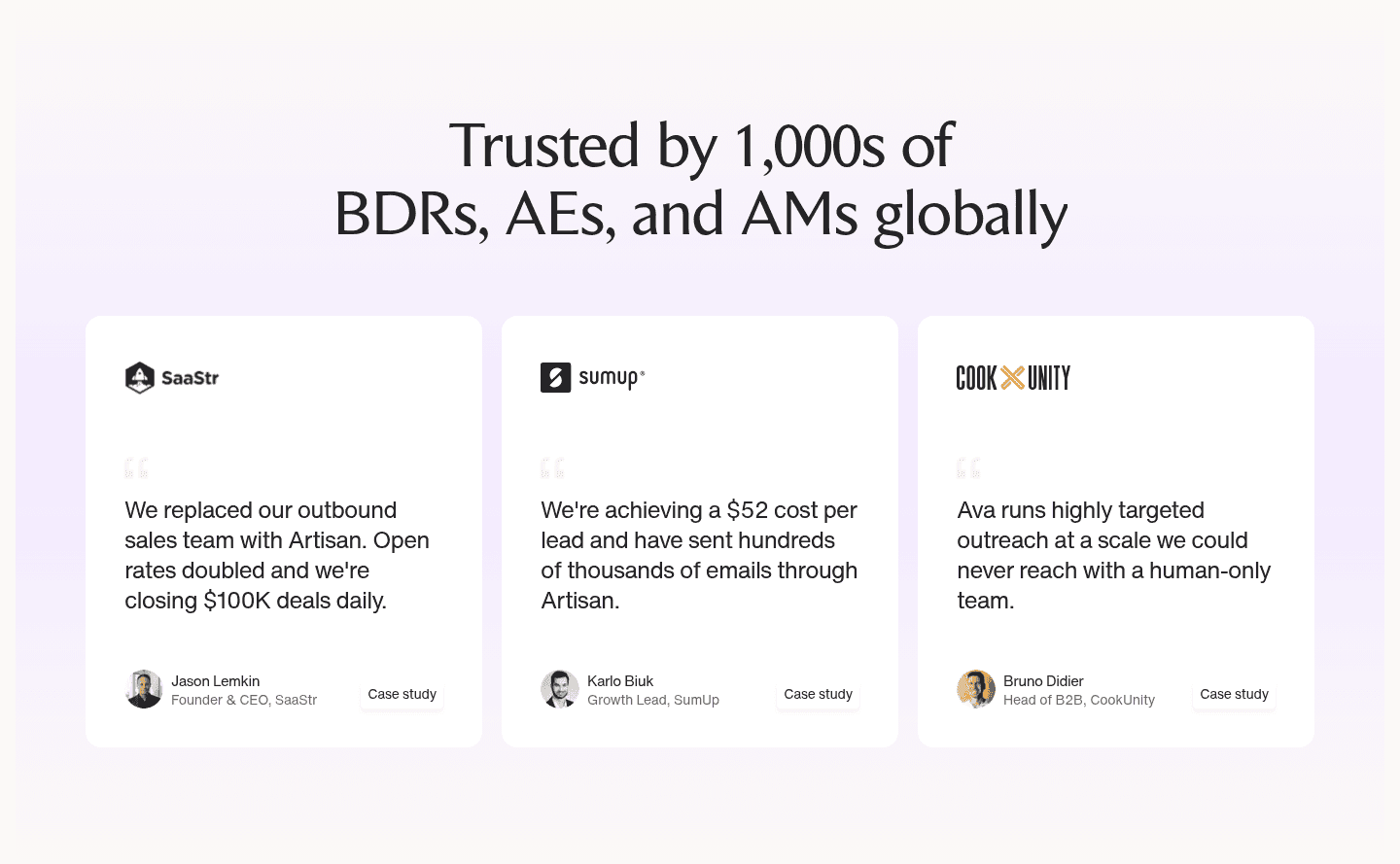
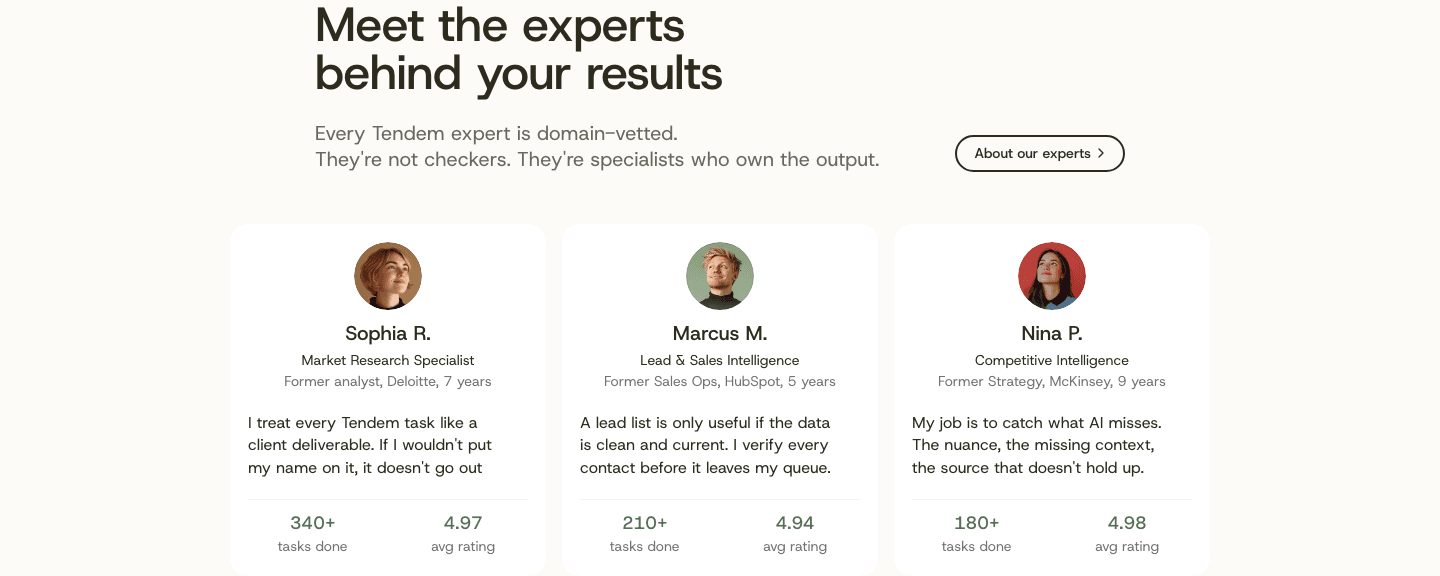
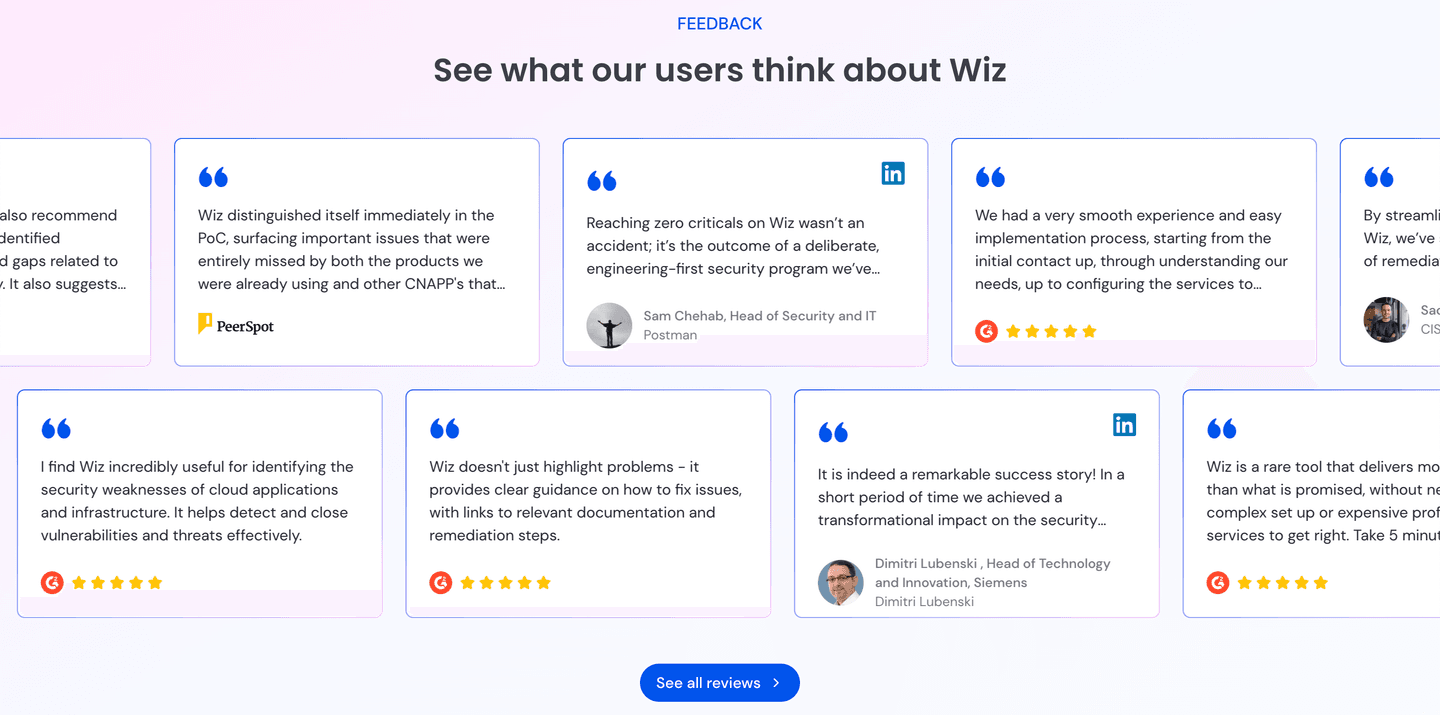
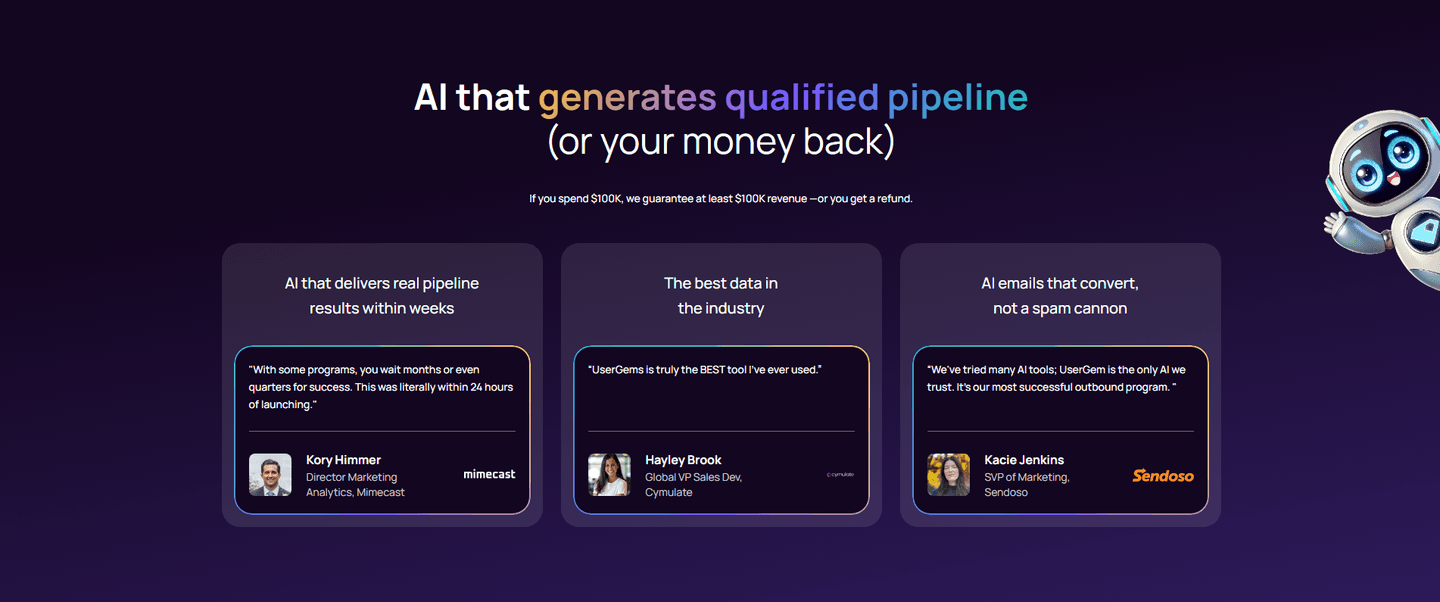
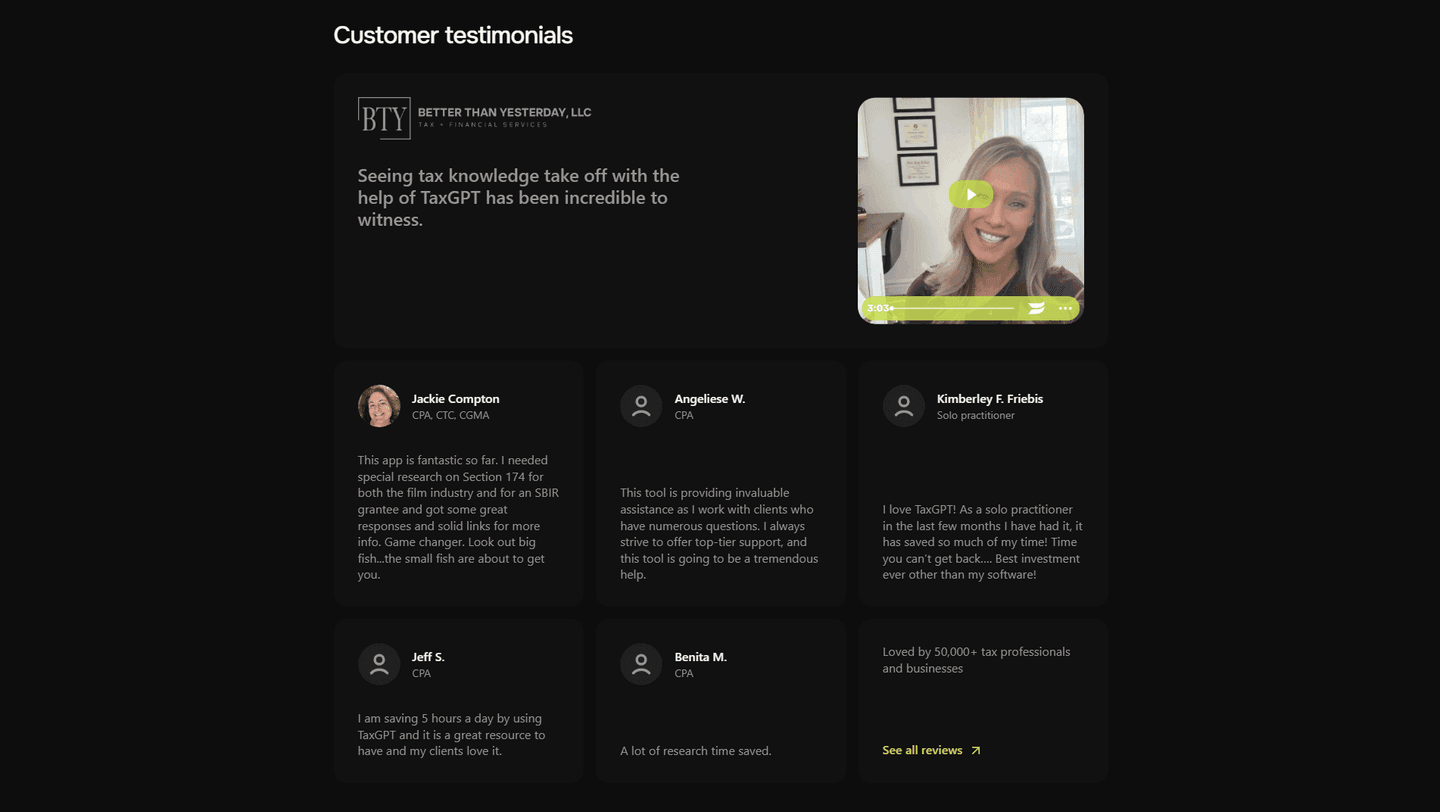
Across the benchmark examples below, the strongest sections pick roles on purpose. Bugherd quotes voices that run the length of the org chart, from Developer and Senior Product Designer through Project Manager and Director of Operations up to CEO, so any reader sees a peer. DinMo pairs a Head of Social Media, a Lead Performance Marketing, and a Head of eCommerce, covering the marketing buying group rather than one corner of it. Lemlist spans BDR Team Lead, Sales Lead, and GTM to show the playbook works across sales functions, and Precoro runs from Purchasing Agent and Business Analyst to Finance Manager and Director of Strategic Sourcing to prove cross-team adoption. At the top of the bench, Webflow quotes two CMOs and a CIO so both marketing and IT see themselves, and Gong names a VP Digital Innovation and a Chief Marketing Officer to signal the product wins at the decision-maker level. Tendem by Toloka goes one step further, naming role plus pedigree plus tenure on each card so the voice reads as a specialist, not a stranger.
Range works best when each voice is also concrete. The strongest sections pair a clear title with highlighted key phrases so the result is easy to catch at a glance, or with a before and after story so the person is not only varied but shows a real change.
83/100 0/100
0/100The usual failure is fake range: three quotes that look varied but all come from the same kind of person, so no new reader is reached. The second is range without relevance, where the titles span widely but none of them match the buyer the page is written for, so the spread reads as decoration rather than proof. The third is dropping the title altogether, quoting an anonymous first name where a real role and company would have made the diversity visible. Pick the seats that actually sign off on the purchase, name each person's role and company, and make sure the spread maps to the committee you are trying to convince.

Curated by
Gabriel Amzallag , Founder, Web Anatomy
5 years CRO + SEO at Qonto (2021–2025). After advising 15+ SaaS on their websites (Payfit, Pigment…), the same patterns kept breaking, so I decided to build the source of truth on what works on the web: the intelligence layer every tool, builder, and team uses to ship sites that perform.
We find every way to grow your website’s visibility and conversions: SEO, AI search (AEO), backlinks and mentions, and UX/UI. 3 free opportunities, delivered by email.
The common questions about quoting a range of job titles in customer testimonials, with answers drawn from 125 benchmark examples.
It means the customers quoted in a testimonial section hold a range of different job titles, rather than all sharing the same role. A strong section might pair a front-line user, a team lead, and an executive, so the spread of voices shows the product earns buy-in across the whole org chart. The most common forms are a span from individual contributor to C-suite, a span across functions like sales, finance, and product, and quotes that name role plus company so each voice is concrete.
A B2B purchase is rarely one person's decision. A front-line user cares whether the tool is pleasant to use day to day, a manager cares about team output, and an executive cares about cost and risk. When every quote comes from the same kind of person, only one of those readers sees themselves. A spread of roles lets each visitor find a voice that matches their own seat, and it quietly signals that the product already won over the different people who have to agree before a deal closes.
The ones that map to your actual buying committee. For most B2B products that means at least one hands-on user, one team lead or manager, and one executive sponsor, ideally across the functions that touch the product. The point is not to collect titles for their own sake, it is to make sure the person who champions the tool, the person who manages the rollout, and the person who approves the spend all see someone like them in the proof.
Yes. A quote attributed to a real name, a specific title, and a recognizable company is far harder to dismiss than an anonymous first name. The title is what makes the role diversity legible: a visitor cannot tell that buy-in spans the org unless each quote says who the person is. Naming the company adds borrowed credibility on top, which is why the strongest sections pair a clear title with a logo a buyer already trusts.
There is no hard cap, but breadth only helps when each voice is specific and relevant. Three to six well-chosen quotes that genuinely span the org usually carry more weight than a dozen near-identical titles. The failure mode is range for its own sake: roles so far from the buyer's world that none of them feel like proof. Pick the seats that matter to the decision and make each one count.