Testimonial|
A company-logo testimonial sits each quote next to the logo of the brand behind it, so a name the visitor already trusts does part of the convincing before they read a word.
Key takeaways
Showing 1–28 of 187 examples
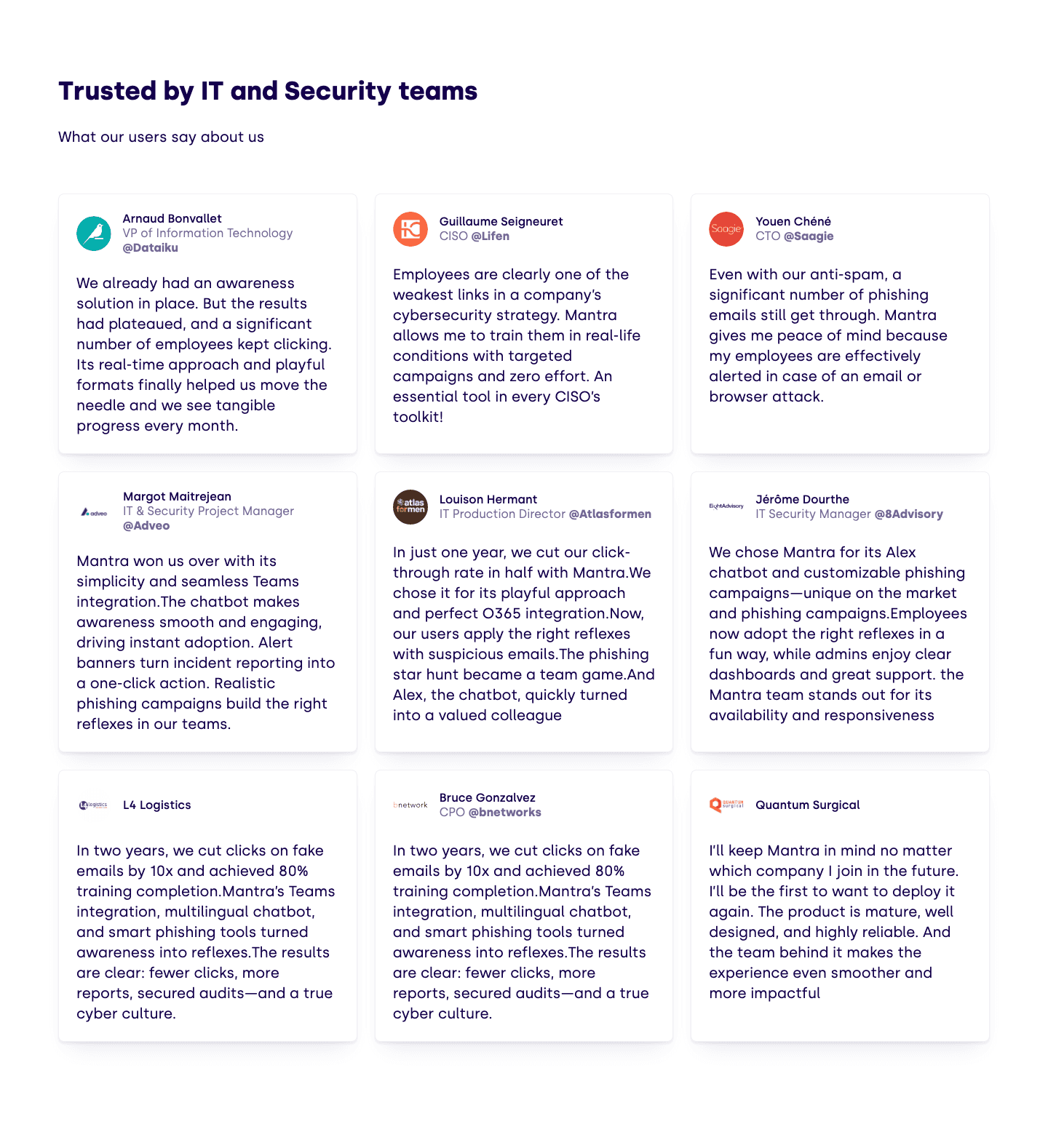
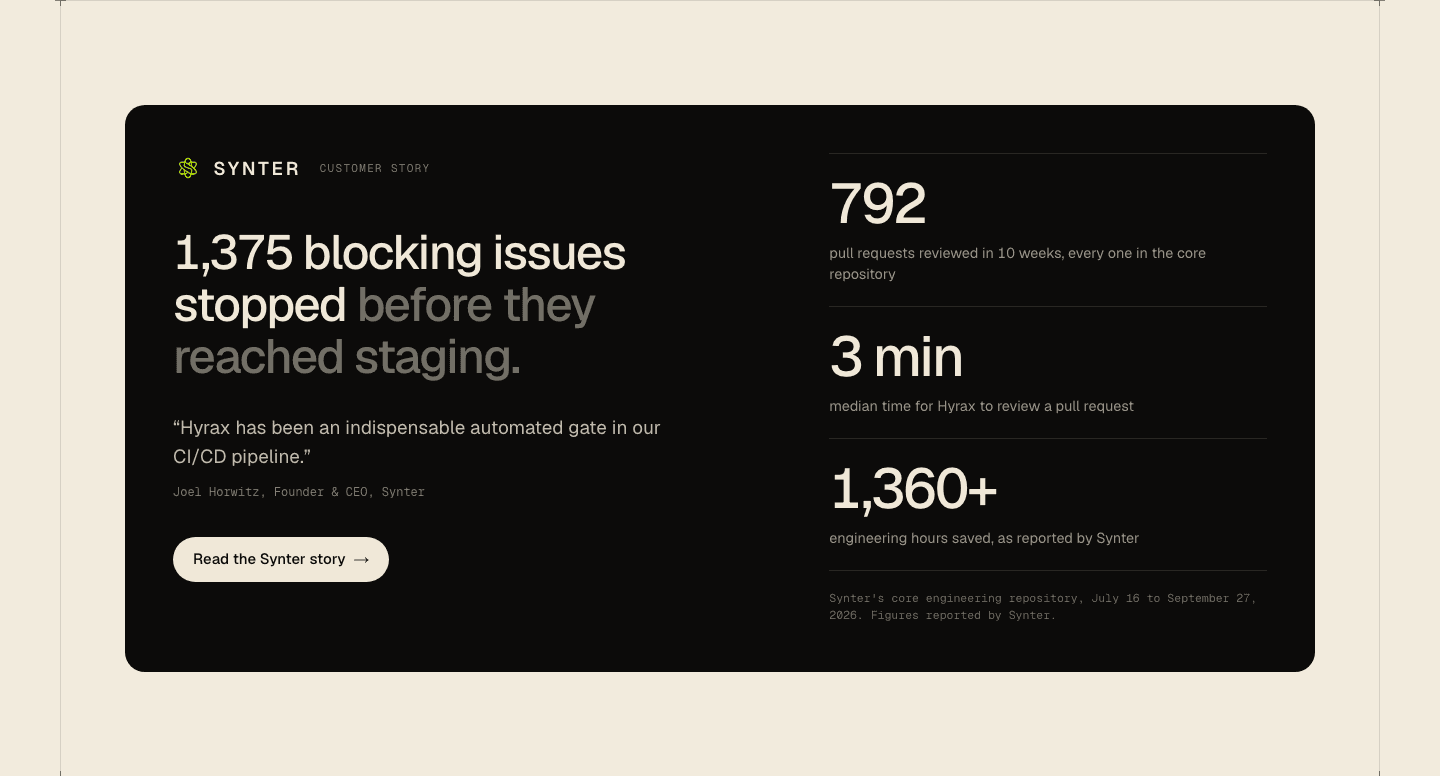
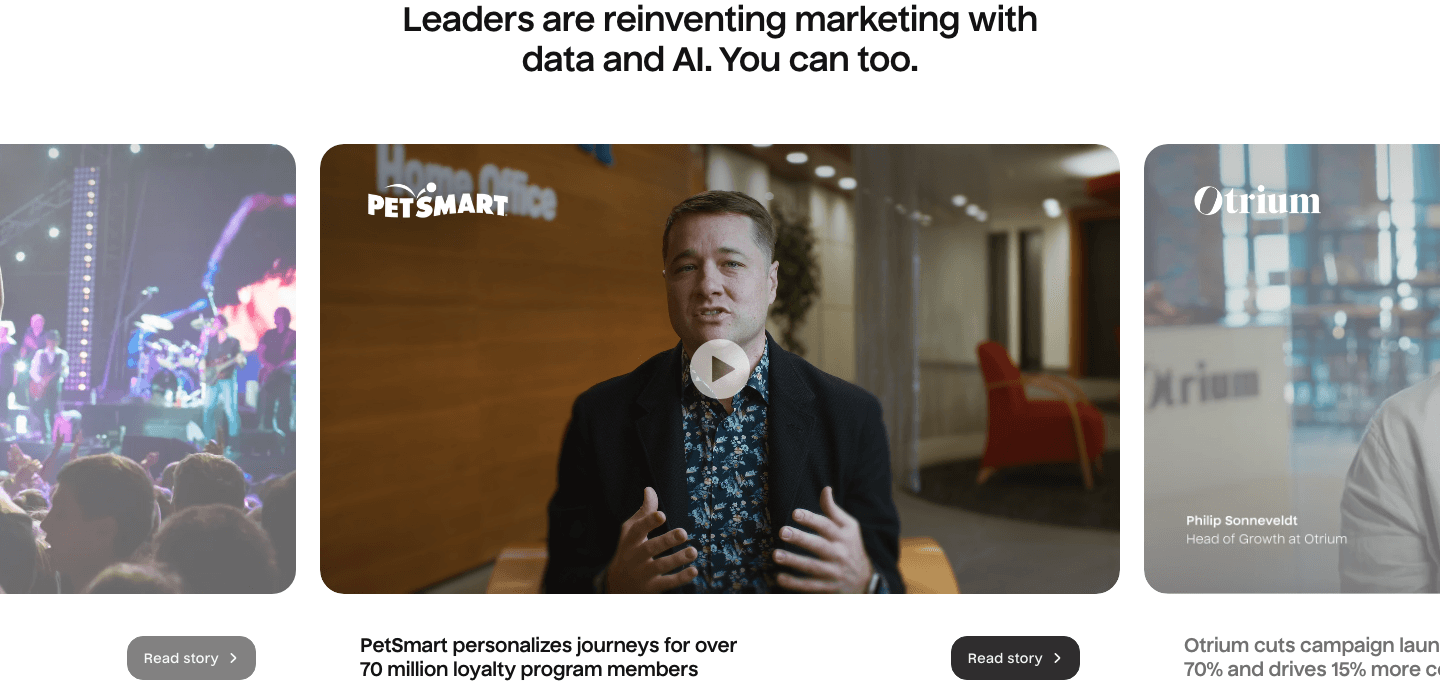
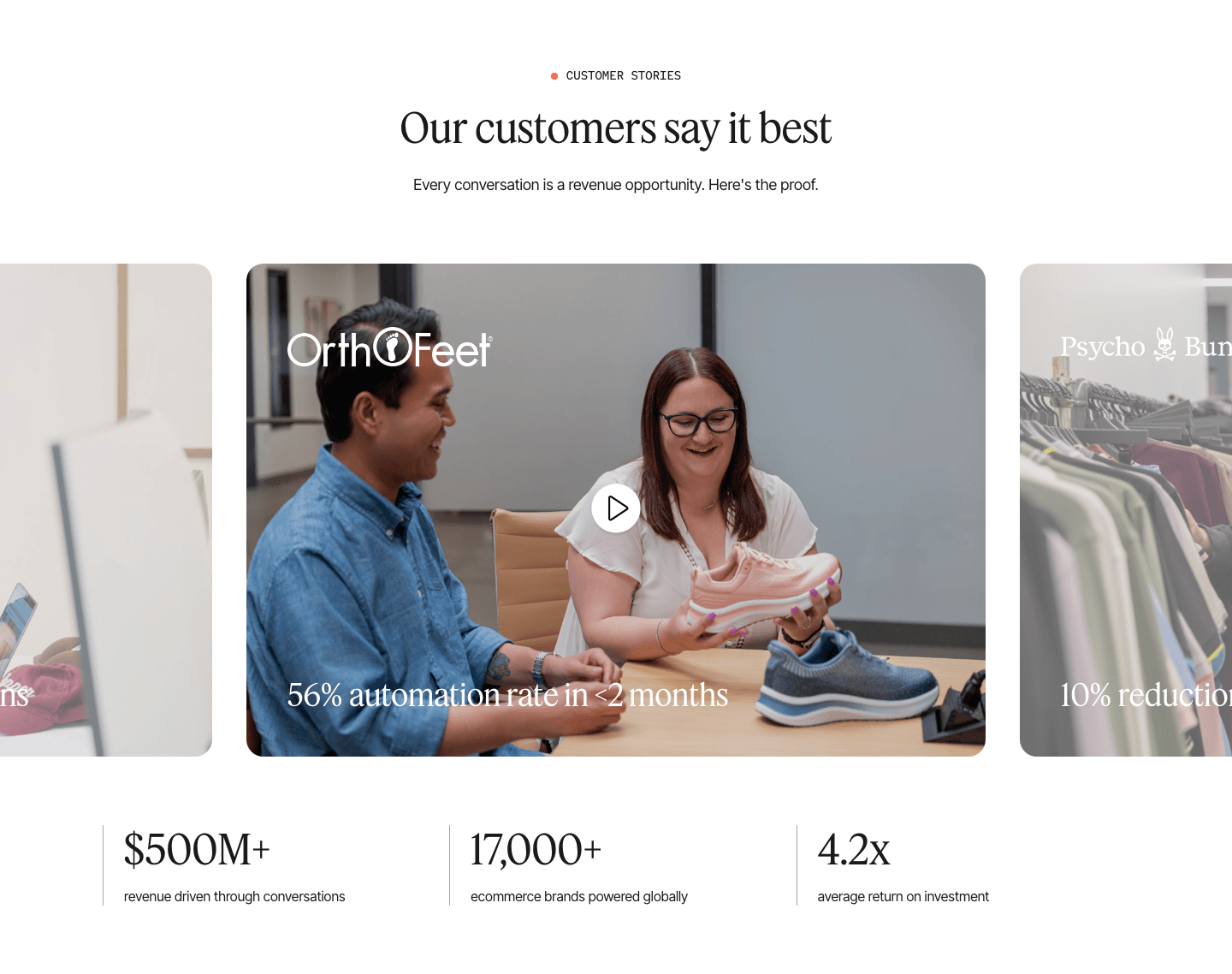
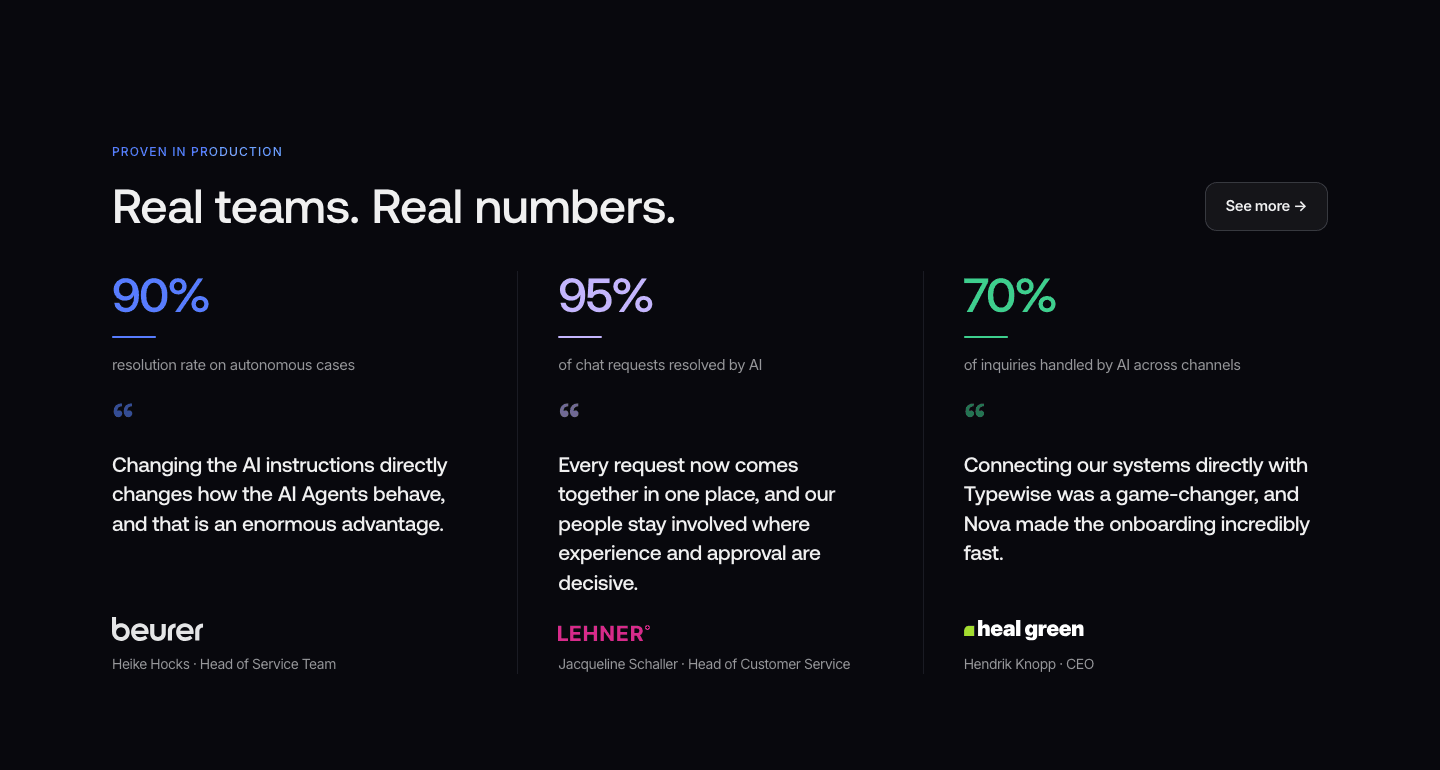
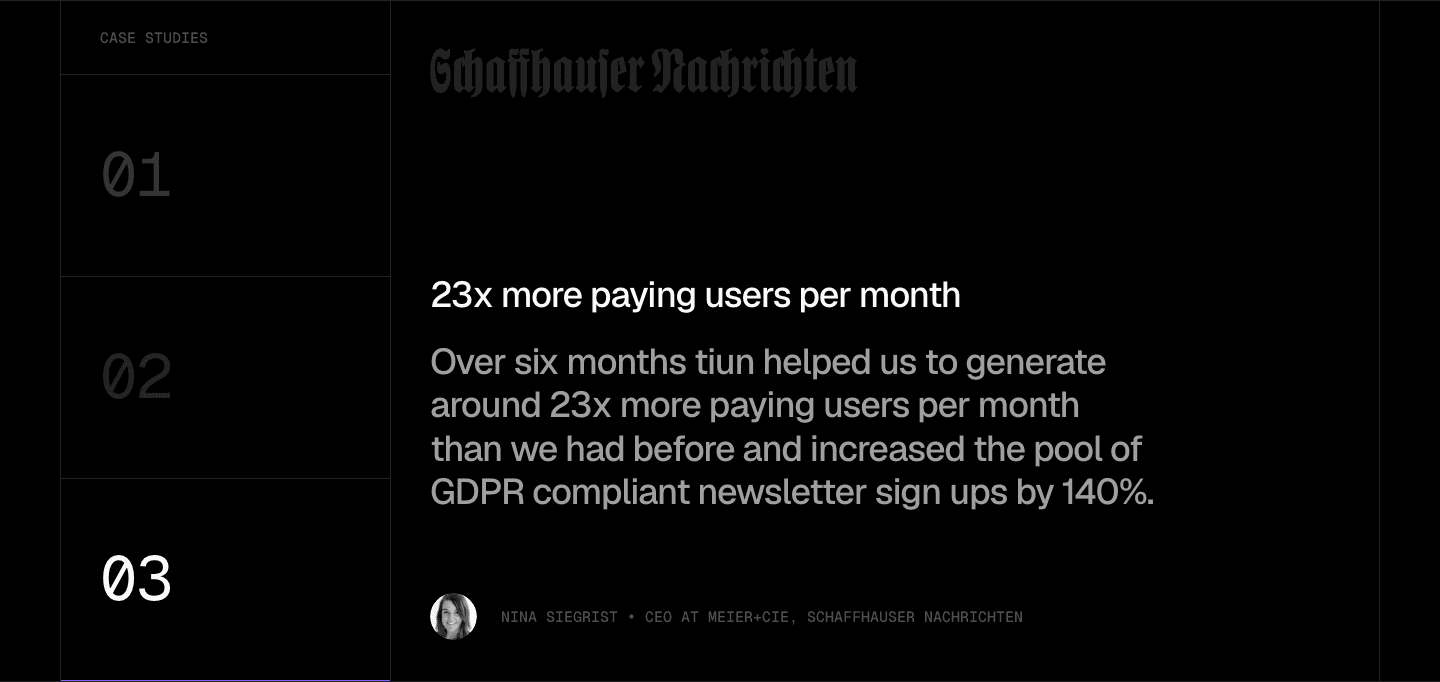
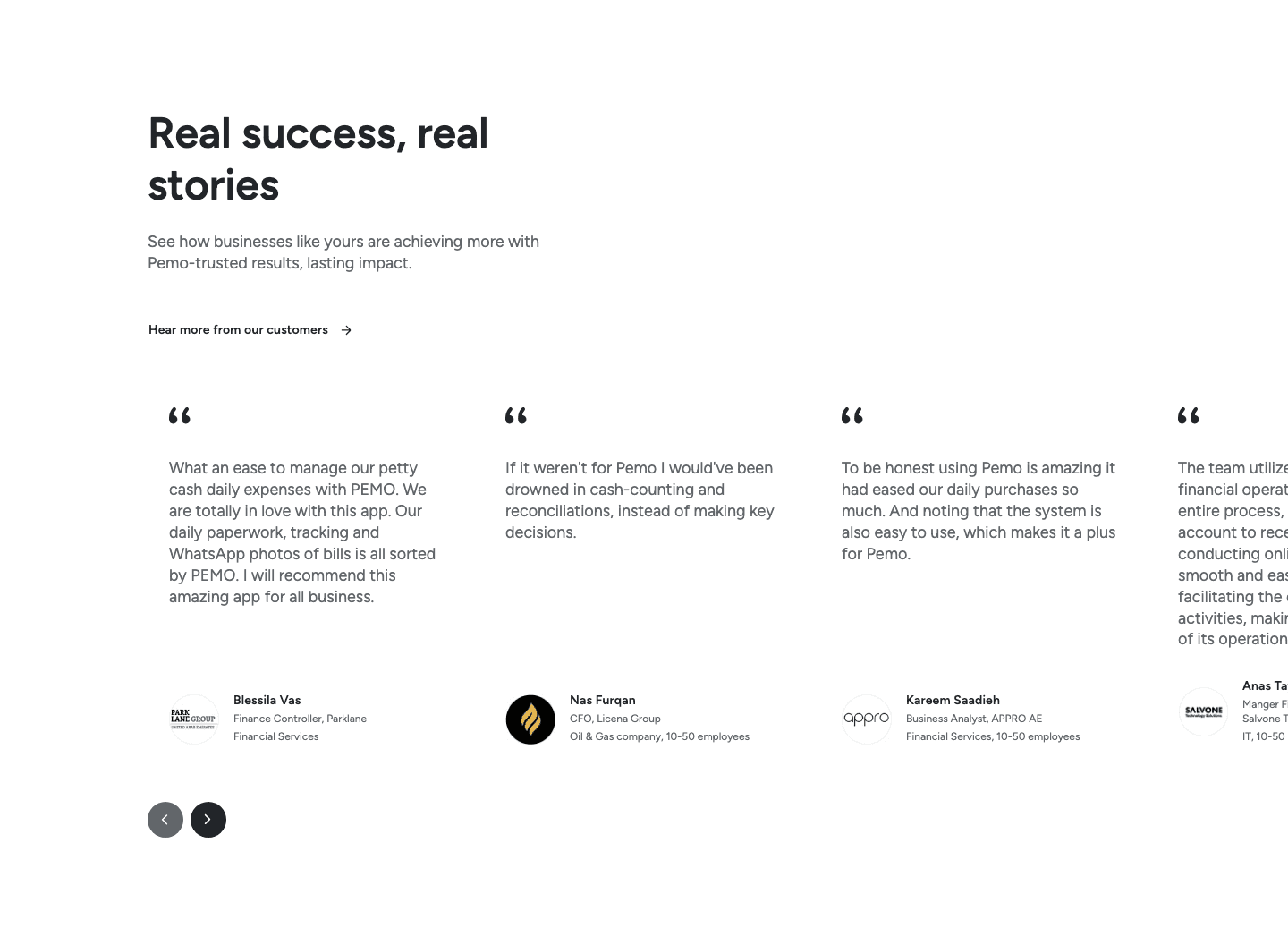
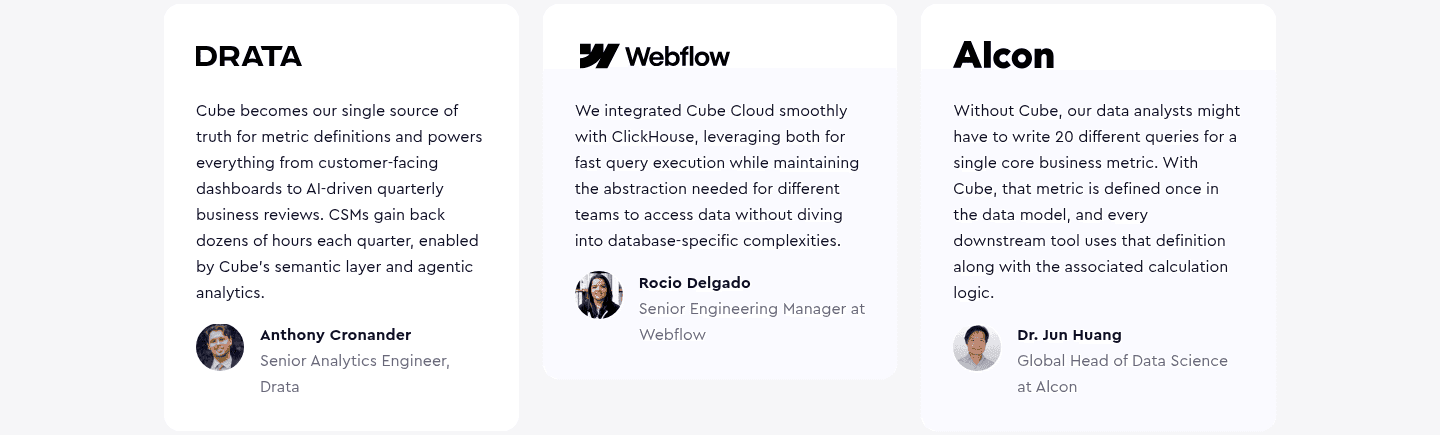
Browse every testimonials pattern by UX best practice.
Every testimonial section is scored across 6 conversion best practices. Copy the best practice stack, not just the layout. See what builds trust and what falls flat.
Hand-picked from {companies} companies and analyzed by our AI conversion agent. Not a random dump of quote cards. Every entry earns its spot.
Found a testimonial section you admire? Run yours through the same scoring engine. See where you stand on the same best practices, and what to fix first.
A company-logo testimonial pairs each quote with the logo of the customer who gave it, so the praise is tied to a brand the visitor can recognize rather than an anonymous name. A quote from an unknown company asks a visitor to trust a stranger. The same quote next to a logo they know borrows that brand's credibility instead. The logo does the first second of persuasion, before the visitor has read a single word of the quote.
The best testimonial sections use a few forms of this, often more than one at once:
Recognition is a shortcut for trust. A visitor cannot verify a stranger's praise, but they can recognize a brand they already respect, and a logo they know transfers that respect to the product it sits beside. The claim stops being a quote the page chose to print and starts reading as a fact a company the visitor trusts already stood behind.
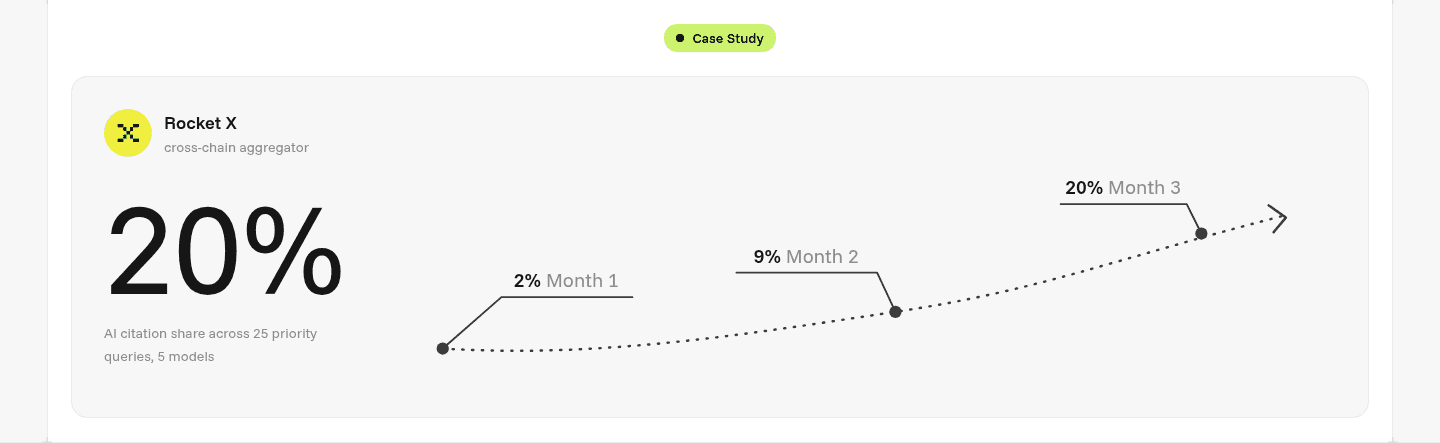
The logo also answers the quiet question every buyer asks: does this work for someone like me? A peer brand from the visitor's own sector says yes more convincingly than any adjective, and a household name says the product is safe to bet on. Either way the proof is caught in a glance, which is exactly how a skimming visitor reads a testimonial section. It pairs naturally with a testimonial that leads with a hard number, where the logo says who and the figure says how much.
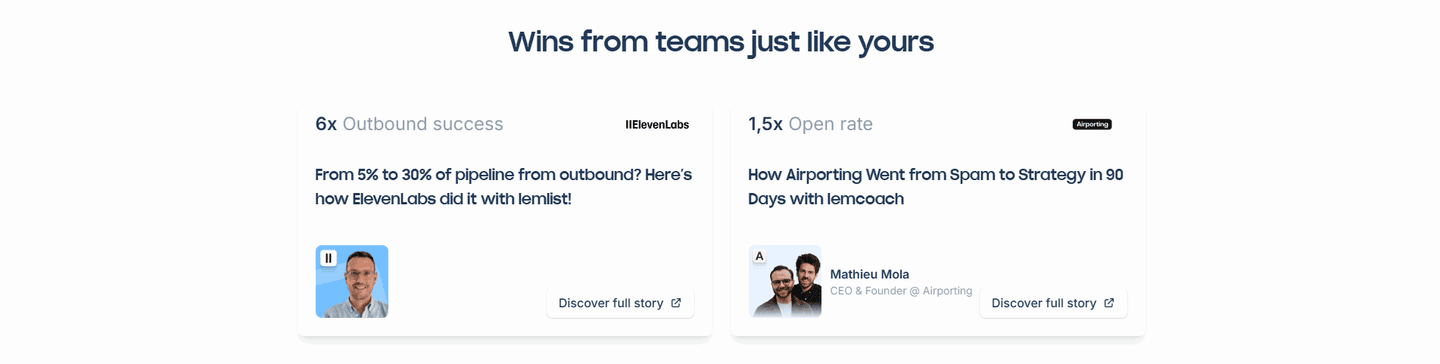
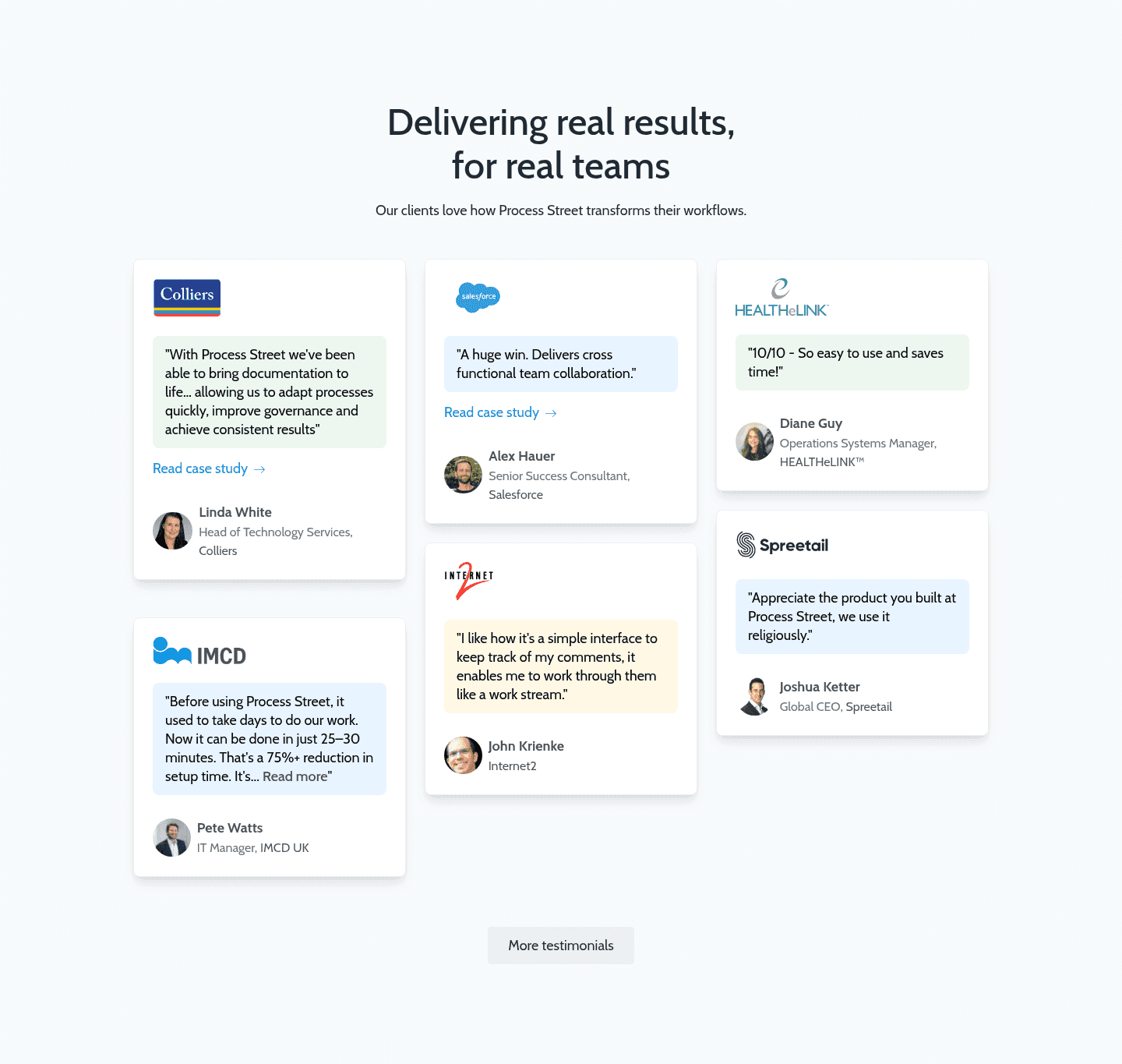
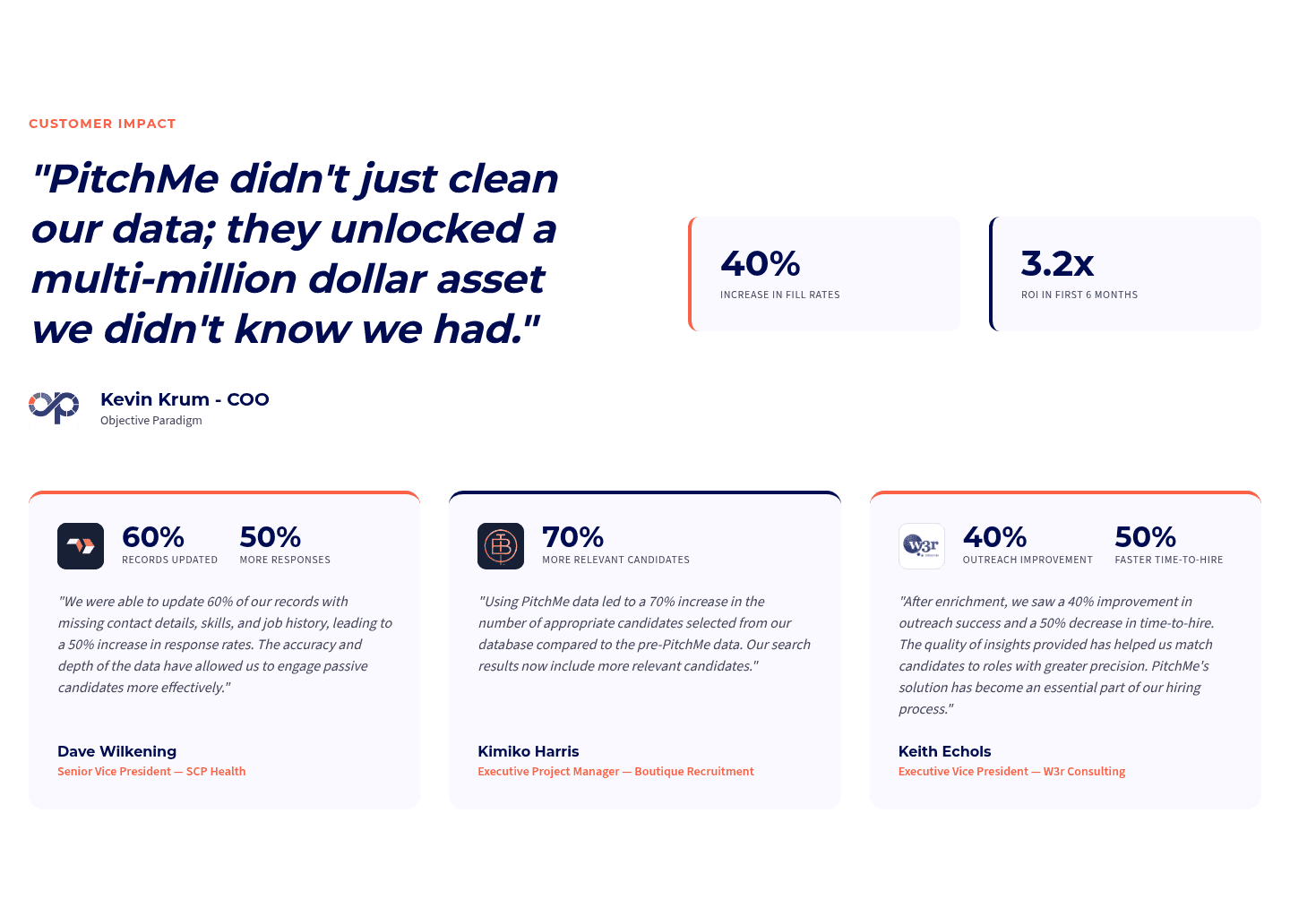
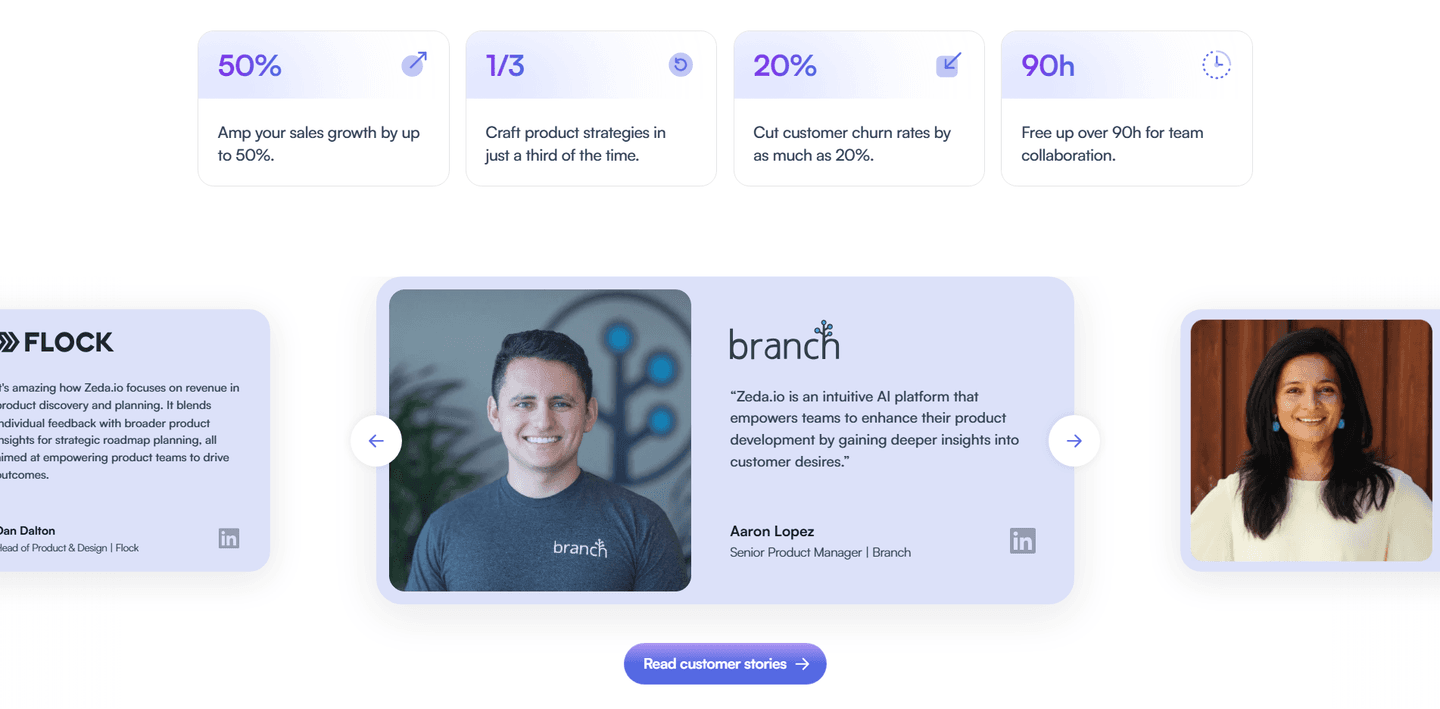
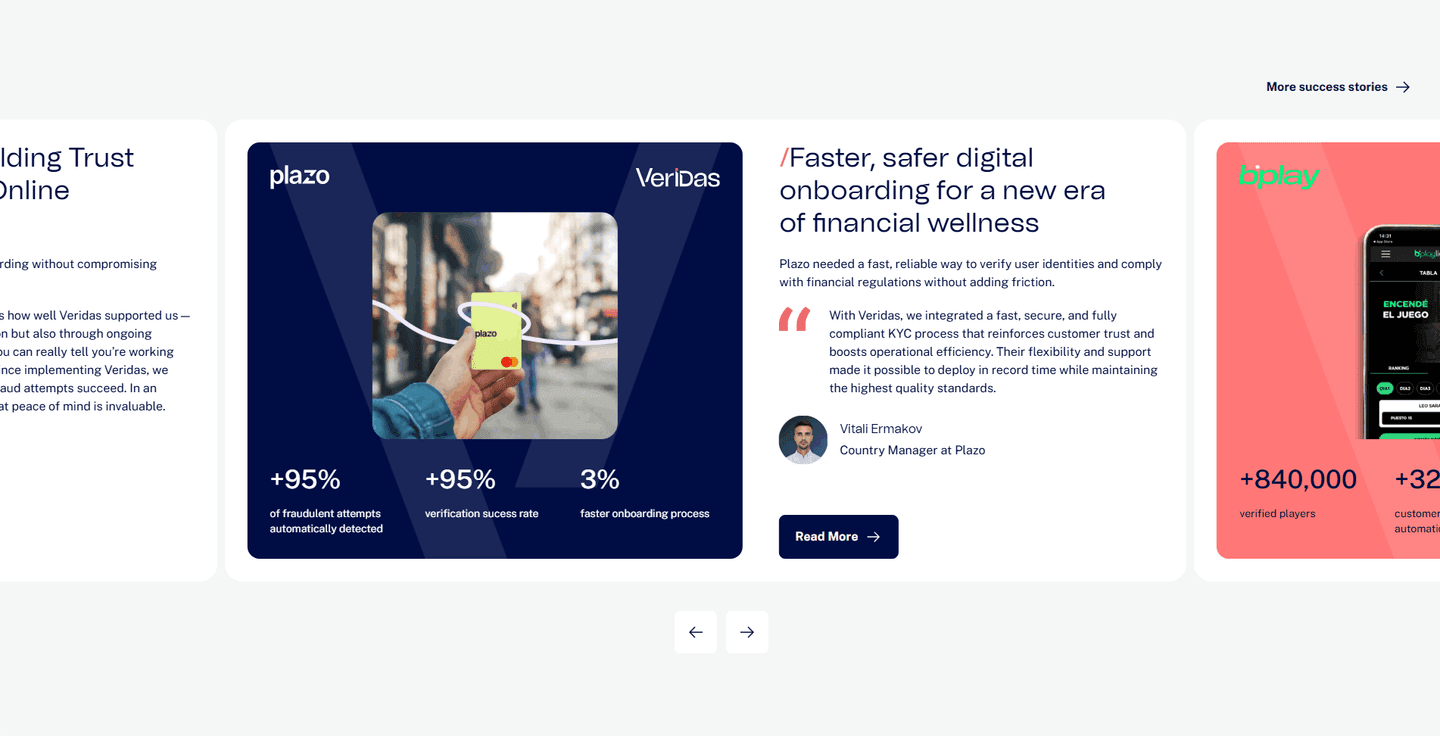
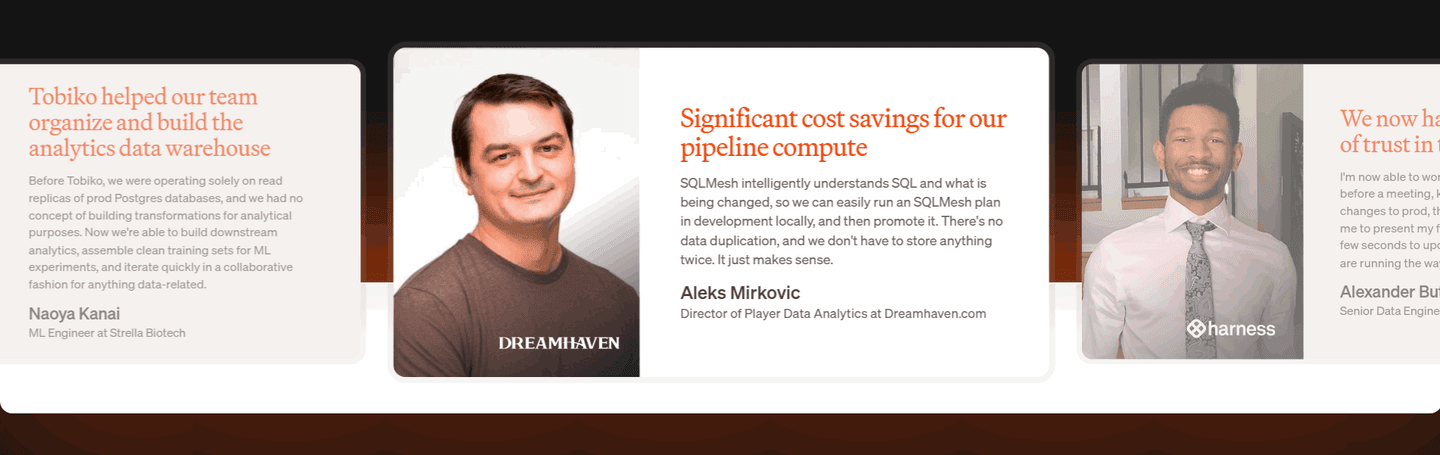
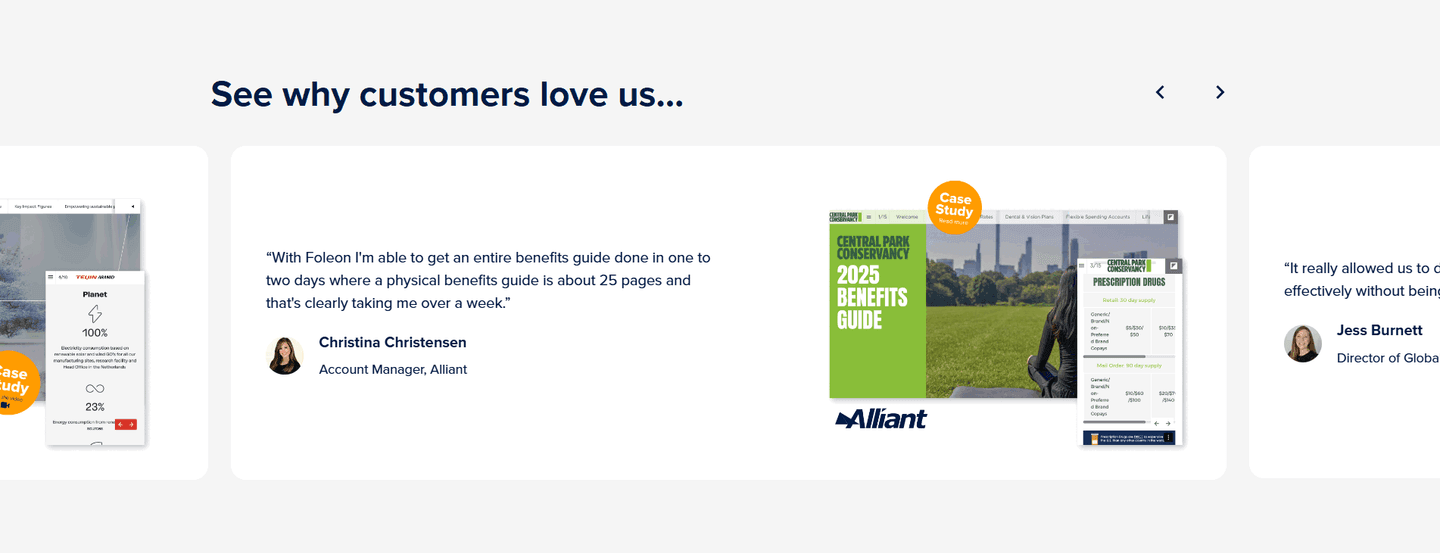
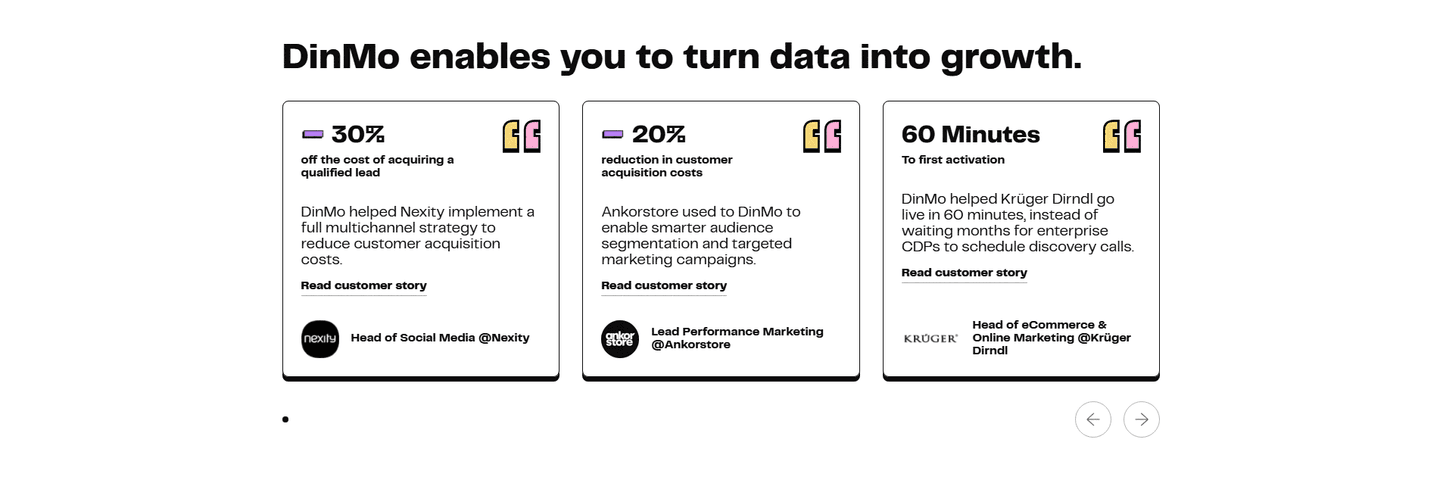
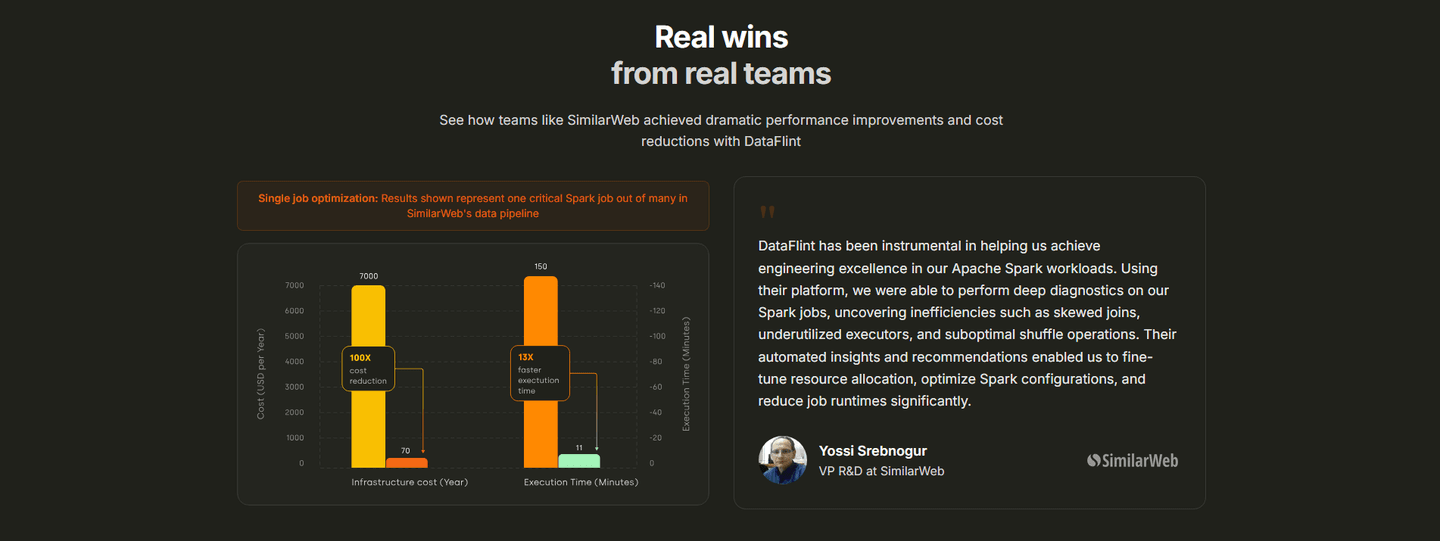
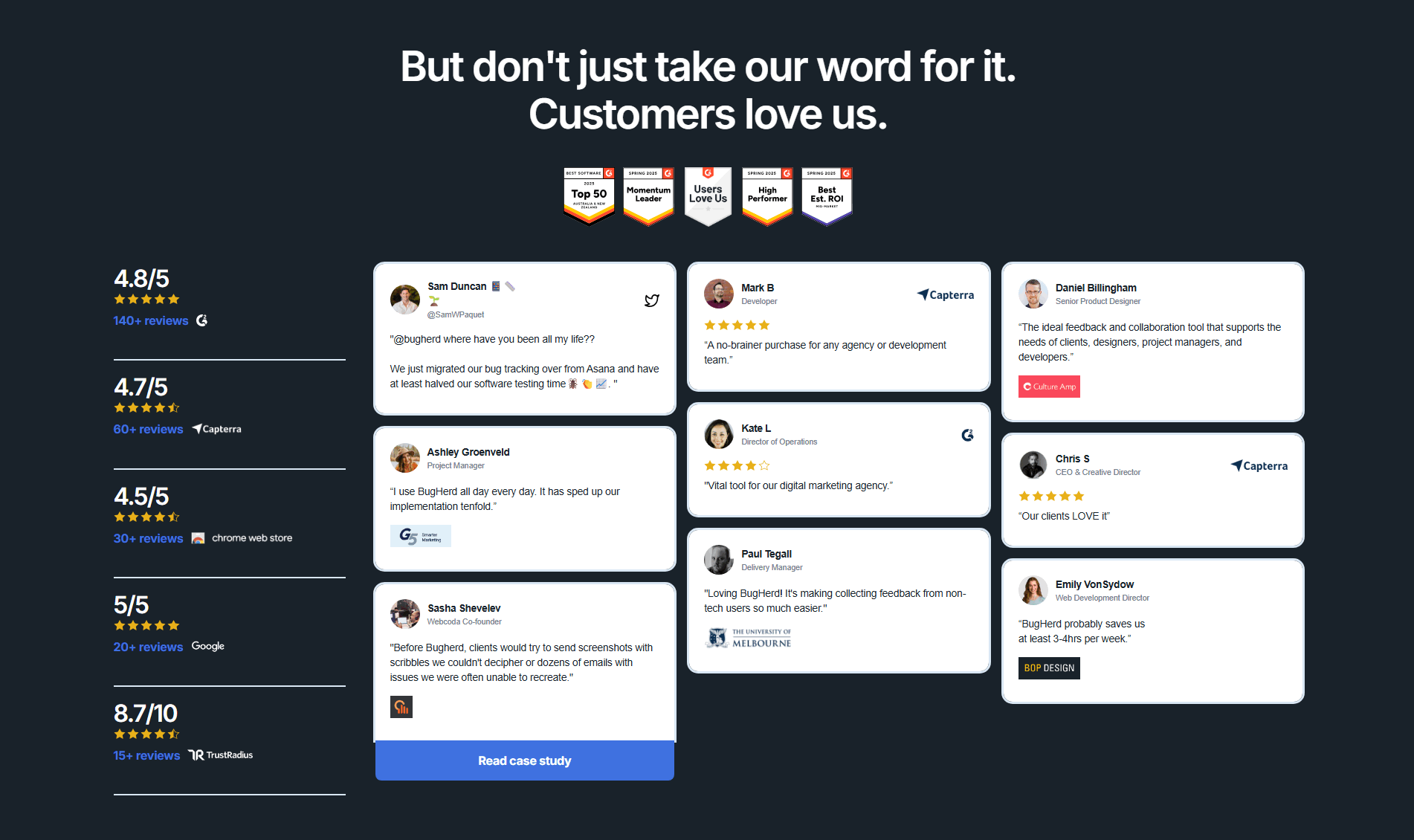
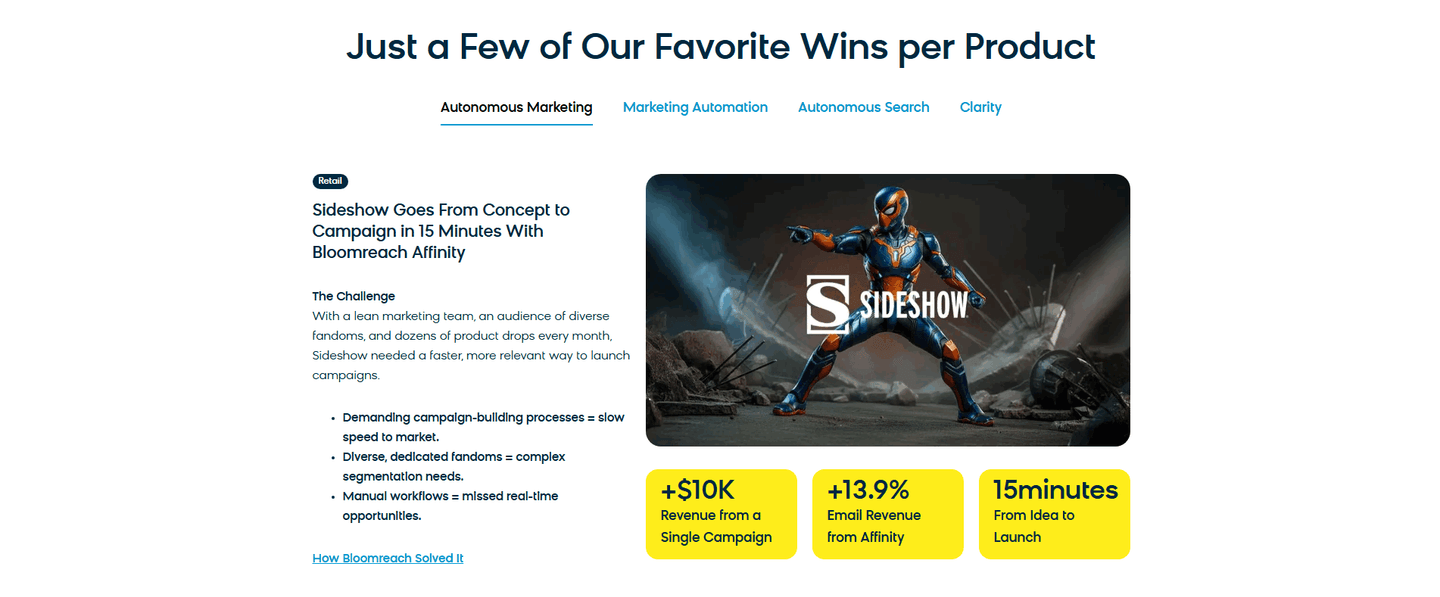
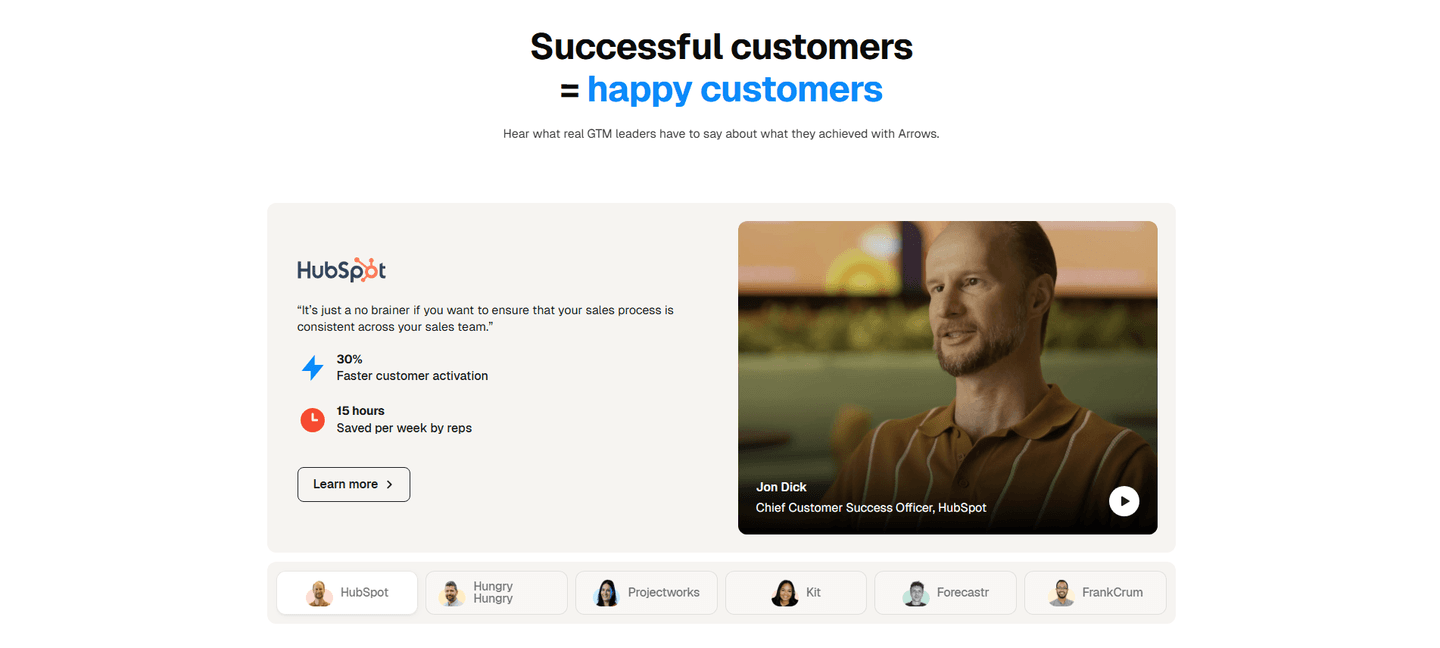
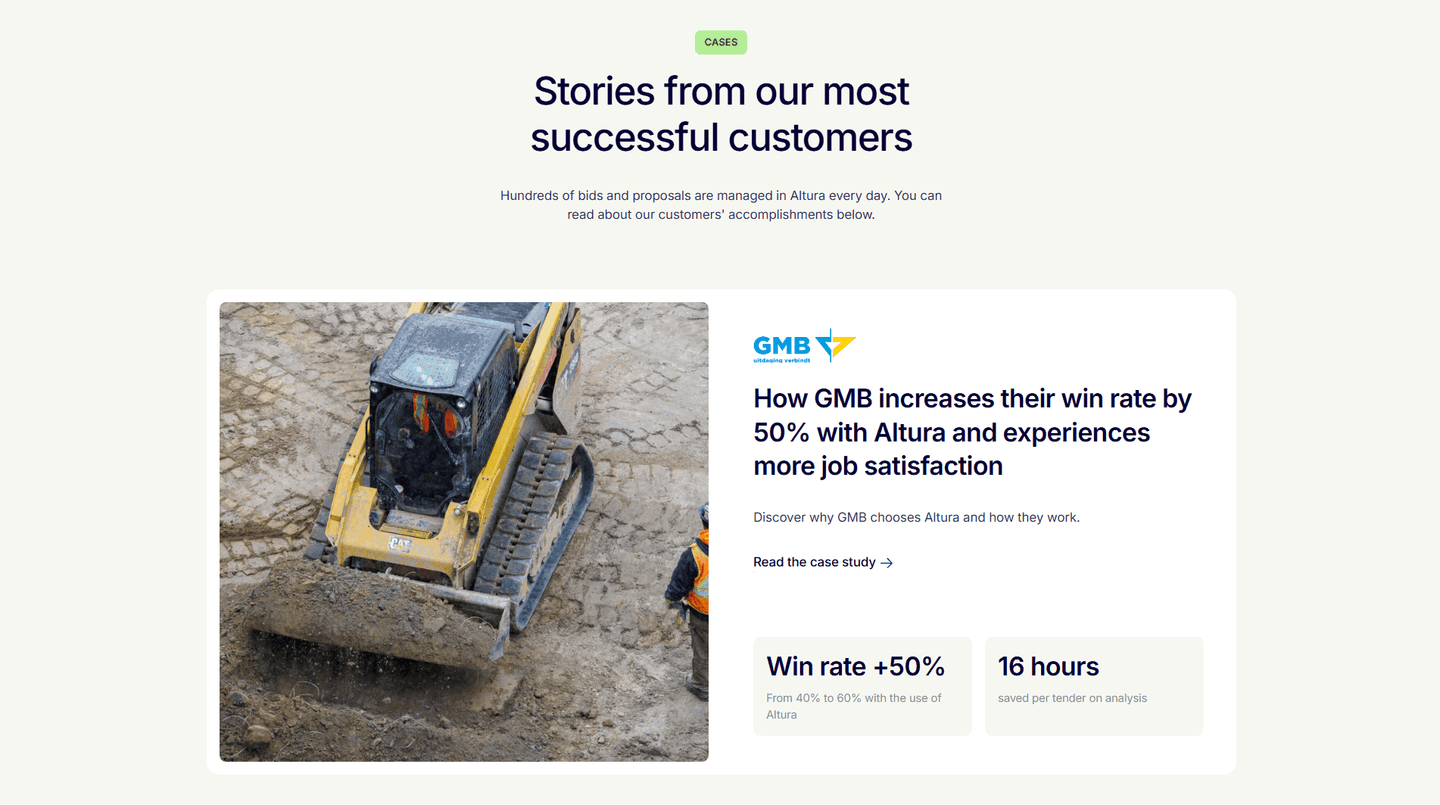
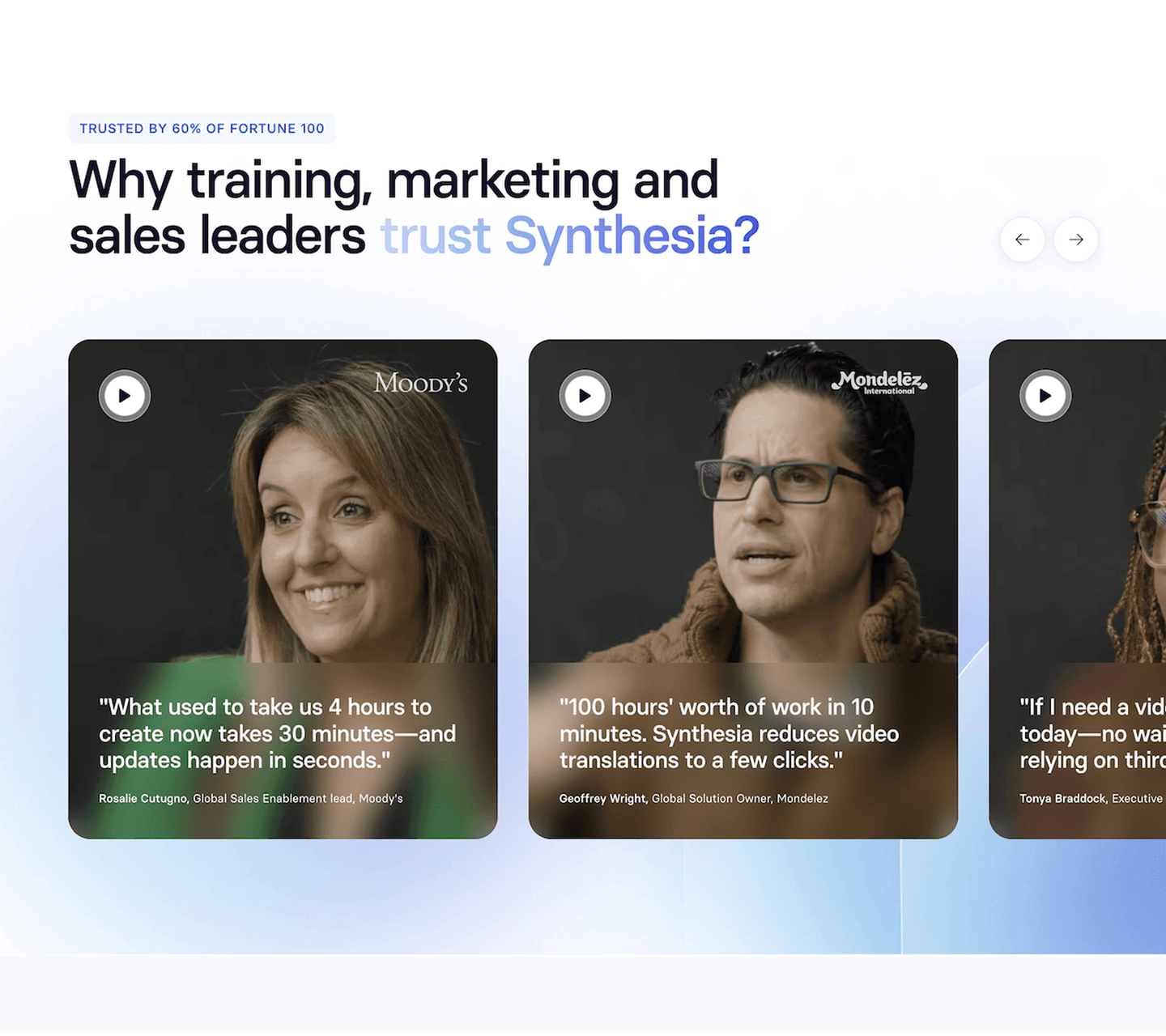
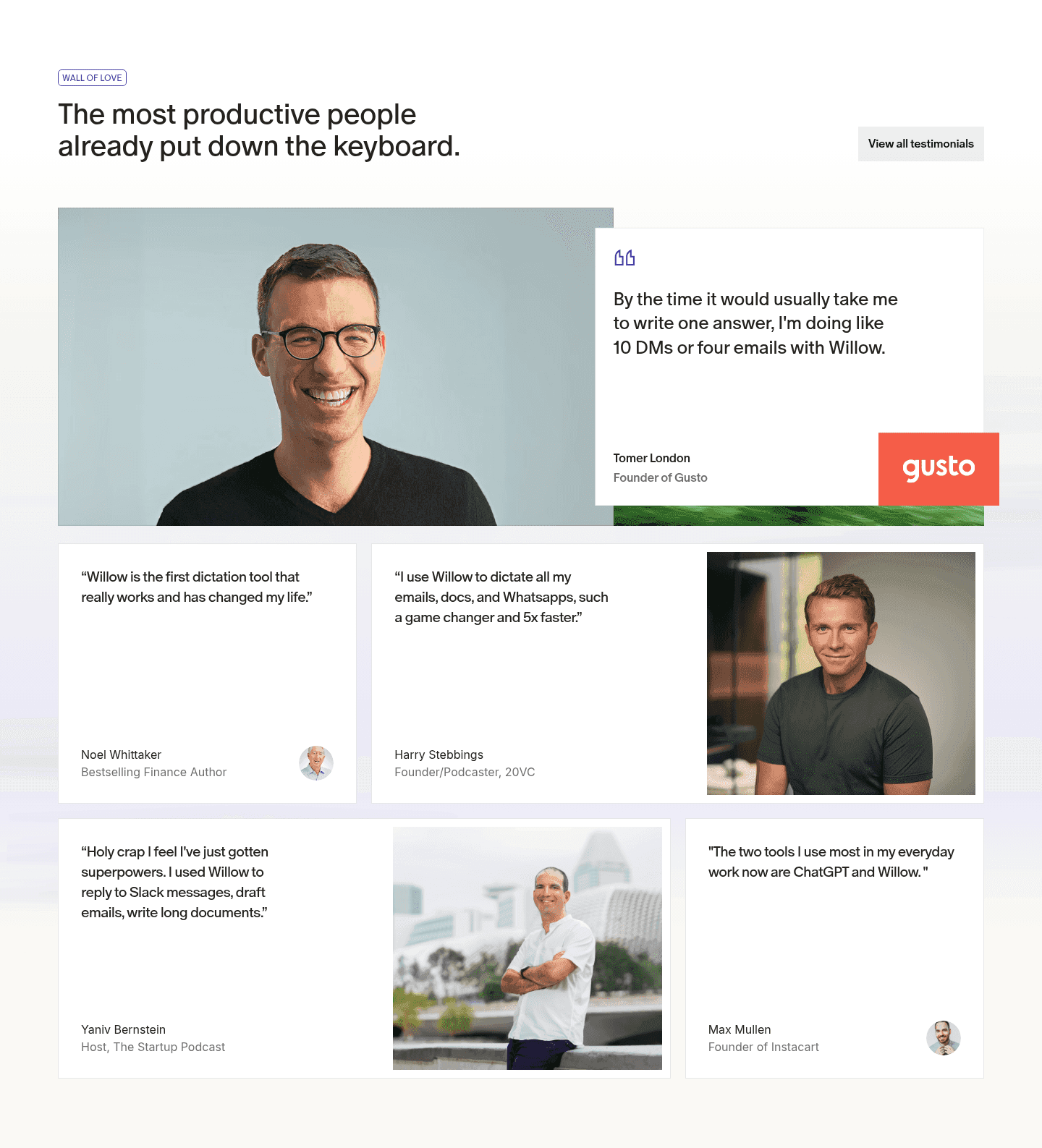
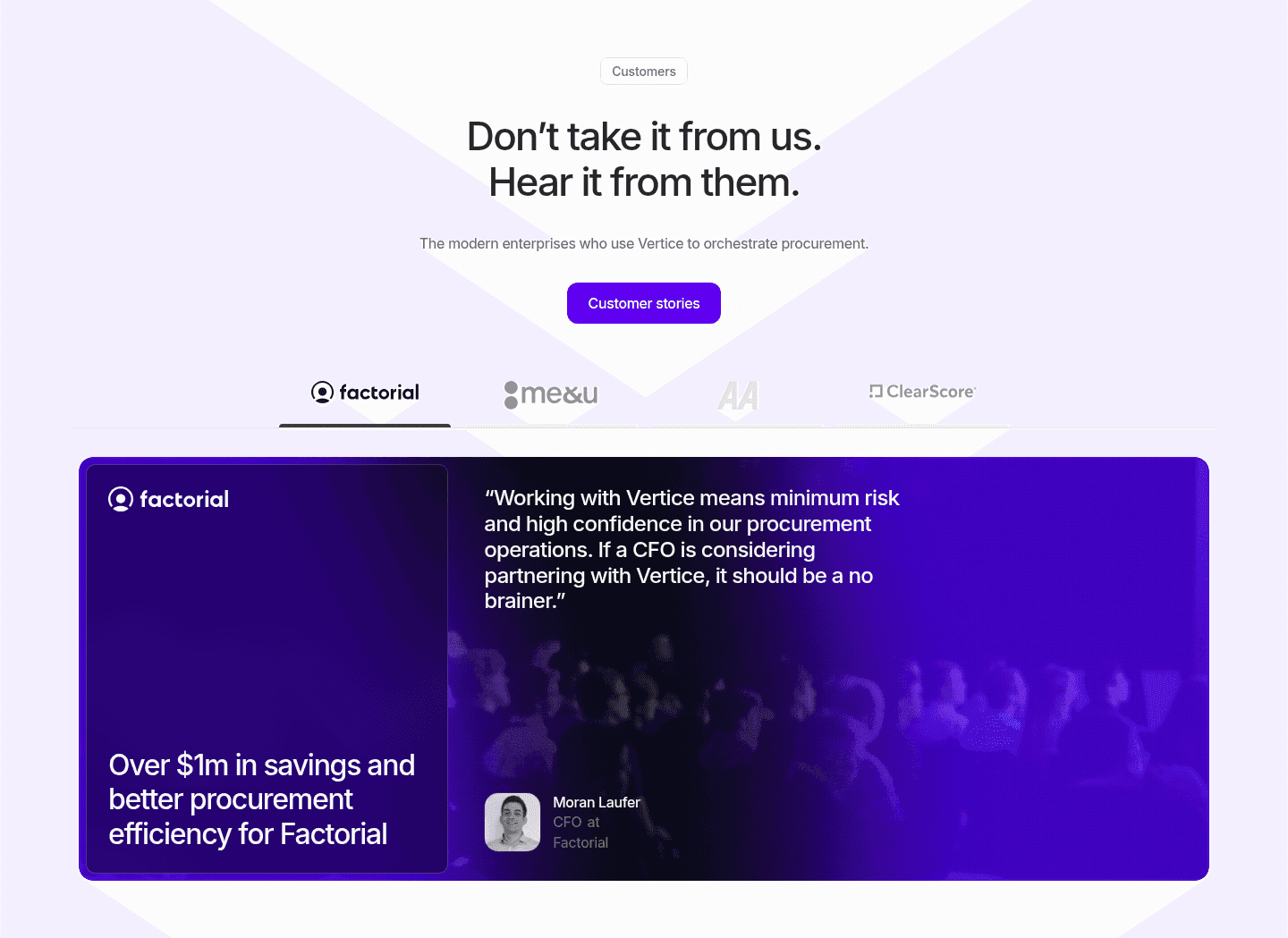
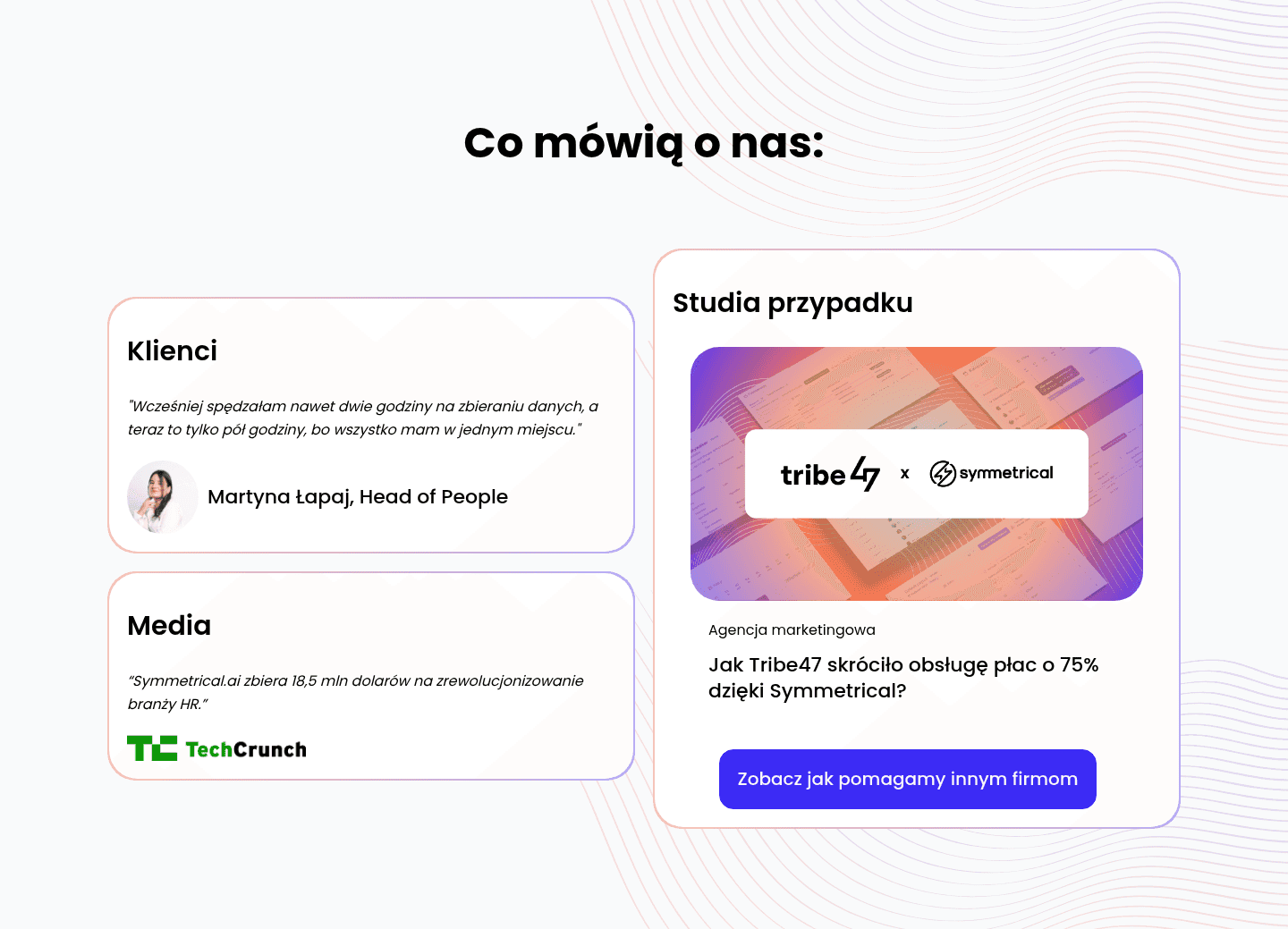
Across the benchmark examples below, the strongest sections put a logo a buyer will actually recognize right on the card. Surfe tops each testimonial with a recognizable customer logo like Bolt, Google, Amazon, or Partoo, so a household name anchors every quote. Arrows pairs its quote with the HubSpot logo and a link to the deeper story, tying the praise to a brand every SaaS buyer knows. Synthesia sets Moody's and Mondelez logos next to enterprise roles like Global Sales Enablement, signalling Fortune 100 trust at a glance. Tigerhall pairs its testimonial with the HP logo and attributes it to Rainer Rabenstein, Global Head of Sales Operations, so the brand has a real face. Storyblok pairs each story with a logo like National Retail Federation, Octopus Energy, Oatly, or Virgin Media O2, so different visitors each find a brand they know, while Ava borrows credibility from SaaStr, SumUp, and CookUnity, and Altura ties its win to the named customer GMB.
The best sections do not lean on the logo alone. They give the brand a real face with named roles and titles so the quote is owned by a person, and they back the logo with a full customer story so a skeptic can verify the depth behind the mark.
100/100 0/100
0/100The usual failure is a logo no one recognizes, a mark from a company the visitor has never heard of that borrows no credibility at all and just adds visual noise. The second is a logo with no owner, a brand mark floating beside a quote with no named person behind it, which reads as decoration rather than proof. The third is a wall of logos so dense that no single brand registers and the quotes themselves get lost. Pair each quote with a logo a buyer will actually recognize, tie it to a named person and role, and let a few strong brands do the work instead of every customer you have.

Curated by
Gabriel Amzallag , Founder, Web Anatomy
5 years CRO + SEO at Qonto (2021–2025). After advising 15+ SaaS on their websites (Payfit, Pigment…), the same patterns kept breaking, so I decided to build the source of truth on what works on the web: the intelligence layer every tool, builder, and team uses to ship sites that perform.
We find every way to grow your website’s visibility and conversions: SEO, AI search (AEO), backlinks and mentions, and UX/UI. 3 free opportunities, delivered by email.
The common questions about pairing testimonials with customer logos, with answers drawn from 187 benchmark examples.
It is a testimonial where each quote is paired with the logo of the customer who gave it, so the praise is tied to a brand the visitor can recognize instead of an anonymous name. The forms vary and often combine. A single well-known logo can sit beside the quote, a row or switcher of customer logos can let a buyer browse several brands, an enterprise mark can signal scale, and a logo can be tied to a named person and role so the brand has a real face.
A quote from an unknown company asks the visitor to trust a stranger. The same quote next to a logo they recognize borrows that brand's credibility, so the praise reads as a fact a company they respect already verified. When Arrows puts the HubSpot logo beside its quote, or Tigerhall pairs its testimonial with HP, the visitor does not have to take the claim on faith. A brand they already trust is standing behind it.
The ones a buyer will actually recognize, or ones from their own sector. A household name like Google or Amazon on a Surfe card borrows broad credibility, while a peer brand in the visitor's industry says the product works for someone exactly like them. Storyblok pairs each story with a logo like National Retail Federation, Octopus Energy, or Oatly so different visitors each find a brand they know. The point is recognition, so an unknown logo does less work than a named one.
Yes, when possible. A logo alone borrows the brand, but a logo plus a named person and role gives the quote a real, accountable face. Synthesia pairs Moody's and Mondelez logos with enterprise roles like Global Sales Enablement, and Tigerhall attributes its HP quote to Rainer Rabenstein, Global Head of Sales Operations. The logo says which company, the name and title say who inside it, and together they are much harder to dismiss than either one on its own.
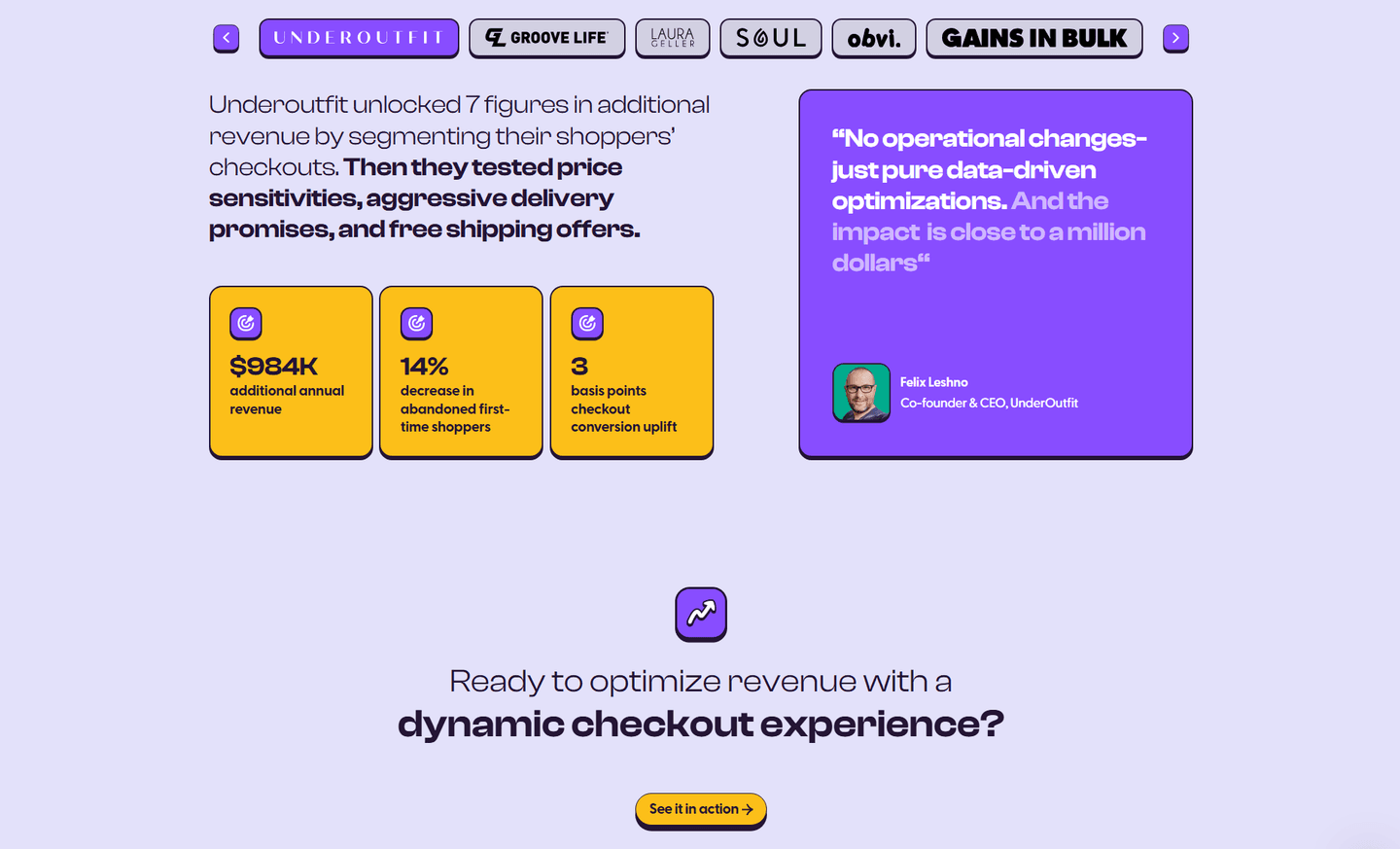
Enough to prove range without turning the section into a wall of marks. A single strong logo beside one quote can carry a card, while a switcher or tab strip lets a buyer browse several brands and find one like theirs. Surfe tops each card with a recognizable logo, and Pretty Damn Quick uses a logo switcher so buyers can pull up a brand close to their own. Lead with logos a visitor will recognize rather than stacking every customer you have.