About|
Culture signals show a visitor what a company stands for and how it works, turning the about section into a reason to trust the team, not just the product.
Key takeaways
Showing 1–15 of 15 examples




Browse every about pattern by UX best practice.
Every about section is scored across 4 conversion best practices. Copy the best practice stack, not the design. See what converts and why.
Hand-picked from 650+ companies and analyzed by our AI conversion agent. Not a random dump of homepages. Every entry earns its spot.
Found an about section you admire? Run yours through the same scoring engine. See where you stand on the same best practices, and what to fix first.
Culture signals are the parts of an about section that tell a visitor what a company believes, how it works, and who it is, instead of only describing what the product does. The product pitch answers "what does this do." Culture signals answer the question a buyer has right after: "what kind of company is behind it, and do I want to work with them." When those two answers sit next to each other, the about section stops reading as a spec sheet and starts reading as a company with a point of view.
The best about sections use one of four forms, sometimes more than one together:
By the time a visitor reaches the about section, they usually understand the product. What they are still deciding is whether the people behind it are worth trusting. A section that repeats the feature list adds nothing to that decision. A section that states a clear belief, shows real personality, or explains how the team works gives the visitor something to align with, or to opt out of, which is exactly what a considered buyer wants before committing.
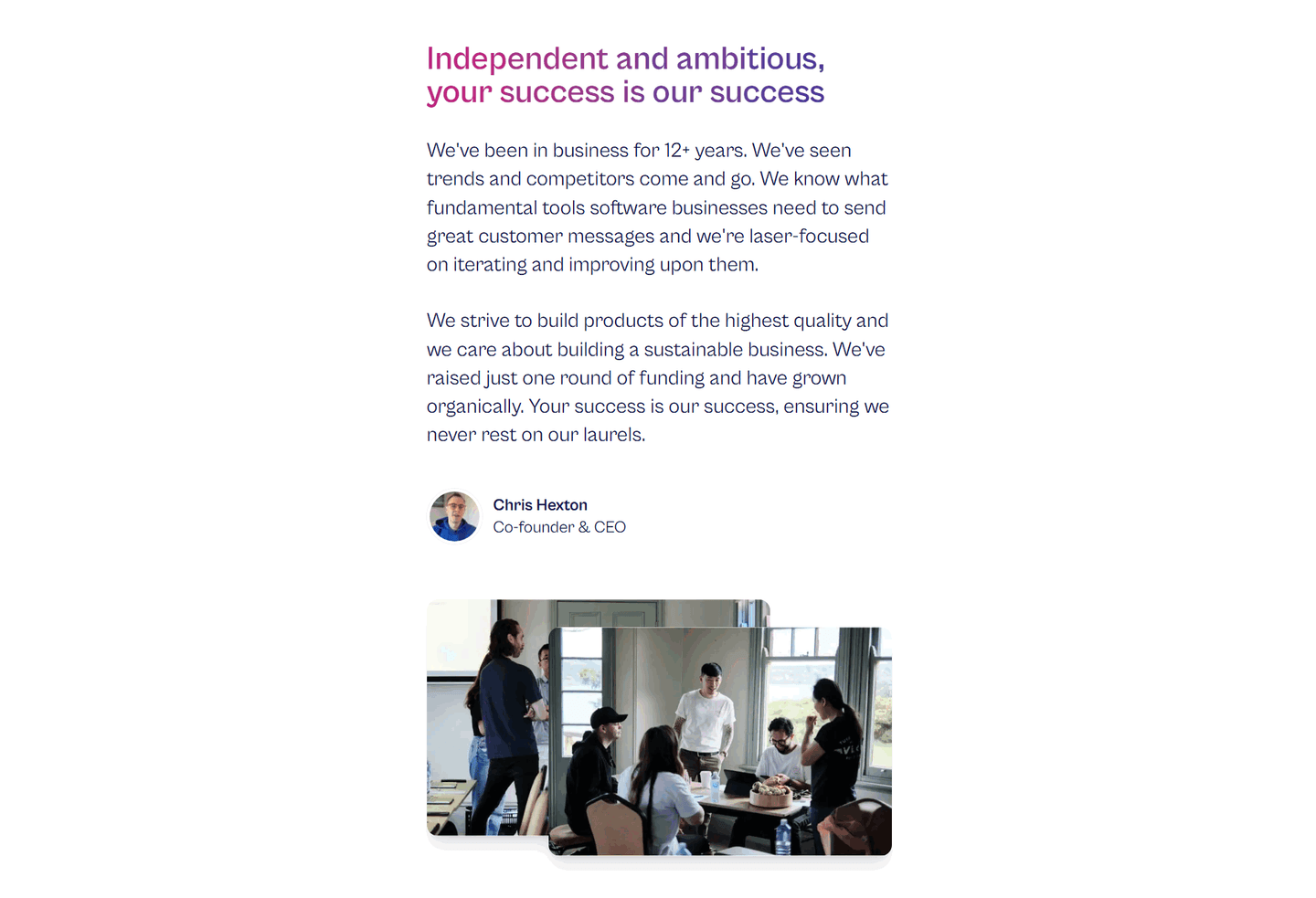
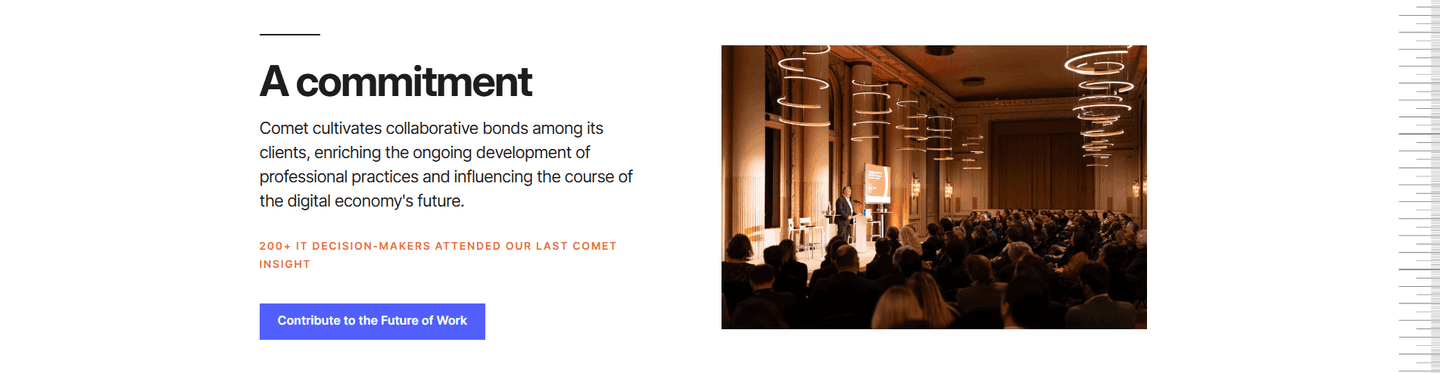
The specificity is what carries the weight. A generic values list reassures no one, because every company claims the same words. A signal like Vero raising a single round and growing organically, or Comet backing its future-of-work mission with a photo from a packed event, is concrete and checkable. It could only be said about that one company, and that is what makes it believable.
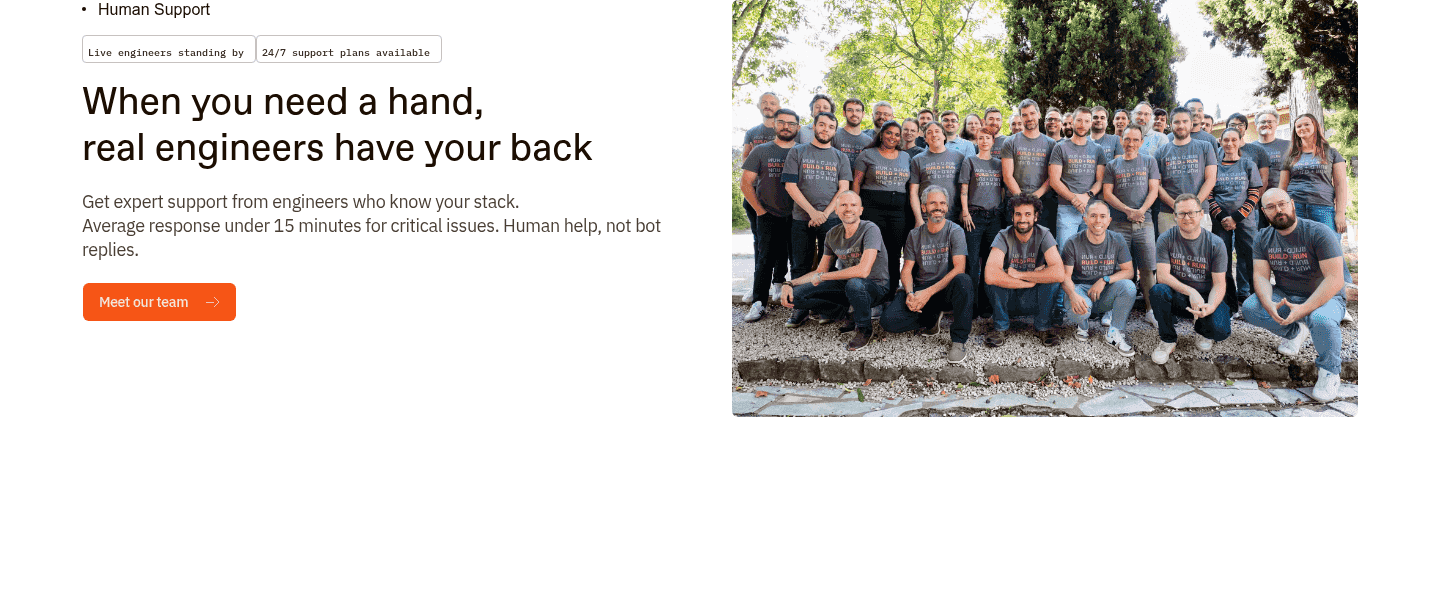
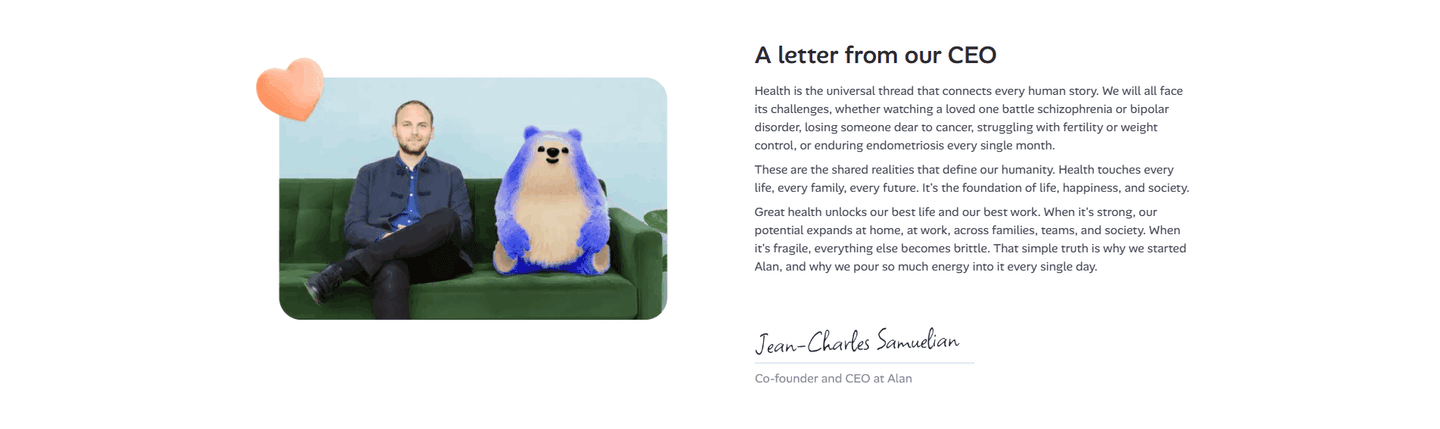
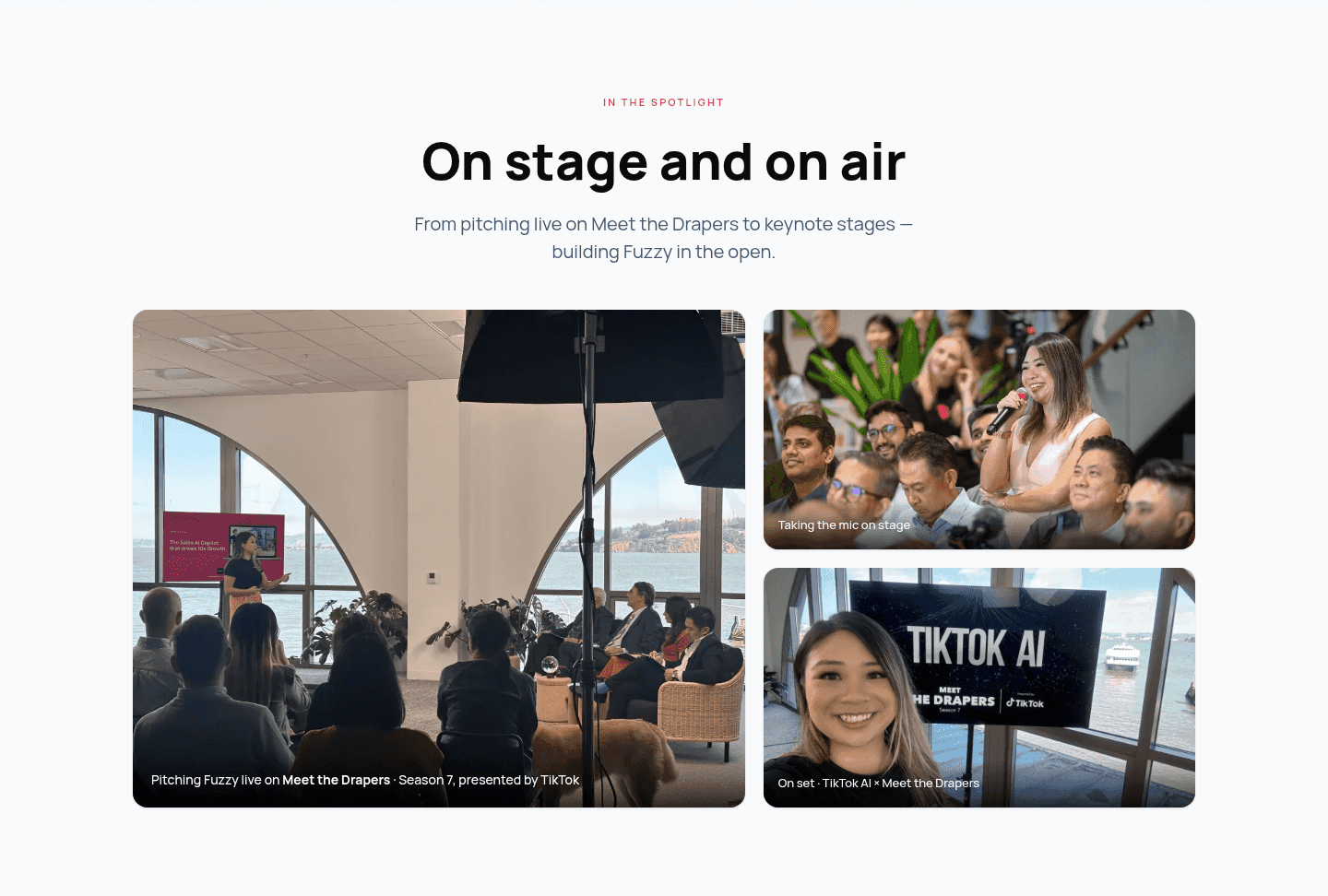
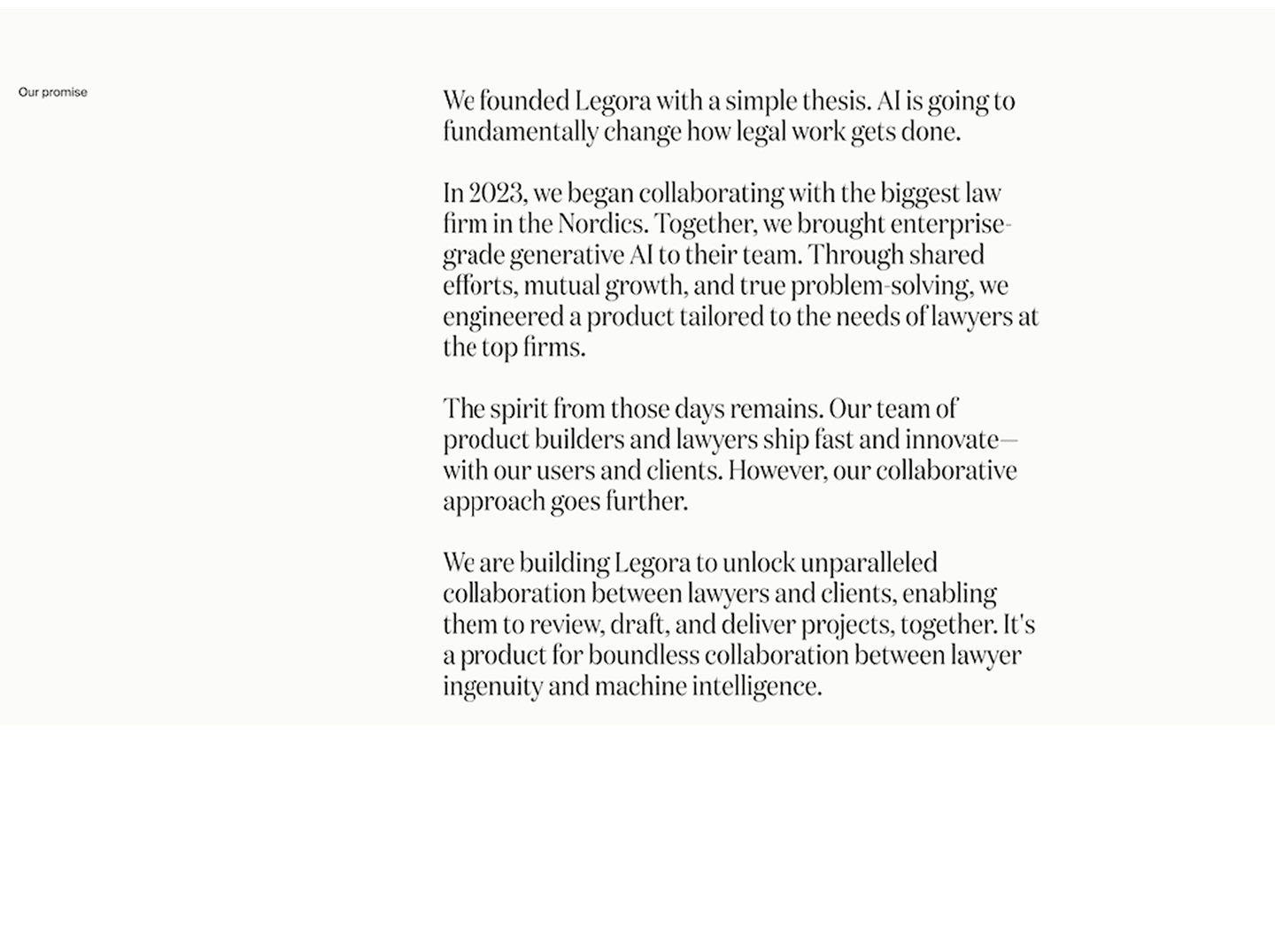
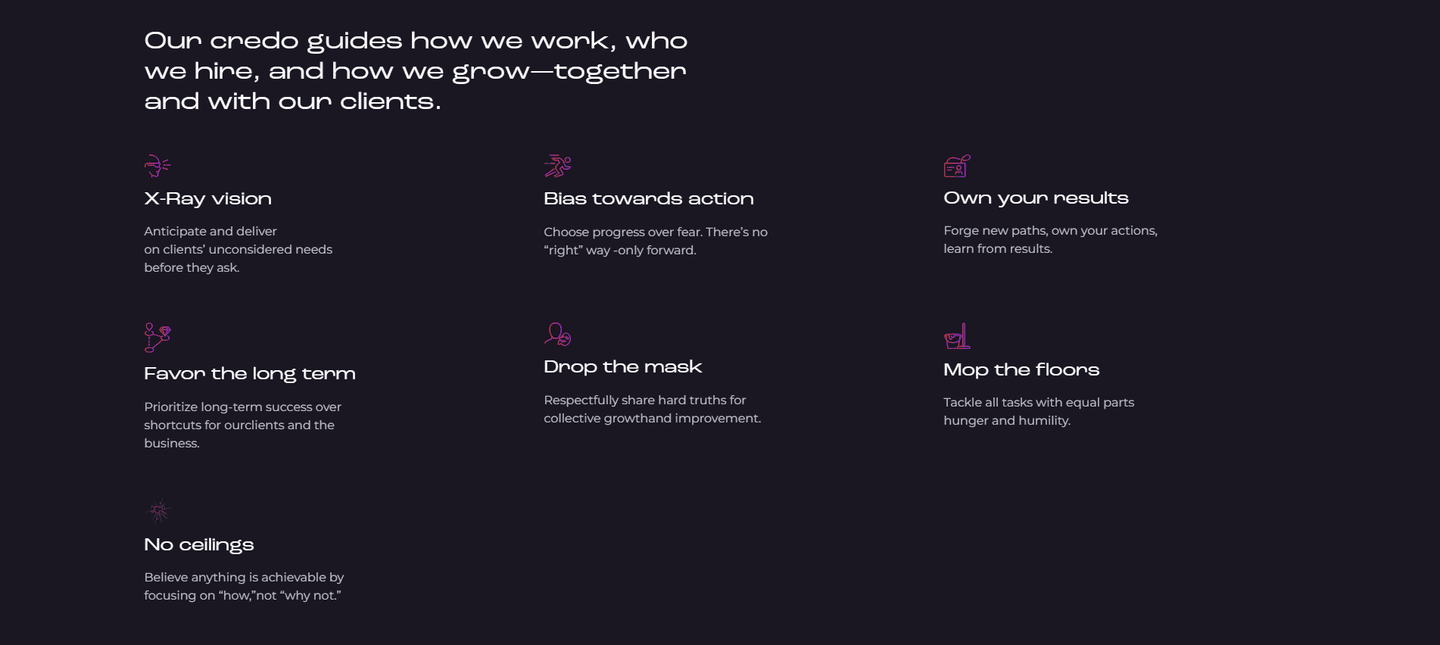
About three-quarters of the about sections in our library carry some culture signal rather than a pure feature recap. Across the examples below, the pattern that works is a specific belief made concrete. Scalingo builds its whole about story around real engineers giving human help, so the brand's personality is inseparable from its support promise. Fuzzy AI states an ethos of building in the open rather than a boilerplate mission. Legora shows how the team works, builders and lawyers shipping fast together, so the culture reads as a way of operating, not a slogan. Comet ties its commitment to shaping the future of work to a real event with a named turnout, and Vero states values alongside an independence story that proves how it runs. The common move is to make the belief so specific it could only belong to that company. Culture rarely stands alone here: the strongest sections pair it with real team and founder photos so the personality has faces behind it.
The usual failure is a values statement that says nothing: a row of one-word virtues, or a mission line so broad it could sit on any company's page. It reassures no one, because a visitor knows it was written to be safe rather than true. The second failure is stating a personality the rest of the page never earns, a claim of being bold or human next to copy that is neither, which reads as louder marketing rather than real culture. State a belief specific enough that a competitor could not copy it, show the personality in the voice itself, and tie it to something concrete a visitor could check.

Curated by
Gabriel Amzallag , Founder, Web Anatomy
5 years CRO + SEO at Qonto (2021–2025). After advising 15+ SaaS on their websites (Payfit, Pigment…), the same patterns kept breaking, so I decided to build the source of truth on what works on the web: the intelligence layer every tool, builder, and team uses to ship sites that perform.
Paste your URL. Get a scored analysis of your about section, including whether your values and personality come through. Free, no signup.
The common questions about showing values, mission, and personality in the about section, with answers drawn from 15 examples.
It means the about section shows what a company believes, how it works, and who it is, instead of only describing the product. That can be a stated mission or set of values, a distinct point of view like building in the open, a personality-forward voice, or a line about how the team actually operates. The point is that a visitor leaves knowing not just what the company sells, but what kind of company it is.
Near the end of a page, a buyer has usually understood the product and is deciding whether to trust the people behind it. A section that only lists features leaves that question open. A section that states a clear belief, shows real personality, or explains how the team works answers it. When Scalingo frames its whole brand around real engineers giving human help, or Fuzzy AI states an ethos of building in the open, the company reads as a specific point of view a visitor can decide to align with.
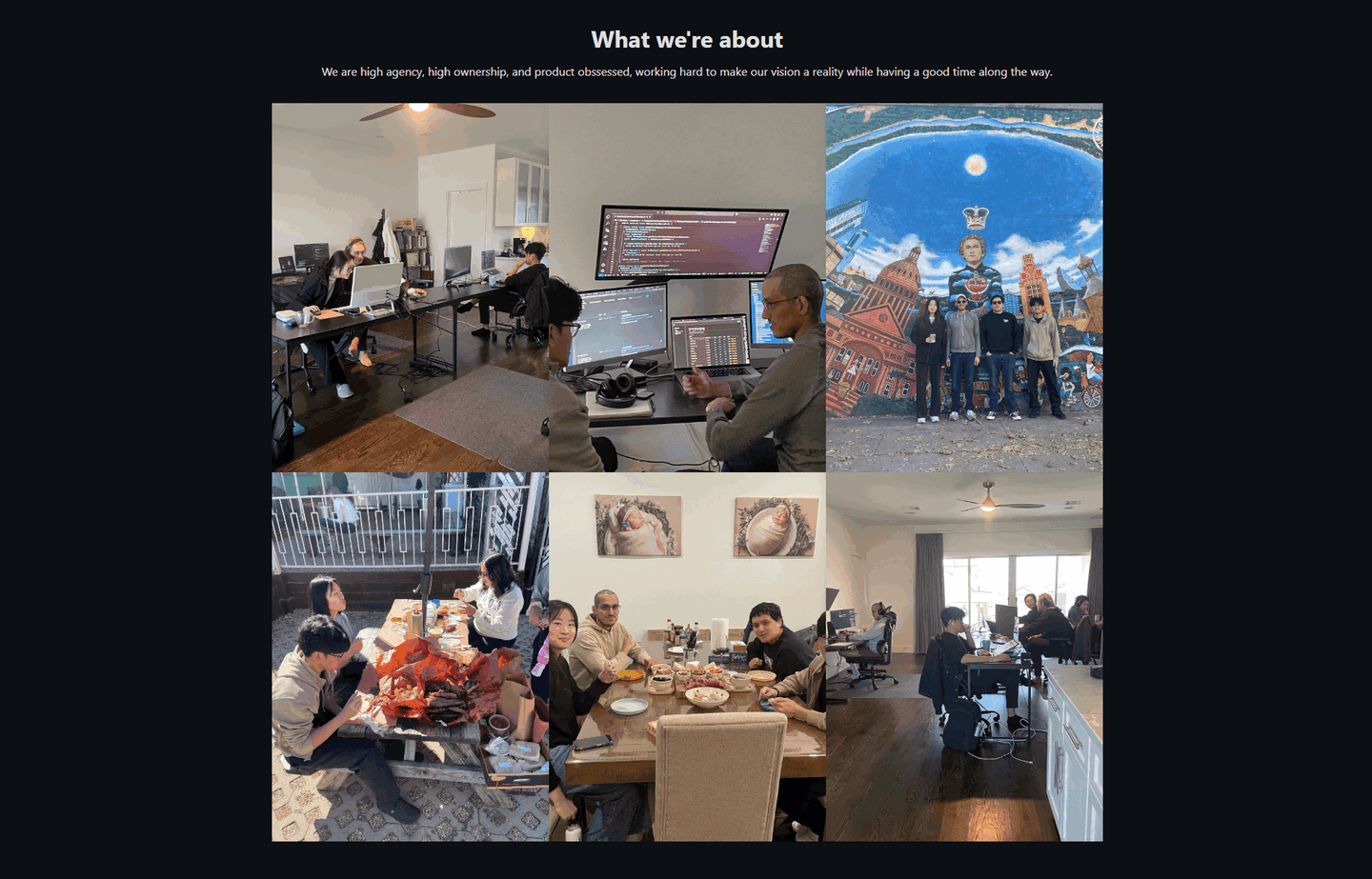
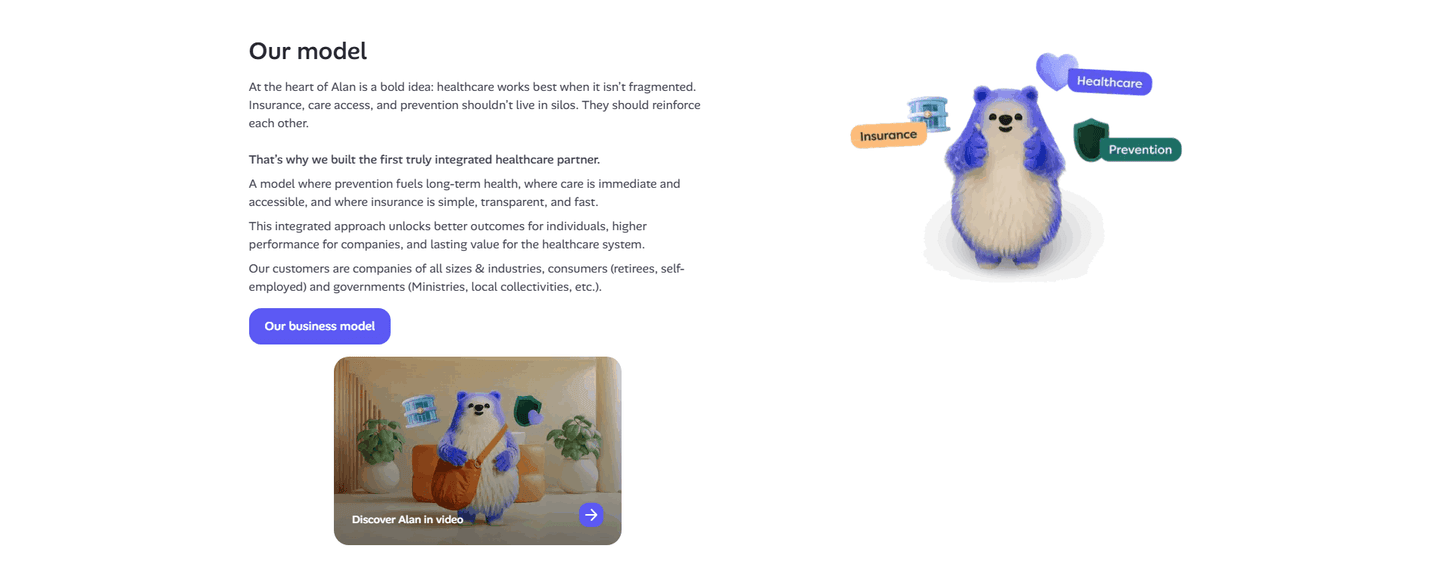
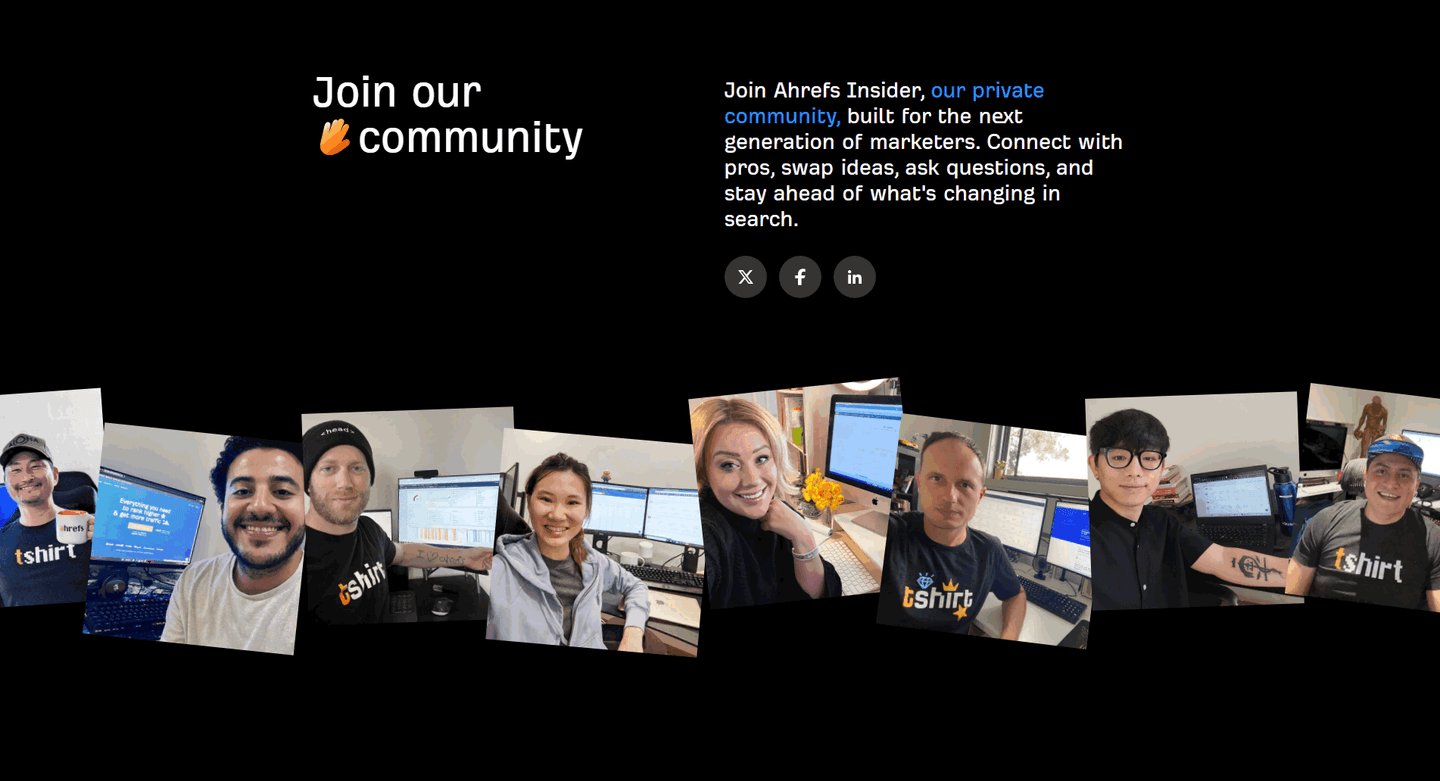
Four show up again and again: a stated mission or set of values, as with Alan and Vero; a distinct ethos or point of view, as with Fuzzy AI building in the open and Scalingo's human-first support; a personality-forward voice, as with Scout opening on 'What we're about' and Ahrefs framing an approachable insider community; and a line on how the team works, as with Legora describing builders and lawyers shipping fast together and Anterior positioning itself as built by clinicians and operators.
A generic values list ('integrity, excellence, teamwork') signals nothing, because every company claims the same words. A real culture signal is specific and checkable. Vero states that it raised one round and grew organically, which says something concrete about how it runs. Comet backs its commitment to shaping the future of work with a photo from a packed event. The difference is that a strong signal could only describe this company, not any company.
Usually in the about section, below the value proposition and the product, once a visitor is weighing whether to trust the company rather than just understand what it does. Placed there, culture signals answer the quiet question a buyer has near the end: what kind of team is behind this, and do I want to work with them. Pairing the belief with a real photo, a named founder, or a specific claim makes it land harder.