Comparison|
A comparison that names where its numbers come from, a dated pricing line or a public benchmark, turns a sales claim into something a buyer can check for themselves.
Key takeaways
Showing 1–8 of 8 examples
Browse every comparison pattern by UX best practice.
Every comparison section is scored across 5 conversion best practices. Copy the best practice stack, not the layout. See what converts and why.
Hand-picked from 650+ companies and analyzed by our AI conversion agent. Not a random dump of comparison tables. Every entry earns its spot.
Built a comparison page? Run yours through the same scoring engine. See where you stand on the same best practices, and what to fix first.
Source transparency is the decision to say where a comparison's numbers come from, right on the table, so the head-to-head reads as verifiable rather than self-serving. A comparison is the one place on a page where a company scores itself against named rivals, and buyers know it. A short source line under the matrix is what separates a table a prospect trusts from one they quietly discount.
The best comparison sections cite one of a few kinds of source:
A comparison table is a company grading its own homework, so a skeptical buyer applies a discount before reading a single row. An uncited claim asks for trust the section has not earned. The same claim with a dated source or a named benchmark behind it stops being an assertion and becomes a fact the buyer could confirm in a new tab, which means they rarely feel the need to.
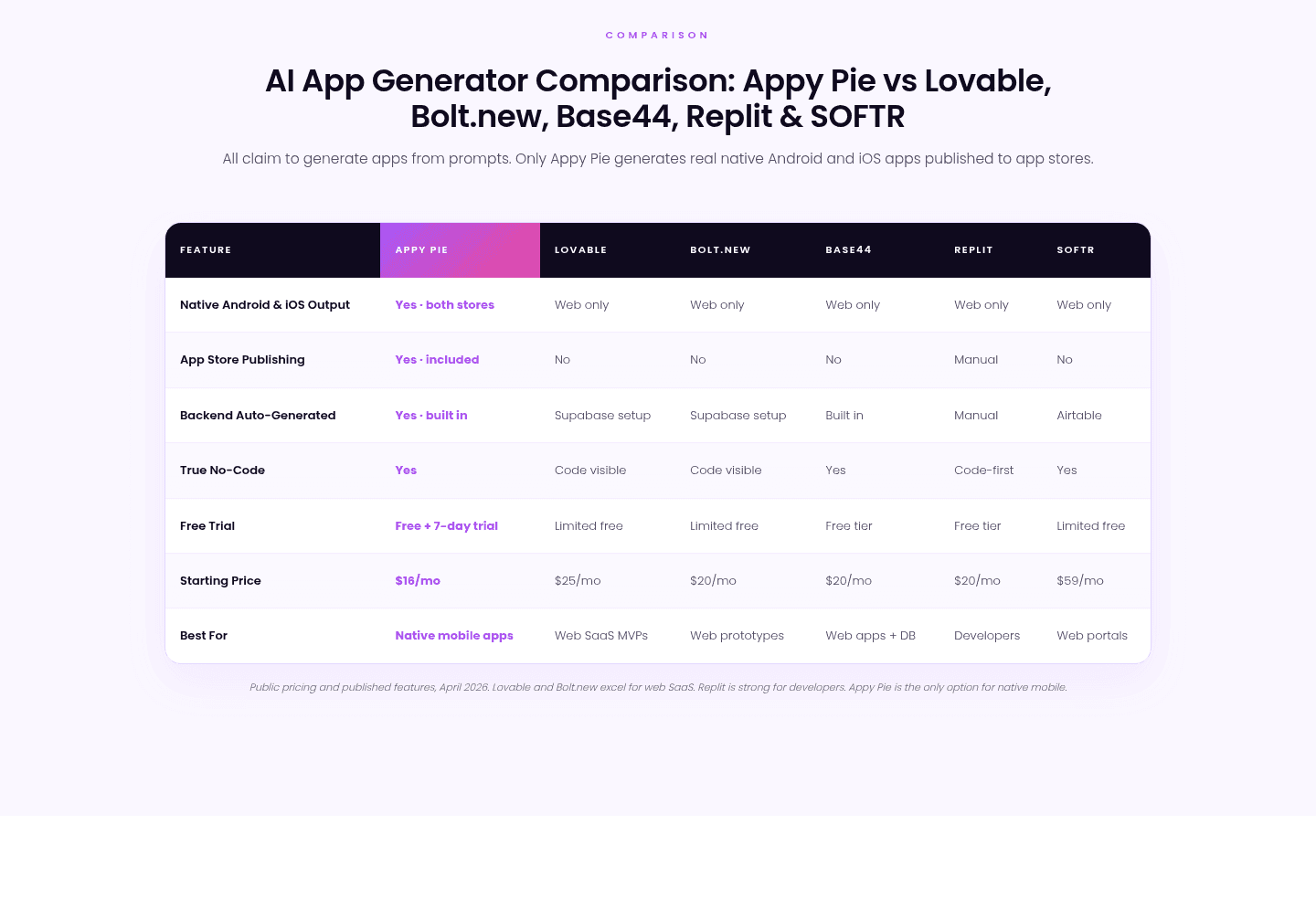
The effect compounds with specificity. "Based on public information" reassures no one, because it cannot be checked. Appy Pie's "Public pricing and published features, April 2026" can be, and that verifiability is exactly what makes the winning column believable. A citation is not a legal disclaimer bolted on at the end. It is the load-bearing part of the argument.
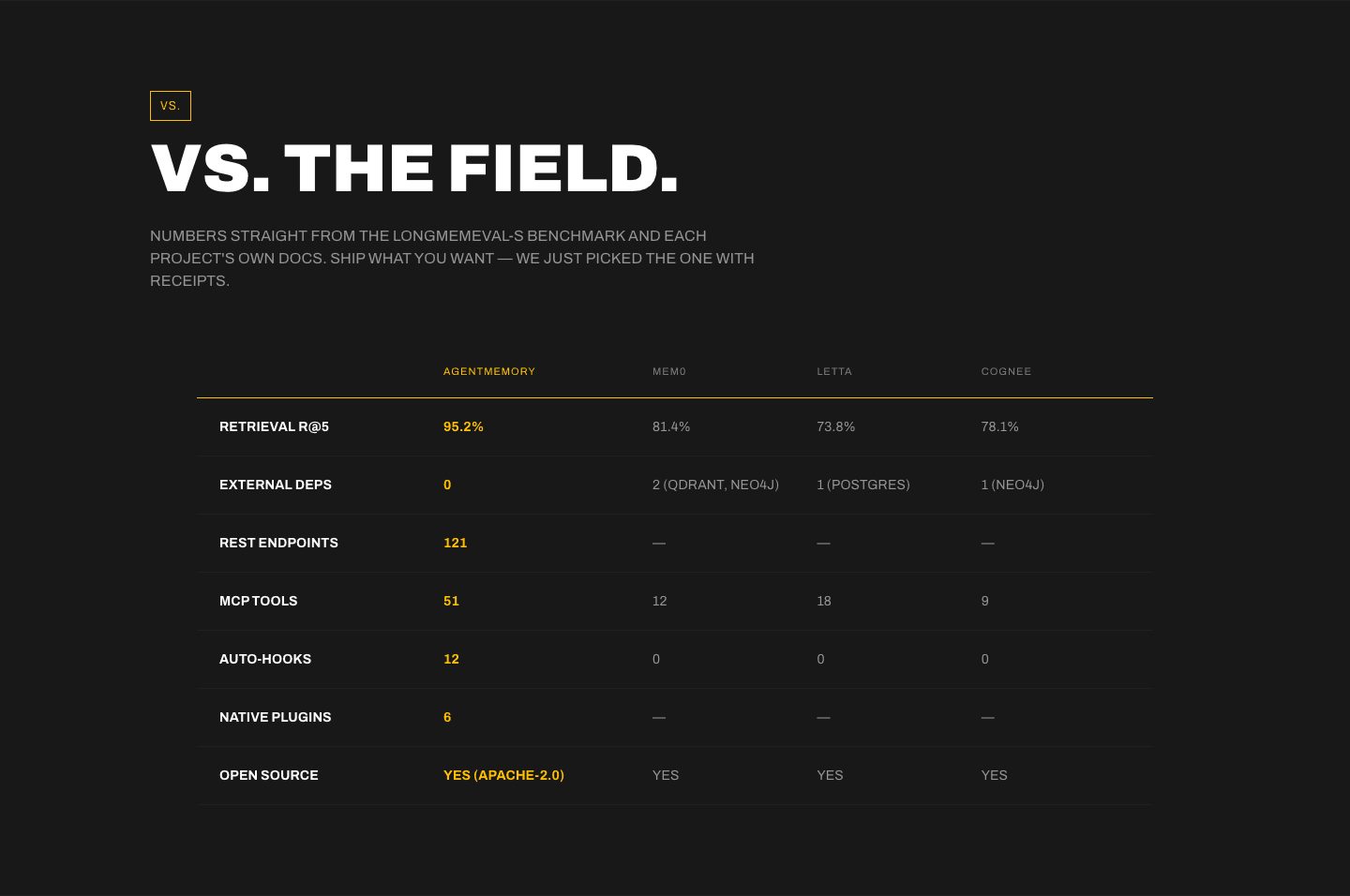
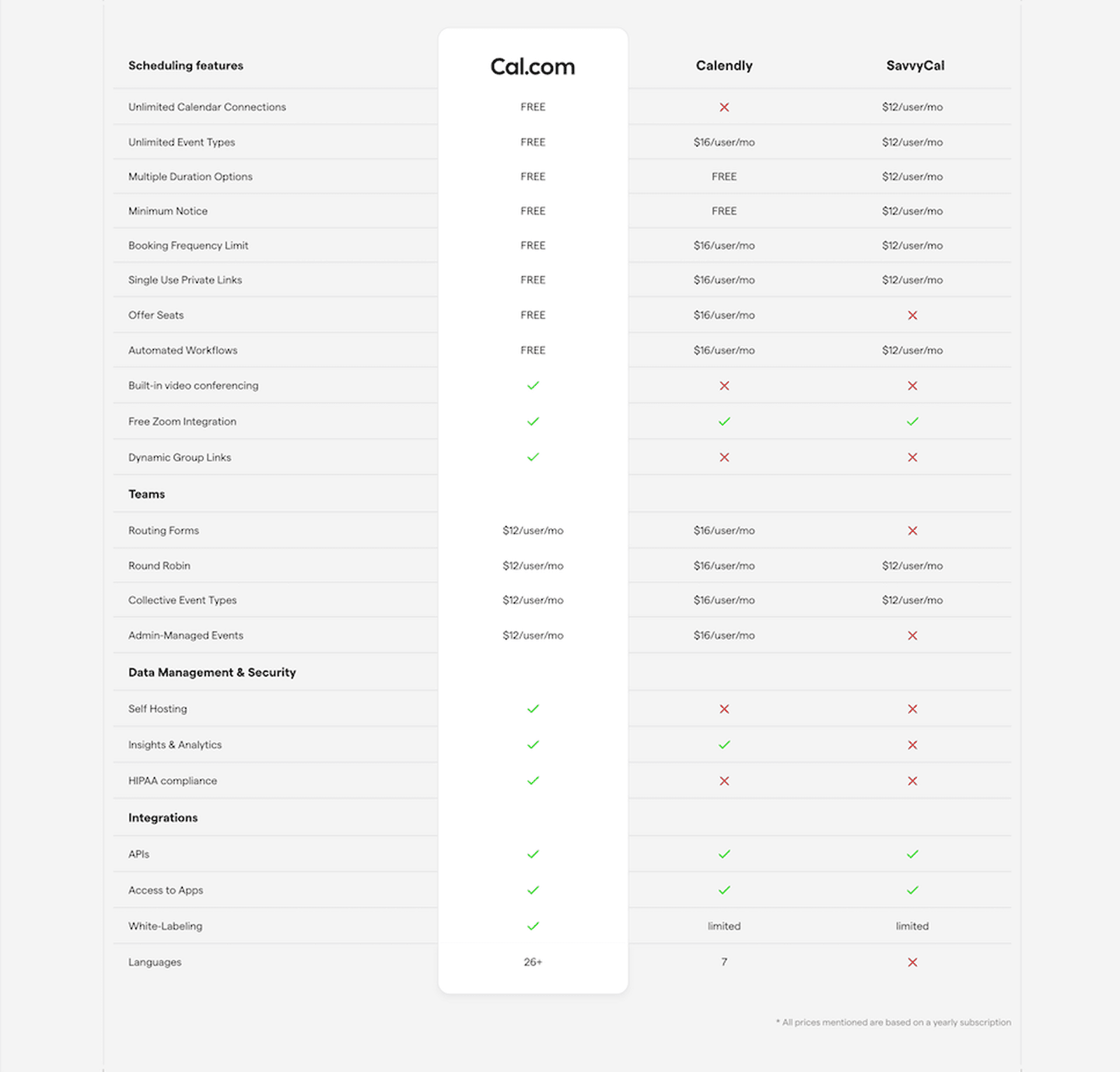
Across the scored examples below, the disciplined version pairs a sharp claim with a source the reader can reach. The numbers are concrete, not directional: Agentmemory shows 51 MCP tools against 12 and zero external dependencies against two, then cites the benchmark and docs those figures came from. The source line sits under the table in small but legible type, framed as a footnote to the whole matrix. And the strongest tables volunteer the basis of comparison, the way Cal.com states its prices assume a yearly subscription, so the win reads as fair rather than staged.
The best examples also know that a cited source and an honest one reinforce each other. Appy Pie backs its pricing citation with a footnote admitting that Lovable and Bolt.new excel for web apps, which makes every other cell more believable. A comparison that stacks several named rivals into one matrix earns its trust the same way, and the multiple-comparison tables in this section show how far a single, well-sourced matrix can carry a shortlist decision.
100/100 0/100
0/100The usual failure is a confident table with no provenance at all: a wall of checks and prices that the buyer has no way to verify and therefore reads as marketing. The second is a source line so vague it adds nothing, "based on public data" with no date and no name, which signals the numbers might not survive a closer look. The third is a stale citation, a pricing snapshot from a year ago that a buyer can immediately falsify by visiting the competitor's live page. Cite a specific, dated, reachable source, or the comparison works against the very trust it was meant to build.

Curated by
Gabriel Amzallag , Founder, Web Anatomy
5 years CRO + SEO at Qonto (2021–2025). After advising 15+ SaaS on their websites (Payfit, Pigment…), the same patterns kept breaking, so I decided to build the source of truth on what works on the web: the intelligence layer every tool, builder, and team uses to ship sites that perform.
Paste your URL. Get a scored analysis of your comparison section, including whether its claims are cited and verifiable. Free, no signup.
The common questions about citing sources in a comparison table, with answers drawn from 8 scored examples.
It means the table says where its numbers come from, usually in a short line beneath it. Instead of asking the visitor to trust a column of checks and prices, the section cites the origin of each claim: a dated pricing snapshot like 'Public pricing and published features, April 2026', a named benchmark, or a review-site index. The visitor can then verify the comparison independently rather than take the vendor's word for it.
A comparison table is the one place on a page where a company grades its own homework, so a skeptical buyer discounts it by default. A source line changes the frame. When the numbers trace back to public pricing pages or a third-party benchmark, the buyer stops reading them as marketing and starts reading them as facts anyone could check. The claim that survives that scrutiny is far more convincing than a louder claim that cannot.
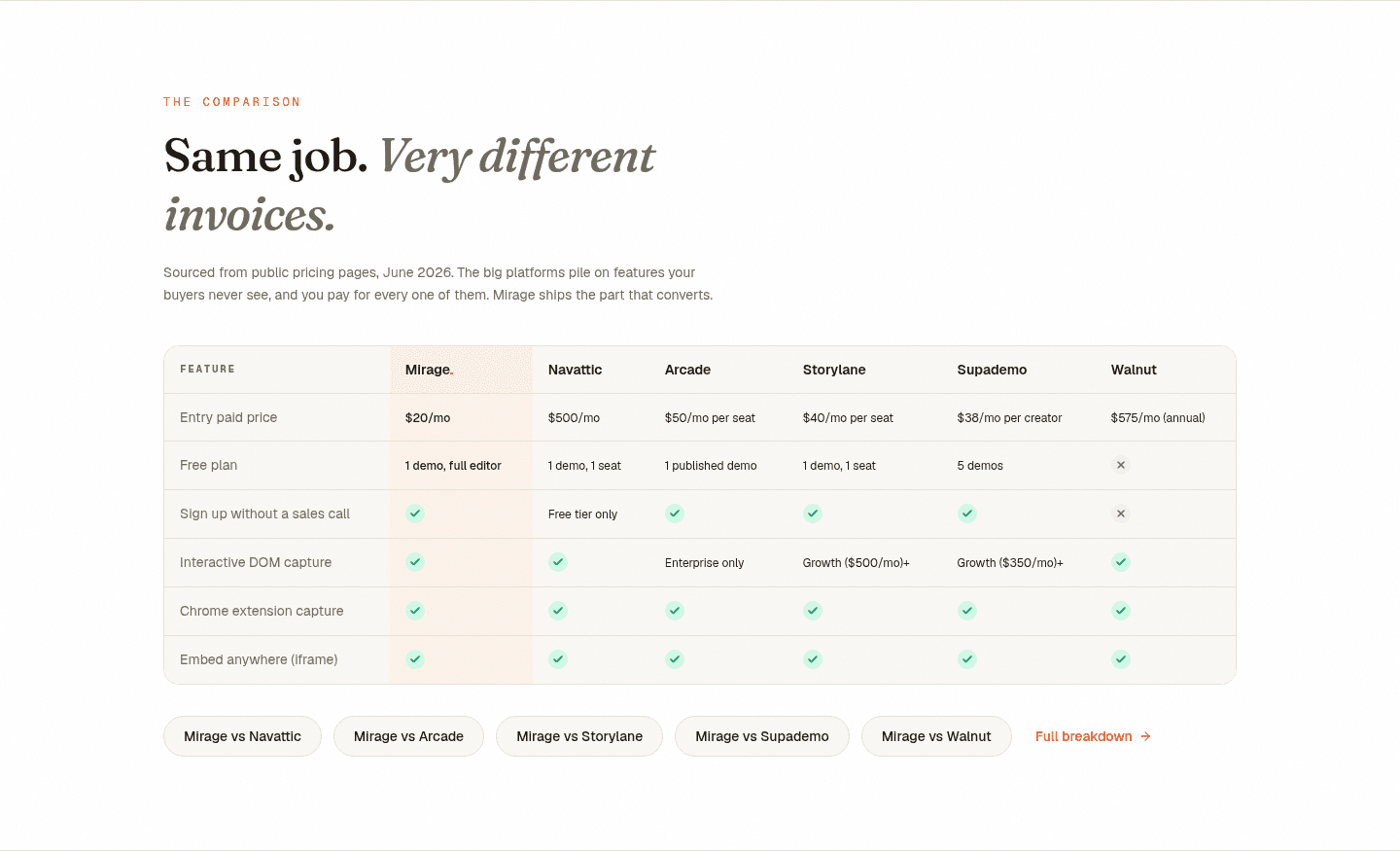
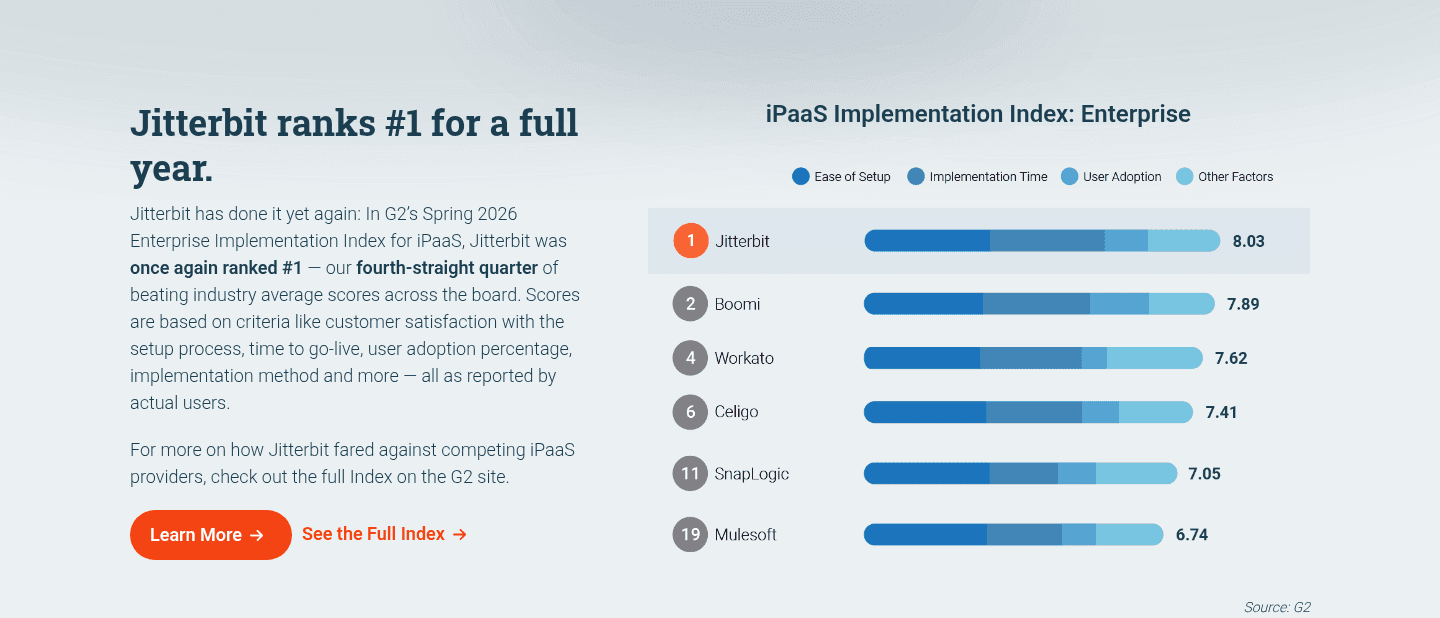
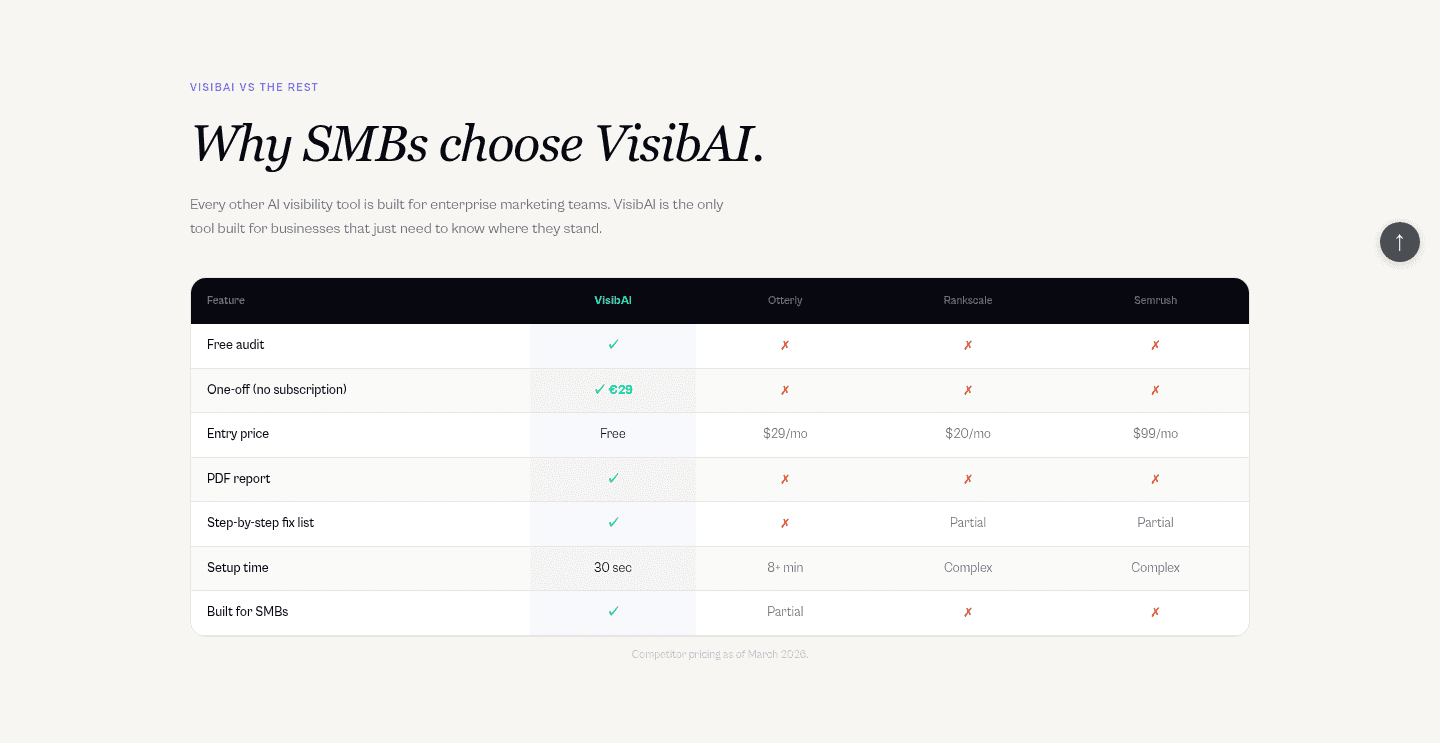
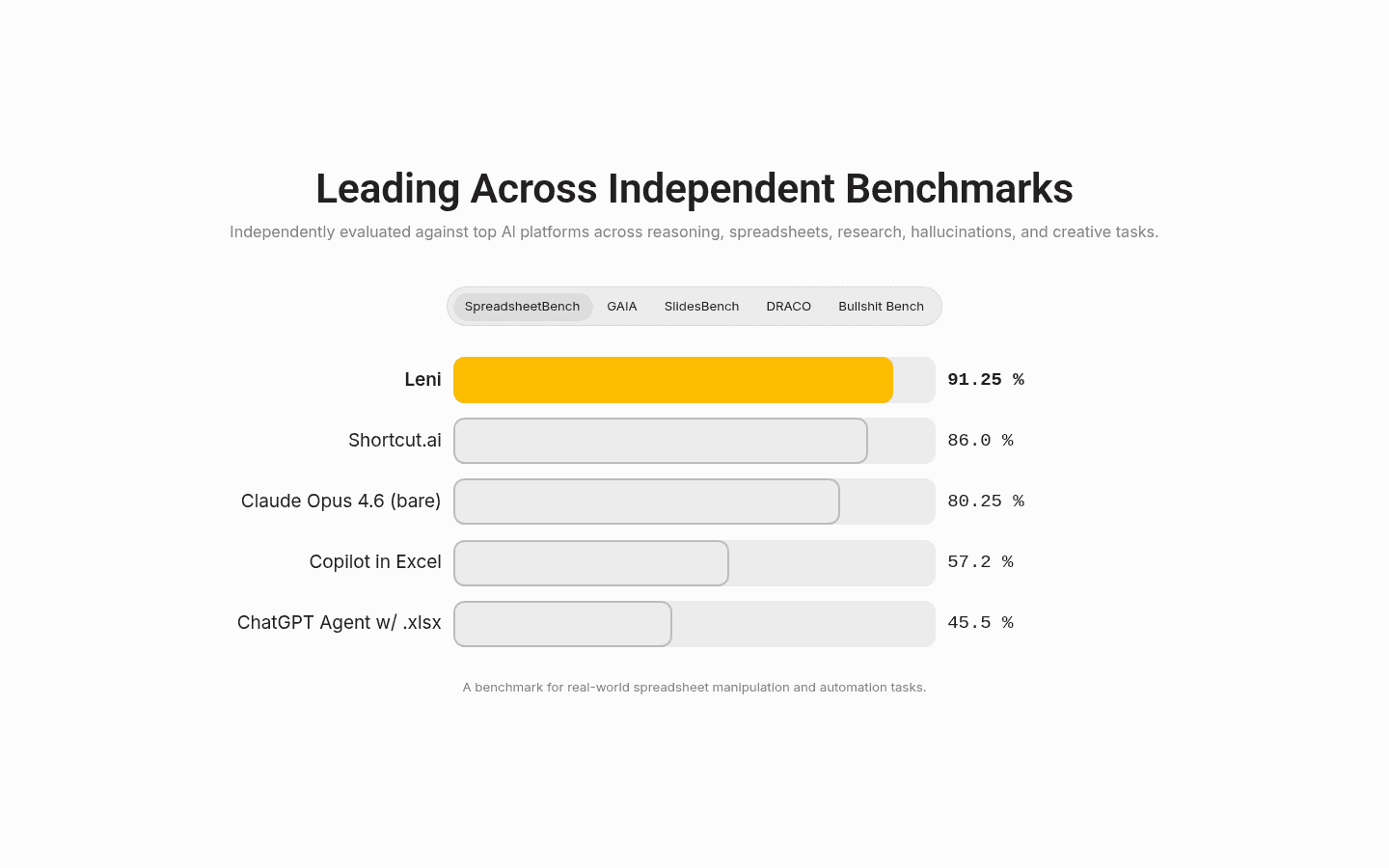
The strongest sources are ones the buyer can reach without you. A dated public-pricing line works for cost rows, as with Mirage's 'from public pricing pages, June 2026' or VisibAI's 'Competitor pricing as of March 2026'. Performance rows can cite a named third-party benchmark, the way Agentmemory pulls its retrieval numbers straight from the LongMemEval-S benchmark and Jitterbit credits a G2 index under its chart. Product rows can point to an open-source license or the competitor's own docs.
Directly under the table, in small but legible type, so it reads as a footnote to the whole matrix rather than a caption on one cell. Keep it specific: a date and a source beat a vague 'based on public information'. Cal.com's footnote that all prices are based on a yearly subscription is a good model, because it also states the basis of comparison so the numbers are read fairly.
Third-party data is stronger wherever it exists, because it removes the vendor as the referee. Leni frames its scores as independently evaluated and names each benchmark it ran, from SpreadsheetBench to GAIA, which signals the numbers are not self-reported. When no external benchmark applies, the next best thing is to cite a public, dated source the buyer can open, so even a self-run comparison rests on verifiable inputs.
