Value Proposition|
A unique-mechanism value proposition names the specific method behind the promise, the engine or approach that produces the result, so the benefit reads as something the product actually does instead of something it merely claims.
Key takeaways
Showing 85–105 of 144 examples




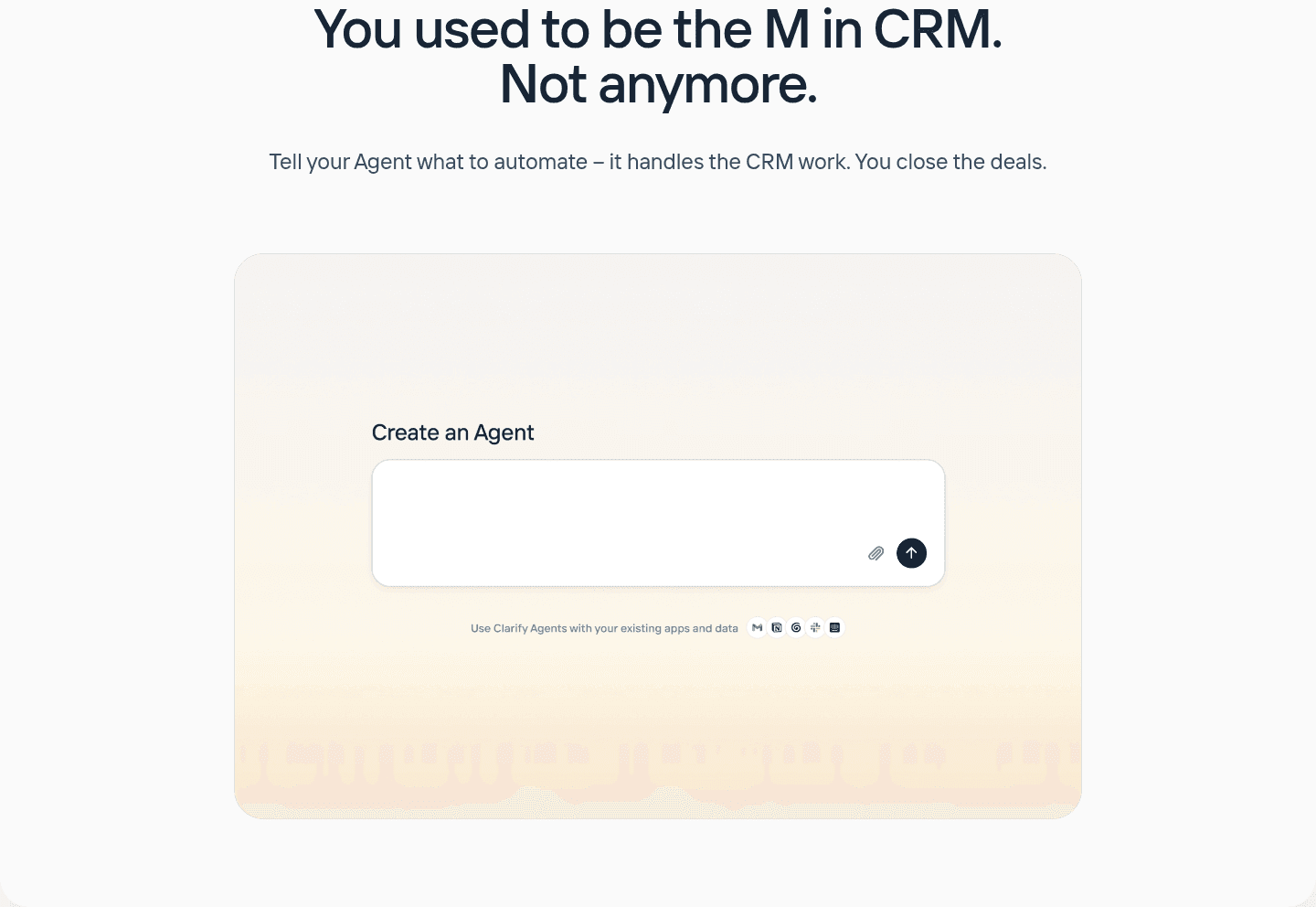
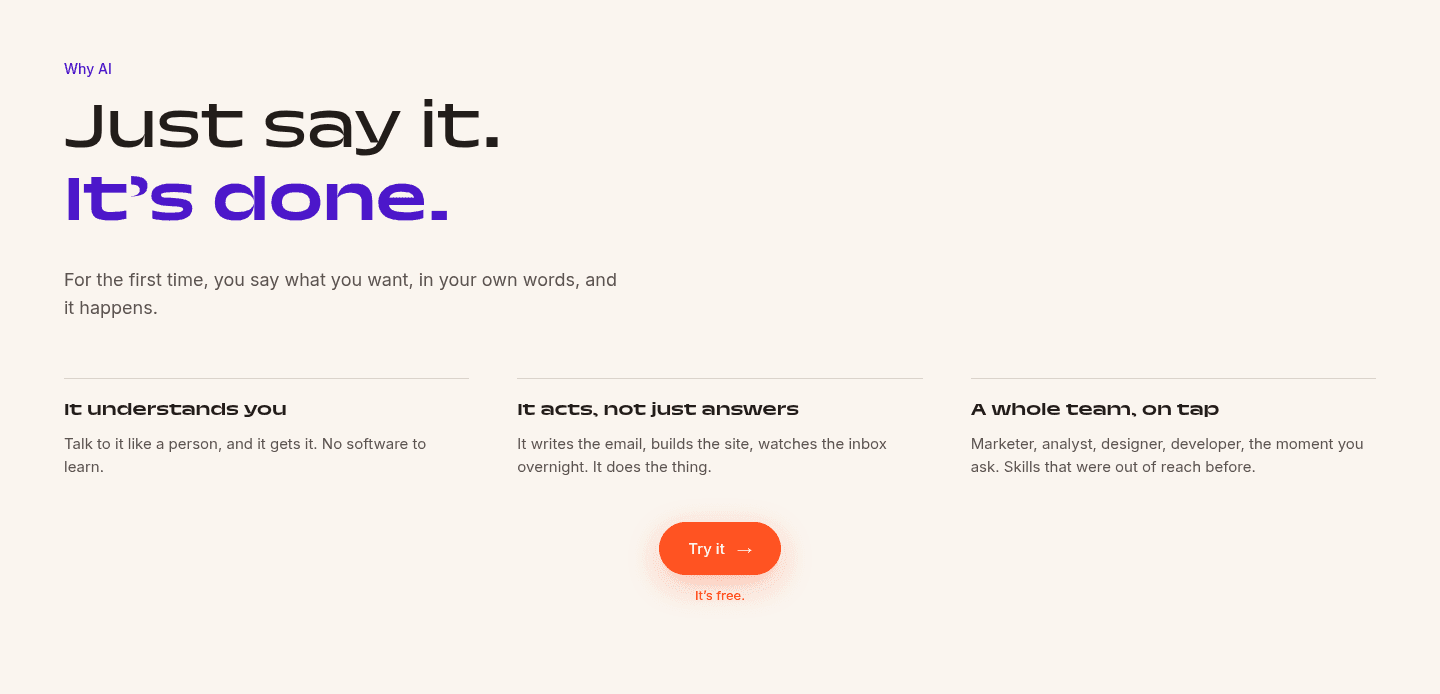
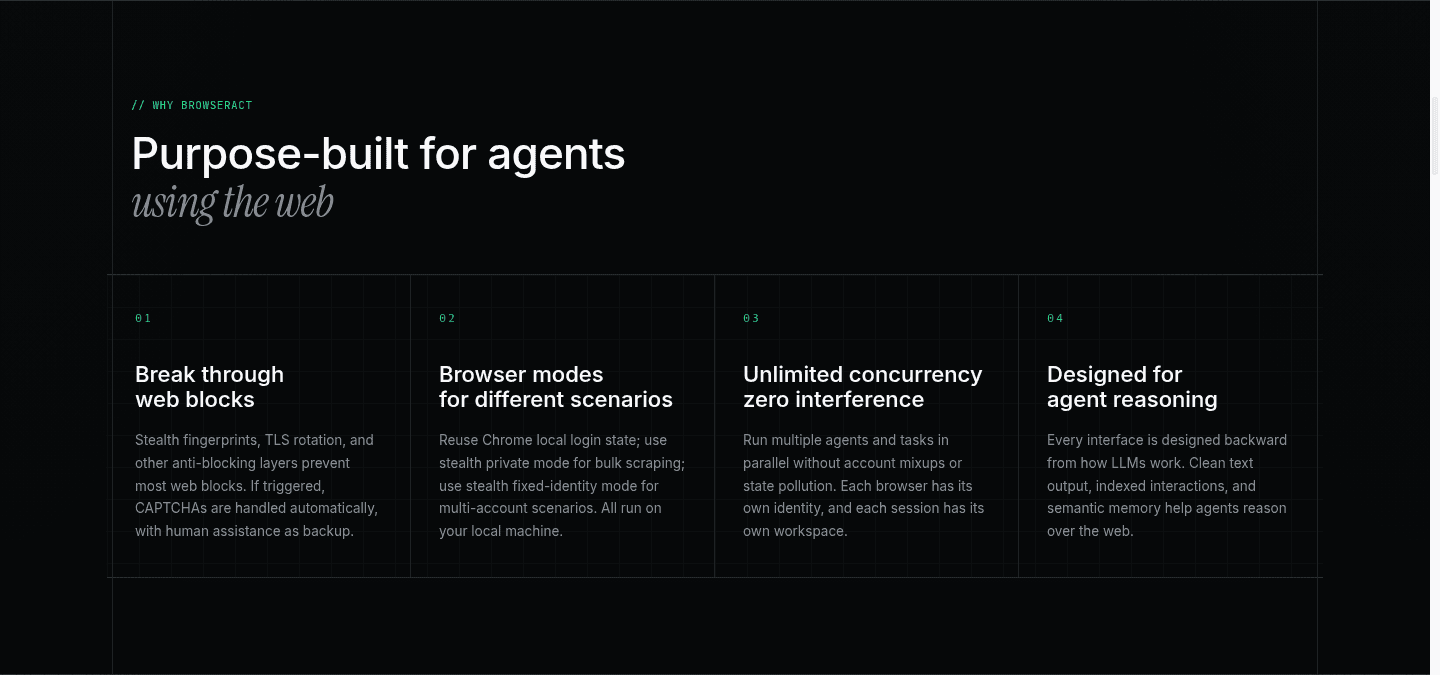

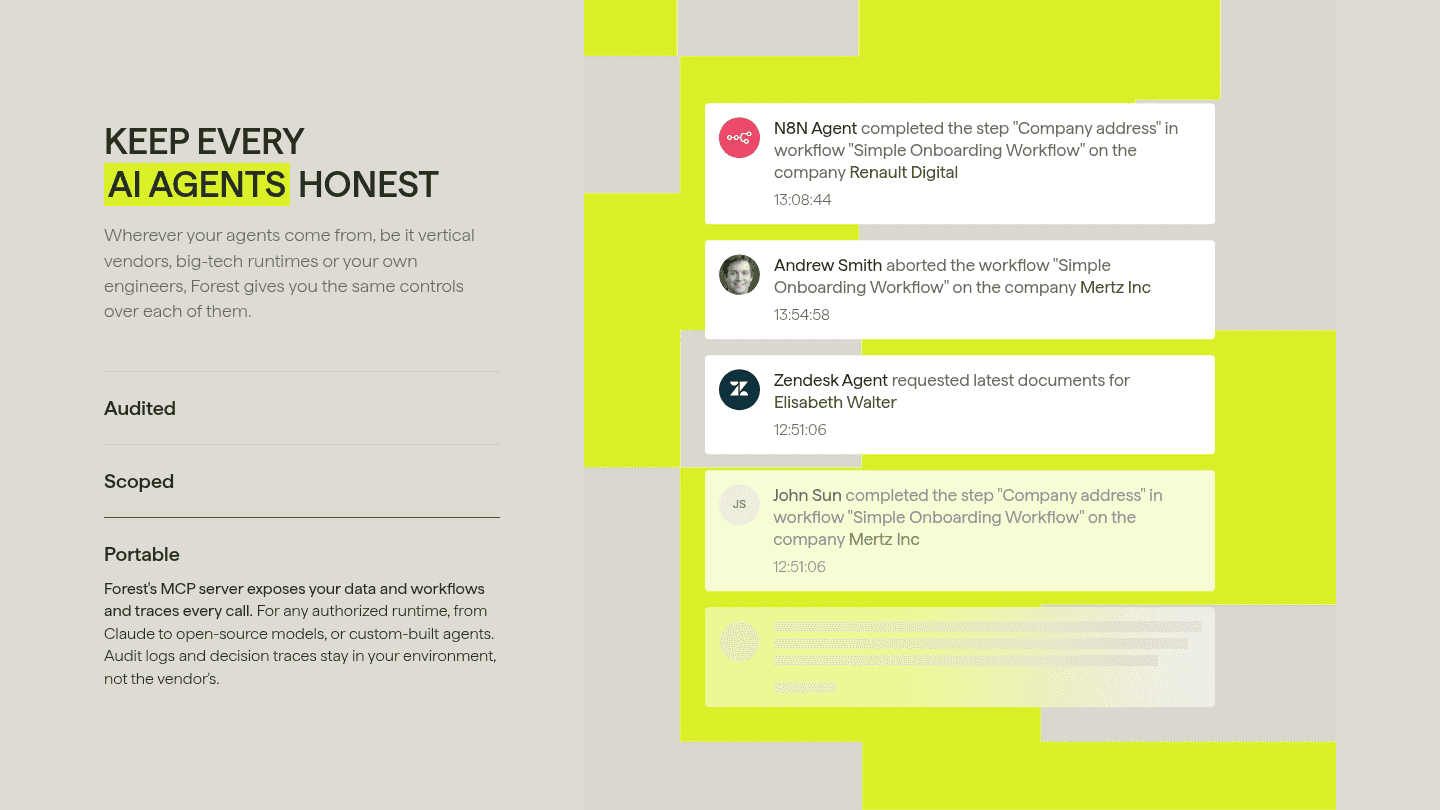
Browse every value proposition pattern by UX best practice.
Every value proposition section is scored across 6 conversion best practices. Copy the best practice stack, not the design. See what converts and why.
Hand-picked from 350+ companies and analyzed by our AI conversion agent. Not a random dump of homepages. Every entry earns its spot.
Found a value proposition you admire? Run yours through the same scoring engine. See where you stand on the same best practices, and what to fix first.
A unique mechanism is the specific how behind the promise, the engine, method, or design choice that produces the result, stated plainly on the page instead of left for the visitor to assume. A section that only lists benefits tells the reader what the product delivers. A section with a unique mechanism also tells them how, so the claim stops being a hope and becomes something the company can show it built.
The best value proposition sections name the mechanism in one of a few forms:
A value proposition is read by someone who has seen a dozen pages that all promise to be faster, cheaper, and easier. Those benefits are commodity, so a skeptic discounts them on sight. Naming the mechanism answers the question that skeptic is already asking, which is how, and a claim with a believable how behind it is far harder to dismiss than one that only asserts an outcome.
The mechanism also carries the argument for defensibility. A benefit that anyone can type into a headline feels copyable, while a named engine, a specific method, or a deliberate design choice reads as a real capability the competitor would have to build. The section stops sounding like a slogan and starts sounding like a reason to switch, because it shows the machinery that makes the promise true.
About 57% of the value proposition sections in our library name a mechanism, so the pattern is common enough to expect and disciplined enough to separate the pages that explain themselves from the pages that only assert. The version that works keeps the mechanism concrete and buyer-facing. Dixa does not just promise faster support, it explains the how: an AI agent that resolves across chat, email, and messaging apps, with visual routing by skill, language, and priority status, so each pillar shows its own machinery. Attribuly names exactly what its engine touches, unifying the ad platforms and email tools a merchant already runs and pushing the data into the warehouse they report from, and Qonto grounds its security claim in a licensed payment institution with bank-grade authentication rather than the word safe.
The strongest mechanisms are shown, not only stated. General Compute backs its from-scratch silicon with a side-by-side of throughput, power draw, and energy cost, and Empromptu AI turns its approach into a thirty-day rollout timeline with the punchline that no AI engineers get hired. A mechanism lands harder when the claims around it are already sharp, so this pattern pairs naturally with a value prop that also puts a real number on each outcome and offers a deep-dive link into the detail for the evaluator who wants to see how the engine works up close.
67/100 0/100
0/100The usual failure is the benefit with no how: a section that promises to be smarter, faster, and more automated without ever naming the engine, method, or choice that makes it so, which leaves the claim indistinguishable from every competitor's. The second is the codename with no translation, an internal term or a hollow buzzword dropped on the page as if it explained itself, when the buyer needs the mechanism in plain words. The third is burying the mechanism in a wall of features, a spec sheet that lists everything the product has but never says why those parts add up to the result. Name the moving part, say it in language a buyer can picture, and frame it against the usual way so the difference is visible.

Curated by
Gabriel Amzallag , Founder, Web Anatomy
5 years CRO + SEO at Qonto (2021–2025). After advising 15+ SaaS on their websites (Payfit, Pigment…), the same patterns kept breaking, so I decided to build the source of truth on what works on the web: the intelligence layer every tool, builder, and team uses to ship sites that perform.
Paste your URL. Get a scored analysis of your value proposition, including whether it names the mechanism behind each claim or leans on adjectives. Free, no signup.
The common questions about naming the specific how behind each value claim, with answers drawn from 144 scored examples.
It is the specific how behind the promise, the engine, method, or design choice that produces the result, stated on the page instead of assumed. A section that only lists benefits says what the product delivers. A section with a unique mechanism also says how it delivers them, so the claim reads as something the company built rather than something it hopes for. General Compute does not just promise more speed, it names the mechanism: accelerators built from scratch for inference, air cooled, with no liquid-cooling overhead passed on to the customer.
Every competitor claims to be faster, cheaper, and easier, so a benefit on its own is easy to discount. Naming the mechanism answers the question a skeptical evaluator is already asking, which is how, and a claim with a plausible how behind it is much harder to wave away. It also signals defensibility: a benefit anyone can copy in a headline feels commodity, while a named engine or method reads as a real capability. DinMo does this when it explains its speed comes from a native data-warehouse sync that needs no engineering, no spreadsheets, and no query writing, so the promise has a visible reason to be true.
They keep it concrete and buyer-facing rather than internal. The strongest versions name the moving part in plain words and, where it helps, show it with a diagram or a before-and-after. Attribuly names exactly what its engine touches, unifying the ad platforms and email tools a merchant already runs and pushing the data into the warehouse they report from, so the machinery shows up in tools they know. Empromptu AI pairs its mechanism with a thirty-day rollout timeline and the punchline that no AI engineers get hired, so the how is shown, not just asserted.
A feature list enumerates what the product has. A unique mechanism explains why those features add up to the result, and ideally why a competitor cannot easily match it. Qonto does not stop at safe and secure, it names the mechanism, a licensed payment institution with bank-grade authentication, so the reassurance rests on something specific. The weak version is a wall of capabilities with no explanation of the approach that ties them together, which reads as a spec sheet rather than a reason to switch.
Whenever the benefit alone sounds like everyone else's, which is most of the time in a crowded category. If the promise is generic, the mechanism is what separates it from the next tab. Slim AI leans on this with a named approach, an architecture that starts from the known vulnerability rather than the software, framed as a fundamentally different way to patch. The exception is a mechanism so technical it loses the buyer, in which case the fix is to translate it into plain language, not to drop it.