Use Cases|
Pairing each audience with a quote from the same kind of buyer lets a visitor see proof from someone like them, right where they decide whether the product fits their role.
Key takeaways
Showing 1–11 of 11 examples
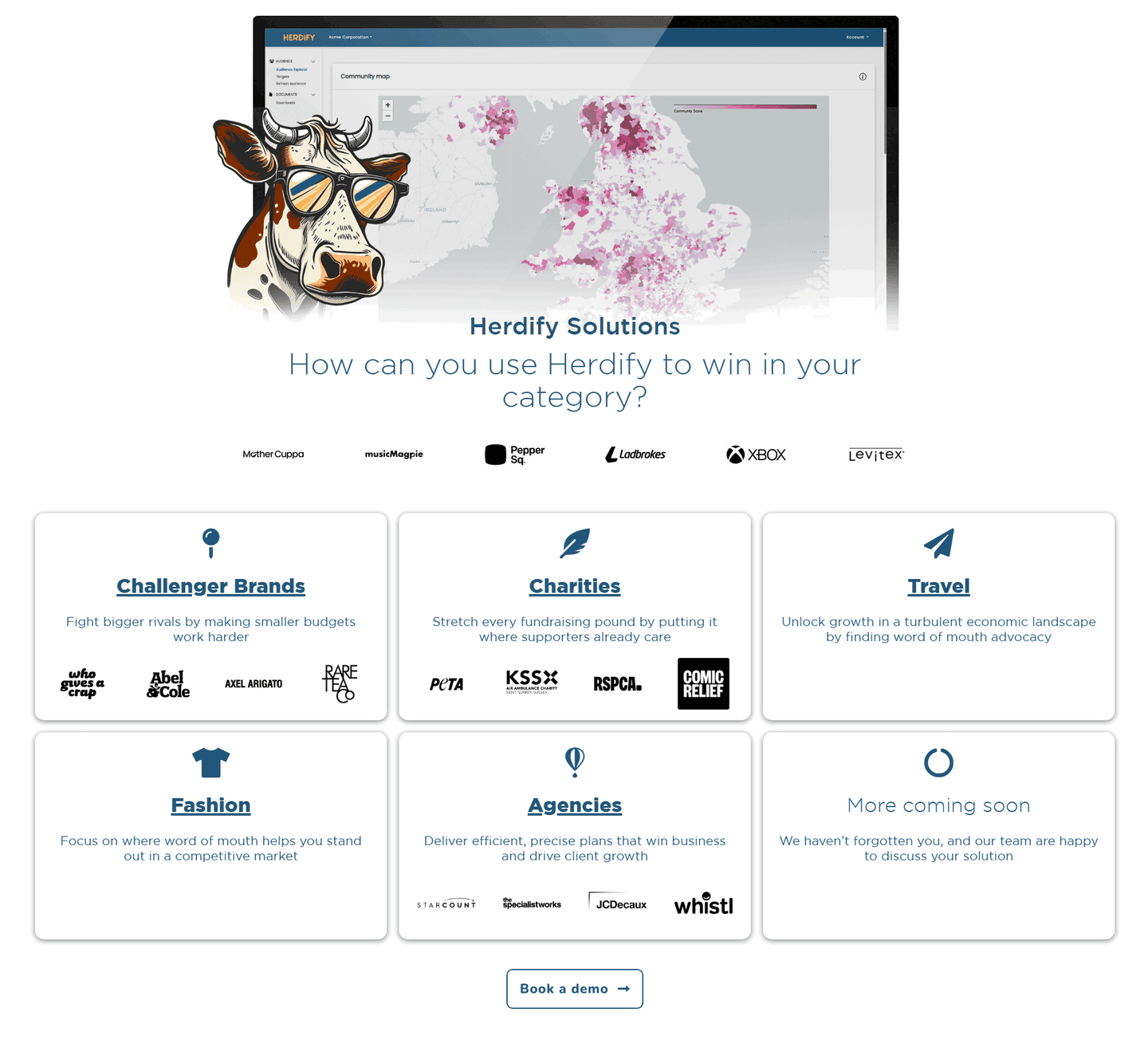
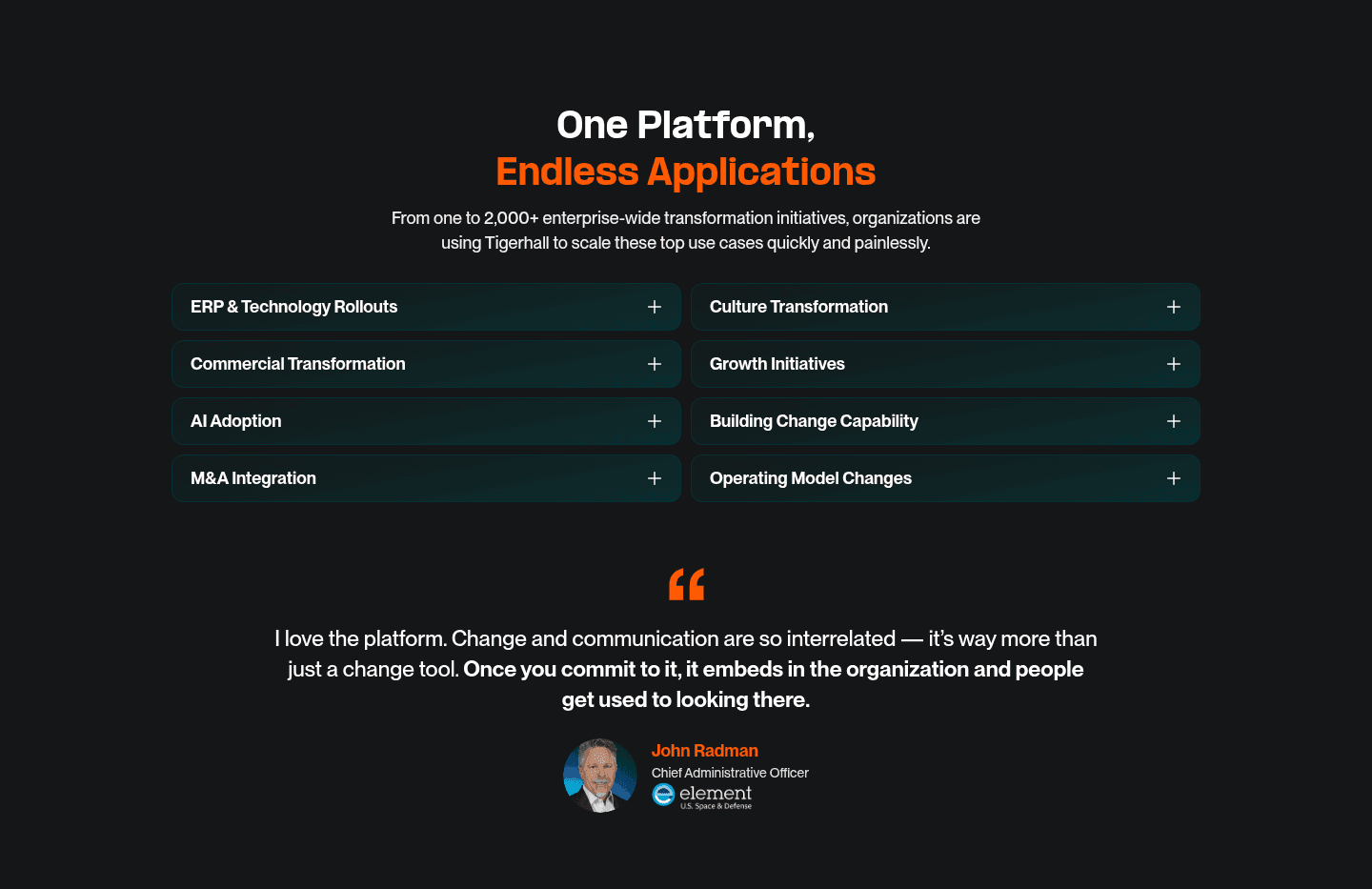
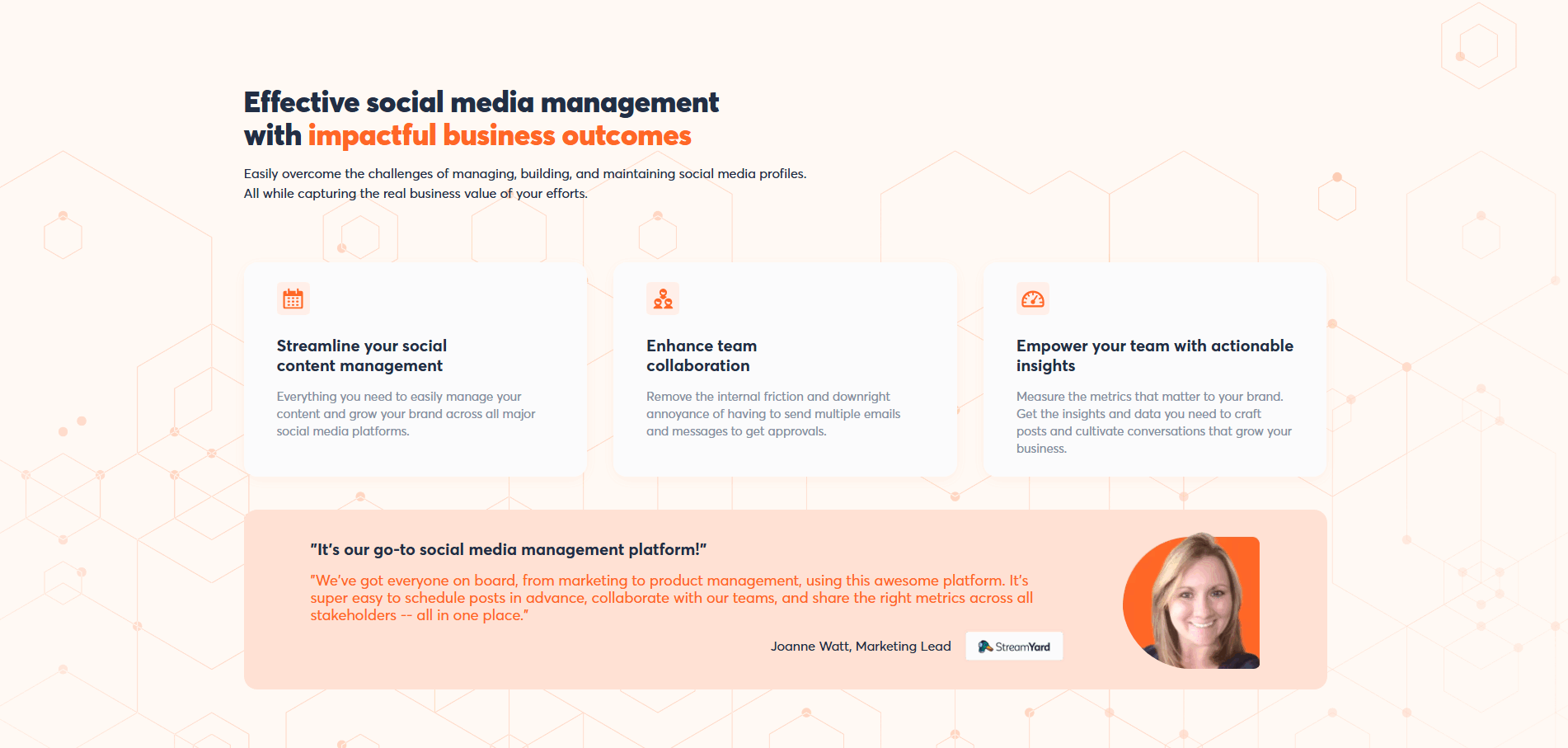
Browse every use cases pattern by UX best practice.
Every use case section is scored across 5 conversion best practices. Copy the best practice stack, not the design. See what converts and why.
Hand-picked from 650+ companies and analyzed by our AI conversion agent. Not a random dump of homepages. Every entry earns its spot.
Found a use case section you admire? Run yours through the same scoring engine. See where you stand on the same best practices, and what to fix first.
A persona-matched testimonial use-case section is the decision to back each audience with a customer voice from that same kind of buyer, instead of one quote reused across every role. A generic section says "here is what the product does, and here is a happy customer." This pattern says "here is what the product does for you, and here is someone exactly like you saying it worked." When the proof sits next to the persona it belongs to, the claim stops sounding like the vendor and starts sounding like a peer who already made the call.
The best use-case sections use one of a few forms, sometimes blended:
A landing page usually addresses several kinds of buyer at once, and a claim about what the product does for a given role is easy to discount when it comes only from the company selling it. A quote from a customer in that exact role turns the claim into something a peer has already tested. The visitor is no longer taking the vendor's word for it; they are reading the verdict of someone in their own seat.
Placement is half the work. A testimonial that lives in a general wall of quotes lower down the page reaches every visitor equally, which means it speaks to no one in particular. A testimonial that sits inside the persona's own tab or card reaches the exact visitor it was chosen for, at the moment they are weighing whether the product fits their situation. The proof and the promise share the same view, so one reinforces the other instead of arriving pages apart.
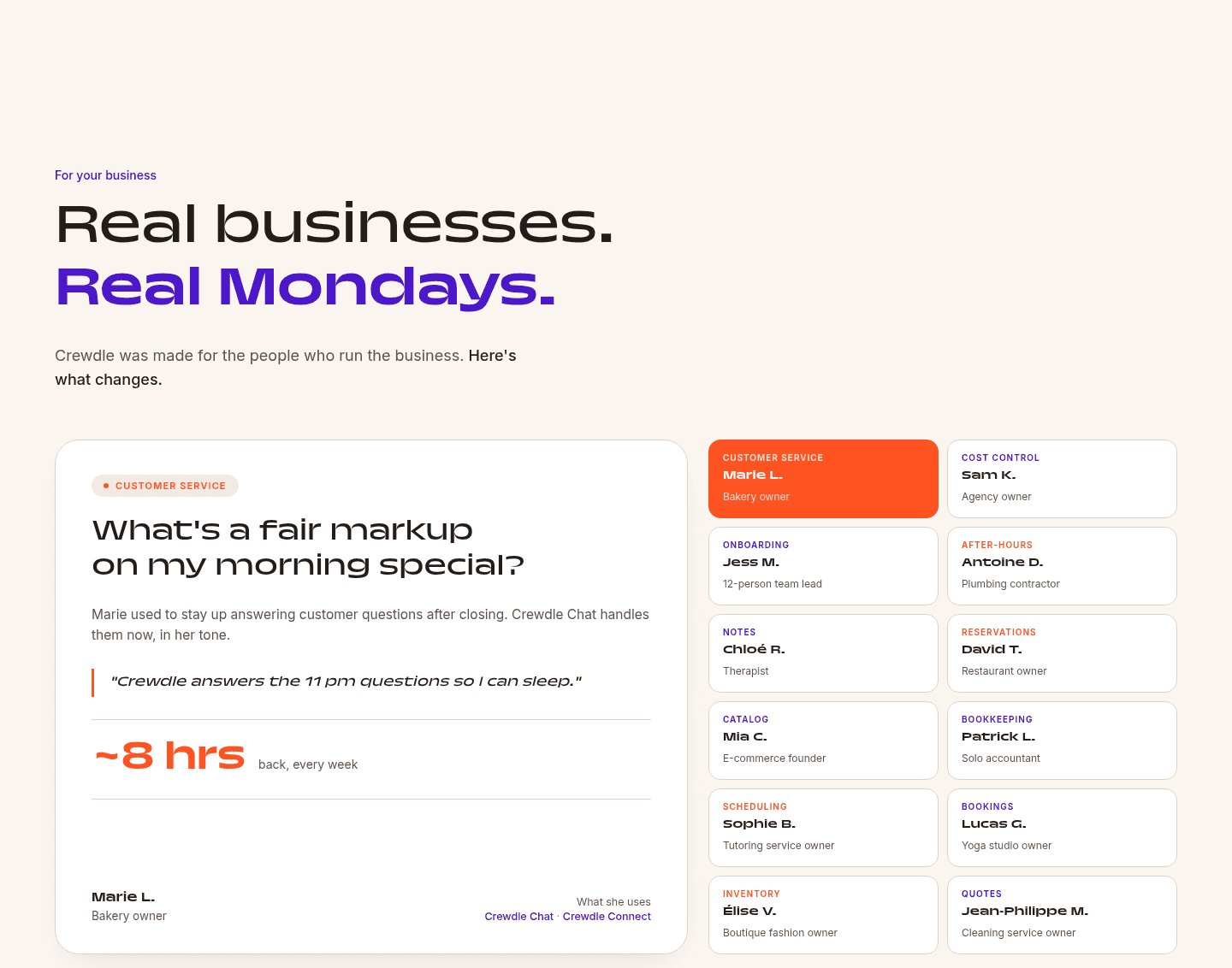
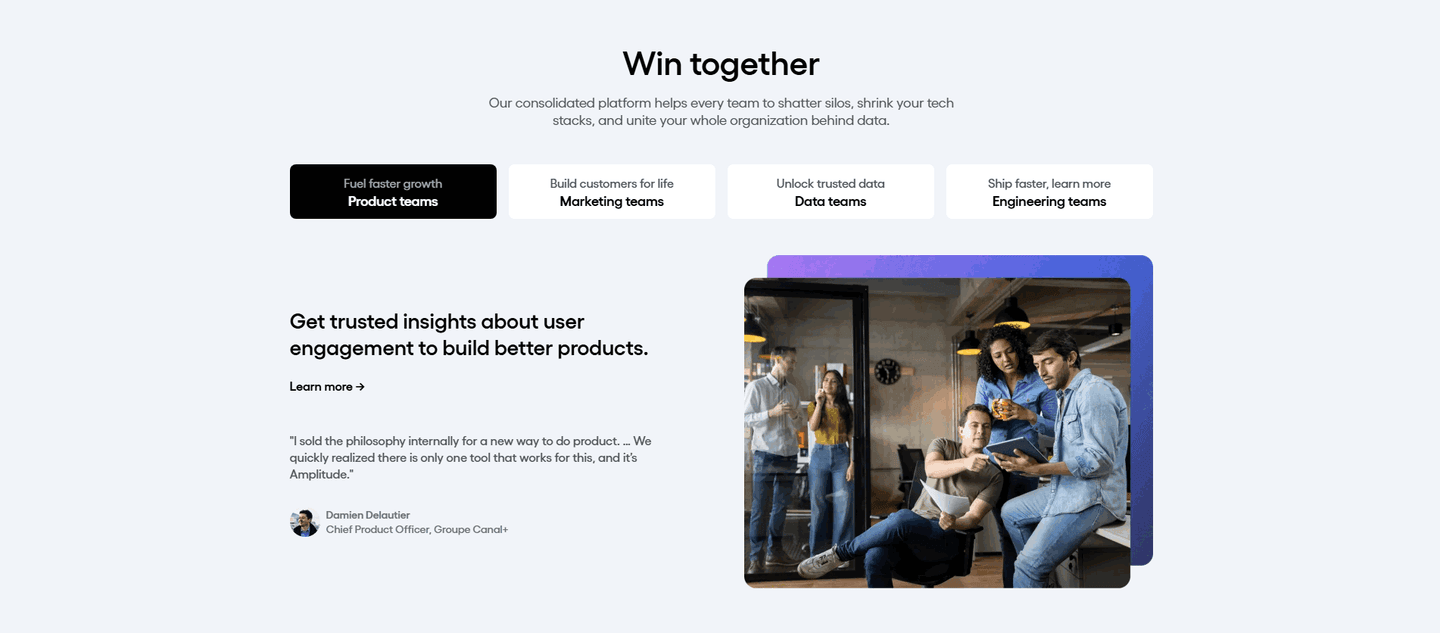
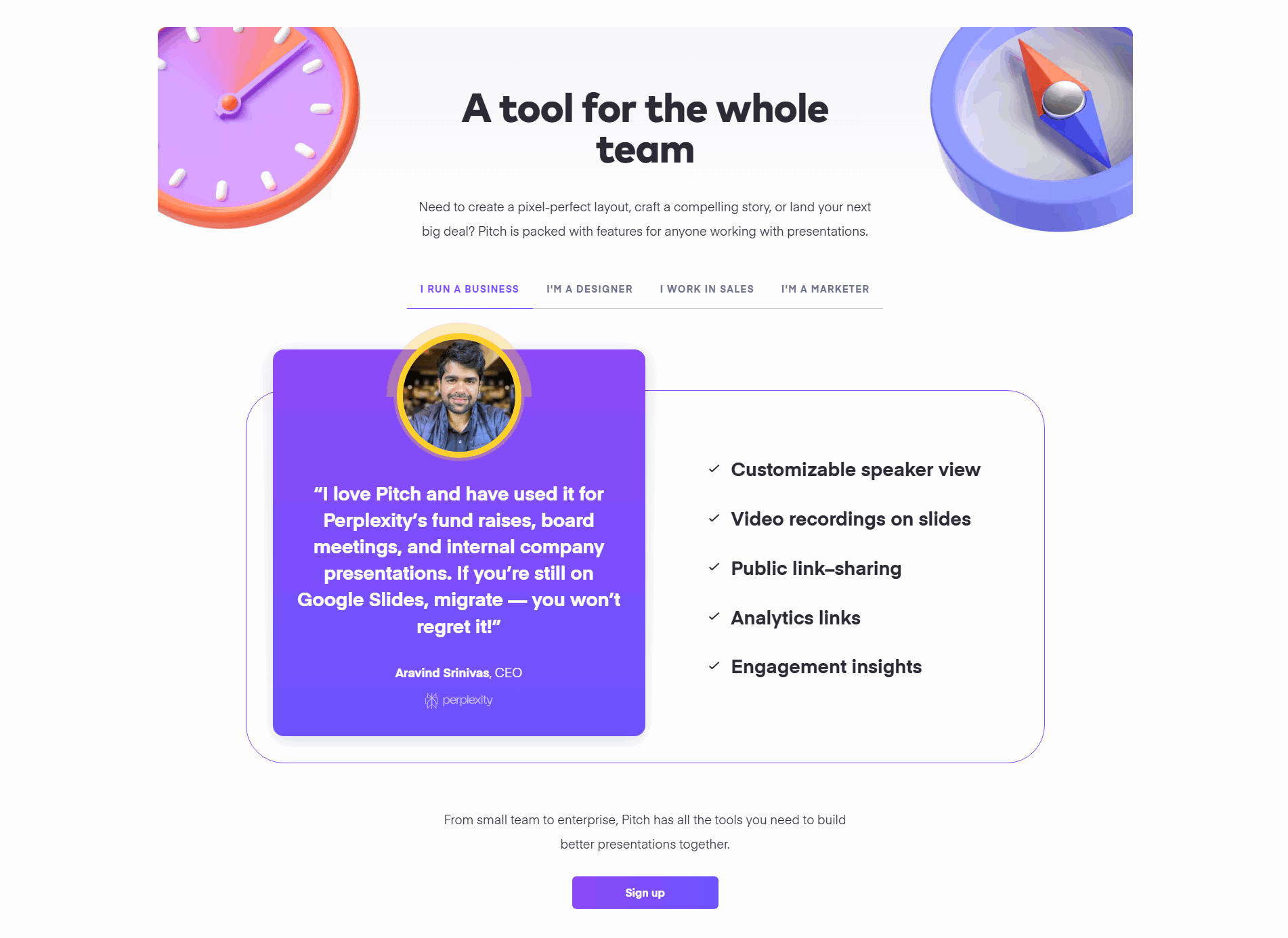
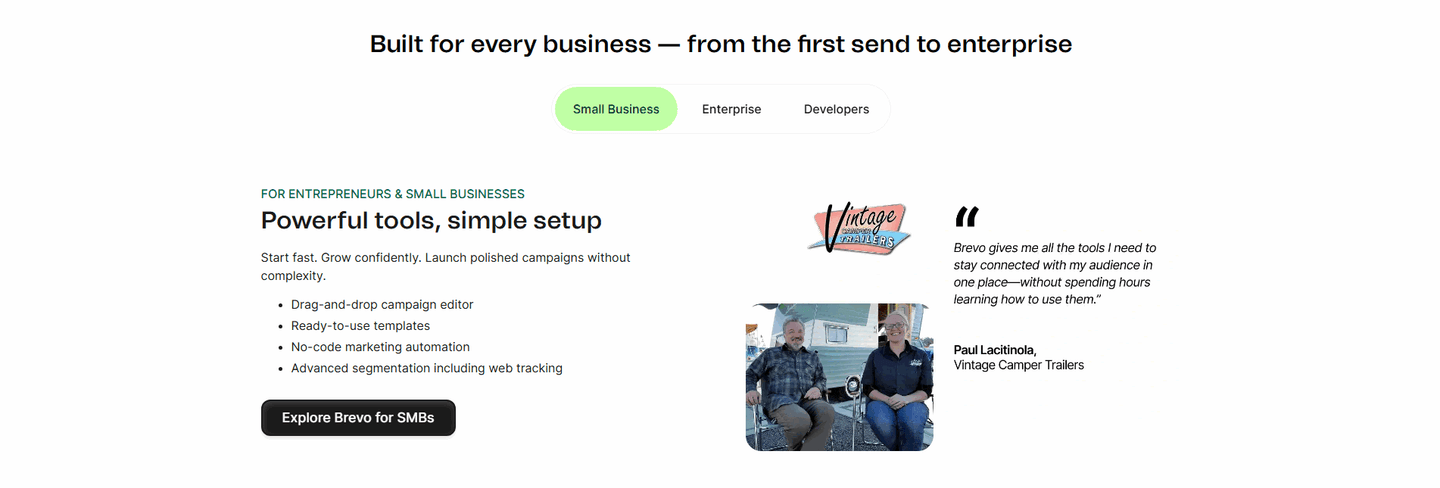
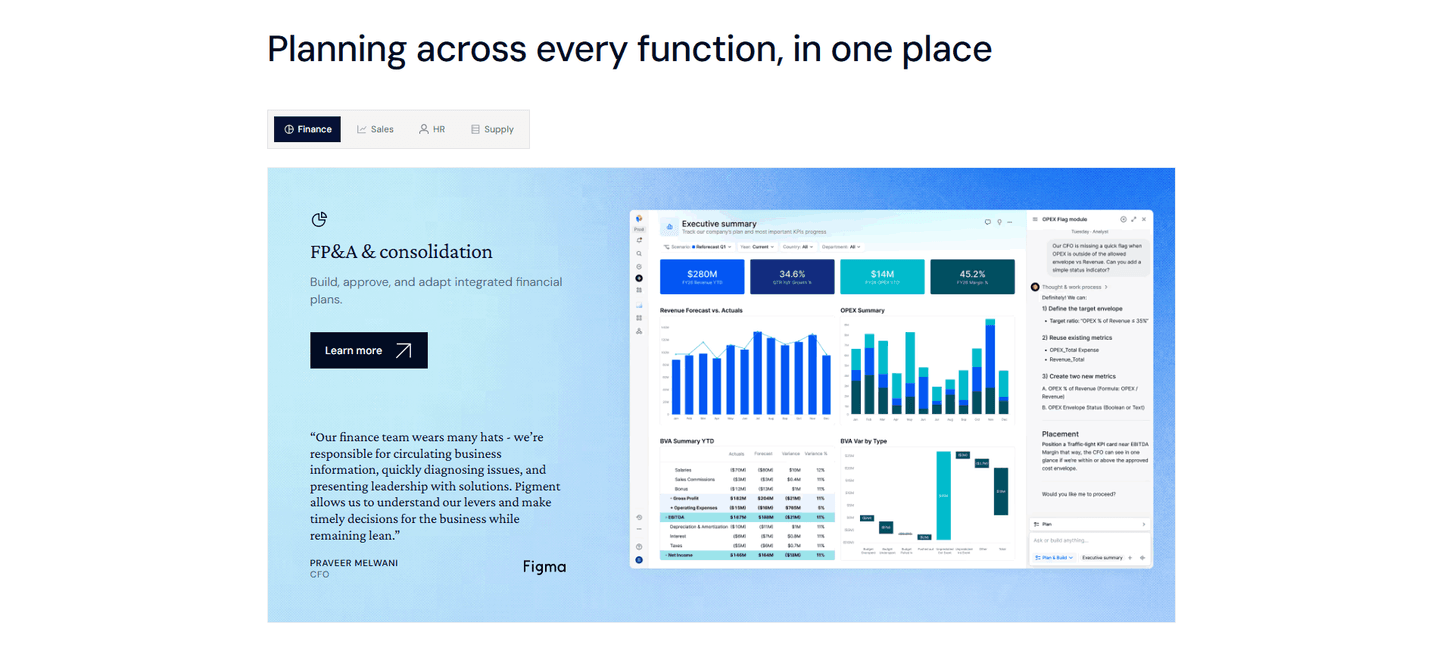
Across the examples below, the sections that land hardest keep the voice and the persona tightly matched. Pitch pairs its "I run a business" tab with a CEO quote from Aravind Srinivas of Perplexity, so the business persona hears from a founder. Pigment ties a Figma customer quote to its finance view, proving the point to the exact team it is pitching. Crewdle AI goes furthest on concreteness, letting Marie L. the bakery owner say the product answers the 11 pm questions so she can sleep, which reads as a real day in that persona's life rather than a polished endorsement. The discipline is the same in every strong example: a named person, a role that matches the tab, and a quote specific enough to prove that persona's promise.
A matched quote is strongest when the visitor can reach their lane fast and see a distinct payoff waiting there. That is why this pattern pairs so well with use-case sections that name an outcome for each persona and with use-case sections built for navigation clarity, where switching roles is a single obvious click.
100/100 20/100
The usual failure is one testimonial doing duty for every persona: the tabs change roles while the same quote sits underneath, so a visitor who switches lanes quickly sees the proof was never really about them. The second failure is an anonymous voice, a quote with no name, role, or company, which asks the visitor to trust a stranger the page will not identify. The third is a mismatch, where the healthcare tab shows a quote from a marketing agency, and the persona logic falls apart the moment the visitor reads the byline. Match the person to the persona, name them, and make the quote prove the promise that persona was just shown.

Curated by
Gabriel Amzallag , Founder, Web Anatomy
5 years CRO + SEO at Qonto (2021–2025). After advising 15+ SaaS on their websites (Payfit, Pigment…), the same patterns kept breaking, so I decided to build the source of truth on what works on the web: the intelligence layer every tool, builder, and team uses to ship sites that perform.
Paste your URL. Get a scored analysis of your use-case section, including whether each persona gets proof from its own kind of buyer. Free, no signup.
The common questions about backing each audience with a matching customer voice in a use-case section, with answers drawn from 11 examples.
It means each audience the section addresses gets a customer voice from that same kind of buyer, not one quote reused across every role. The product-team tab carries a quote from a product leader, the healthcare tab carries a quote from a healthcare customer, the small-business view carries a quote from a small-business owner. The proof sits next to the persona it belongs to, so the visitor reads it as evidence from someone in their own situation rather than a generic endorsement.
A landing page speaks to several kinds of buyer at once, and a claim about what the product does for a role is easy to doubt when it comes only from the vendor. A quote from a customer in that exact role turns the claim into something a peer already verified. When the visitor recognizes the person as someone like them, the proof lands harder than any feature list, and the hesitation about whether the product really fits their case starts to lift.
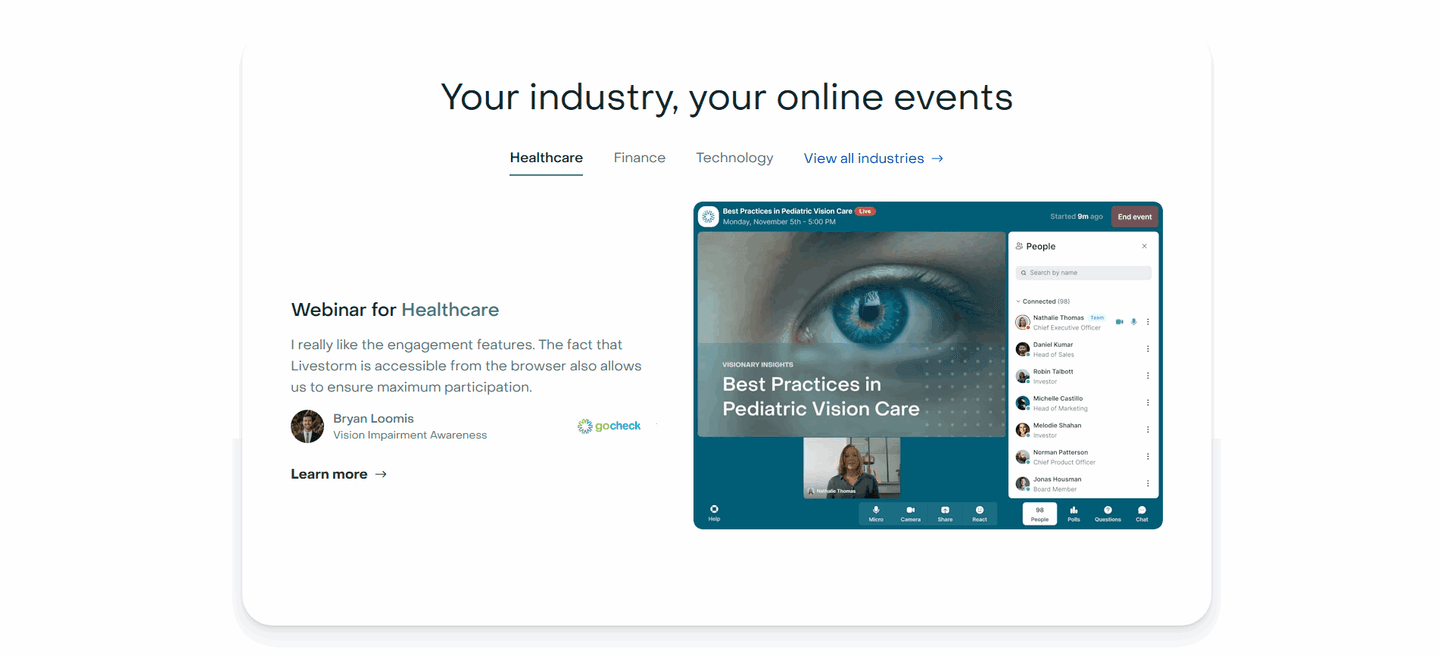
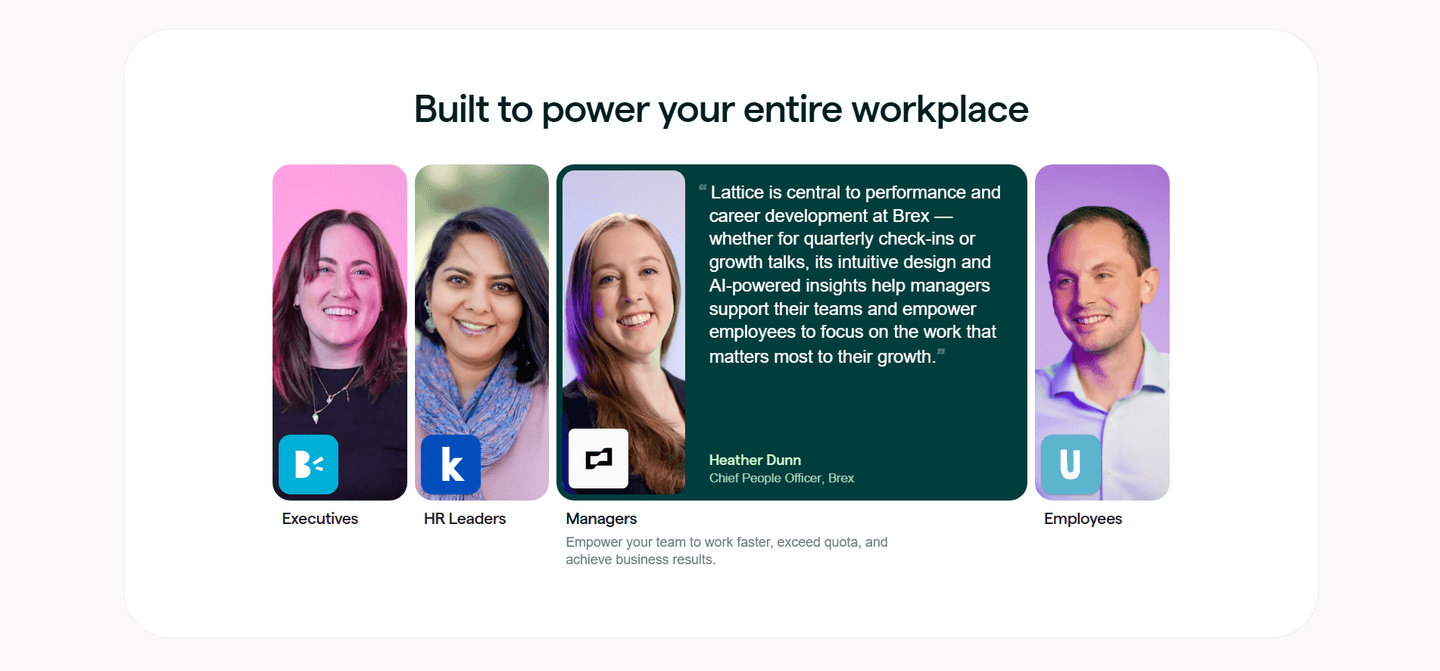
A few show up most often. Role or team tabs, where each function carries its own quote as you switch. Industry tabs, where the active vertical shows a customer from that sector. A grid of persona cards, each with a portrait, a title, and a matching quote. And a segment toggle, where each audience view swaps in a named customer from that segment. All of them keep the proof and the persona together, so switching roles switches the voice too.
The person's role and company should read as the same kind of buyer the tab or card is for. A quote from a Chief Product Officer under the product persona, a small-business owner under the SMB view, a people leader under the HR persona. The strongest ones go further and make the quote concrete, naming the everyday scenario or the result that role cares about, so it proves the specific promise the persona was shown rather than praising the product in general.
One per persona is the goal, not a wall of quotes on every view. If the section splits into four roles, four role-matched voices, one surfaced at a time as the visitor switches, does more than a dozen quotes stacked under a single generic header. The point is relevance: each visitor should see the one testimonial that speaks to their situation, so lead each persona with its best-matched proof and leave the rest out of that view.