Pricing|
Per-feature pricing breaks the total down per capability or unit of usage, so a buyer sees exactly what drives the cost before committing to a plan.
Key takeaways
Showing 22–23 of 23 examples
Browse every pricing pattern by UX best practice, or jump to an industry view.
Every pricing section is scored across 8 conversion best practices. Copy the best practice stack, not the layout. See what converts and why.
Hand-picked from 350+ companies and analyzed by our AI conversion agent. Not a random dump of pricing tables. Every entry earns its spot.
Found a pricing table you admire? Run yours through the same scoring engine. See where you stand on the same best practices, and what to fix first.
Per-feature pricing breaks the total down to the parts that create it, so a buyer sees the price of each capability or unit of usage instead of one flat plan number they have to take on faith. Most pricing pages stop at a headline figure per tier. The ones that convert the skeptics go further and show what moves that figure up or down.
It usually takes one of a few forms:
A single plan price asks the buyer to trust that the number is fair. A price broken down per capability lets them check it. When the cost of a seat, a credit, or a unit of usage is stated in the open, the total stops looking like a figure someone picked and starts looking like the sum of parts the buyer can add up themselves.
It also answers the quietest objection in pricing: what happens when I grow. A buyer who can see the per-unit rate knows what the second month costs, not only the first. That certainty removes a reason to stall, which is often the real thing standing between a pricing page and a signup.
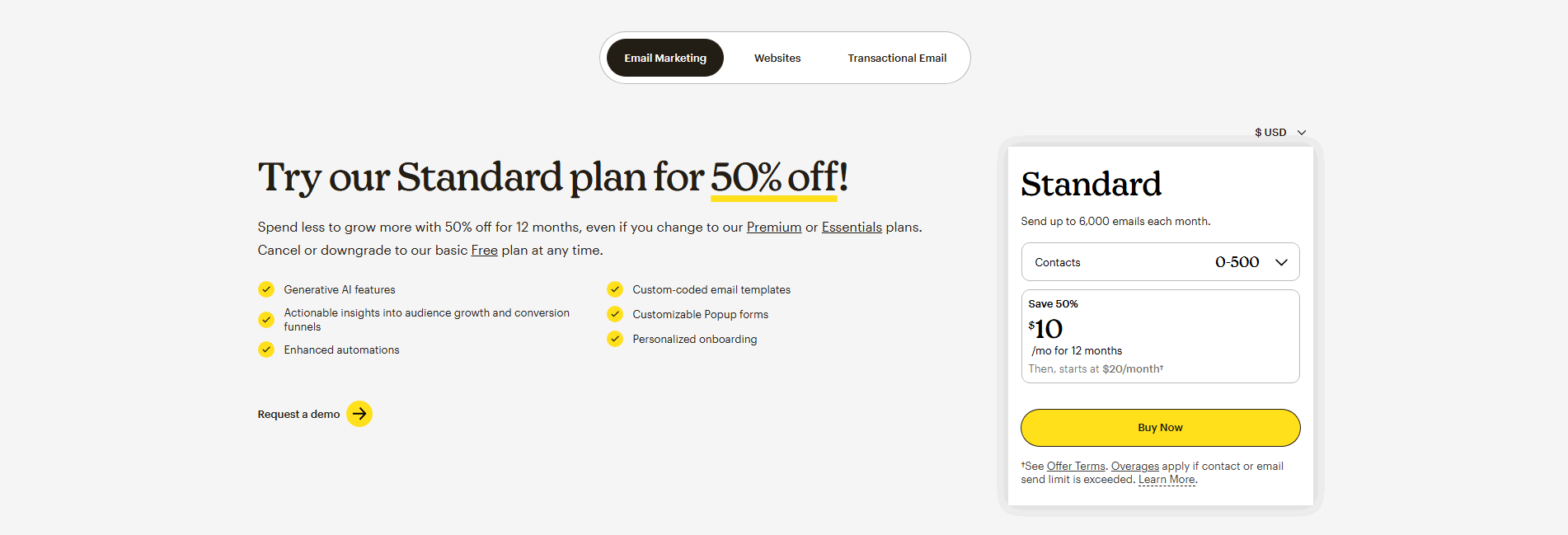
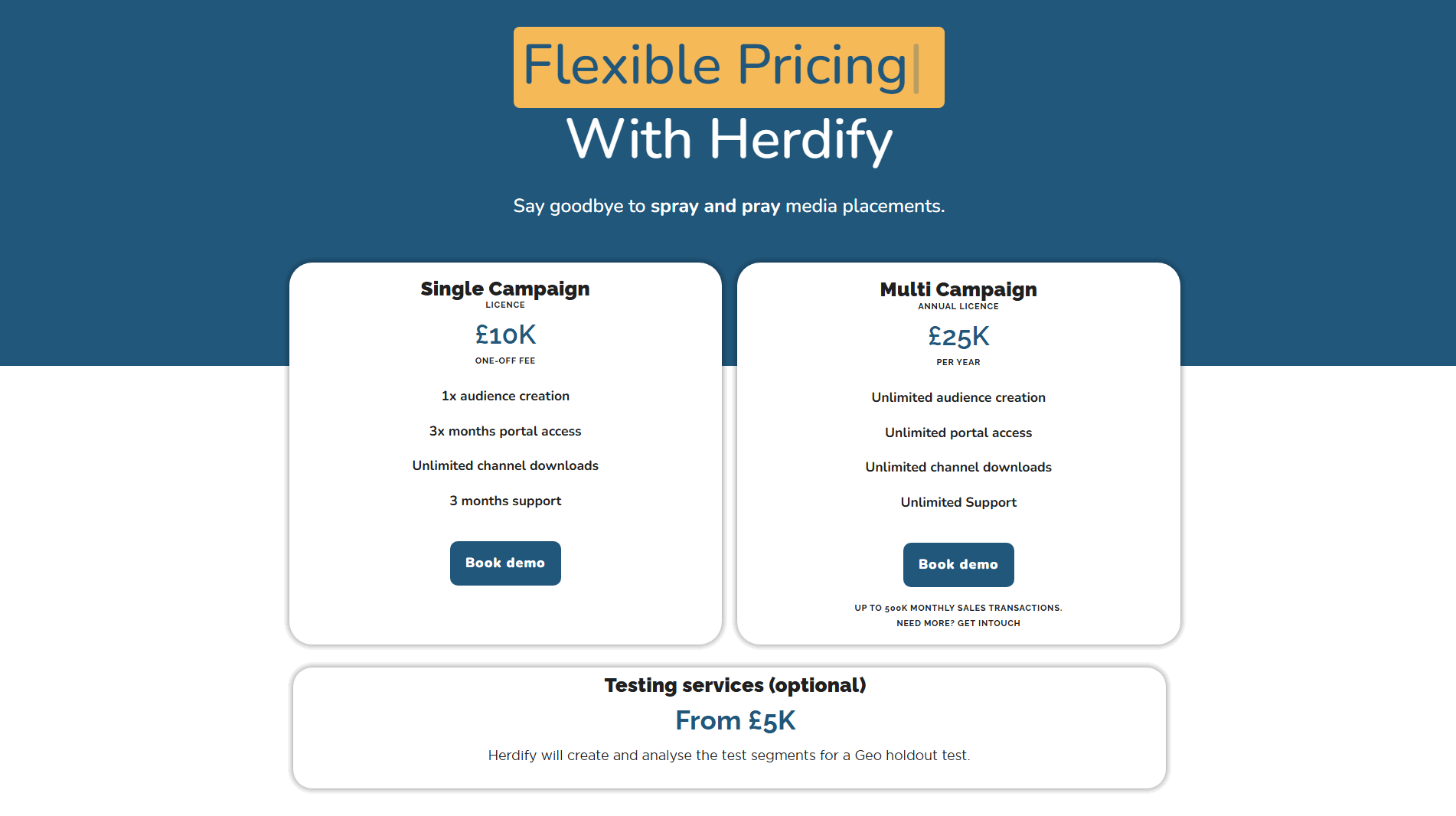
Only about a third of the pricing sections we scored break the price down this way, so doing it well is still a way to stand apart. Across the examples below, the strong ones make the per-unit number easy to find rather than hiding it in a footnote. Alchemy pairs its usage rate with a slider that estimates the bill across compute units in real time, so the buyer prices their own need before committing. Raycast keeps its add-ons honest with an Advanced AI +$8/month toggle sitting right on the plan. Eventmobi itemizes the optional pieces per unit, from badge stock at $1.99/badge to Lead Capture at $50/exhibitor, so a build-your-own package still resolves to a visible total.
The discipline is the same each time: attach a real number to each unit that scales, and put it where the buyer is already looking. For the wider picture, the pricing section gallery shows how these same pages handle tiers and toggles, and the testimonials gallery shows the social proof that often sits beside a price to back it up.
56/100 11/100
The usual failure is a flat plan number with no breakdown, which forces the buyer to guess what a second seat or a busy month will cost, and often to guess high. The second is a breakdown that exists but hides, with the per-unit rate in fine print or a tooltip a visitor has to hunt for. The last is add-on math that never resolves, a list of units with prices that never rolls up into a total the buyer can picture. State each rate in the open, keep it beside the plan it belongs to, and make sure the parts still add up to a number a buyer can trust.

Curated by
Gabriel Amzallag , Founder, Web Anatomy
5 years CRO + SEO at Qonto (2021–2025). After advising 15+ SaaS on their websites (Payfit, Pigment…), the same patterns kept breaking, so I decided to build the source of truth on what works on the web: the intelligence layer every tool, builder, and team uses to ship sites that perform.
Paste your URL. Get a scored analysis of your pricing section, including whether the total is broken down clearly enough to trust. Free, no signup.
The common questions about breaking a price down per capability and per unit of usage, with answers drawn from 23 scored examples.
Per-feature pricing breaks a plan's total down to the parts that create it, showing the price of each capability or unit of usage instead of one flat number. Common forms are per-seat add-on rates, per-unit usage prices, credit or action breakdowns, and overage rates shown next to each plan. The point is that a buyer can see what drives the total and add it up rather than trust it.
A flat plan price asks for trust; a breakdown invites a check. When the cost of a seat, a credit, or a unit of usage is stated in the open, the total reads as the sum of parts a buyer can verify, not a figure someone chose. It also answers the growth question, since a visible per-unit rate tells the buyer what scaling up will cost before they commit.
Alchemy prices compute as low as $0.40 per 1M CUs, Strapi charges +$15/month per extra seat, Novu Connect prints $0.02 then $0.015 per extra conversation, and Octolens shows usage add-ons with mentions from $0.01 and keywords from $5/month. Each attaches a real number to the unit the buyer consumes, so the plan total is traceable back to usage.
Beside the plan it belongs to, in plain view rather than a footnote. The clearest pages put the add-on rate directly on the card, sometimes behind a toggle like Raycast's Advanced AI +$8/month, and pair a usage estimator or slider with the rate so a buyer can size their own bill. The test is that the per-unit number is as easy to find as the headline price.
It fits best when cost genuinely scales with usage, seats, or actions, which is where a flat number leaves buyers guessing. A product with a simple fixed offer may not need it. But any pricing page where the total depends on how much a buyer uses benefits from showing the per-unit rate, because the alternative is asking the buyer to trust a number they cannot check.