Skip to content

Best Blockchain Website Examples (And Why They Convert)

We scored 4 blockchain homepages on 60+ conversion criteria. See which sections separate the top performers, and what your page is probably missing.

Updated April 20264 pages analyzed
#CompanyScore

Scored by AI across 60+ conversion criteria

Ledger landing page
#1
56/100
Scroll to explore
Analyze your blockchain pageFree. Takes 2 minutes.

What high-performing blockchain homepage design gets right

Blockchain pages have to make complex technology feel trustworthy and accessible. The strongest pages in this benchmark do four jobs early:

58.6/100

Avg. page score

  • Make the use case obvious in the first viewport so the visitor knows whether this is a wallet, infrastructure, exchange, or protocol.
  • Lead with trust and security since blockchain buyers have higher-than- average skepticism about new platforms.
  • Show the product or developer experience as a real workflow so the promise feels operational instead of aspirational.
  • Give developers and buyers a low-friction next step with specific CTA language like "Start building" or "Get started free."

4 best blockchain homepages analyzed in detail

Each company below is paired with its strongest section and scored across 60+ conversion criteria. See what they get right, and what you can borrow.

01

Ledger, Hardware security for your crypto assets.

Editor's pick56/100
Gabriel AmzallagGabriel AmzallagFounder, Web Anatomy

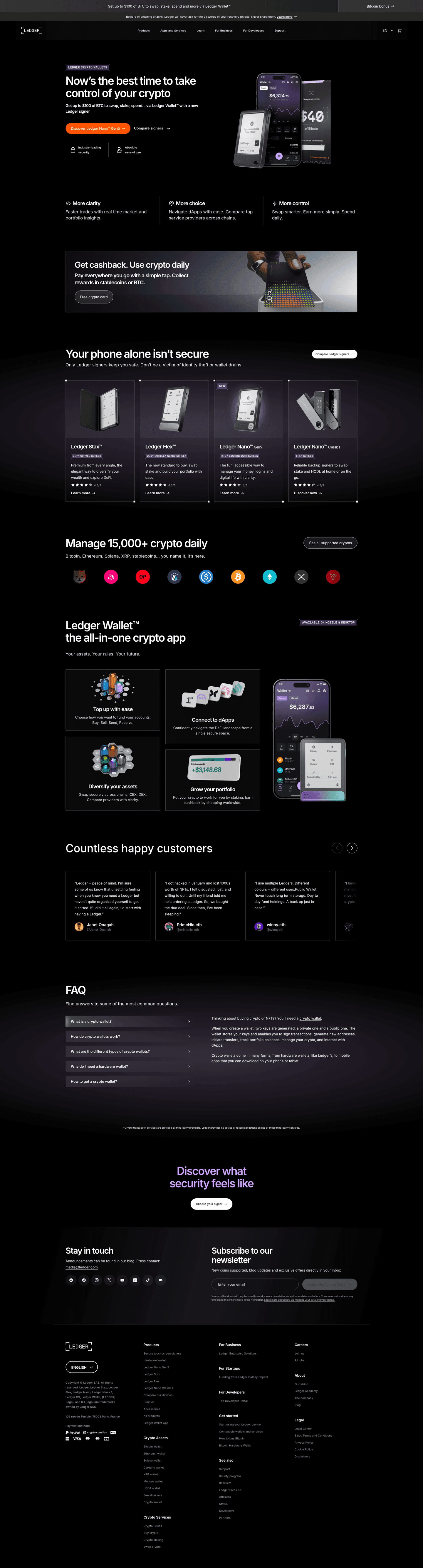
Security-first value proposition done right. Ledger makes hardware wallet protection tangible with clear product visuals and a trust story that carries from the hero through every section.

What makes this page stand out

  • Physical device approach provides a tangible security differentiator vs. software-only crypto wallets
  • Multi-cryptocurrency support across thousands of digital assets maximizes addressable market
  • Strong brand recognition as the market leader in hardware crypto wallets provides category ownership
  • Ledger Live companion app creates a complete hardware+software ecosystem for managing digital assets

Section we love

·Value Proposition
Ledger Value Proposition section
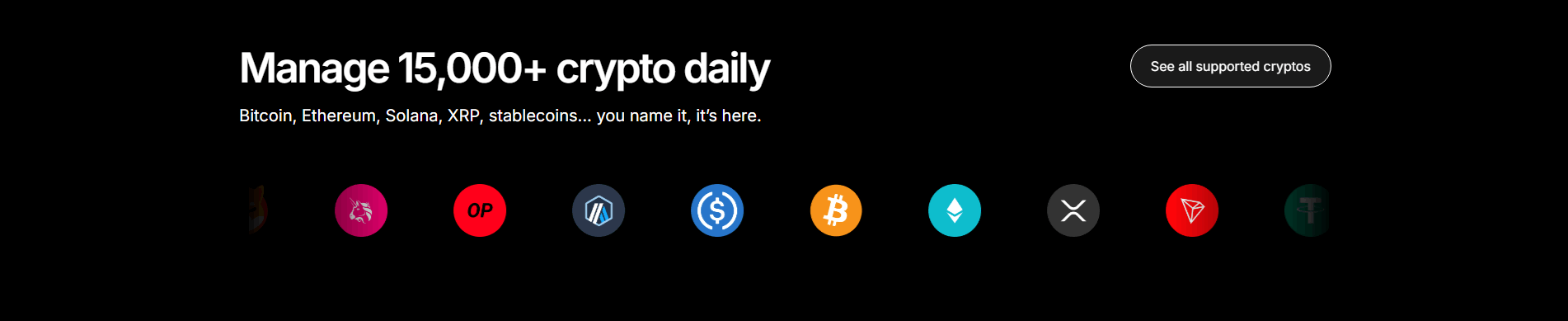
  1. 1Accordion stacks four distinct propositions: scam prevention, multi-platform 2FA, broad coin support and recovery
  2. 2Quantified reach with 15,000+ crypto at your fingertips makes the coverage claim concrete
  3. 3Unique mechanism named: Ledger Wallet Transaction Check reads transaction details to detect threats before signing
  4. 4Benefits map to real fears, prevent hacks and hidden scams and never lose access to your assets
02

Alchemy, The Web3 development platform developers trust.

52/100
Gabriel AmzallagGabriel AmzallagFounder, Web Anatomy

Developer infrastructure with a trust-forward approach. Alchemy pairs Web3 tooling with strong social proof and a developer-first messaging style that reduces integration anxiety.

What makes this page stand out

  • Supernode infrastructure provides reliable, fast access to blockchain data at scale
  • Multi-chain support (Ethereum, Polygon, Solana, Arbitrum) addresses the fragmented blockchain ecosystem
  • NFT and DeFi-specific APIs demonstrate vertical specialization within Web3
  • Enterprise adoption (major DeFi protocols, NFT platforms) validates the infrastructure positioning

Section we love

·Trust
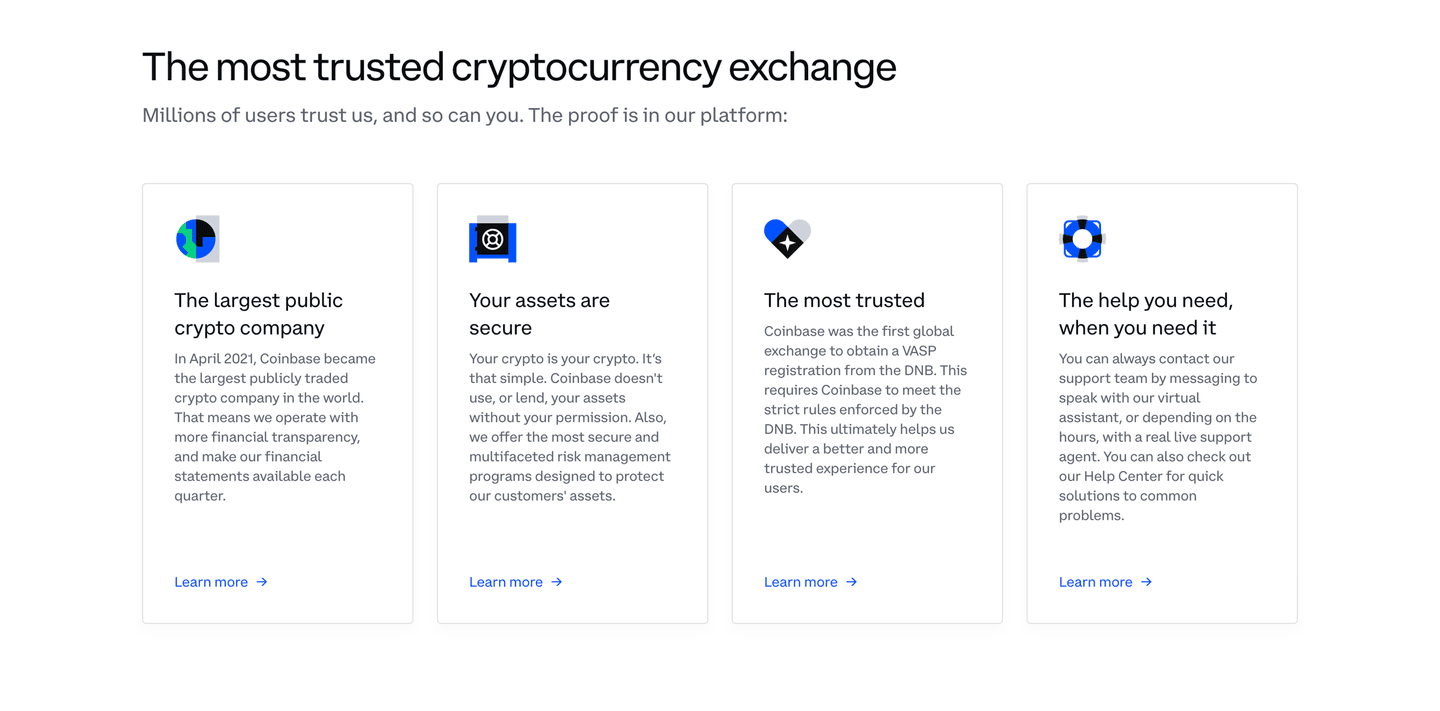
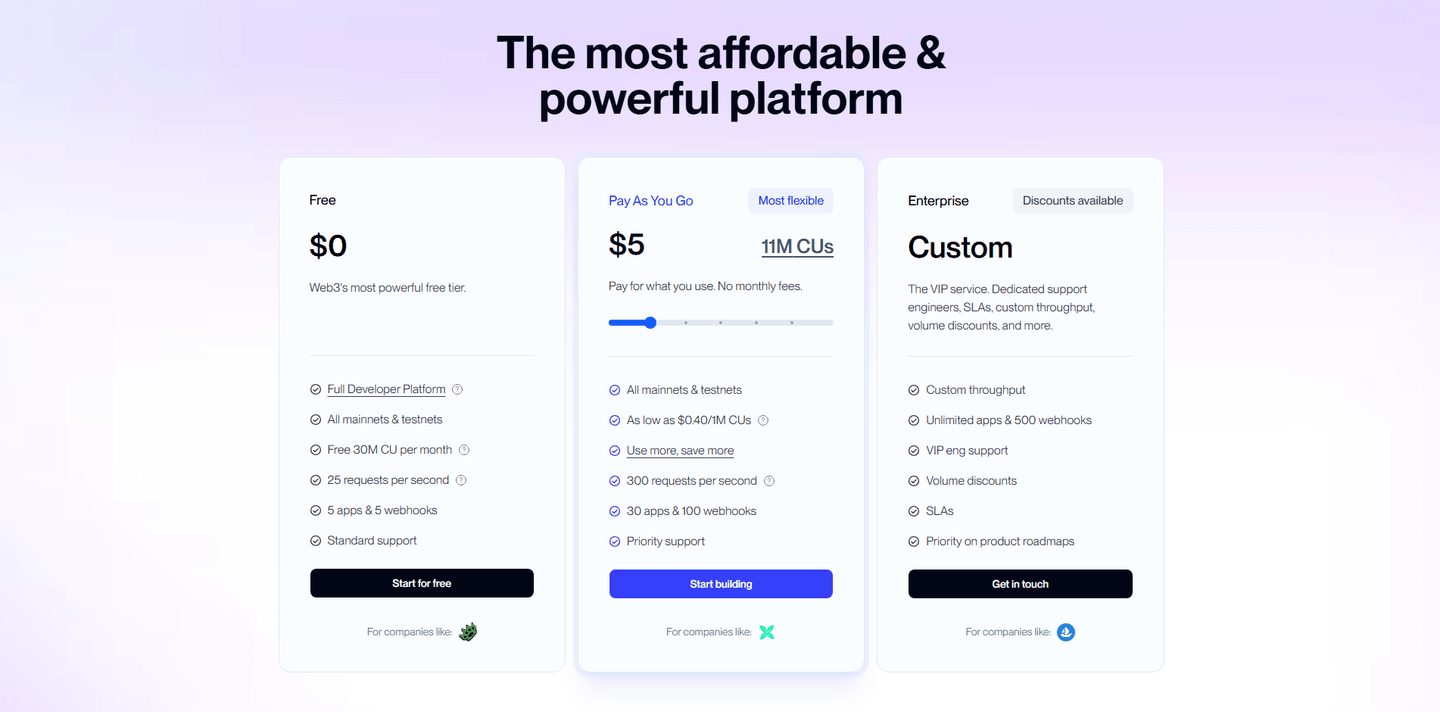
Alchemy Trust section
  1. 1The padlock-with-fingerprint visual signals security but stays decorative, with no real badge or certification.
  2. 2(Secure assets) reads as a product feature (custodial and non-custodial wallets) rather than verifiable trust proof.
  3. 3No logos, numbers, or compliance seals appear, so there is no concrete evidence a buyer can check.
  4. 4The custodial vs non-custodial breakdown educates more than it reassures, leaving the trust angle thin.
03

Coinbase, The trusted platform for crypto trading and building.

49/100
Gabriel AmzallagGabriel AmzallagFounder, Web Anatomy

Multi-audience blockchain platform with smart segmentation. The page balances consumer accessibility with enterprise credibility through feature sections that serve both audiences clearly.

What makes this page stand out

  • Regulatory compliance and security-first approach builds trust for risk-averse retail investors
  • Simple buy/sell interface alongside advanced trading tools serves both beginners and experienced traders
  • Staking, lending, and DeFi features expand beyond trading into broader crypto financial services
  • Educational content (Coinbase Learn, earn campaigns) onboards new users through education

Section we love

·Features
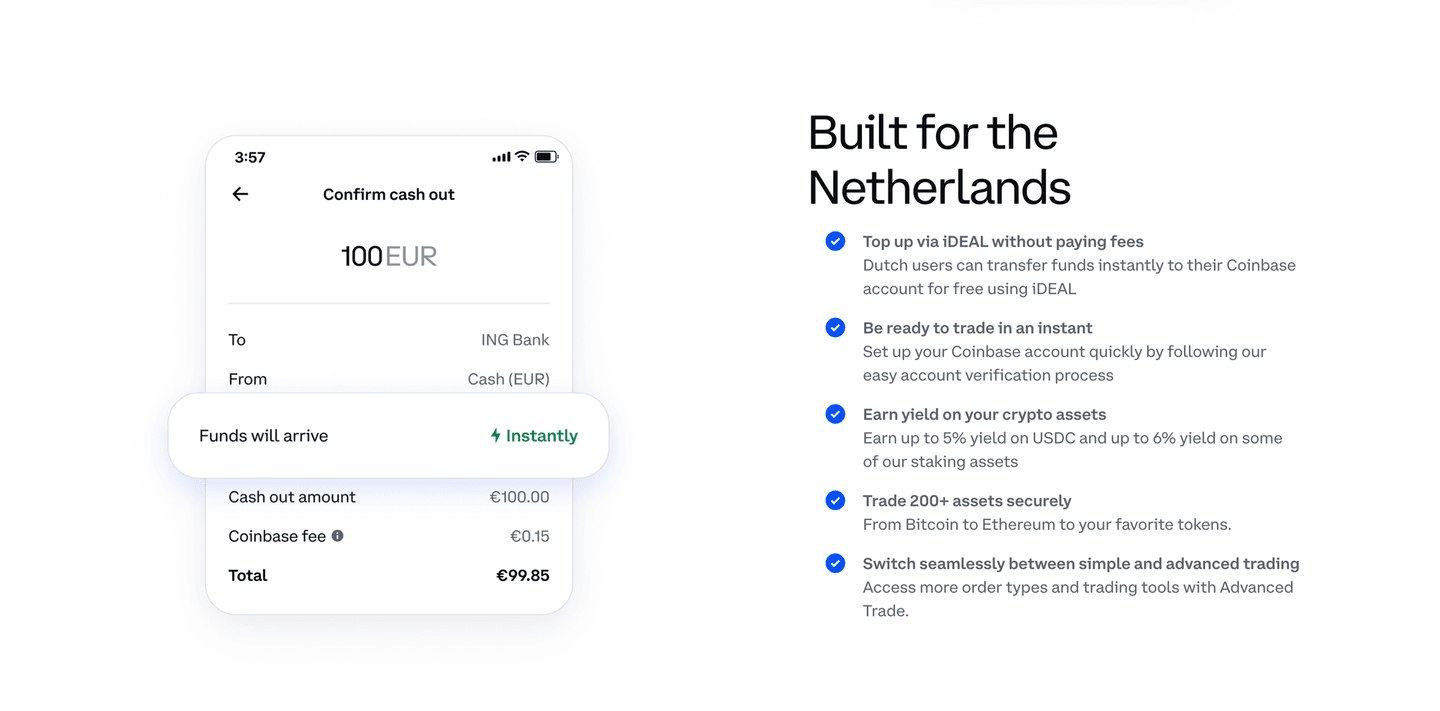
Coinbase Features section
  1. 1Benefit-led bullets lead with outcomes (Top up via iDEAL without paying fees, Earn yield on crypto) not feature names
  2. 2Real app screenshot shows a cash-out confirmation with funds arriving Instantly and a clear fee breakdown
  3. 3Quantified payoffs (up to 5% on USDC, up to 6% staking yield, 200+ assets) make the value concrete
  4. 4Localized headline Built for the Netherlands plus iDEAL and ING details speak directly to the market
04

Iron Fish, Privacy-first cryptocurrency for everyone.

31/100
Gabriel AmzallagGabriel AmzallagFounder, Web Anatomy

Privacy-first protocol with accessible messaging. Iron Fish makes technically complex cryptography feel approachable with clear how-it-works sections and community-driven trust.

What makes this page stand out

  • Every transaction encrypted by default differentiates from transparent-by-default chains
  • Proof-of-work consensus provides familiar, battle-tested security model
  • Accessible mining (CPU-friendly) creates broader participation vs. GPU/ASIC-dominated chains
  • Bridge capabilities for interoperability with other blockchains demonstrate ecosystem thinking

Section we love

·Trust
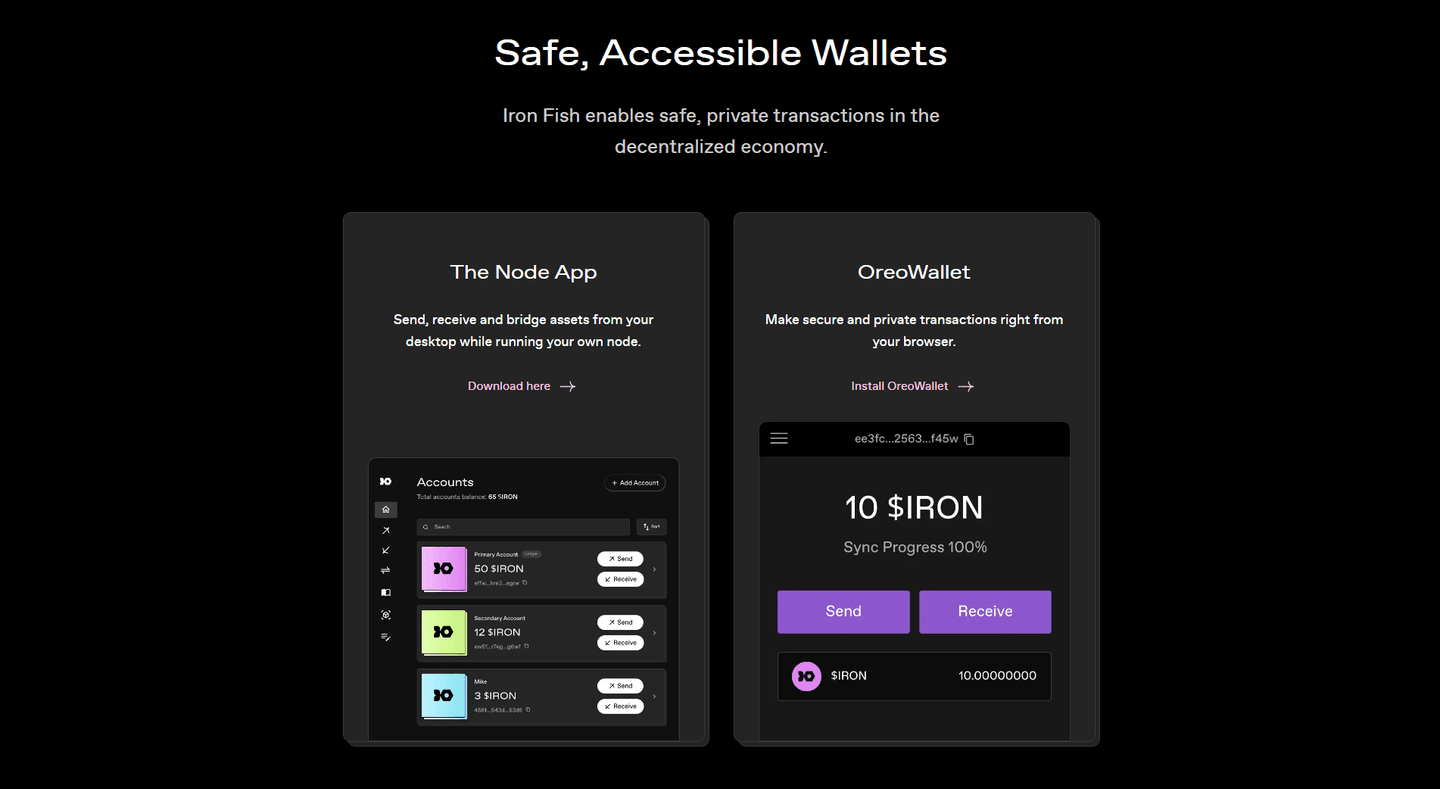
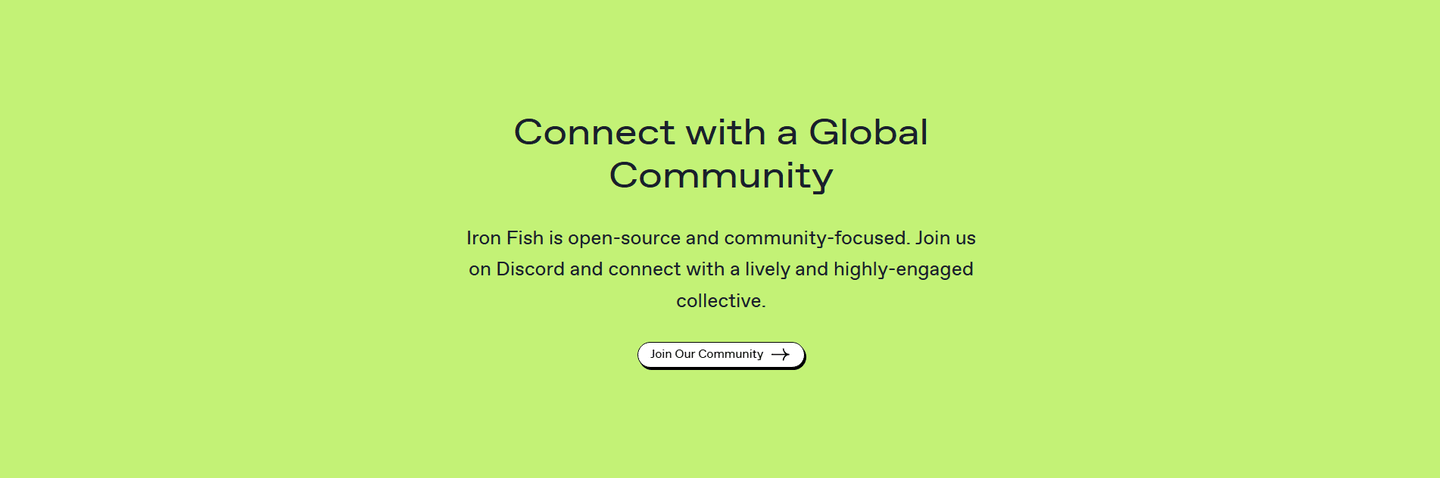
Iron Fish Trust section
  1. 1The press row carries three recognized outlet logos (The Block, Forbes, CoinDesk)
  2. 2The headlines quantify backing with hard figures ($27 Million raised, A16z-led $28M round)
  3. 3The A16z-backed framing borrows credibility from a top-tier crypto investor
  4. 4The mix of named media logos plus funding numbers combines two proof types in one strip

See how your page compares to the 58.6 average page score

Run a diagnostic on your blockchain page and get a section-by-section breakdown of what to fix first to improve clarity, trust, and product proof.

Design patterns we see across high-performing blockchain pages

Across 4 blockchain pages reviewed, the pages that convert tend to make the first screen do one job: establish what the product does and why it is trustworthy.

The strongest patterns pair clear use-case claims with trust-first proof, then back those claims with security credentials and developer adoption numbers that a skeptical buyer can verify. Crypto website design works best when it bridges the gap between technical complexity and tangible value. Use website section examples to compare how these building blocks show up across page types.

Trust Alchemy

20/100

How Alchemy builds credibility early

Alchemy trust section
  1. 1The headline pins reliability to a hard figure (99.99% uptime, 99.995% on the status board)
  2. 2The seven-day status bars make the Operational claim visible rather than asserted
  3. 3The side-by-side comparison contrasts Alchemy uptime against Competitor D (partial outage) and self-hosted (major outage)
  4. 4The proven, industry-leading framing ties the uptime number to infrastructure credibility

Reviewed design-pattern pick from Alchemy’s trust section.

What I love about this section

  • The headline pins reliability to a hard figure (99.99% uptime, 99.995% on the status board)
  • The seven-day status bars make the Operational claim visible rather than asserted
  • The side-by-side comparison contrasts Alchemy uptime against Competitor D (partial outage) and self-hosted (major outage)
  • The proven, industry-leading framing ties the uptime number to infrastructure credibility

Value Proposition Iron Fish

33/100

How Iron Fish presents their value

Iron Fish value proposition section
  1. 1Four distinct value props (decentralized privacy, accessible crypto, compliance, Ledger support) in a numbered accordion
  2. 2Left-side diagram maps how Your Account, Transaction Records and View Keys connect, making abstract privacy tangible
  3. 3Numbered 01-04 layout sets a clear reading order and invites click-through to expand each promise
  4. 4Compliance, not compromise framing preempts the regulatory objection unique to privacy crypto

Reviewed design-pattern pick from Iron Fish’s value proposition section.

What I love about this section

  • Four distinct value props (decentralized privacy, accessible crypto, compliance, Ledger support) in a numbered accordion
  • Left-side diagram maps how Your Account, Transaction Records and View Keys connect, making abstract privacy tangible
  • Numbered 01-04 layout sets a clear reading order and invites click-through to expand each promise
  • Compliance, not compromise framing preempts the regulatory objection unique to privacy crypto

Overlooked sections that quietly drive clarity and trust

In this set, navigation and how-it-works sections often do more conversion work than teams expect: they shape technical understanding, reduce complexity anxiety, and help different audiences find their entry point.

The biggest gaps usually appear where the page should explain the protocol or infrastructure story in plain language. When those sections are thin, the hero gets forced to do all the trust work, and visitors leave before understanding the product.

Navbar Iron Fish

43/100

Why this navbar works

Iron Fish navbar section
  1. 1The open Use menu lays out a clear grid (Node App, Node CLI, Mine, Block Explorer, Ecosystem, Ledger App)
  2. 2Each menu item pairs a label with a one-line description so users grasp the action fast
  3. 3The nav stays lean with Use, Learn, Community, Developers, Blog top-level entries
  4. 4The pink Get Started button repeats in both the nav and hero for a strong conversion path

Reviewed overlooked-section pick from Iron Fish’s navbar section.

What I love about this section

  • The open Use menu lays out a clear grid (Node App, Node CLI, Mine, Block Explorer, Ecosystem, Ledger App)
  • Each menu item pairs a label with a one-line description so users grasp the action fast
  • The nav stays lean with Use, Learn, Community, Developers, Blog top-level entries
  • The pink Get Started button repeats in both the nav and hero for a strong conversion path

How It Works Alchemy

67/100

How Alchemy simplifies the process

Alchemy how it works section
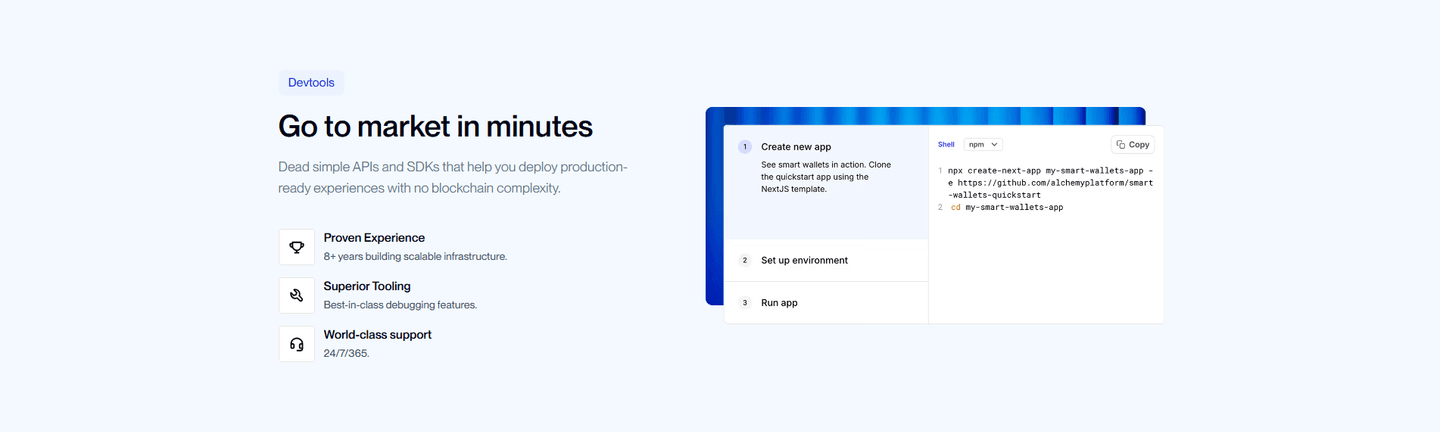
  1. 1Three numbered steps (create new app, set up environment, run app) map the full path from zero to running
  2. 2The headline (go to market in minutes) sets a concrete fast timeline for getting live
  3. 3A live shell panel shows the exact npx create-next-app and cd commands so the first step feels copy-paste easy
  4. 4Dead simple APIs and SDKs messaging plus a one-click Copy button signal minimal effort to start
  5. 5Feature icons (proven experience, superior tooling, world-class support) reinforce confidence beside the steps

Reviewed overlooked-section pick from Alchemy’s how it works section.

What I love about this section

  • Three numbered steps (create new app, set up environment, run app) map the full path from zero to running
  • The headline (go to market in minutes) sets a concrete fast timeline for getting live
  • A live shell panel shows the exact npx create-next-app and cd commands so the first step feels copy-paste easy
  • Dead simple APIs and SDKs messaging plus a one-click Copy button signal minimal effort to start

Use the examples below as prompts for what to standardize, not just what to redesign.

Checklist: a practical audit for blockchain website design

If you are iterating on a blockchain homepage design, this checklist helps you spot missing sections and messaging gaps quickly, especially around Features, Cta, and Value Proposition.

Run it on your current page, then decide what to rewrite, what to reorder, and what proof to add before you touch visual polish. For a faster baseline, you can also try our landing page audit.

Interactive quiz

What would your blockchain homepage score?

Question 1 of 5
0%

Can a blockchain buyer identify what you do in under 5 seconds?

"Web3 development infrastructure" beats "building the decentralized future."

Gabriel Amzallag

Reviewed by

Gabriel Amzallag , Founder, Web Anatomy

5 years CRO + SEO at Qonto (2021–2025). After advising 15+ SaaS on their websites (Payfit, Pigment…), the same patterns kept breaking, so I decided to build the source of truth on what works on the web: the intelligence layer every tool, builder, and team uses to ship sites that perform.

See how your page compares to the 58.6 average page score

Run a diagnostic on your blockchain page and get a section-by-section breakdown of what to fix first to improve clarity, trust, and product proof.

Analyze your blockchain pageFree. Takes 2 minutes.

Explore other industries

See how conversion patterns differ across verticals. Each page scores real homepages on the same framework.

See all industries
Benchmark-backed blockchain homepage inspiration

Blockchain FAQ

Quick answers based on our blockchain website benchmark dataset.

What are the best blockchain websites?

[01]

The strongest performers in this April 2026 benchmark are Ledger, Alchemy, Coinbase, and Iron Fish. Each makes complex technology feel trustworthy: Ledger by leading with hardware security, Alchemy by treating developer experience as the product, Coinbase by segmenting consumer and enterprise cleanly, and Iron Fish by translating privacy cryptography into plain language. Across 4 blockchain homepages scored against 60+ criteria, these pages convert because trust is the first thing visible.

What makes blockchain websites harder to convert than other tech pages?

[02]

Blockchain buyers arrive skeptical, often more skeptical than insurance or healthcare buyers, and will not commit until they see the trust story. Across 4 homepages reviewed, the pages that convert make trust the product: Ledger opens with hardware protection, Alchemy pairs Web3 tooling with social proof that reduces integration anxiety, and Coinbase serves consumer and enterprise audiences without diluting either message.

What is the biggest design mistake on blockchain homepages?

[03]

Leading with abstract Web3 vision statements while delaying concrete product proof and security credentials. The average page in this April 2026 benchmark scored 58.6. Top performers answer "why should I trust this?" in the hero: Ledger shows hardware protection, Alchemy leads with developer reliability, and Iron Fish translates cryptographic privacy into plain how-it-works language. Visitors need verifiable proof before they will read anything else.

What sections should a blockchain homepage include?

[04]

A hero that names the specific use case (wallet, infrastructure, exchange, or protocol), an early trust layer with security audits, developer count, or transaction volume, a product or developer experience walkthrough, audience-specific routing (developer vs enterprise vs consumer), and a low-friction CTA like "Start building" or "Get started free." Ledger and Alchemy both stack these well. Across 4 homepages, pages that bury trust convert least.

How many blockchain examples do I need to review before redesigning?

[05]

Three to five is enough if you pick by blockchain vertical. Only 13% of homepages in this benchmark score in the top tier, so the gap is concentrated in a few blocks. Study Ledger for security-first hardware positioning, Alchemy for developer- infrastructure framing, Coinbase for multi-audience segmentation, and Iron Fish for accessible protocol-level messaging.

Where can I find great inspiration for my blockchain website?

[06]

Study pages section by section instead of saving full-page screenshots. Browse best landing page examples for the full gallery, then drill into hero section examples and trust section examples to see how Ledger, Alchemy, and Coinbase differ at each funnel stage.

How do I audit my blockchain homepage?

[07]

Use a structured rubric that checks clarity, trust, and friction instead of relying on subjective feedback. Run your page through the landing page analysis for a section-by-section score against the same 60+ criteria used in this benchmark.