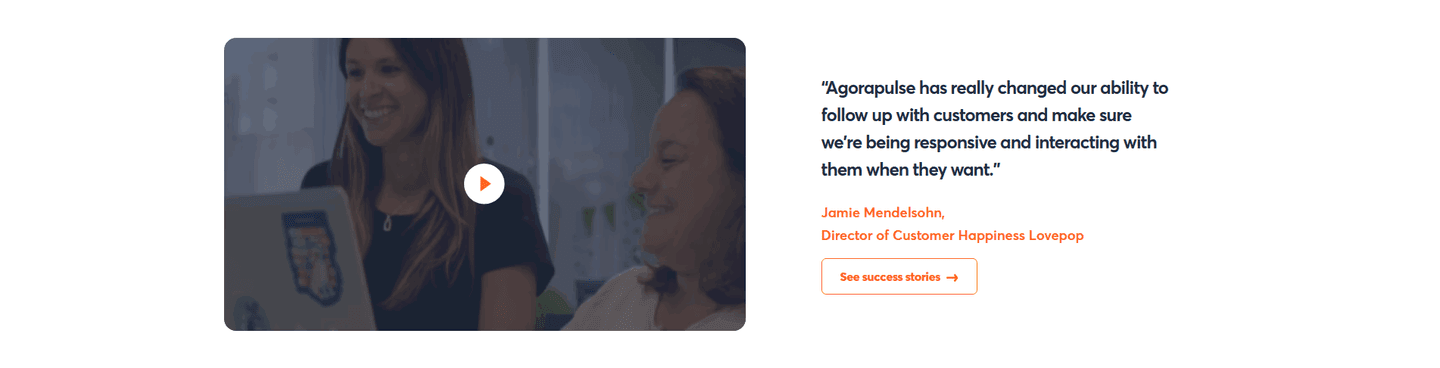
Testimonial|
A recorded face and voice reads as harder-to-fake proof than a text quote, and the play button invites a low-effort click that pulls visitors deeper into the story.
Key takeaways
Showing 22–24 of 24 examples
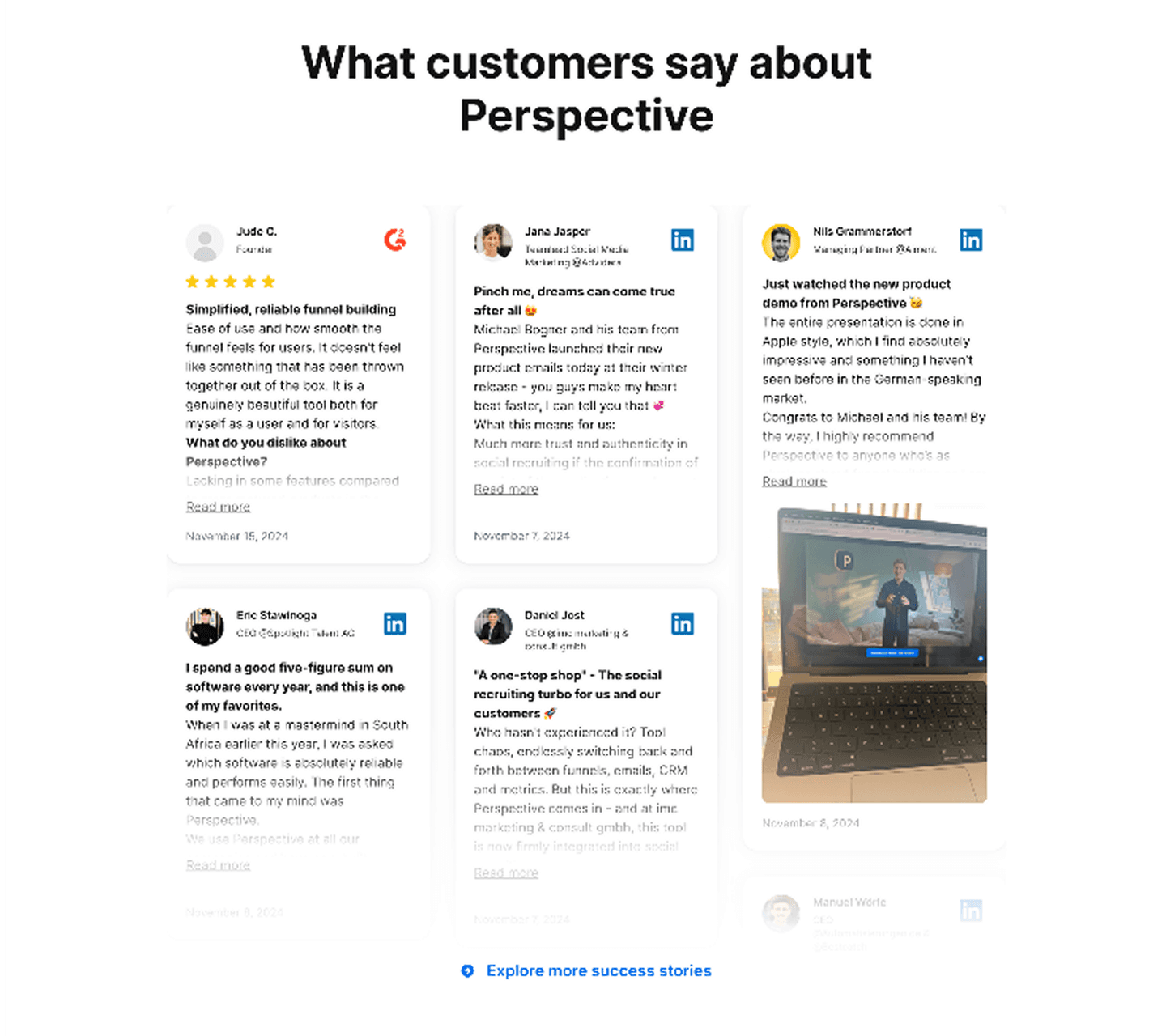
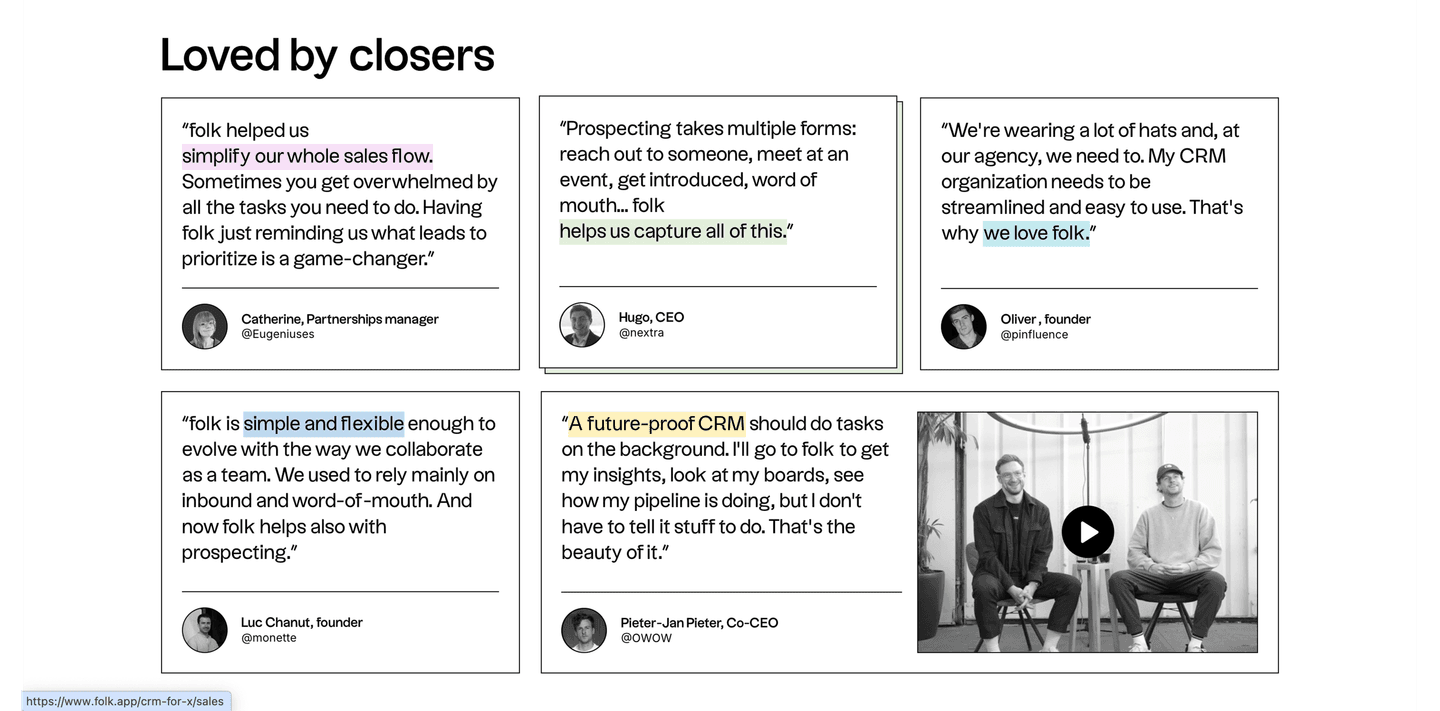
Every testimonial section is scored across 6 conversion best practices. Copy the best practice stack, not just the layout. See what builds trust and what falls flat.
Hand-picked from 350+ companies and analyzed by our AI conversion agent. Not a random dump of quote cards. Every entry earns its spot.
Found a testimonial section you admire? Run yours through the same scoring engine. See where you stand on the same best practices, and what to fix first.
A video testimonial is a customer testimonial delivered as a short recorded clip rather than a written quote. On the page it shows up as a thumbnail of a real customer face with a play button, so the proof is a person you can watch and hear instead of a sentence you have to take on faith. A recorded face and voice is harder to fake than a text quote, which is exactly why it reads as higher-trust proof.
The best testimonial sections use one of a few forms, often two together:
Text is cheap to write and easy to doubt. A recorded human face and voice is not, so a visitor instinctively reads a video as more credible than the same words typed into a card. The play button does a second job: it is a low-effort invitation that pulls a skeptical buyer into the story instead of asking them to skim past it.
The format also stacks well with other proof. A video paired with a named role, a customer logo, or a hard number layers proof types, so the testimonial is human and specific at once. Adoption is still low enough, around a fifth of scored testimonial sections, that a single strong video remains a differentiator rather than table stakes. The same instinct drives social proof in the hero, where evidence sits next to the promise before a visitor has to scroll.
Across the scored examples below, the strongest sections treat the video as the centerpiece of the proof, not a decoration. Synthesia makes every card a face-to-camera video, while Ramp lines up a row of watchable customer stories instead of static quotes, and Conveo gives an embedded clip a visible runtime so the time cost is clear before the click. The pattern that performs is layering: the best cards put a play button over a still that also carries a customer logo or a hard result, like Lemlist pairing each video with a named brand and a verifiable number. The video earns the trust, and the logo or metric makes it specific.
50/100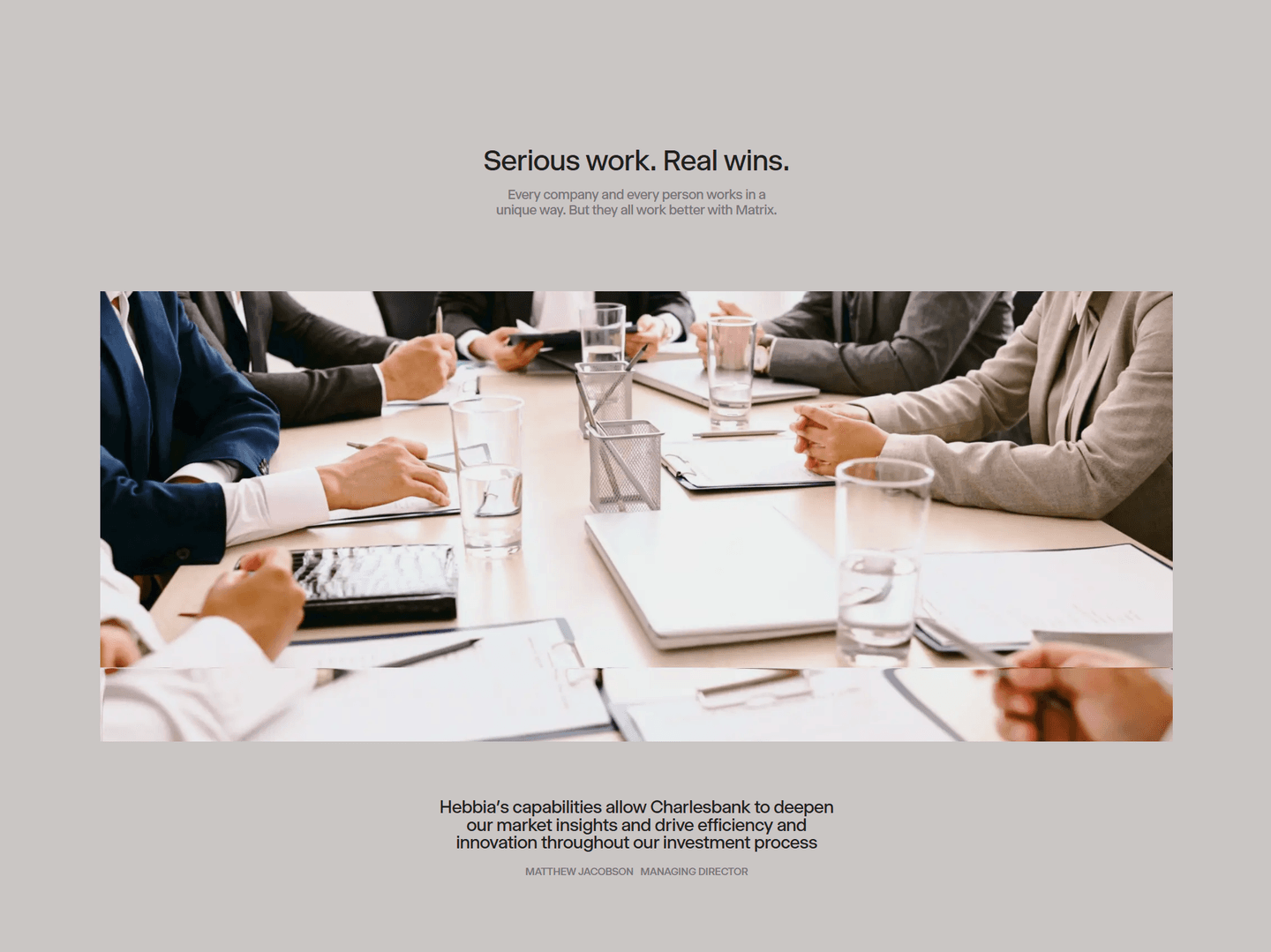 0/100
0/100The usual failure is a video that never gets pressed: a thumbnail with no face, no play button, or no hint of how long the clip runs, so the visitor scrolls past it. The second failure is a bare video with no attribution, a talking head with no name, role, logo, or result, which removes the very specificity that makes the human proof land. Lead with a real face and a clear play button, keep the clip short, and anchor it with a name, a logo, or a number so the trust the video earns has something concrete to point at.

Curated by
Gabriel Amzallag , Founder, Web Anatomy
5 years CRO + SEO at Qonto (2021–2025). After advising 15+ SaaS on their websites (Payfit, Pigment…), the same patterns kept breaking, so I decided to build the source of truth on what works on the web: the intelligence layer every tool, builder, and team uses to ship sites that perform.
Paste your URL. Get a scored analysis of your testimonial section, including whether your proof reads as credible. Free, no signup.
The common questions about using customer video in the testimonial section, with answers drawn from 24 scored examples.
It is a customer testimonial delivered as a short recorded video rather than a written quote. On the page it usually appears as a thumbnail of a real customer face with a visible play button. When clicked, the customer tells their story on camera, which reads as harder to fake than a block of text and so lands as higher-trust proof.
A recorded human face and voice is much harder to fabricate than a sentence of text, so a visitor instinctively reads it as more credible. The play button also invites a low-effort click that draws a skeptical buyer into the story instead of asking them to take a written claim on faith. The best sections then layer the video with a named role, a customer logo, or a hard number so the proof is both human and specific.
The common forms are a face-to-camera video card with a visible play button, a featured or embedded case-study video with its runtime shown, a row or grid of video thumbnails, video cards paired with a watch the full story link to deeper proof, and video stills that carry a pulled-out metric or a customer logo on the card itself. Many top sections combine two of these, for example a play button over a still that also shows a hard result.
Short enough that a visitor will actually press play. A face-to-camera card often runs under a minute, and an embedded case-study video that shows its runtime, such as a three or four minute clip, signals the time cost up front so the click feels safe. The point is a watchable story, not a webinar, so lead with the shortest video that still carries a real outcome.
No, the strongest sections mix them. A video testimonial is still a differentiator rather than table stakes, since only about a fifth of scored testimonial sections use one, so a single well-placed video alongside text quotes stands out. Use the video for your most compelling customer story and keep text quotes for breadth across roles, industries, and results.